You are sitting in the chair, staring at your grow-out line in the mirror, wondering if this time you commit to a real change. The brunette spectrum is wide enough to let you shift your look without losing the depth that made you go dark in the first place, and the right variation saves you from a root panic at week five.
Fifteen looks cross the range from a low-maintenance solid base to a layered balayage that buys you months between appointments, which is why Lovely Brunette Hair 2027 fill so many saved boards. You need a shade that works with your texture, your morning, and the fact that you are not booking a gloss every six weeks.
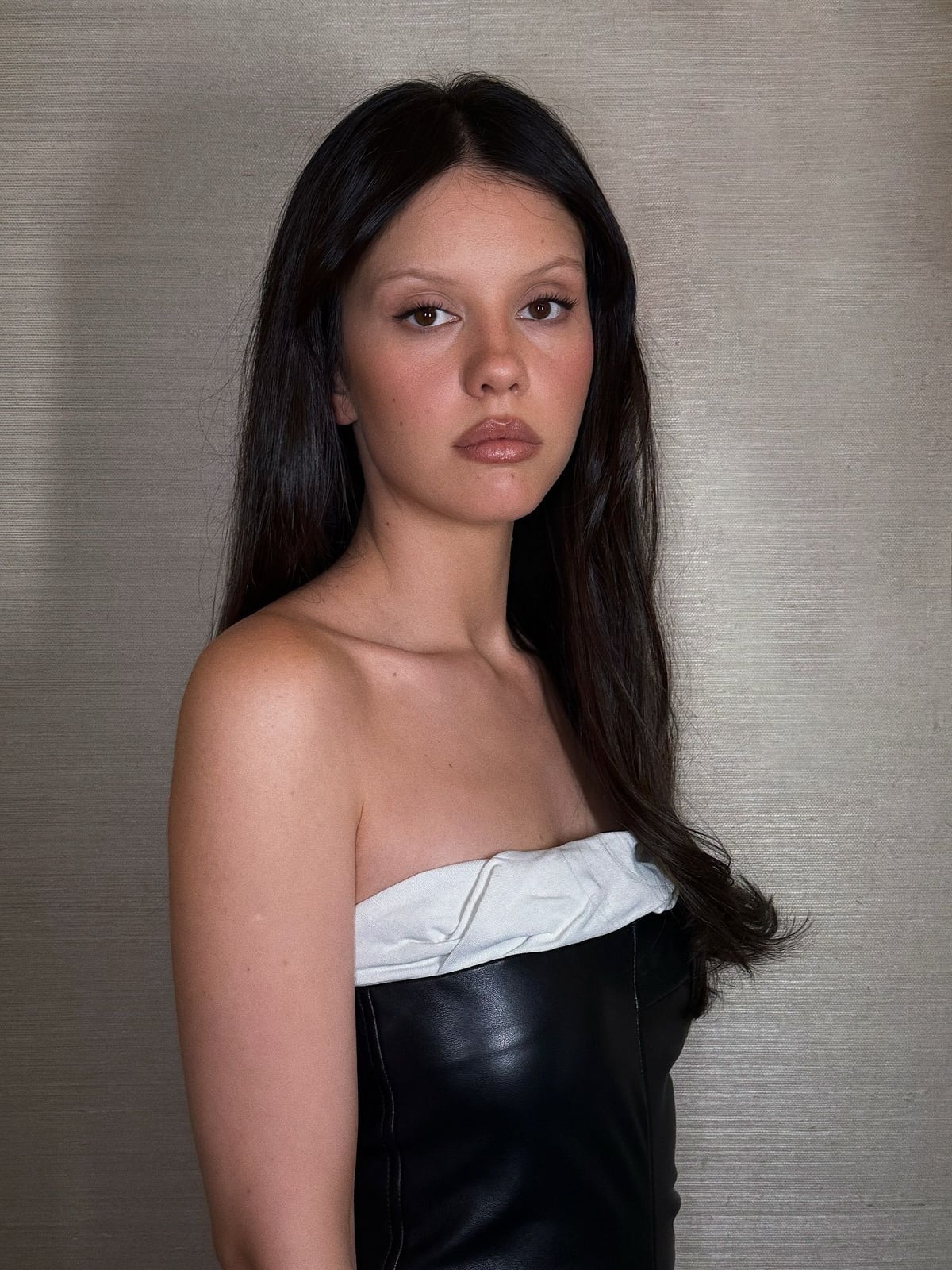
Rich dark brown base with subtle lighter strands
Courtesy of: vogue.com
Not quite a highlight, not quite a gloss. The middle part lets the weight of the color fall forward. Skip it if you want visible contrast or a lighter base. Ask your colorist for: dark brown base, subtle all-over lighter strands. The texture here is air-dried, which means less heat and more patience. A trim every eight to ten weeks keeps the length honest.
Soft dimension with subtle ash highlights
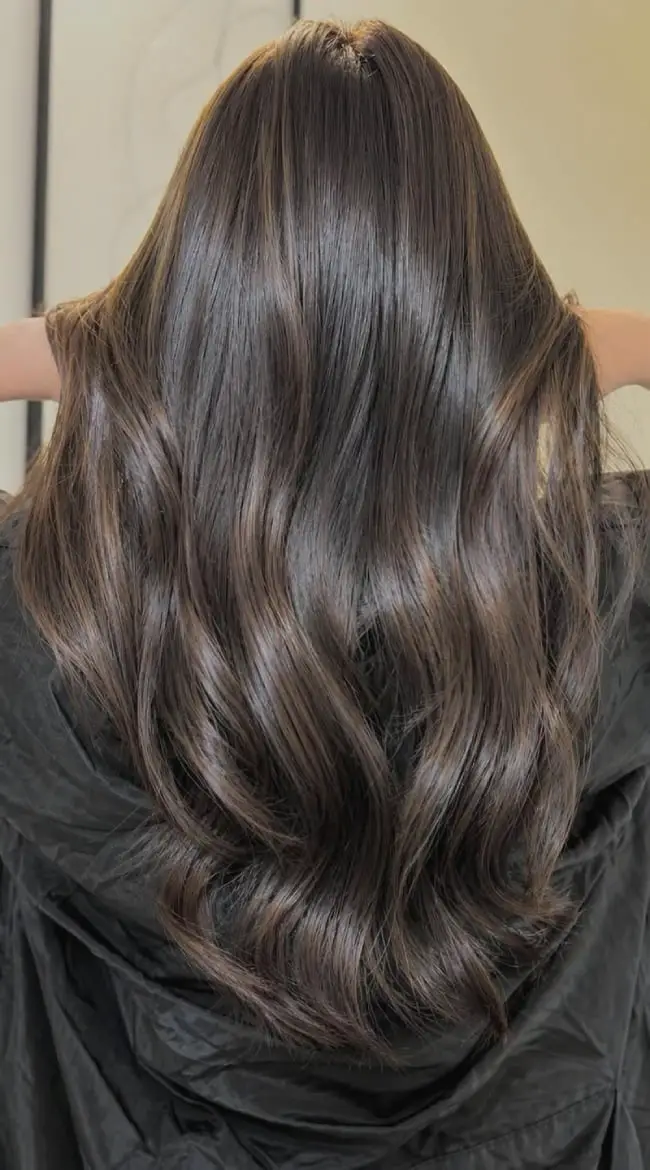
Photo credit: fabmood.com
Warm brown with gold ribbons reads one way. Dark brown with subtle ash highlights reads another. This one lands cool and dimensional, the loose waves catching the ash in the bends. Thick, wavy hair holds these fine strands without them vanishing. Skip it if your texture is very fine. The highlights can get swallowed. The grow-out is soft, not stripey. Toning every six to eight weeks keeps the cool from shifting brassy.
Lighter balayage with curtain bangs

Image credit: marieclaire.com
The words for the chair: medium brown base, subtle blonde balayage, curtain bangs. Fine, wavy texture holds the air-dried waves, and the middle part keeps the curtain bangs balanced. The balayage lands lighter at the ends and softer at the root, no harsh line when it grows. Skip it if you prefer a solid color or a fringe that needs daily heat. The catch: these bangs need a trim every four to six weeks or they turn into regular face-framing layers. Soft layers throughout let the wave pattern show.
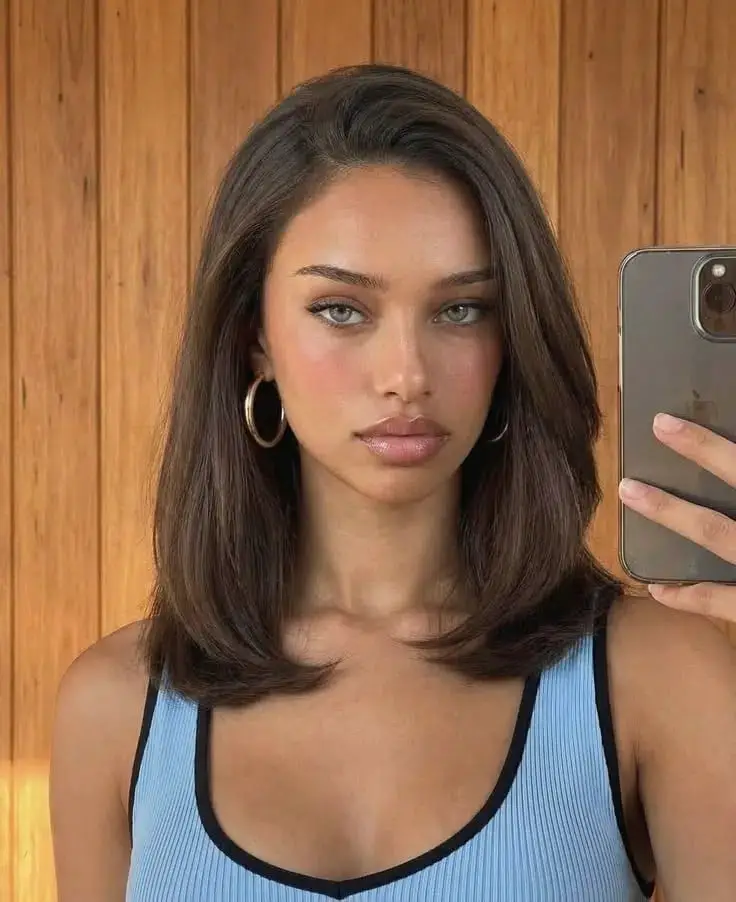
Collarbone bob with face-framing caramel highlights
Source: simplyhomeandhealth.com
Fine, straight texture with volume suits this cut best. The blunt ends need density to land clean. The side part swings the shorter pieces forward. Ask your colorist for: collarbone bob, layers, dark brown with caramel highlights. The blowout with a round brush gives the volume this shape depends on.
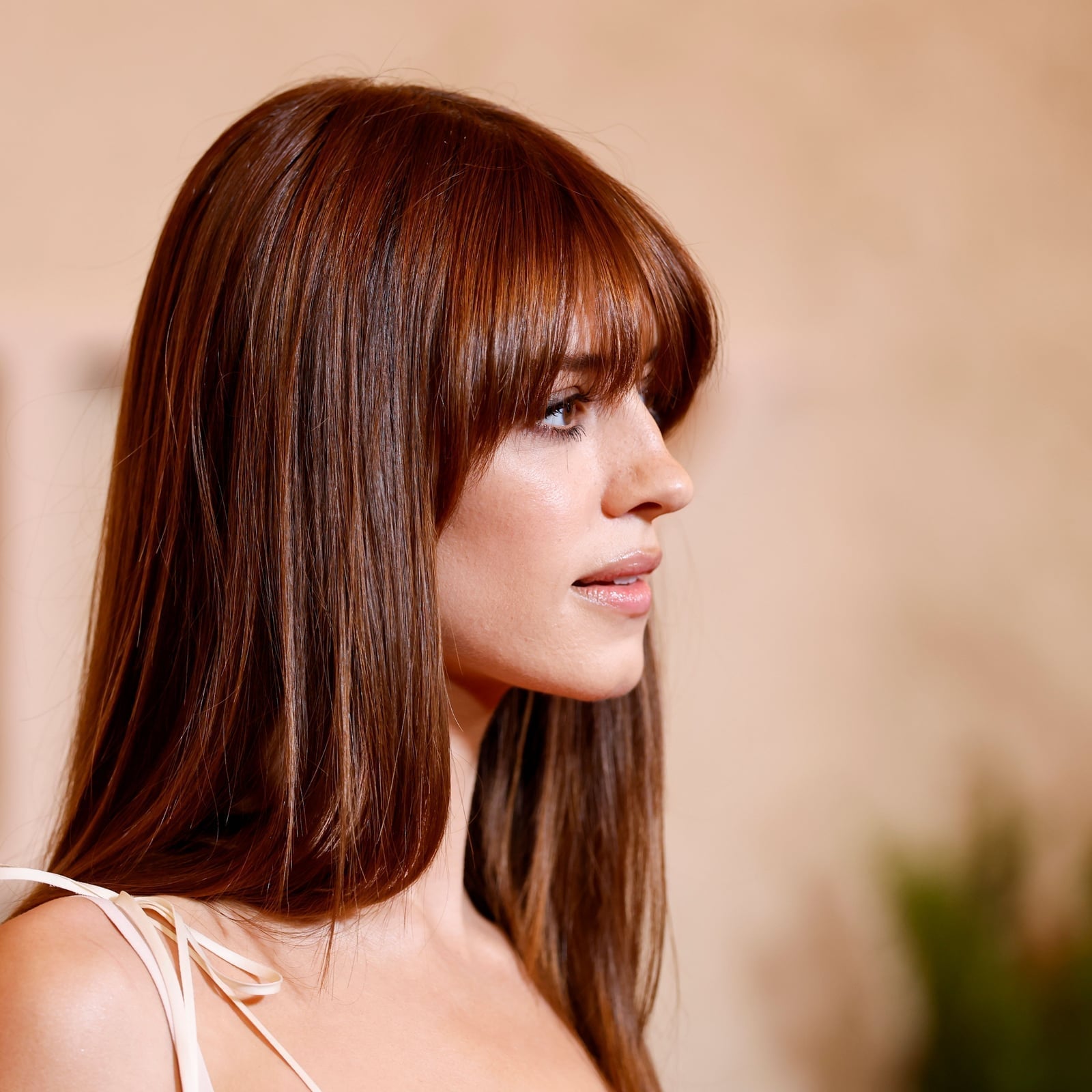
Blunt bangs on warm medium brown with auburn undertones
Via vogue.com
Long layers on fine, straight hair, warm medium brown base with subtle auburn undertones that catch a side profile. The blunt bangs sit heavy and straight, a deliberate weight against the longer length. This color looks a neutral warm, not copper, not chestnut, but something in between. Fine texture needs a flat iron to keep the bangs sharp. A professional setting suits this precision.
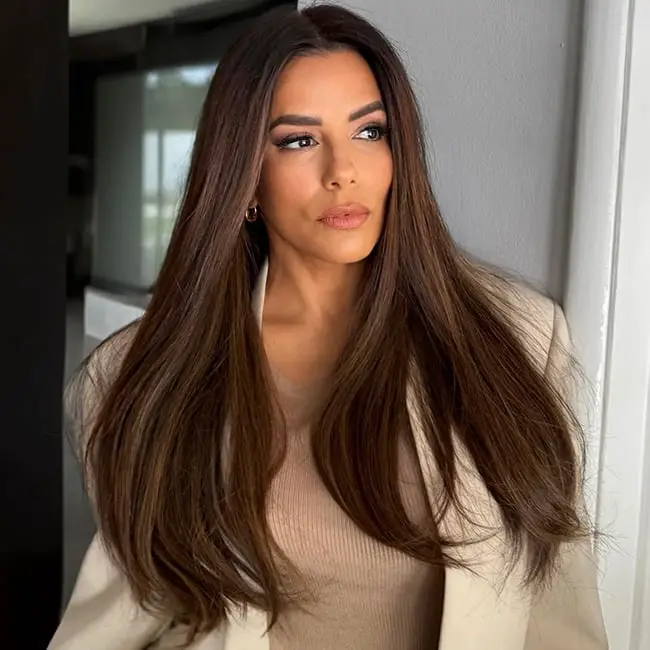
Flowing layers with blended caramel highlights
Courtesy of: shefinds.com
Long layers do not exist to make a statement. They exist to let color move, and this design proves it. A dark brown base holds the weight while caramel highlights are woven through each layer, so the tone shifts as the hair falls. The technique is deliberate: the lighter pieces sit deep enough that the straight, thick texture looks one smooth piece, not stripes. Middle part keeps the symmetry clean. It works best for those who want a longer style with blended color. Tell your colorist: dark brown base, caramel highlights, long layers, middle part. The blend is the point, and a smooth blowout is the only styling it needs.
Wavy texture with face-framing caramel highlights and curtain bangs
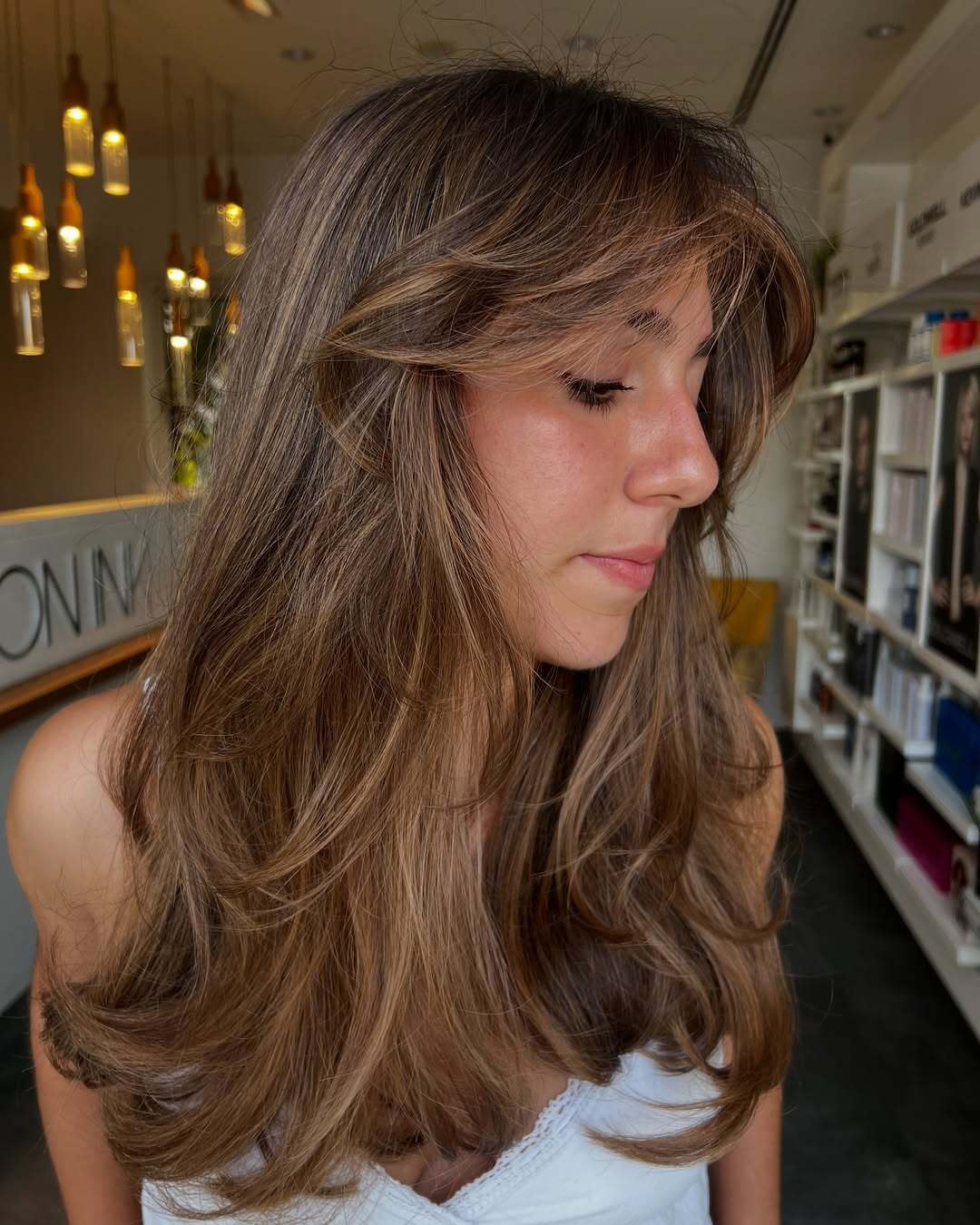
Photo credit: cloudninehair.com.au
Curtain bangs change the math on highlights. The lighter pieces here start around the cheekbone, so the caramel catches the eye before the rest of the medium brown base gets a word in. Face-framing layers do the same thing: they pull the warmth forward. Thick, wavy texture gives the color something to grab onto. Not for anyone who wants a bang-free style or prefers a single tone.
Dark brown with caramel balayage and loose waves
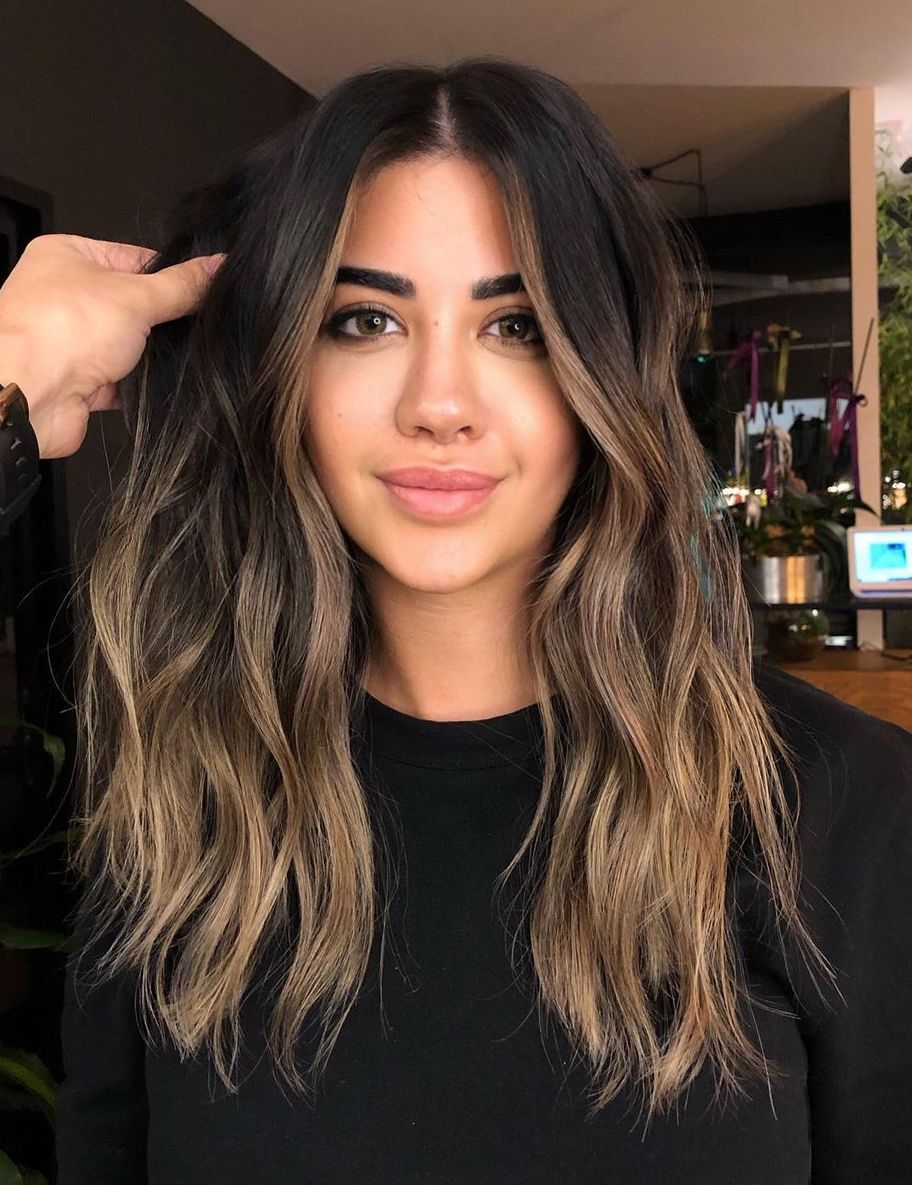
Image credit: hadviser.com
Balayage and a solid base color are not the same project. The first is painted on, the second is all-over. This design picks the painted route: caramel sweeps through a dark brown base, and the layered cut lets each wave show a different slice of warmth. A salon handles the blend because the transition from dark to caramel needs a hand that knows where to stop. Skip it if you want an even all-over tone or a cooler finish. Tell your colorist: dark brown base, caramel balayage, layers, loose waves. The painting technique means the roots stay dark, so the grow-out is gentler than highlights.
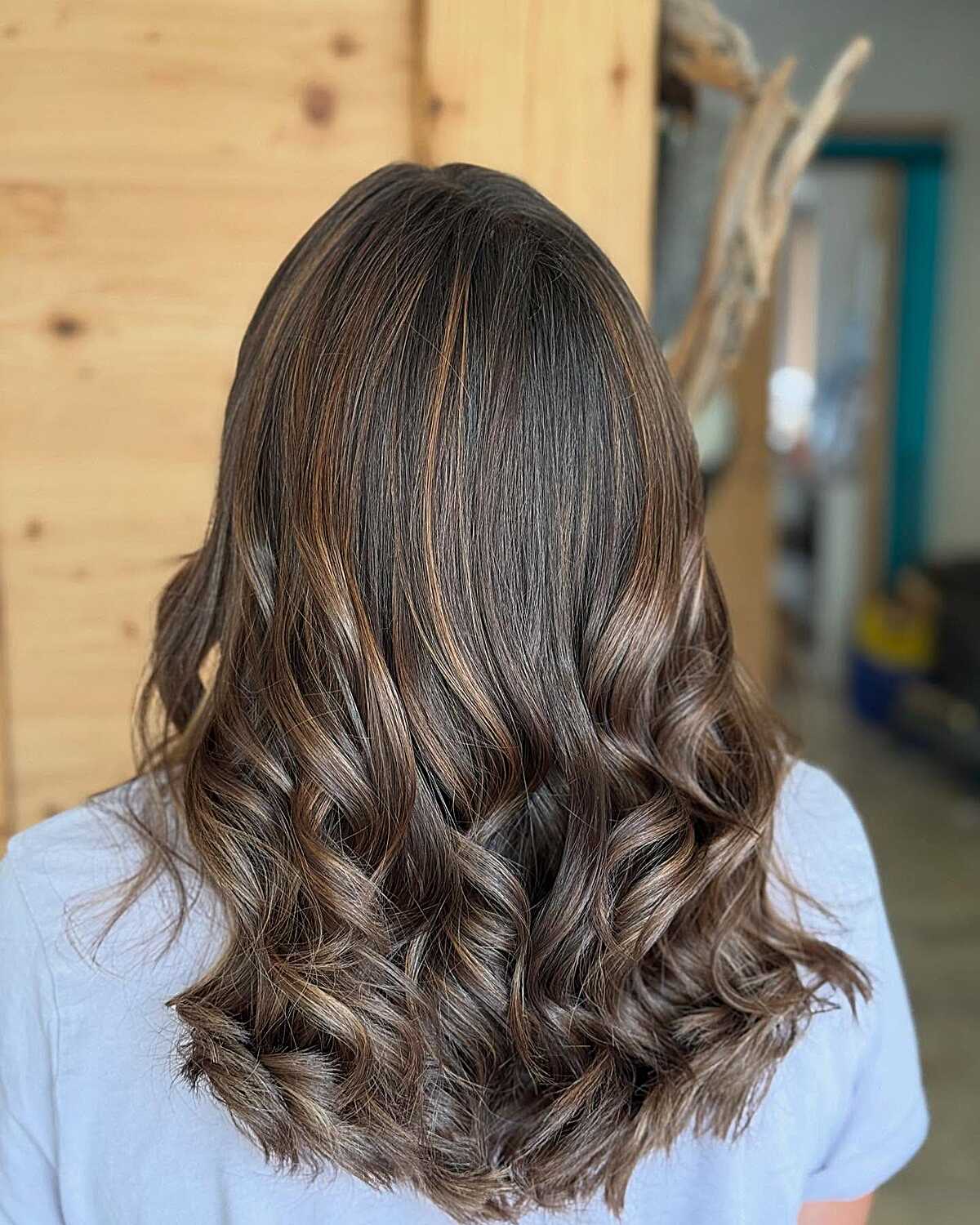
Textured waves with caramel highlights on a dark brown base
Source: latest-hairstyles.com
Caramel highlights on dark brown look best when you accept the upkeep. The contrast is strong, which means the lighter pieces show every bit of warmth as they fade. Thick, wavy texture helps disguise the line, but by week ten the tone starts pulling brassy. The layered cut keeps the shape interesting while the color does its thing. This look requires a solid commitment to a toning routine every eight weeks.
One smooth balayage on dark brown layered hair
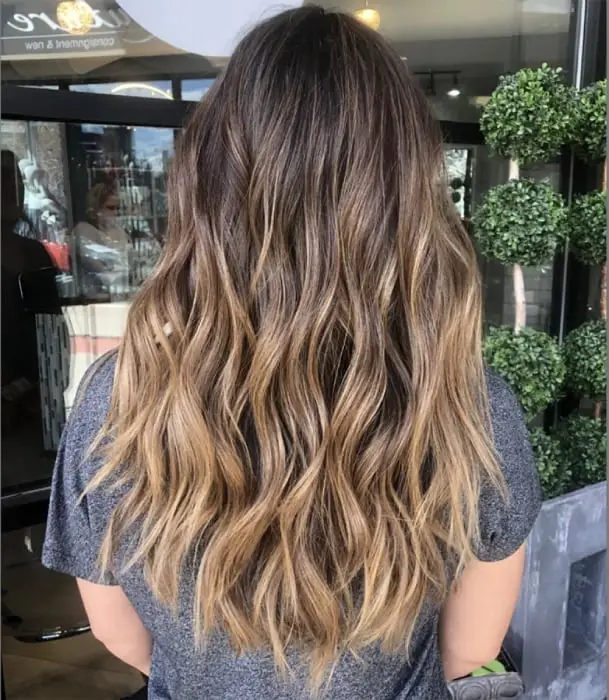
Source: soleabeautysalon.com
Smooth balayage versus traditional highlights: which one lands softer? This one. The blonde here does not start at the root; it begins lower, so the dark brown base stays dominant at the top. The layered cut lets the light pieces fall naturally, and the soft waves keep the transition from looking painted on. Wavy, thick texture makes the blend look intentional rather than grown out. Not for anyone who wants obvious streaks or a high-contrast look. Tell your colorist: dark brown base, smooth blonde balayage, layered cut. The grow-out is the selling point.
Multi-dimensional color with delicate caramel highlights
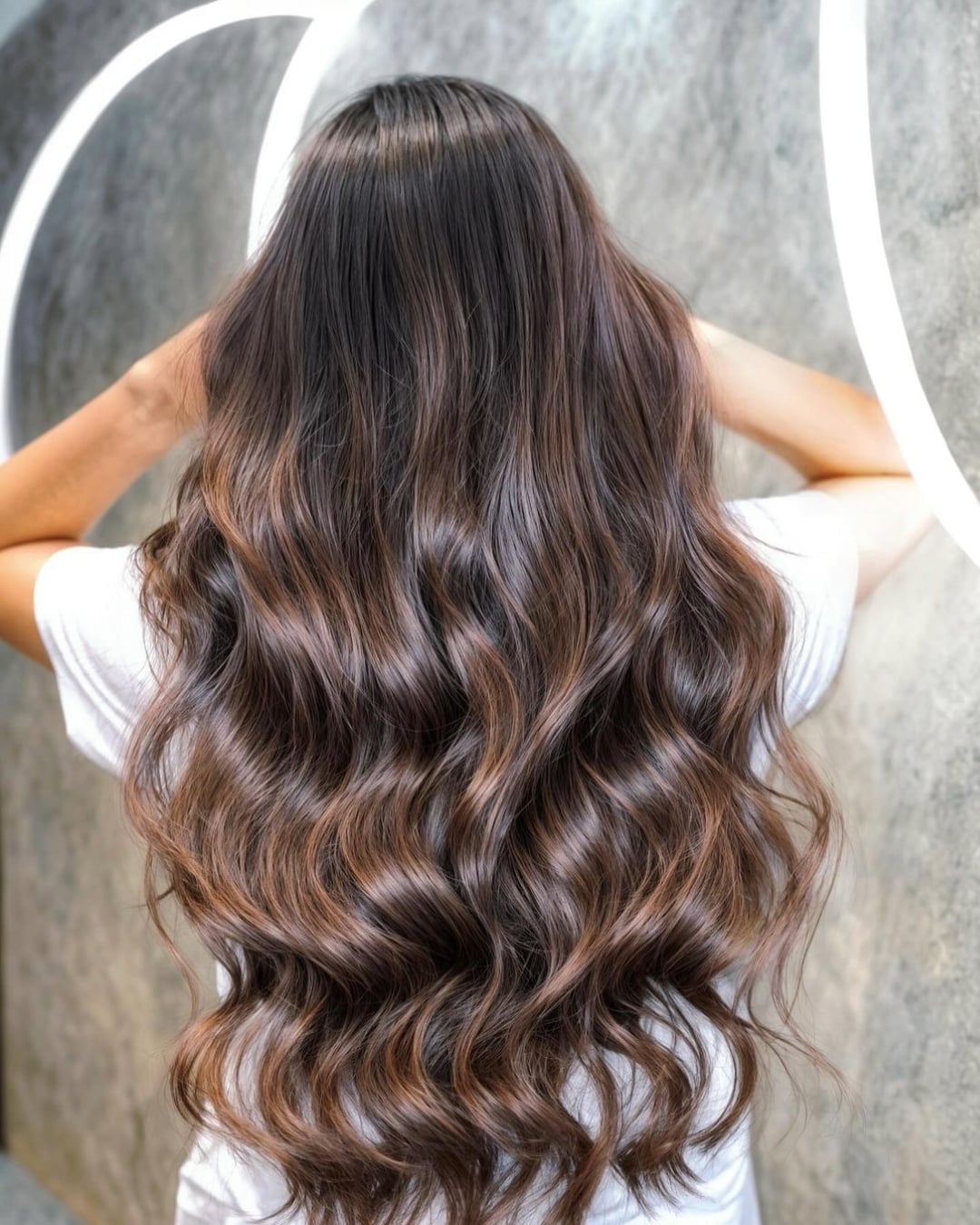
Via gustohair.com
Dark brown base meets delicate caramel highlights, and the result is a color that shifts as you move. The strands are woven in, not painted on, so the warmth is part of the hair rather than an add-on. Wavy, thick texture carries the dimension best; the caramel highlights at the bends while the brown holds the depth underneath. Layers help this work by giving the highlights more surfaces to hit. It works best with a solid color or cooler tones across the board. A heat protectant before styling keeps the waves defined. Plan a highlight refresh every eight to twelve weeks to keep the caramel from muddying.
Caramel highlights on dark brown for a salon look
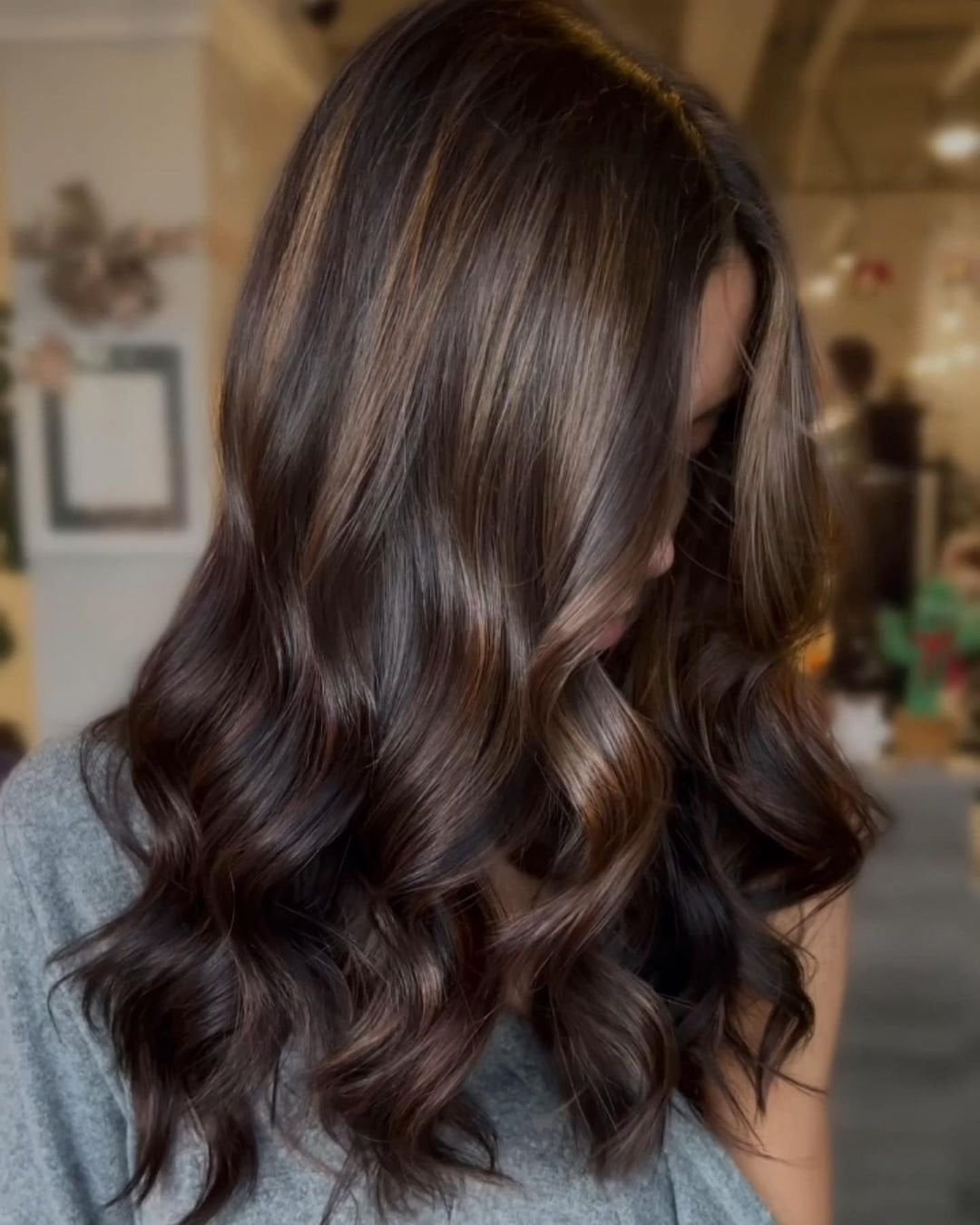
Courtesy of: redkenpro.com
Want a rich dark brown that looks neat and dimensional? Caramel highlights are the bridge. The base stays dense while the lighter pieces sit in the layers, softening the overall effect. A middle part and a gentle blowout pull it together without looking overworked. Thick, wavy hair with layers takes this blend naturally. Tell your colorist: dark brown base, caramel highlights, layered cut. The catch: the blend needs a stylist who can keep the caramel from forming stripes. Two tones, one result that earns its chair time.
Loose waves with ash blonde highlights and balayage
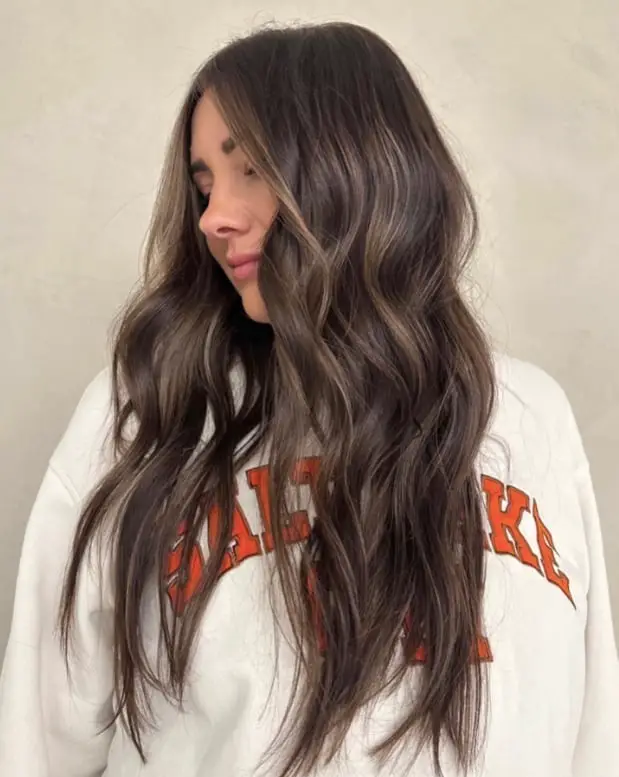
Photo credit: pradaandpearls.com
Balayage on a dark brown base uses ash blonde highlights that start mid-length and fade toward the ends. The technique skips the root line entirely, so the grow-out is a non-event. Loose waves show the contrast best; the ash tone reads cool against the brown without turning muddy. A side part shifts where the light lands. Thick, wavy hair holds the wave pattern without extra product. A texturizing spray refreshes the shape on day two. The balayage itself needs a refresh every ten to twelve weeks, which means more time between appointments and less brassiness in between.
Ash blonde highlights on dark brown in a soft blowout
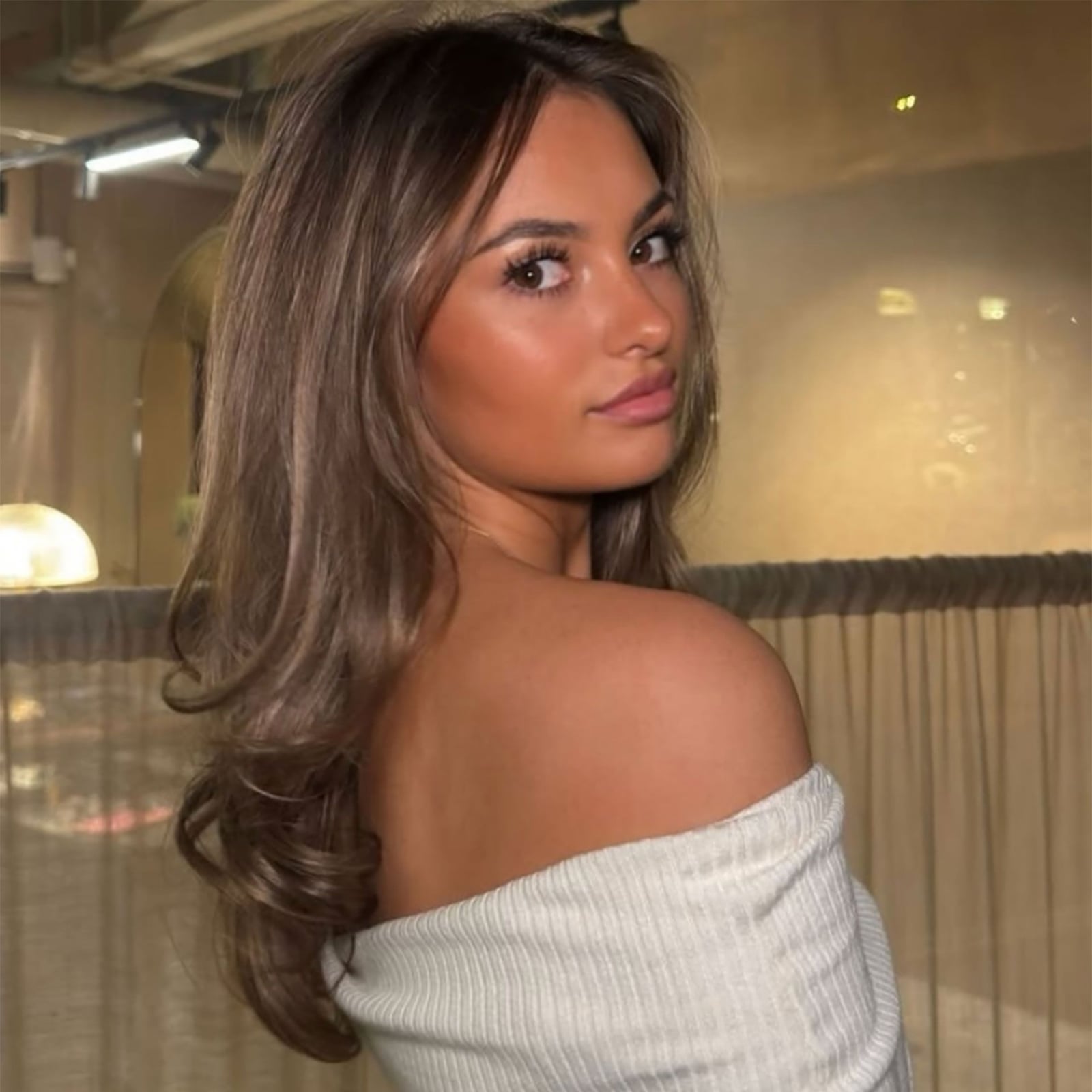
Image credit: glamourmagazine.co.uk
Pick a soft blowout over loose waves when you want the highlights to show structure instead of movement. Ash blonde strands sit strategically through the layers, widening the visual shape. The dark brown base keeps it from washing out. This is the version that lifts at the root and curves under at the ends. Ash needs maintenance. Toning every six to eight weeks is the baseline; skip it and the highlights pull warm. Thick, wavy hair with layers handles the blowout best. Not for those who want a wash-and-wear color.
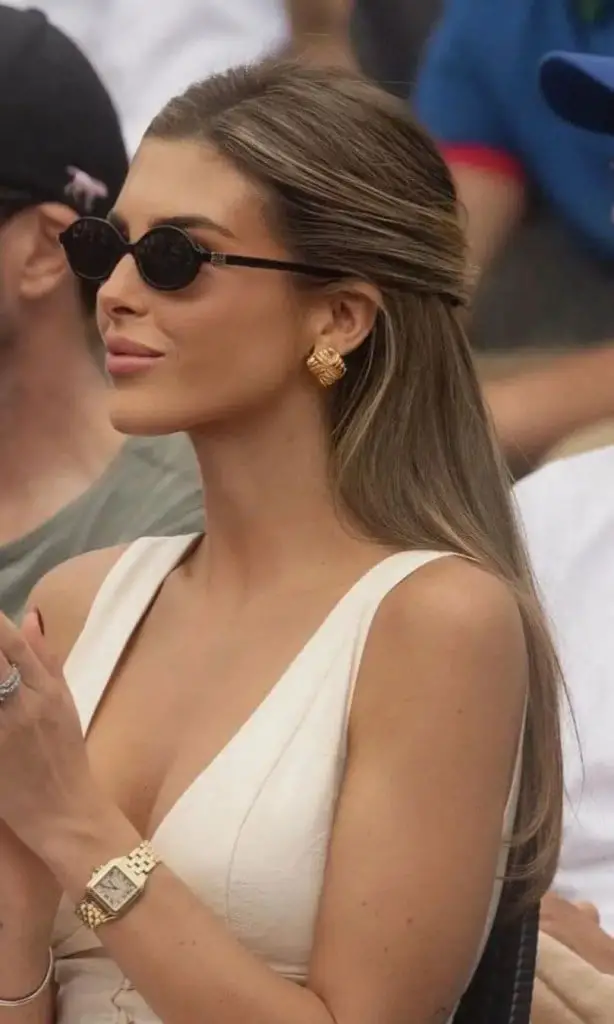
Half-up, half-down with ash blonde highlights
Source: simplyhomeandhealth.com
A half-up, half-down style puts the focus on the color by pulling the top section away from the face. The subtle ash blonde highlights sit throughout the thick, wavy texture, so the contrast shows whether the hair is up or down. A middle parting keeps the look balanced. The pulled-back section opens the face while the length stays loose, making it a good option for many face shapes. Pins or a hair tie hold it in place; the style takes about five minutes to build.
Final Thoughts
Pick your look by the one thing you will not compromise on.
- Fine hair: ask for a root-smudged base that hides grow-out.
- Ten minutes in the morning: choose a smooth balayage and air-dry.
- Cool base that pulls brassy: commit to a purple shampoo twice a week.
- You want curtain bangs: check that your colorist leaves enough weight at the ends.
Find the brunette shade that lets you walk out and not think about it again for weeks.
