You have a consultation next week and the word “bronde” keeps circling your brain, but the exact shade still feels abstract. A soft lived-in color saves you from a sharp grow-out line and buys you an extra four weeks between appointments, which is the real luxury.
27 versions of that blend exist here, from low-maintenance placements to higher-contrast ribbons, all built for normal styling habits rather than a full blowout every morning. The catch is finding the one that matches your texture and your schedule, which is why Charming Bronde Balayage 2027 fill so many saved boards. This collection skips the guesswork.
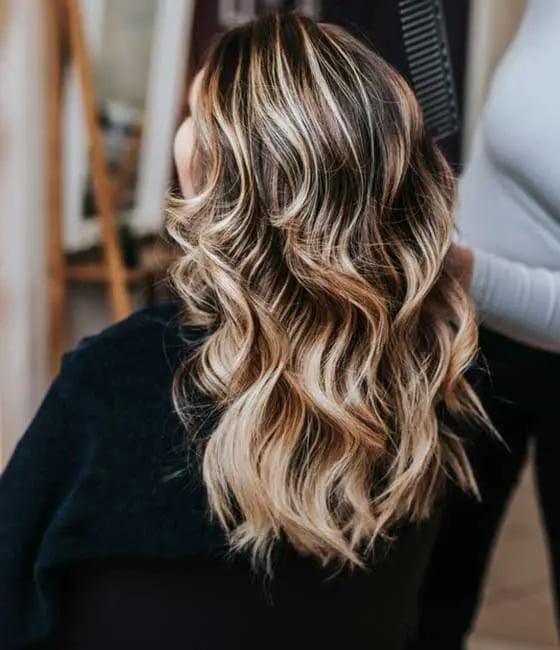
Lighter blonde highlights on a rich brown base
Courtesy of: stylecraze.com
Rich brown base meets lighter blonde in a back view that shows exactly how balayage should spread. The thick, wavy texture catches every shift between the two tones, so the blend looks deliberate. Request from your colorist: rich brown base, lighter blonde balayage highlights. Suits most face shapes, as long as your hair starts at the shoulders and holds a wave. This look thrives on contrast. The soft blowout keeps the waves defined without flattening the lift.
Ash blonde face-framing pieces on a bronde base
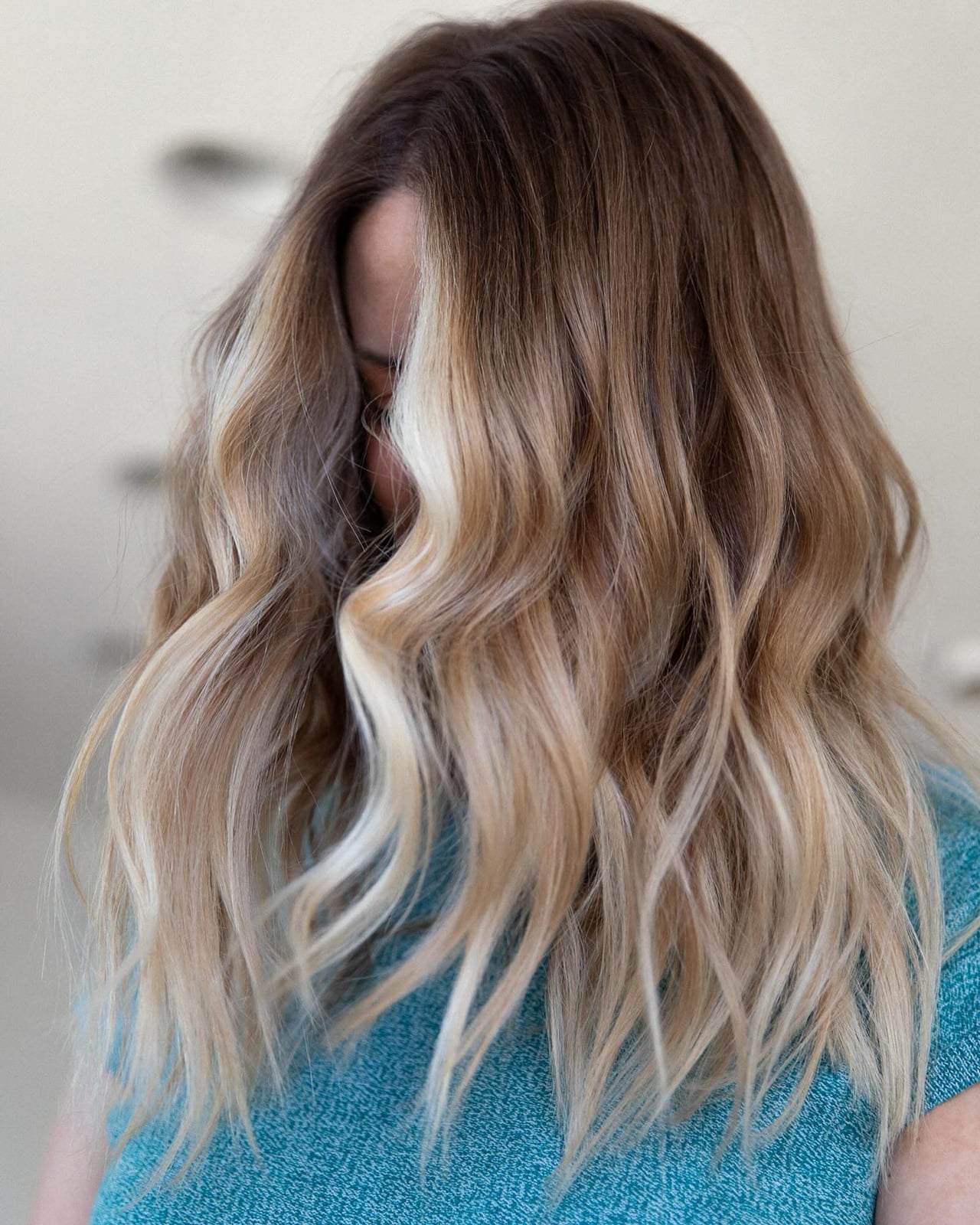
Photo credit: therighthairstyles.com
Wondering how to get those dramatic blonde pieces without the whole head going light? The rich brown base keeps the depth while ash blonde highlights wrap forward around the face. Fine, wavy texture works best here. The lighter strands sit visibly on top rather than sinking in. Ideal for softening a square or round face. Not for anyone who dislikes a prominent fringe or has very coarse hair that resists lift. The middle part lets the color fall evenly on both sides.
Natural lighter effect for thick wavy hair
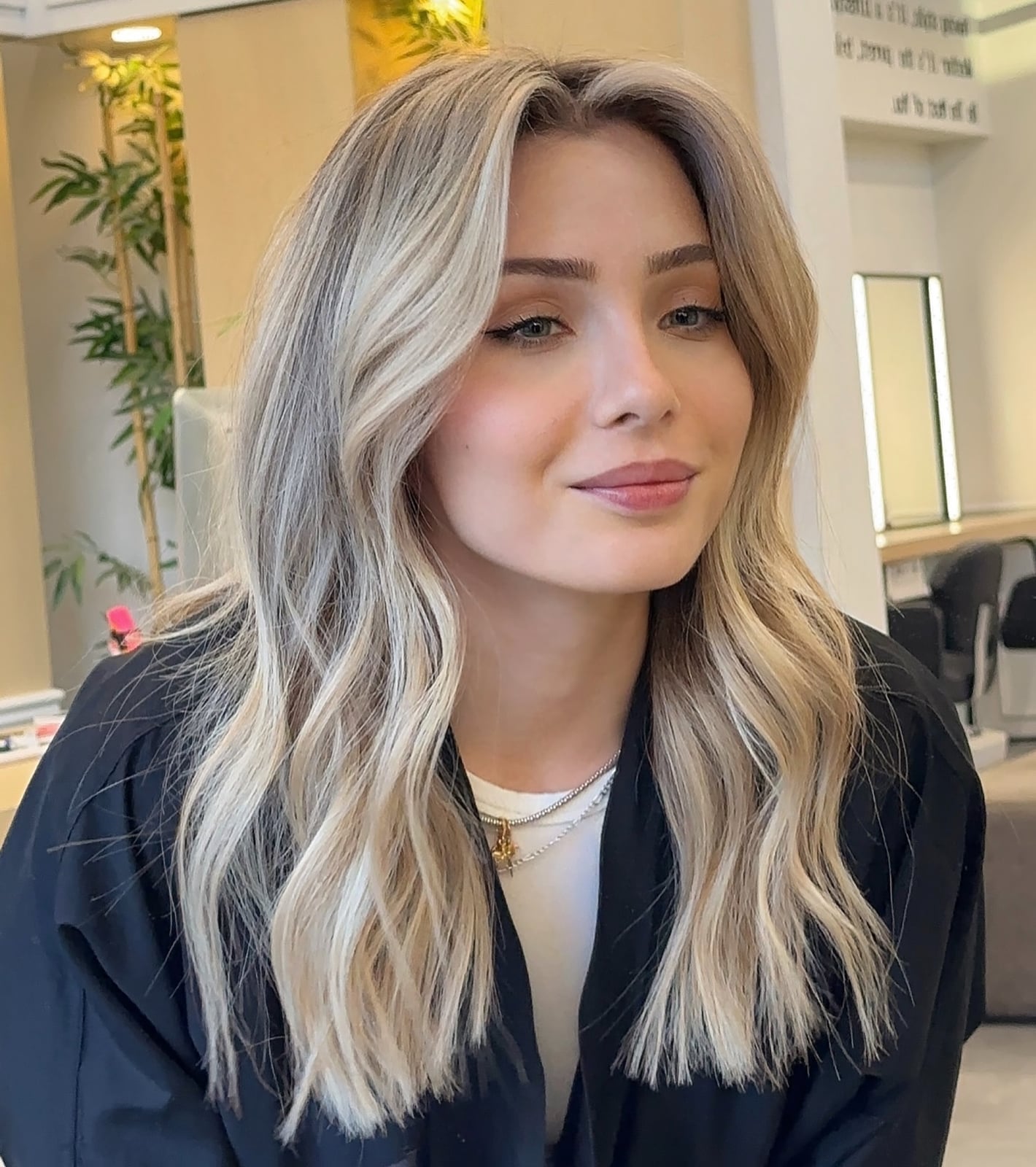
Image credit: fabbon.com
Thick, wavy hair holds the loose waves without product, and the middle parting keeps the color distribution even. Request from your colorist: warm brown base, ash blonde balayage, soft layers. Suits most face shapes, especially if your hair starts at the collarbone. The catch: very straight hair won’t hold the wave that makes the blend visible. A diffuser on low heat sets the shape without disrupting the tone.
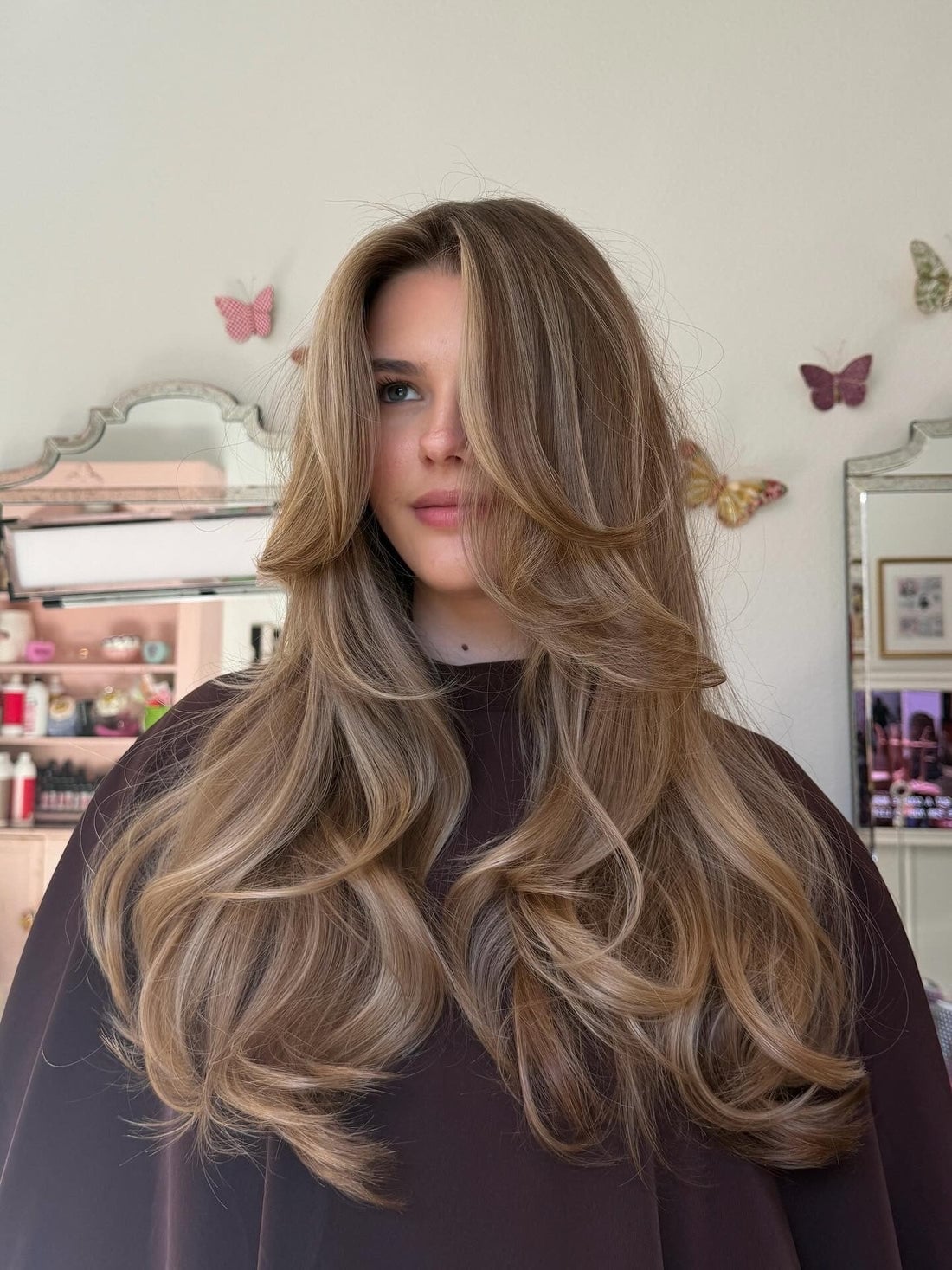
Curtain bangs and face-framing layers with ash blonde
Source: creativebooster.net
Curtain bangs on thick, wavy hair change the game compared to a standard face-framing section. The rich brown base with ash blonde highlights lands heaviest below the ears, so the bangs stay darker and the lighter pieces peek through the layers. Curtain bangs soften a square jaw or round cheeks. Pass when your hair is very fine, the bangs tend to separate rather than sweep. A round brush during blow-dry sets the curtain shape for the day.
Layers and bangs frame dark brown hair
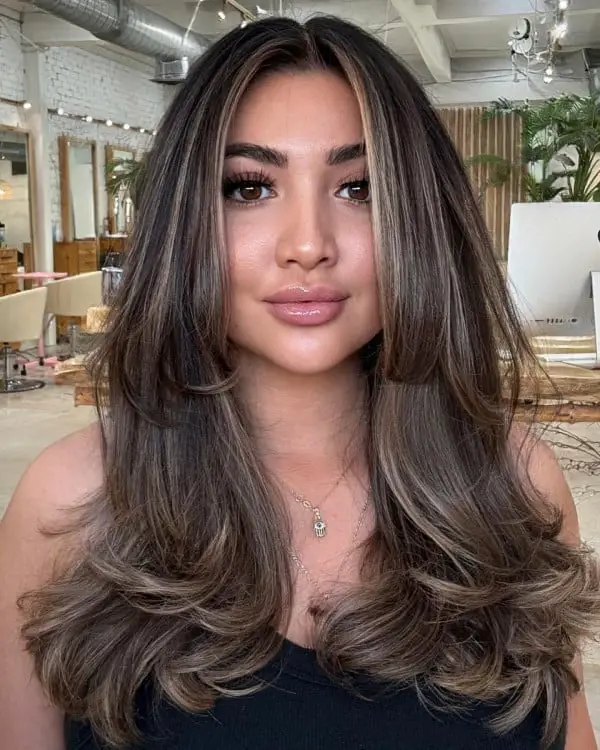
Via fabmood.com
Dark brown base with soft blonde highlights reads more subtle than the ash versions, and the curtain bangs frame the face without stealing attention. Thick, wavy texture gives the layers enough weight to sit naturally without fanning out. Tell your colorist: dark brown base, soft blonde balayage, curtain bangs. Curtain bangs work well for round or square faces. The blonde here stays soft and blended. A trim every six to eight weeks keeps the bangs from grazing your nose.
Contrasting highlights on a thick wavy base
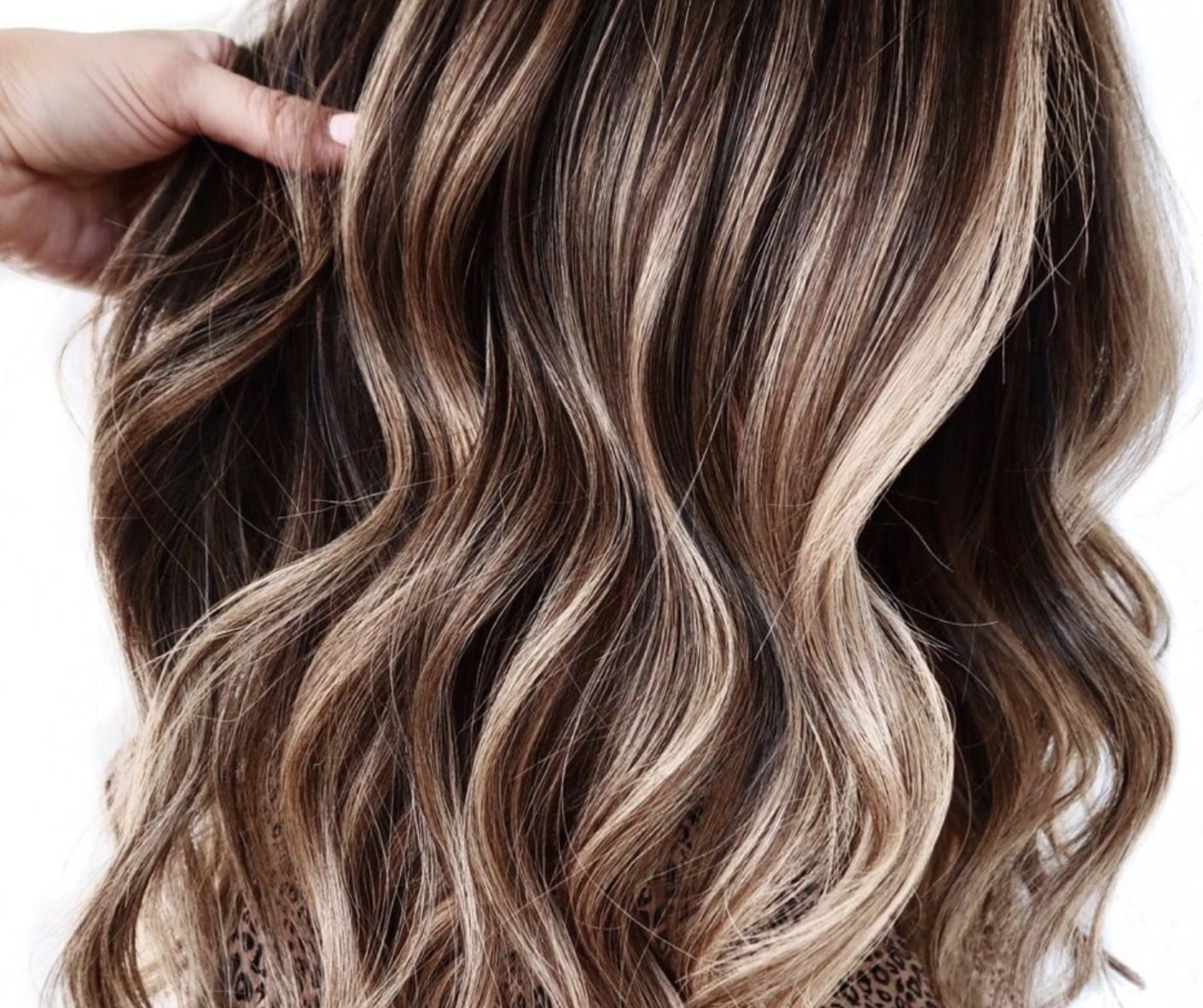
Courtesy of: lwsalons.com
Rich brown base, ash blonde highlights. The contrast here is deliberate. Thick, wavy texture takes the balayage well because the natural bends break up the color. A wavy blowout pushes the lighter pieces forward without them looking painted on. It works best with a subtle blend or very fine hair. Toning for ash blonde is needed every 4-6 weeks.
Brown and blonde blend creates a natural look
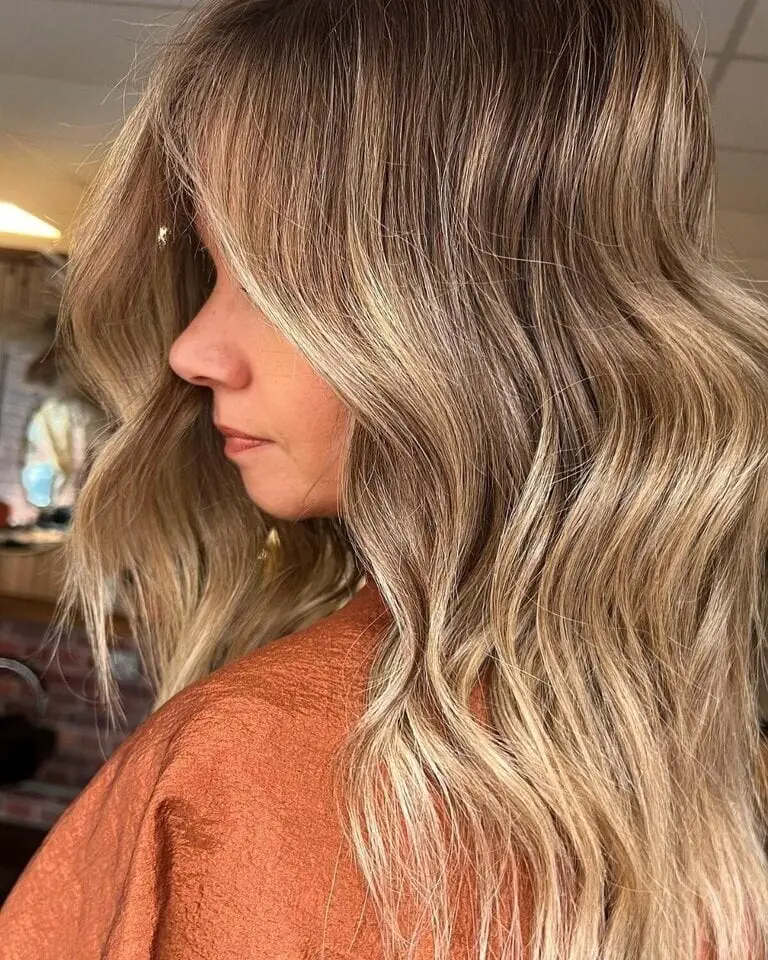
Photo credit: redkenpro.com
Side view shows exactly how the soft layers carry the sun kissed blonde highlights through the rich brown base. The waves settle at different depths, so the lighter pieces stand out without a hard line anywhere. No bangs here. The layers do the framing on their own. Suits thick, wavy hair that starts at least at the collarbone. Trim the layers every 6 8 weeks.
When you want a salon look without harsh lines
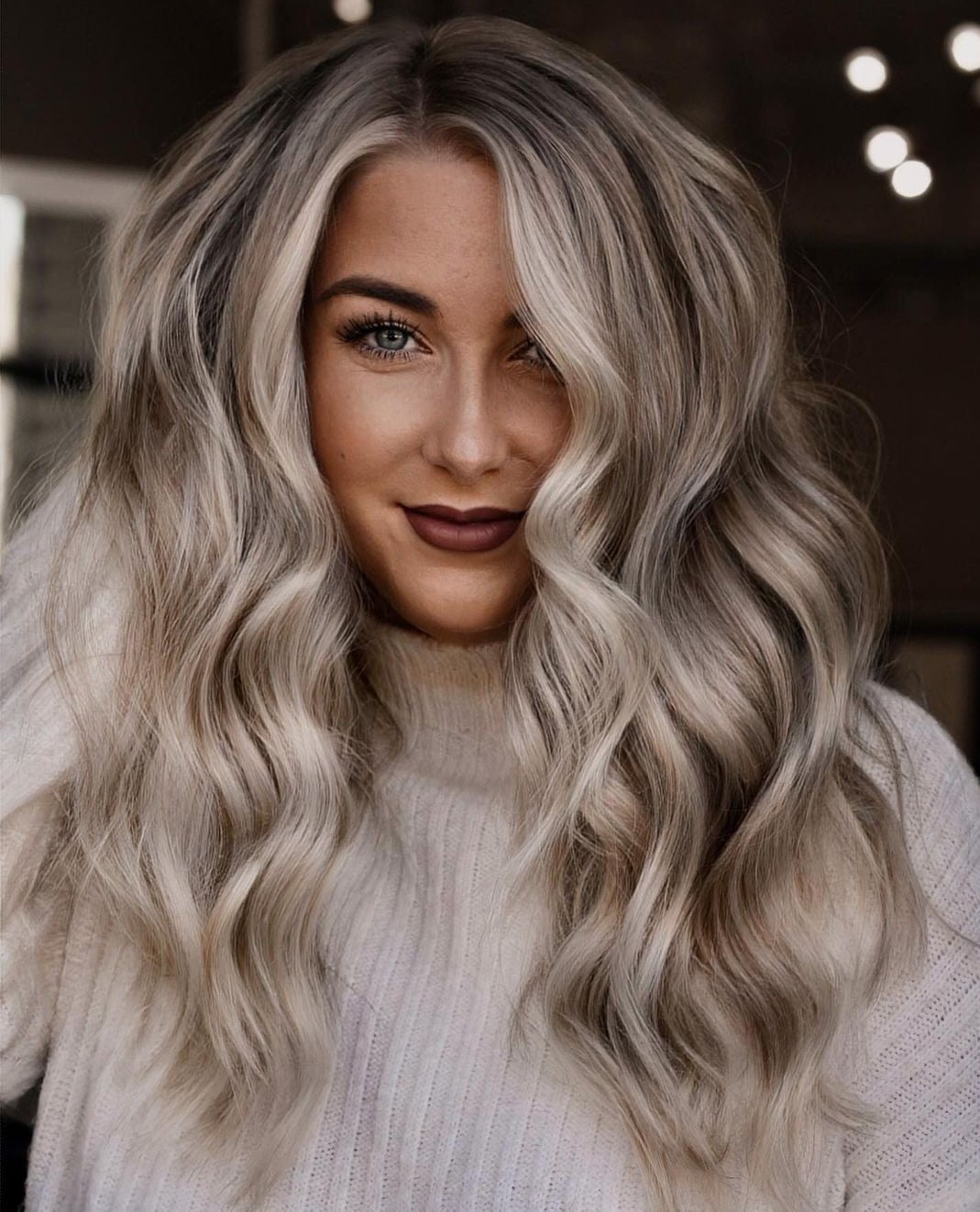
Image credit: hadviser.com
How does the ash blonde stay soft without turning muddy? The painted balayage starts low enough that the natural base stays dominant at the root. A middle parting and loose wavy layers keep the transition invisible. Thick, wavy hair handles this well. Skip it if you prefer a darker overall tone. Request from your colorist: natural base, ash blonde painted balayage. A texturizing spray helps define the waves. Toning for ash blonde is needed every 4-6 weeks.
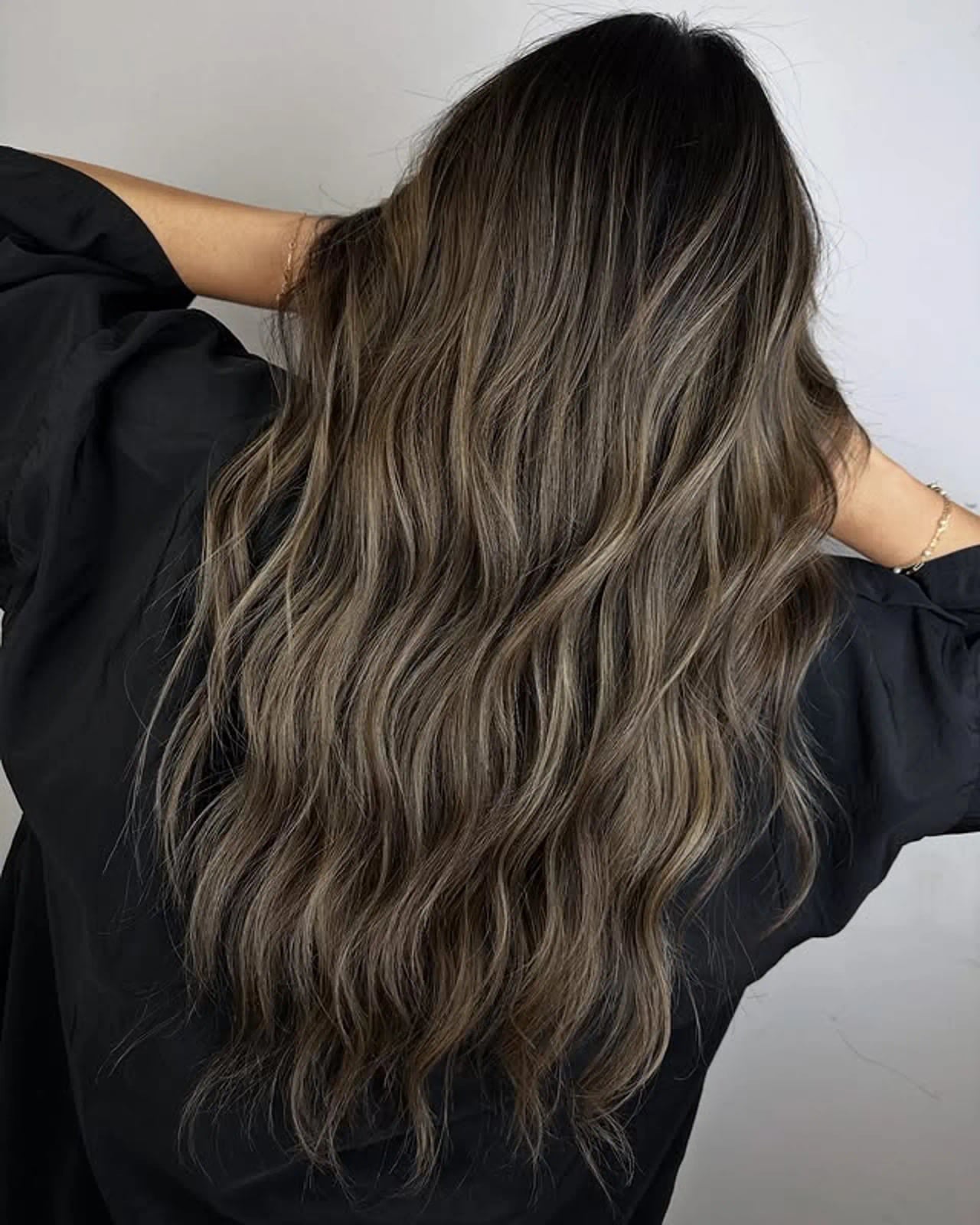
Highlights cascade through dark brown waves
Source: kiri-me.com
Back view shows the real test of a balayage: no stripe where the dark brown base meets the ash blonde. The lighter pieces fan out through the waves instead of stacking at one level. Thick, wavy texture gives the color somewhere to live. Skip it if you prefer warmer blonde tones. Use a volumizing spray at the roots for lift.
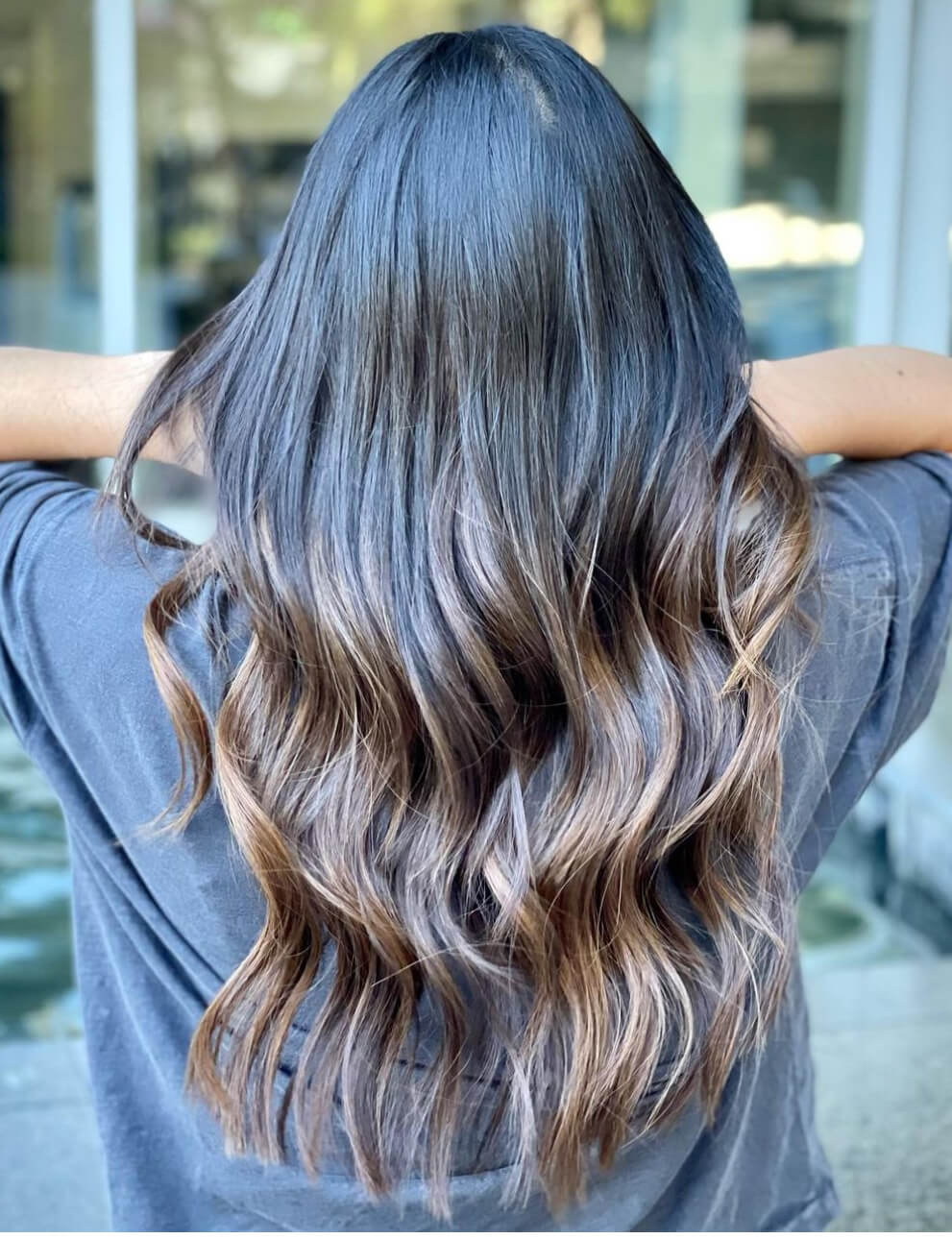
Bronde balayage transition on dark brown base
Source: noellesalon.com
Rule for a transition like this: the dark brown base stays dominant at the root, and the lighter bronde tones appear only where the waves bend. From the back, you see a gradient that looks like grown-out sun exposure. Thick, wavy hair makes the shift believable. Skip it if you prefer cool tones. Request from your colorist: dark brown base, bronde balayage highlights. A smoothing serum keeps the ends looking neat.
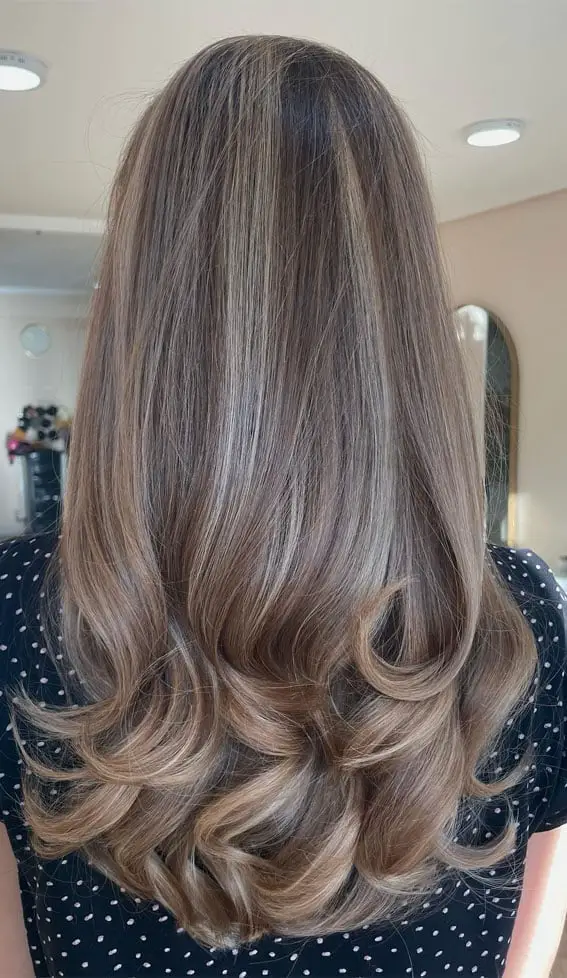
Soft ash-toned highlights on thick wavy hair
Via itakeyou.co.uk
Ash tones weave through thick, wavy strands without a hard line, which is the whole trick. The balayage technique places lighter pieces deeper in the density, so the blowout looks natural depth rather than a stripe. A middle part lets the color fall evenly on both sides. Skip it if you prefer warm tones; ash can pull muddy on a base that leans golden. The catch for thick hair: the stylist needs to saturate each section fully, or the darker underlayers stay untouched. Toner lifts the ash effect, and that toner fades around week five.
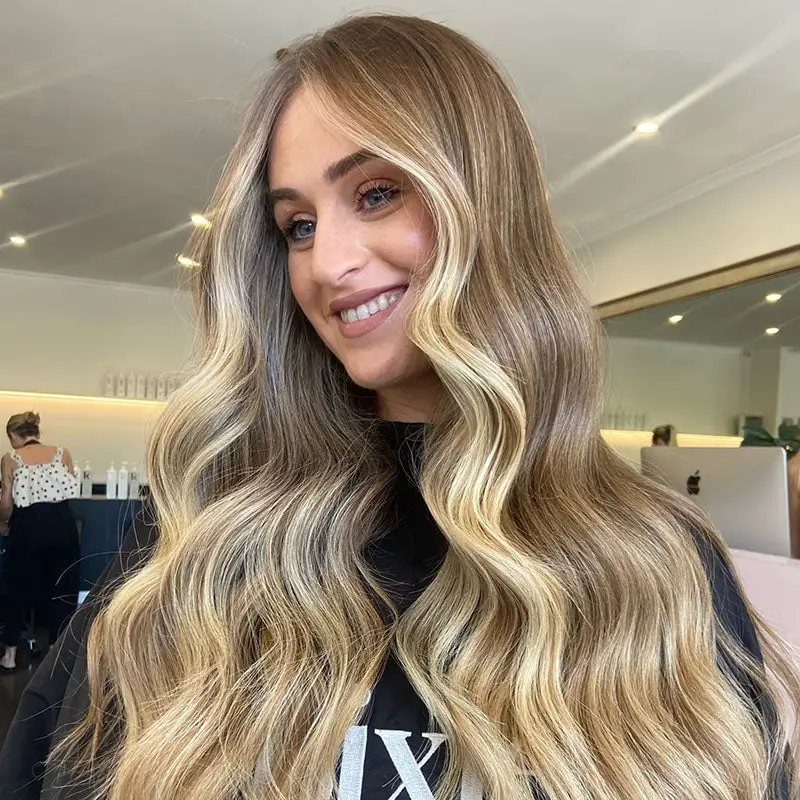
Face-framing highlights on a rich brown base
Courtesy of: bixie.com.au
Face-framing highlights on a rich brown base do exactly what the name suggests. Request from your colorist: rich brown base, ash blonde face-framing balayage. The lighter strands start a few inches from the root, so the grow-out stays soft. Round and square faces benefit from the lighter pieces pulling attention outward. The texture needs to hold a wave for the color to look intentional; poker-straight hair flattens the effect. A middle part keeps the framing balanced on both sides.
Smooth balayage transition with ash blonde tones
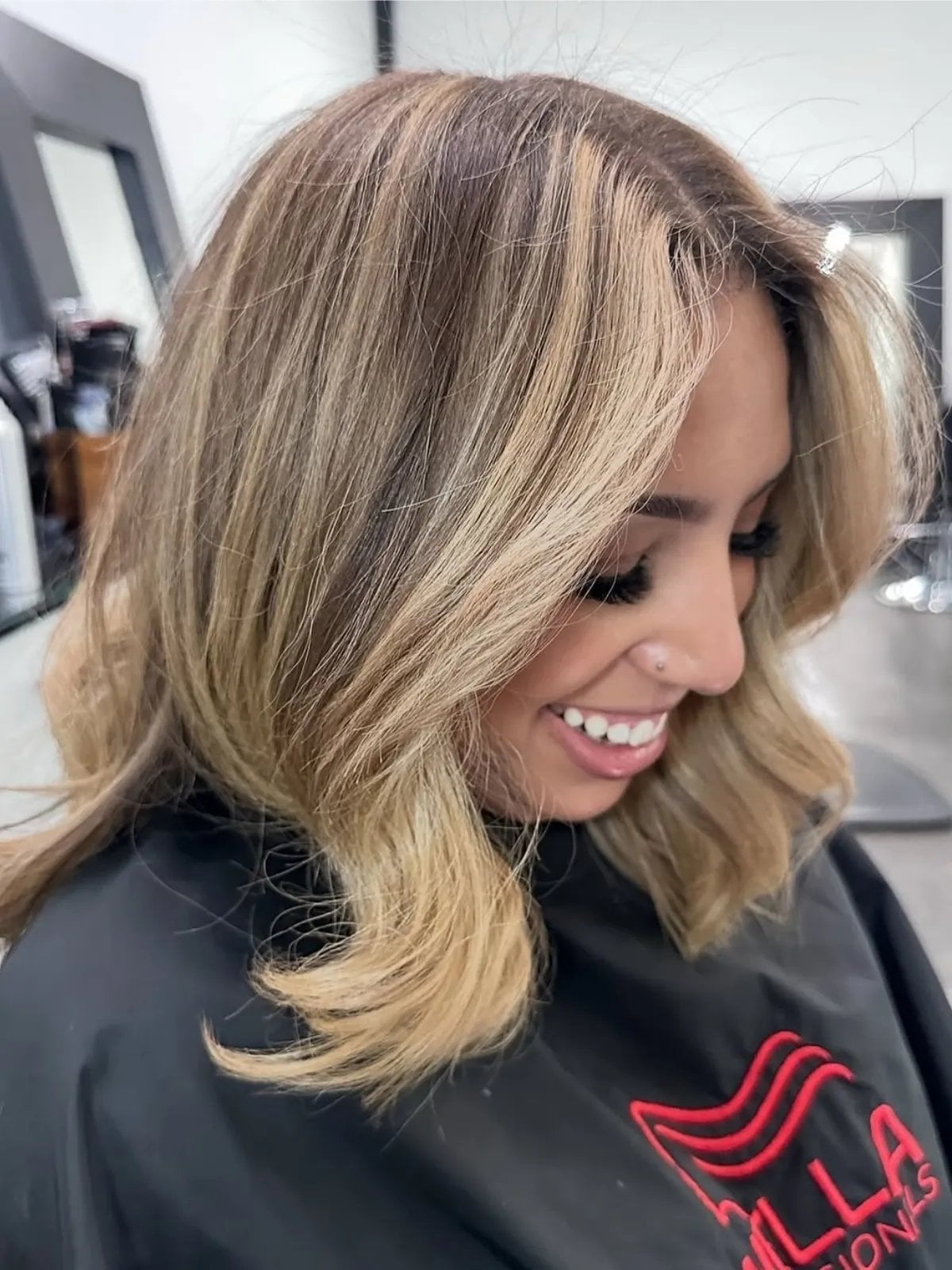
Photo credit: wella.com
A side part changes the whole weight of the color. The darker base sits heavier on one side, and the ash blonde tones sweep across the crown before tapering into the lengths. Subtle layers keep the transition from looking blocky. Thick, wavy hair handles this gradient well because the texture diffuses any seam. Pass when your hair is fine; the contrast can look two separate colors rather than a blend. The stylist paints each subsection by hand, so the result depends on their patience.
Lighter balayage effect with ash blonde tones
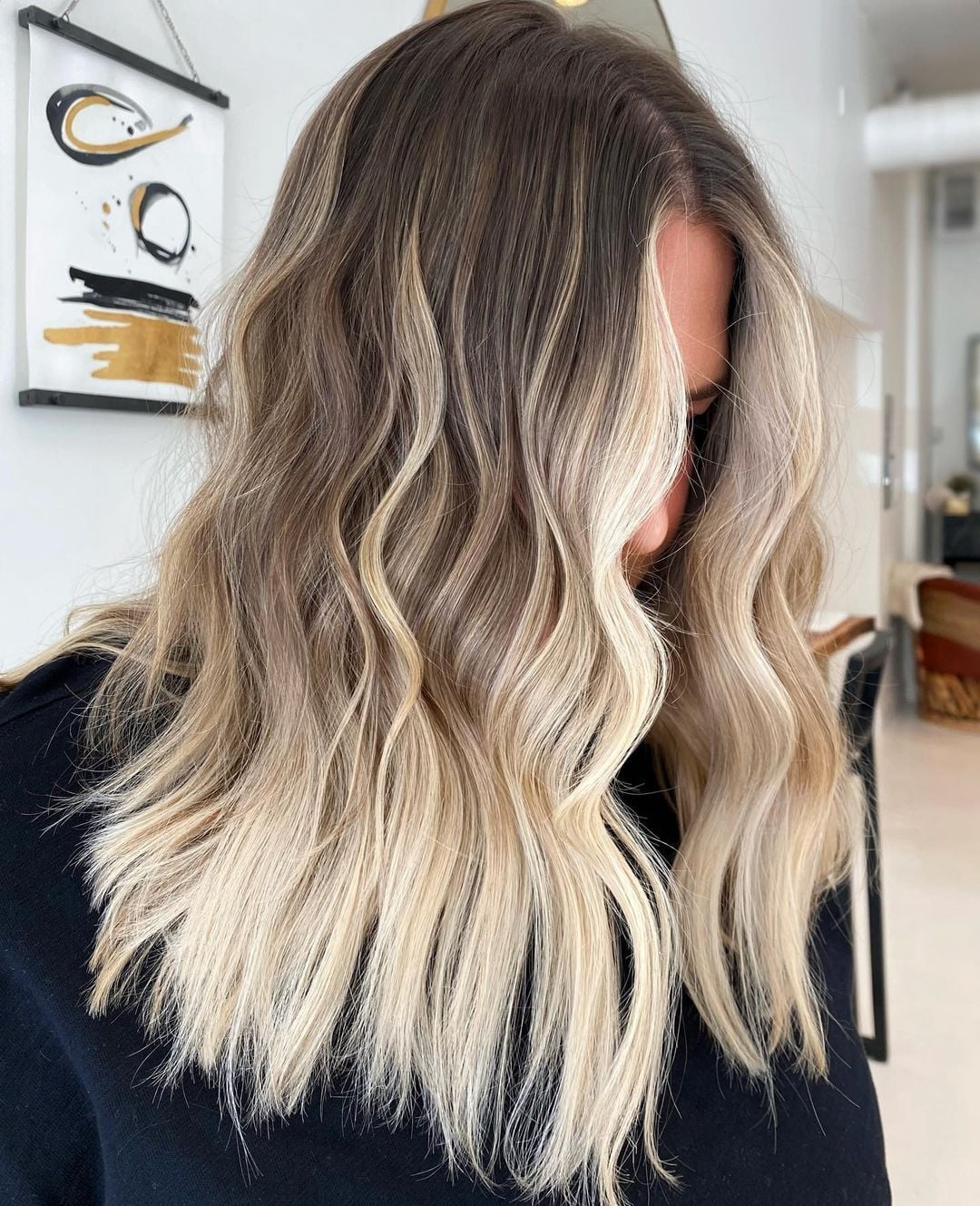
Image credit: hadviser.com
A natural brown base lifting into ash blonde tones looks lighter only when the lighter pieces stay concentrated toward the ends. A middle part and waves break up the color, so no single strand dominates. Thick, wavy hair needs the stylist to weave the balayage through the density, not just paint the top layer. The ash finish reads cooler than caramel or honey. The subtle layers help the waves catch the lighter sections at different heights.
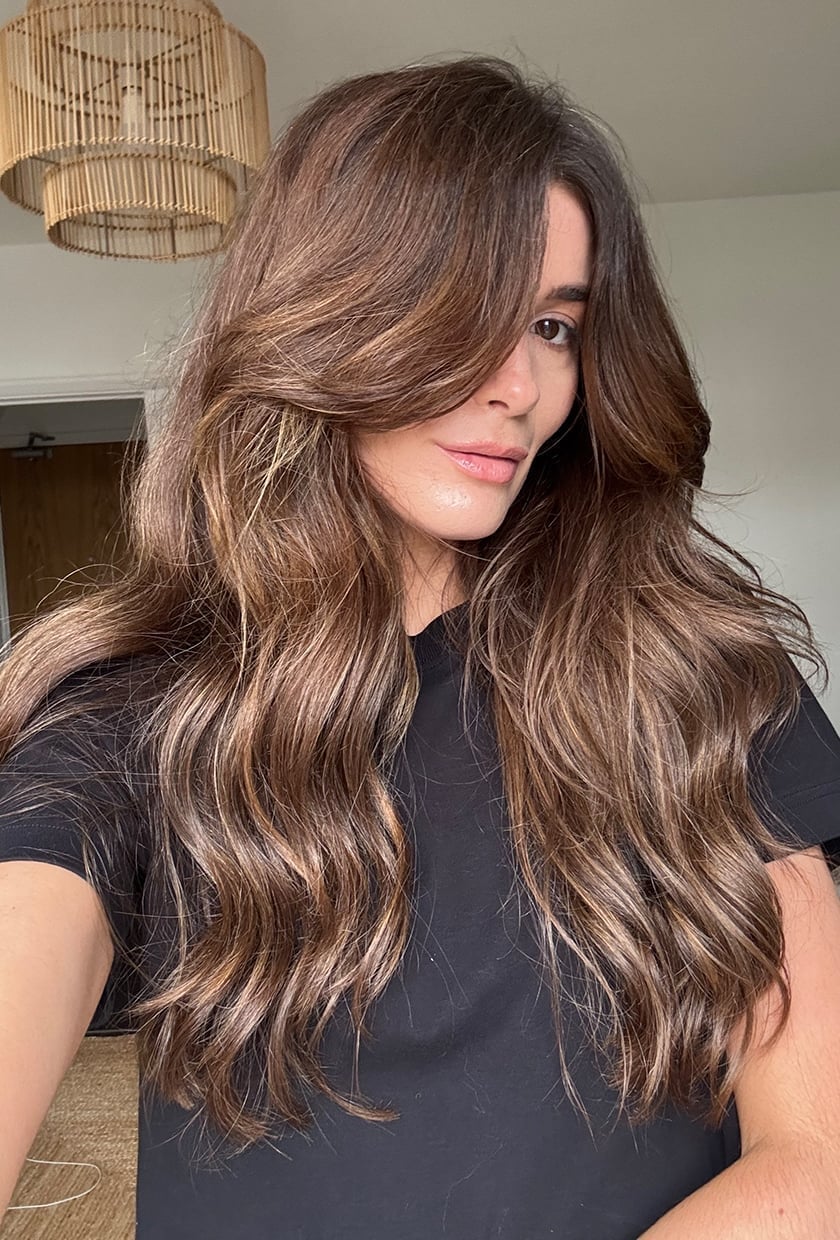
Caramel tones with face-framing layers and bangs
Source: whowhatwear.com
Caramel tones on a rich brown base warm the face without going full copper. Request from your colorist: rich brown base, caramel balayage tones, curtain bangs. The curtain bangs frame the forehead and blend into the face-framing layers, so the color graduation starts higher. Square and round faces soften with the lighter pieces hitting cheekbone level. The side part directs the heavier side of the bangs across the brow. A blowout with waves is the default styling; air-drying flattens the curtain shape.
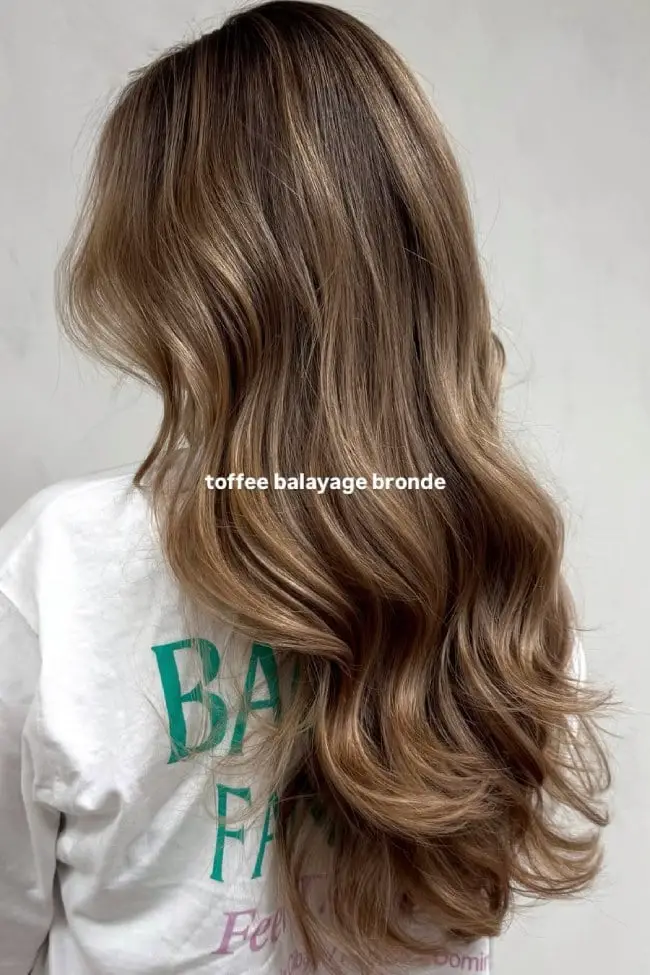
Toffee balayage highlights on wavy thick hair
Via fabmood.com
Compared to a honey-gold balayage, toffee reads warmer and richer on the ends. The base stays a neutral brown, so the lift feels planned. Thick, wavy texture holds the contrast without the color pooling into one flat sheet. Suits anyone with hair that starts past the collarbone. The length gives the painter room to graduate the tone. Skip it if cool ash tones are your usual lane; toffee pulls warm and the shift will feel abrupt. A texturizing spray on the mid-lengths keeps the wave pattern visible; a trim every eight weeks stops the ends from overtaking the lighter pieces.
Lighter balayage highlights with ash blonde tones, creating a soft
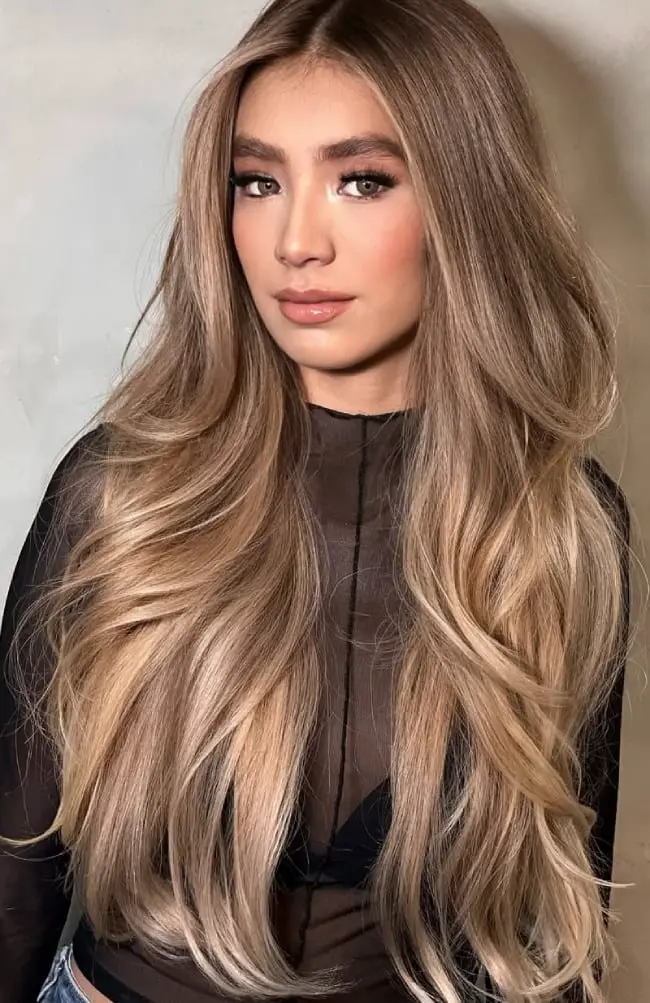
Courtesy of: itakeyou.co.uk
This one takes about three hours in the chair because the warm brown base needs a separate pre-lightener pass before the ash tone goes on. The payoff is a finish that looks lit from above, not painted in stripes. Middle part keeps the face-framing pieces symmetrical, which helps when you want the lighter sections to land at the cheekbone rather than the ear. Thick, wavy hair carries the lift without the ash looking flat or muddy. Not for anyone who prefers a golden or caramel finish. The ash will turn that base green over time. Toning every four to six weeks is the reality; a color-depositing shampoo in between buys you an extra week.
Natural lighter balayage with ash blonde tones, close-up take
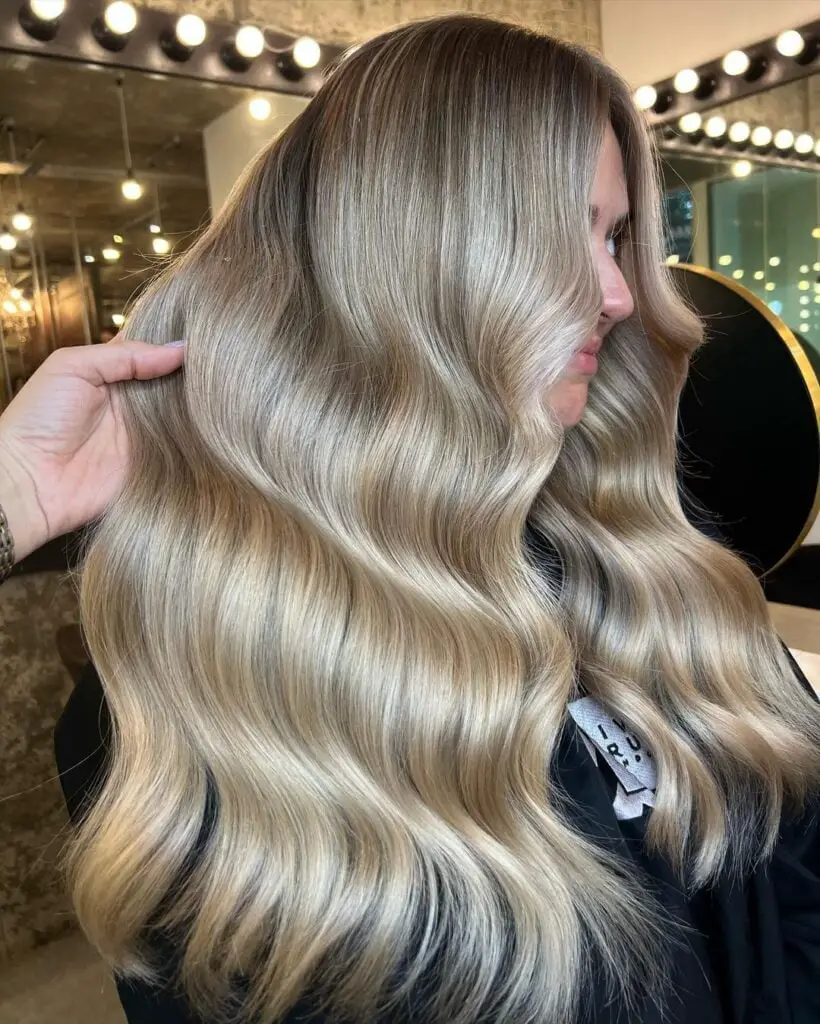
Photo credit: livetruelondon.com
The transition line sits just below the occipital bone, so the darker base stays visible at the crown while the ash blonde takes over at the ends. Thick, wavy texture blurs the seam naturally. No need for a heavy root shadow to fake the grow-out. Suits a side part or a middle part equally well; the placement is soft enough to work with either. Pass when your hair is finer than medium density; the contrast between dark root and light end can look harsh without enough bulk to bridge it. A smoothing serum on the ends keeps the ash from catching on dry air; a gloss every eight weeks refreshes the tone without a full redo.
Rose gold balayage tones on layered wavy hair
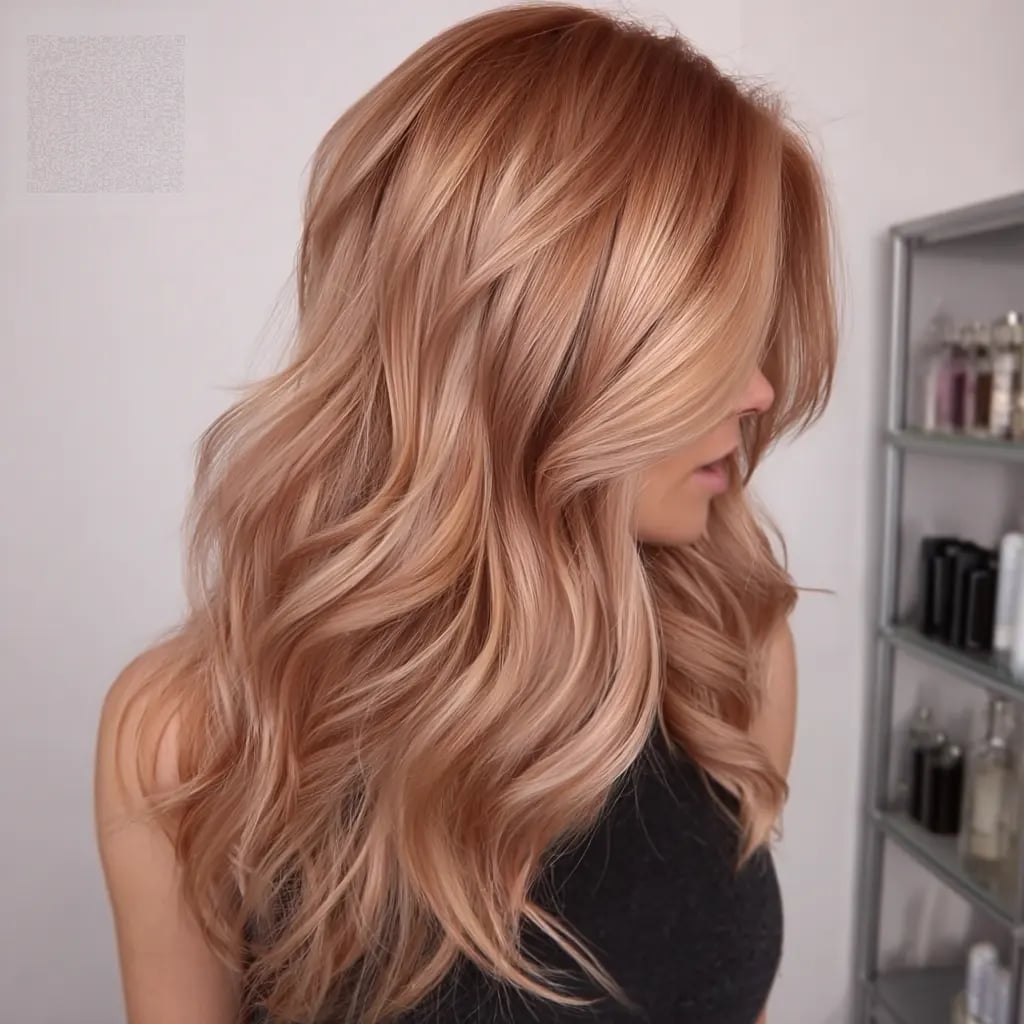
Image credit: hairinspohub.com
Rose gold balayage needs a warm brown base to look metallic rather than pastel. Layers cut into the mid-lengths give the color somewhere to land; a blunt cut would let the rose gold sit in one block. A side part opens up the lighter sections on the heavier side, which adds depth without extra foils. Thick, wavy hair holds the curl pattern that shows off the pink shift. This finish typically lasts up to eight weeks; after that, the rose gold fades to a brassy peach and the base brown starts to dominate. A color-depositing conditioner in a strawberry milk shade keeps the tone alive between sessions.
Smooth caramel balayage transition on dark brown
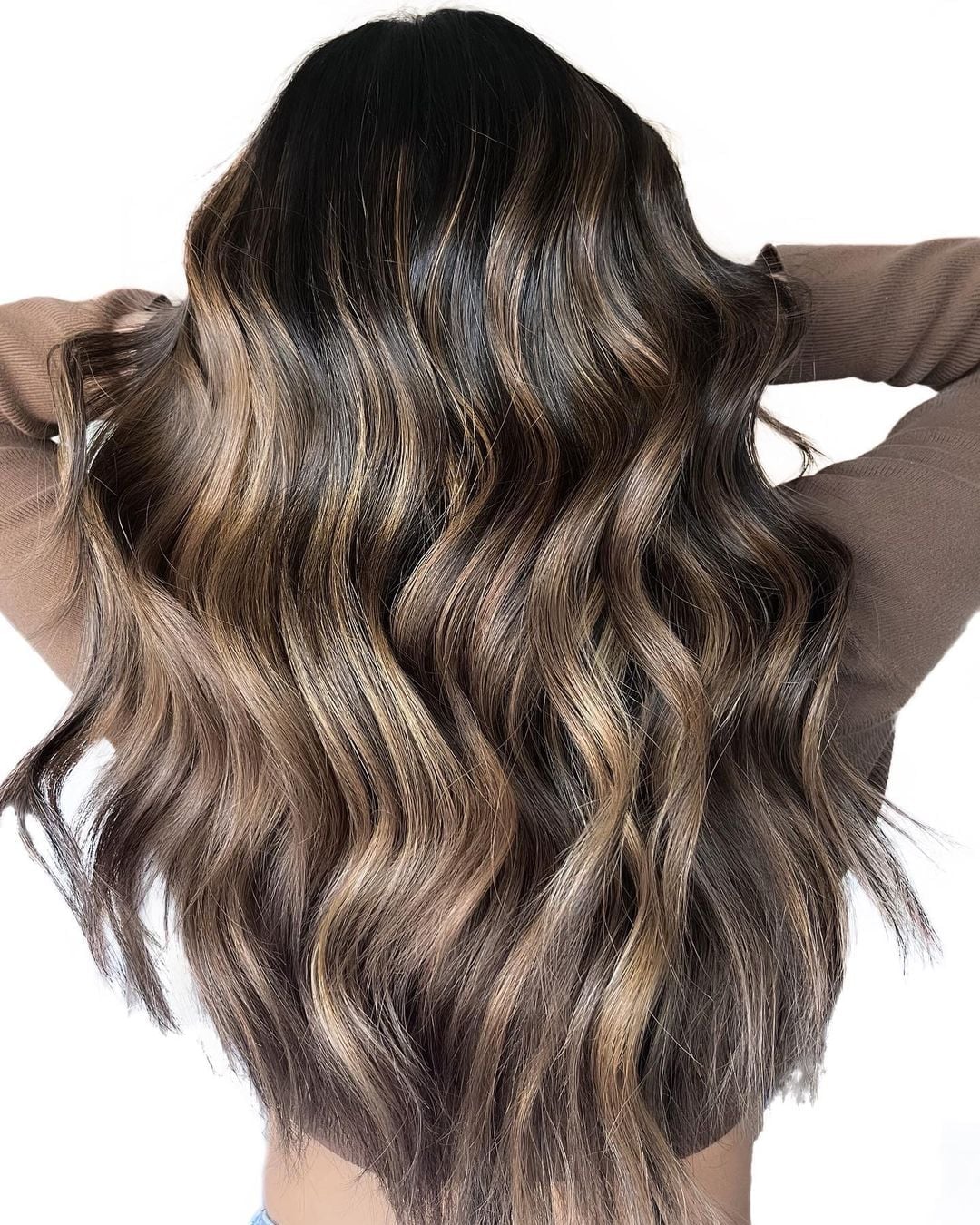
Via hadviser.com
From the back, the caramel sections are painted in a V pattern that mirrors the natural fall of the hair, so the grow-out line stays hidden under the next layer. Dark brown base means the contrast is visible even indoors. No need for direct sunlight to show the lift. Thick, wavy texture helps the caramel blend into the brown without a hard edge; fine hair would let the seam show through. Suits a blowout or air-dried waves equally; a neat blowout gives the caramel a glossy finish, while air-drying keeps it casual. The dark base stays dominant and the caramel is an accent.
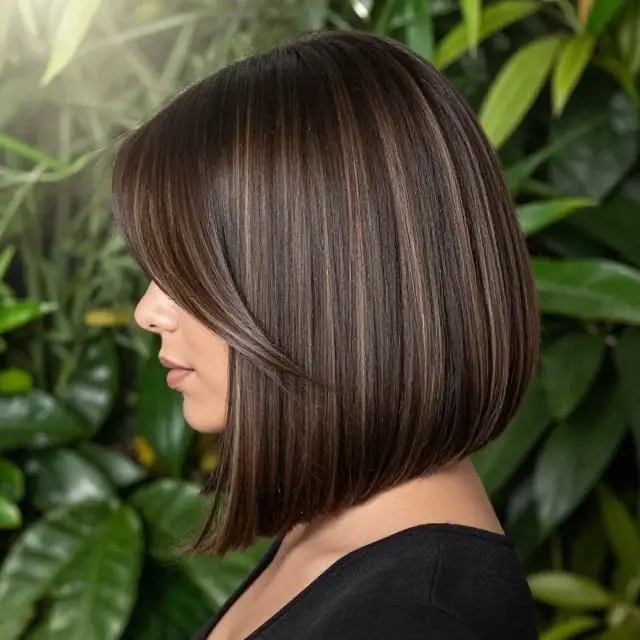
Sleek bob with side-swept bangs and blonde balayage
Courtesy of: pinklimevc.com
Straight, fine hair at the jawline benefits from this cut. The dark brown base with subtle blonde balayage gives a neat look. Side-swept bangs soften round and heart faces well. It suits those who prefer longer hair or have coarse texture that resists a smooth finish. Request from your colorist: dark brown base, subtle blonde balayage, sleek bob, side-swept bangs.
Face-framing balayage with curtain bangs on wavy hair
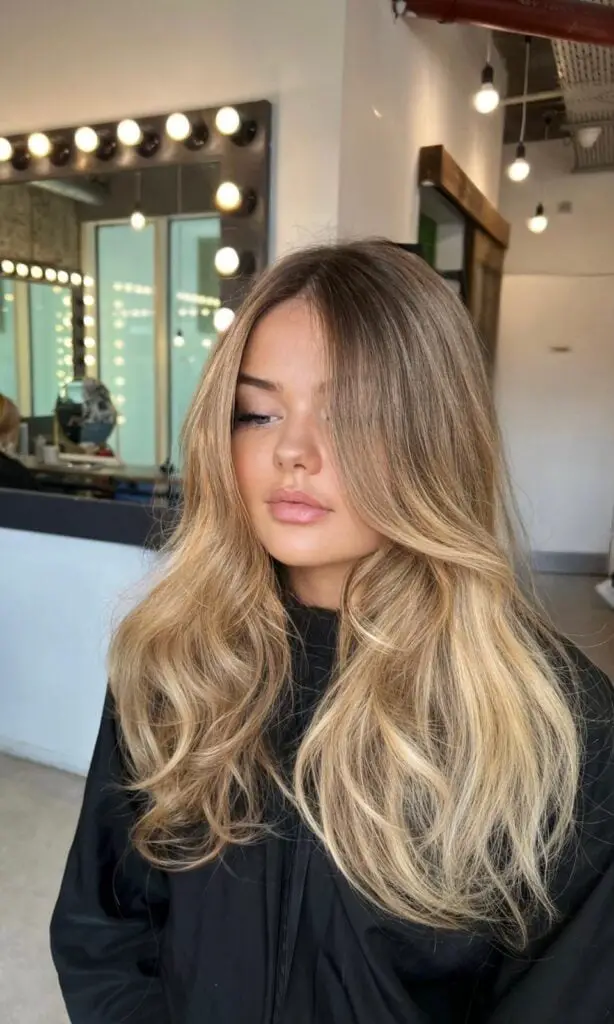
Photo credit: livetruelondon.com
This is not a full head of highlights. The rich brown base with ash blonde tones stays concentrated around the face, leaving the back deeper. Curtain bangs on thick, wavy hair create softness at the cheekbone. Skip it if you dislike fringe maintenance or have very fine hair that curtain bangs can thin out.
Air-dried waves showcase bronde highlights
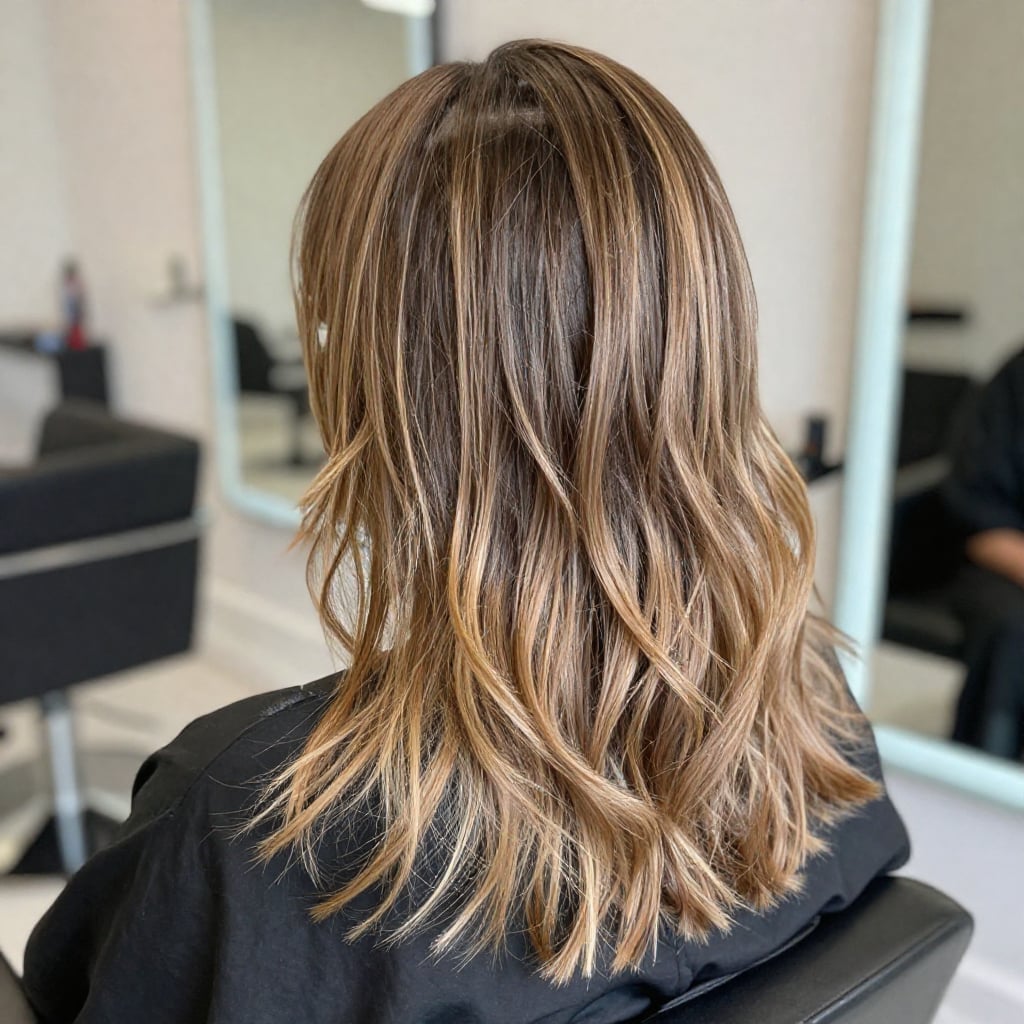
Image credit: hastehair.com
The mistake is treating this like a blowout look. The bronde base with lighter blonde balayage highlights works best when you let fine, wavy hair dry naturally with a middle part. A leave-in conditioner prevents the lighter pieces from feeling dry. The subtle layers keep the shape without requiring heat. It suits those who prefer a neat finish or have very coarse hair that air dries unevenly.
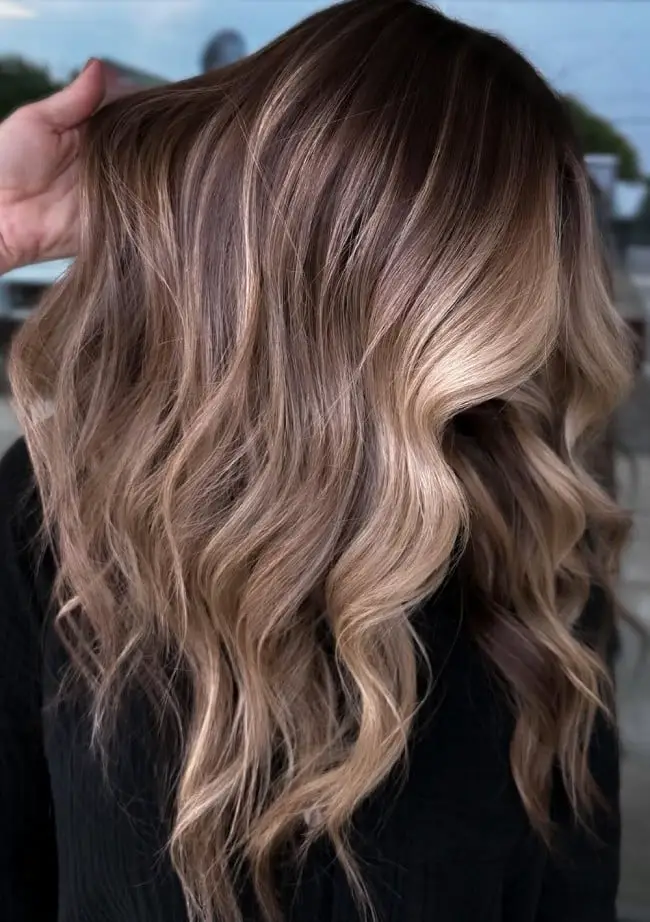
Natural lived-in look with blonde balayage
Source: fabmood.com
The smooth transition from dark brown base to lighter blonde tones means the root line stays soft for months. Thick, wavy hair carries the hand-painted balayage well, with waves breaking up the lighter pieces naturally. A side part adds volume at the crown. It works best for a low-maintenance grow-out rather than high contrast. A texturizing spray holds the lived-in texture.
Blonde pieces frame wavy bob hairstyle
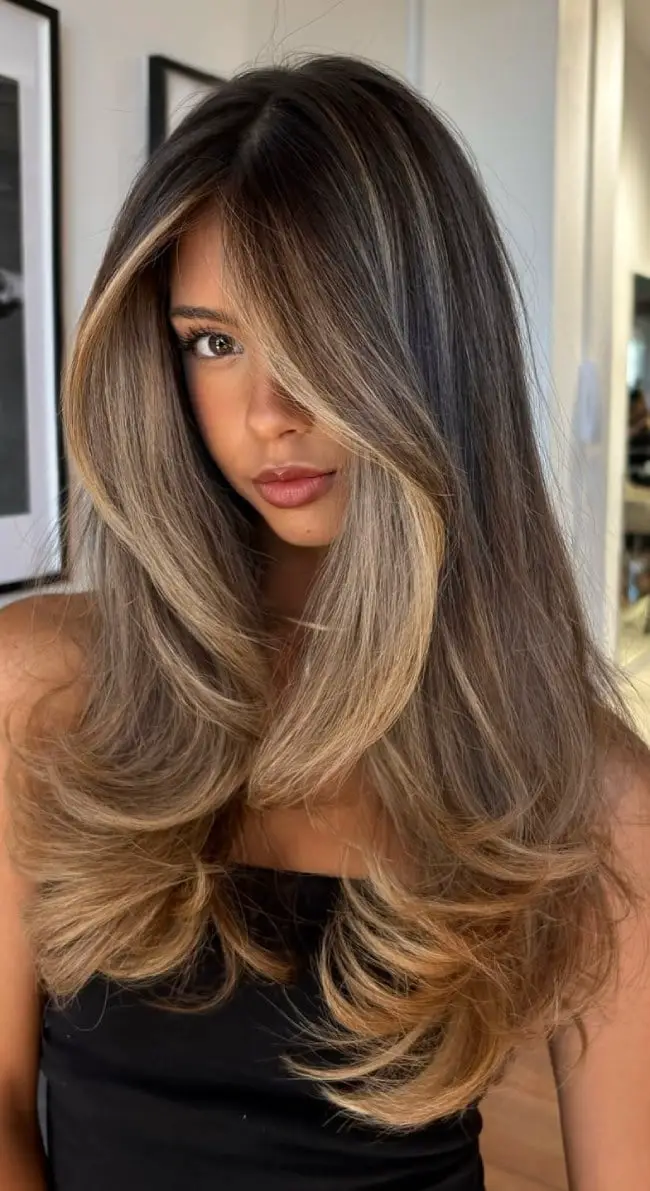
Via fabmood.com
A voluminous blowout gives this face-framing blonde balayage its lift. The dark brown base with lighter highlights concentrates the blonde around the jaw and cheekbones, not throughout. Thick, wavy hair at the jawline holds the shape well. A blunt cut or very fine hair that collapses without product may not achieve this look. A volumizing mousse before drying makes the difference.
Dimension and depth with ash blonde tones
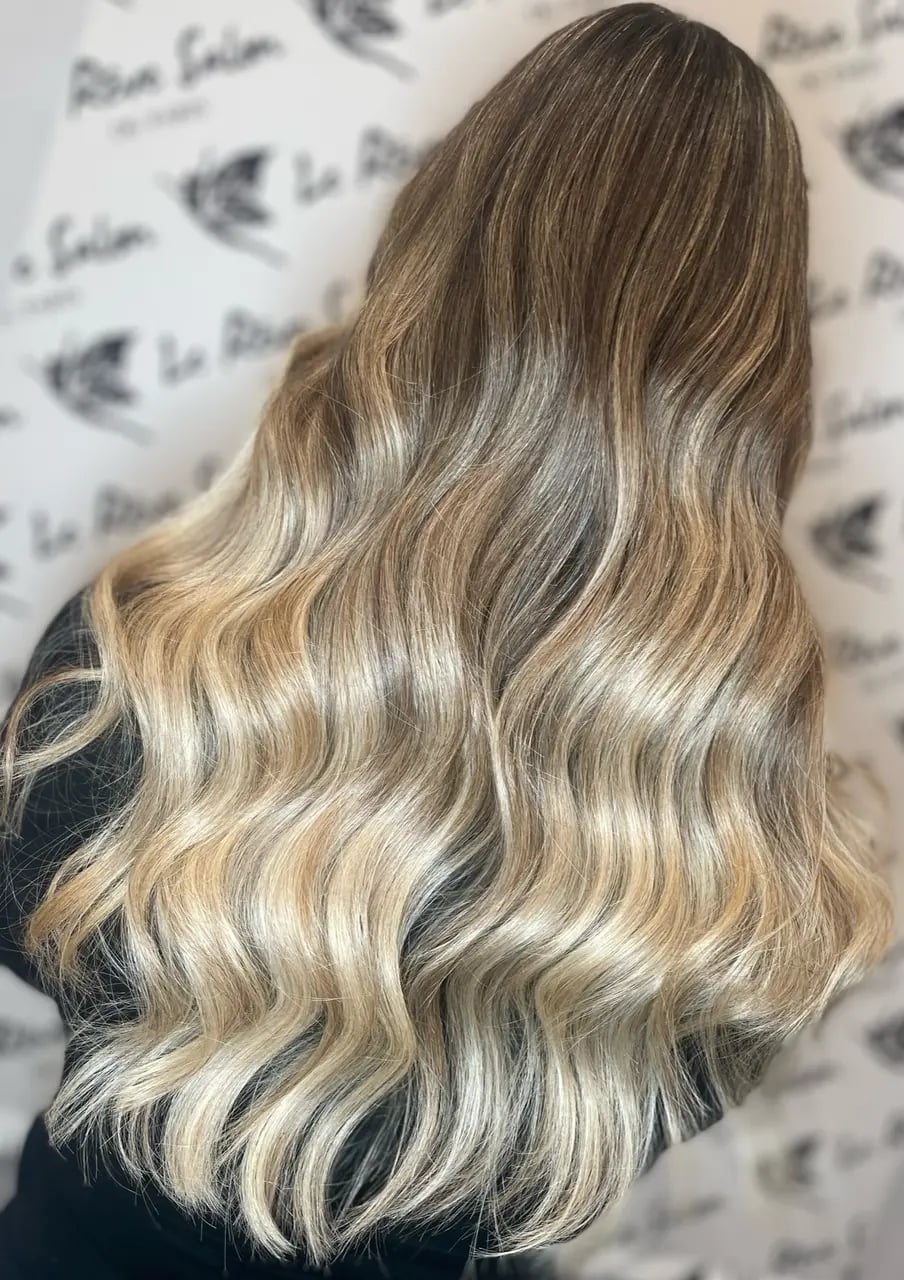
Courtesy of: lerevesalonandspa.com
Warm caramel balayage gets all the press, but ash blonde on a rich brown base is the quiet workhorse. The smooth transition from deep root to cool-toned ends lands somewhere between brown and blonde, true bronde territory. Thick wavy hair shows off the shift best, each wave catching a different slice of the gradient. Request from your colorist: rich brown base, ash blonde balayage tones. Skip it if you prefer warmer tones; ash pulls gray on the wrong base. Most face shapes work here, though the back view reveals the real payoff, a slow fade that never hits a harsh line. Toning every four to six weeks keeps the ash from drifting brassy. One short sentence: this is not a single-process shortcut.
Lighter blonde ends on a dark brown base, wavy
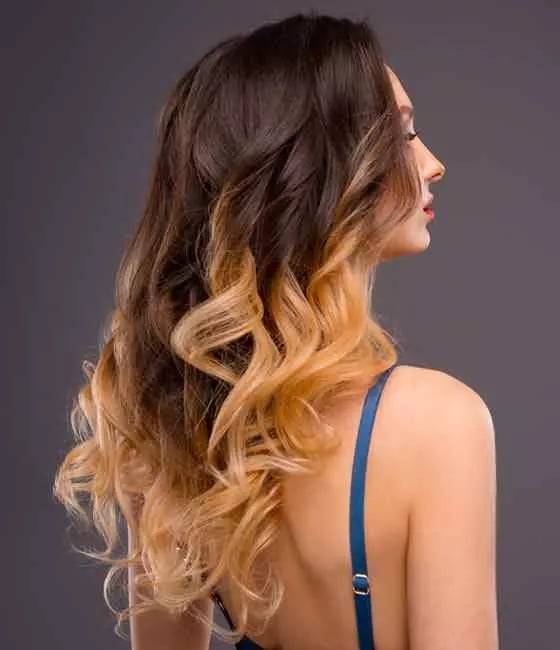
Photo credit: stylecraze.com
Dark brown at the root, lighter blonde at the ends. The rule of thumb is a graduation that looks like summer did the work. Loose flowing waves pull the color into view from every side angle, the dark base anchoring the lighter lengths below. The transition from dark to blonde looks a slow melt, not a stripe. This is a two-session investment: the base stays dark while the ends lift gradually.
A smoothing serum on damp hair keeps the waves from catching and frizzing. The side view tells the story best, blonde at the tips, brown at the crown, nothing in between that looks forced.
Final Thoughts
Pick the look that matches your natural texture and your actual styling time, not the one that looks best on someone else’s hair.
- Fine hair: ask for a root-smudged balayage to avoid a harsh regrowth line.
- Ten minutes in the morning: choose air-dried waves over a neat blowout.
- Cool base that pulls brassy: book a toner every six weeks.
- Thick, wavy hair: soft face-framing layers keep the shape from turning into a triangle.
Find your perfect bronde balayage blend.
