You are standing in front of the mirror, a few warm strands at the front catching the light differently, and you wonder if a single appointment could shift the whole thing. Red highlights have a way of making a cut look intentional without demanding a full commitment, which is why Gorgeous Red Highlights 2027 fill so many saved boards.
Thirty-three looks give you a spread from subtle copper wisps on dark brown to vivid cherry face-framing pieces, each with a real-world upkeep line and the honest words for the chair. This collection aims to solve one problem: finding the exact red that works with your base, your texture, and your tolerance for a toner schedule.
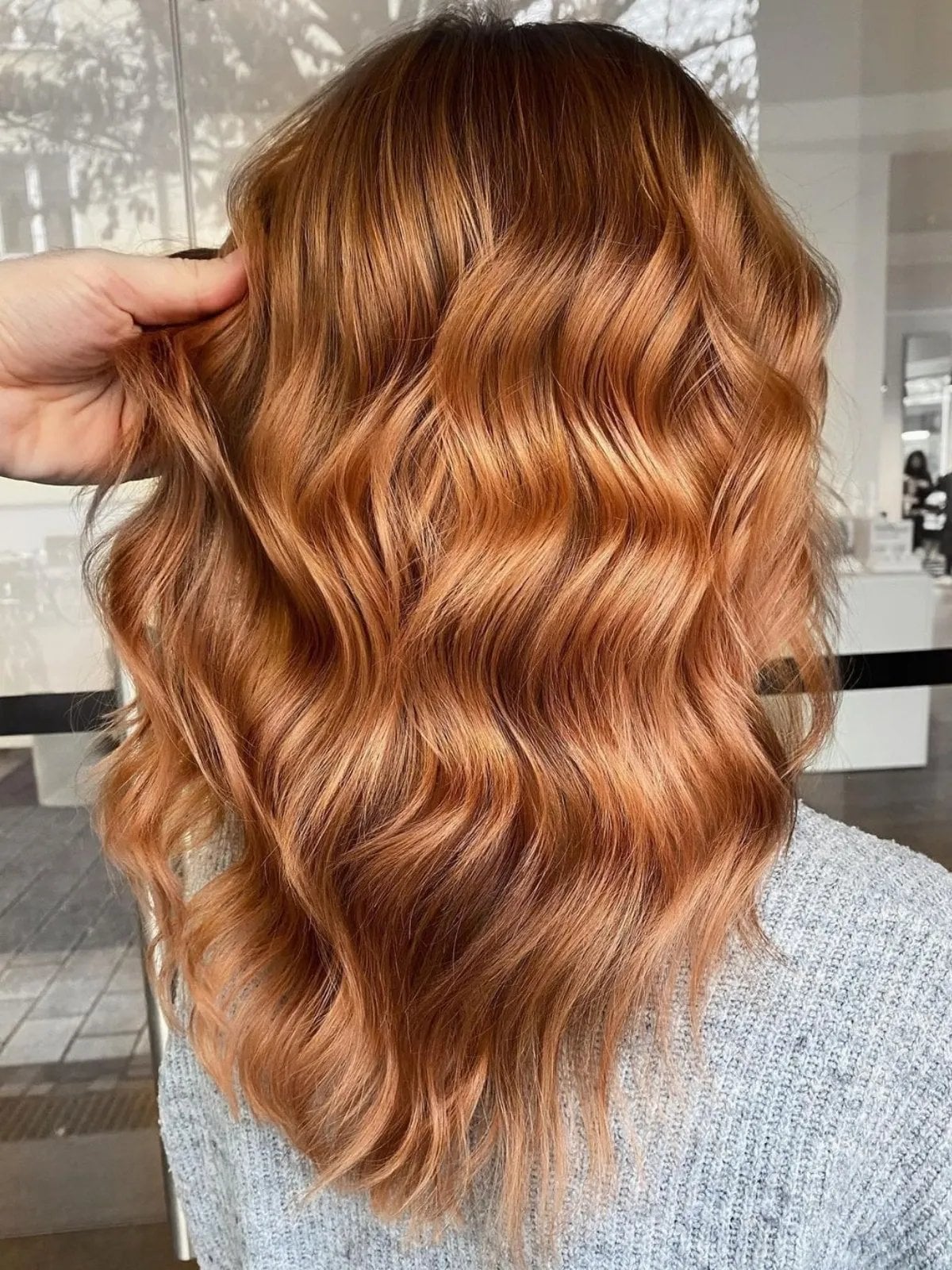
Copper base with subtle blonde highlights in loose waves
Courtesy of: wella.com
Two tones at once, a rich copper base with subtle blonde highlights, and the trick is how quietly they sit together. The blonde strands weave through the layers, not announcing themselves, just lifting the copper where the light hits. Loose waves help: they scatter the color so no single stripe dominates. You need thick, wavy hair starting at the collarbone to hold the shape. Suits most face shapes with the layered cut. The catch: if you prefer a solid color, this design will feel like too much negotiation between shades. Fine hair may not keep the wave long enough to justify the technique.
Deep red base with subtle lighter red highlights
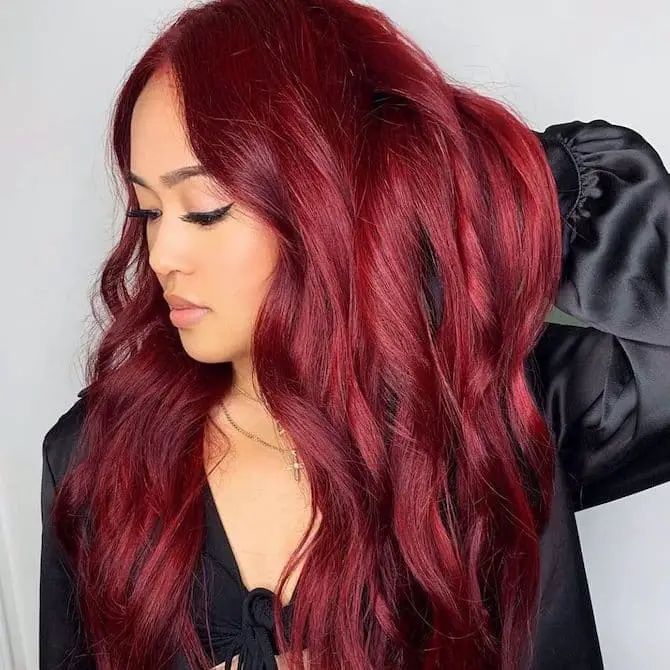
Photo credit: au.wella.professionalstore.com
A deep red base and subtle lighter red highlights versus a solid burgundy, the difference is depth. Solid reads flat; the lighter strands give the long, thick waves a place to catch the eye. Side part helps the color shift across the hair. Most face shapes can wear this, especially with long layers that let the highlights travel. Not for shorter hair: the subtlety needs length to register. The lighter red pieces work best when the base is rich enough to ground them.
Dark red with bright red highlights and curtain bangs
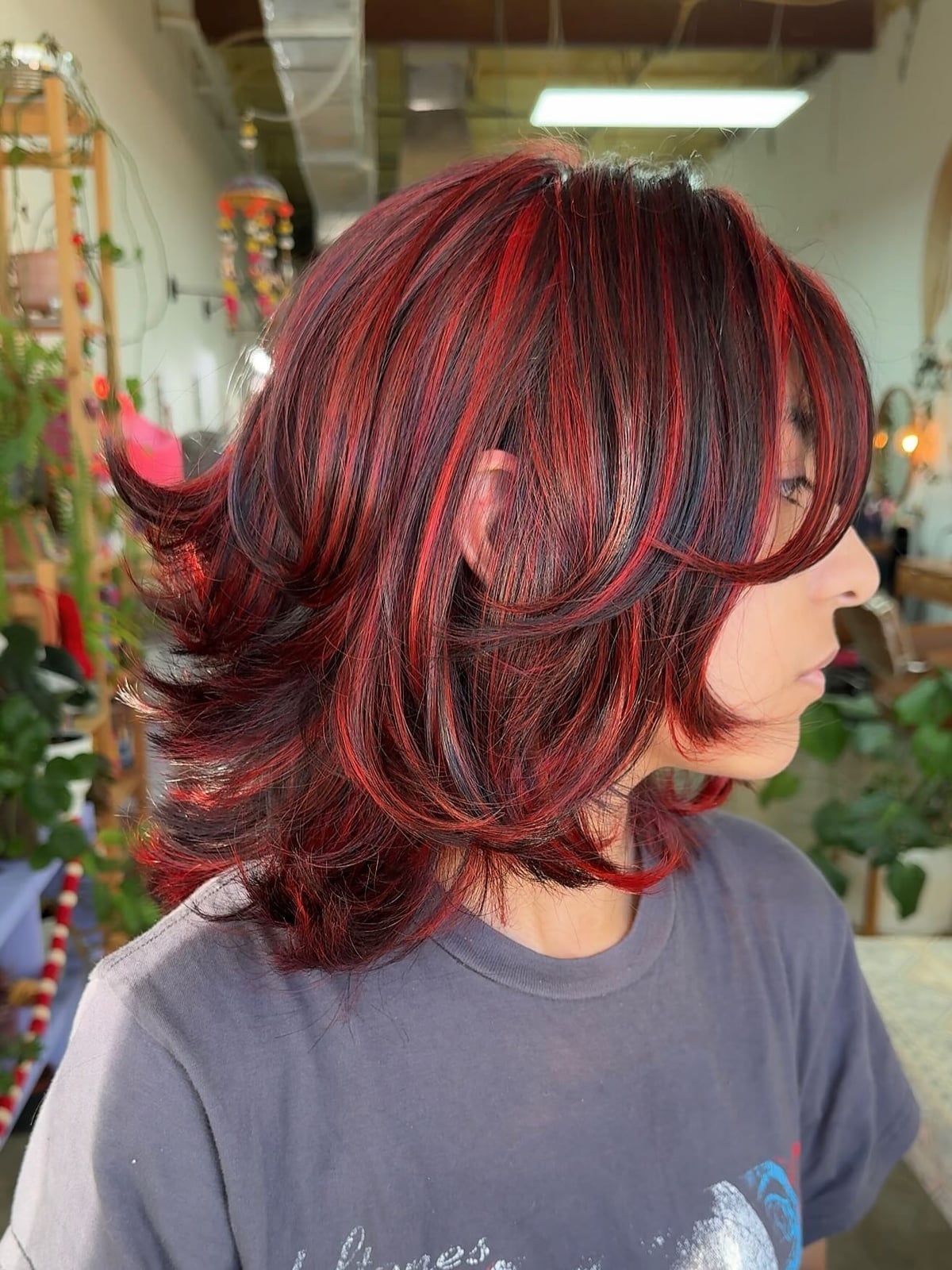
Image credit: latest-hairstyles.com
Curtain bangs with bright red highlights on a dark red base, how do you ask for that balance? Tell your colorist: dark red base, bright red highlights, curtain bangs, layered cut. The fine, wavy texture keeps the bright streaks from feeling heavy; the side part lets them peek through the fringe. Most face shapes work because the bangs soften the forehead. Not for anyone who dislikes bangs or whose hair is very thick. The weight can pull the fine texture flat.
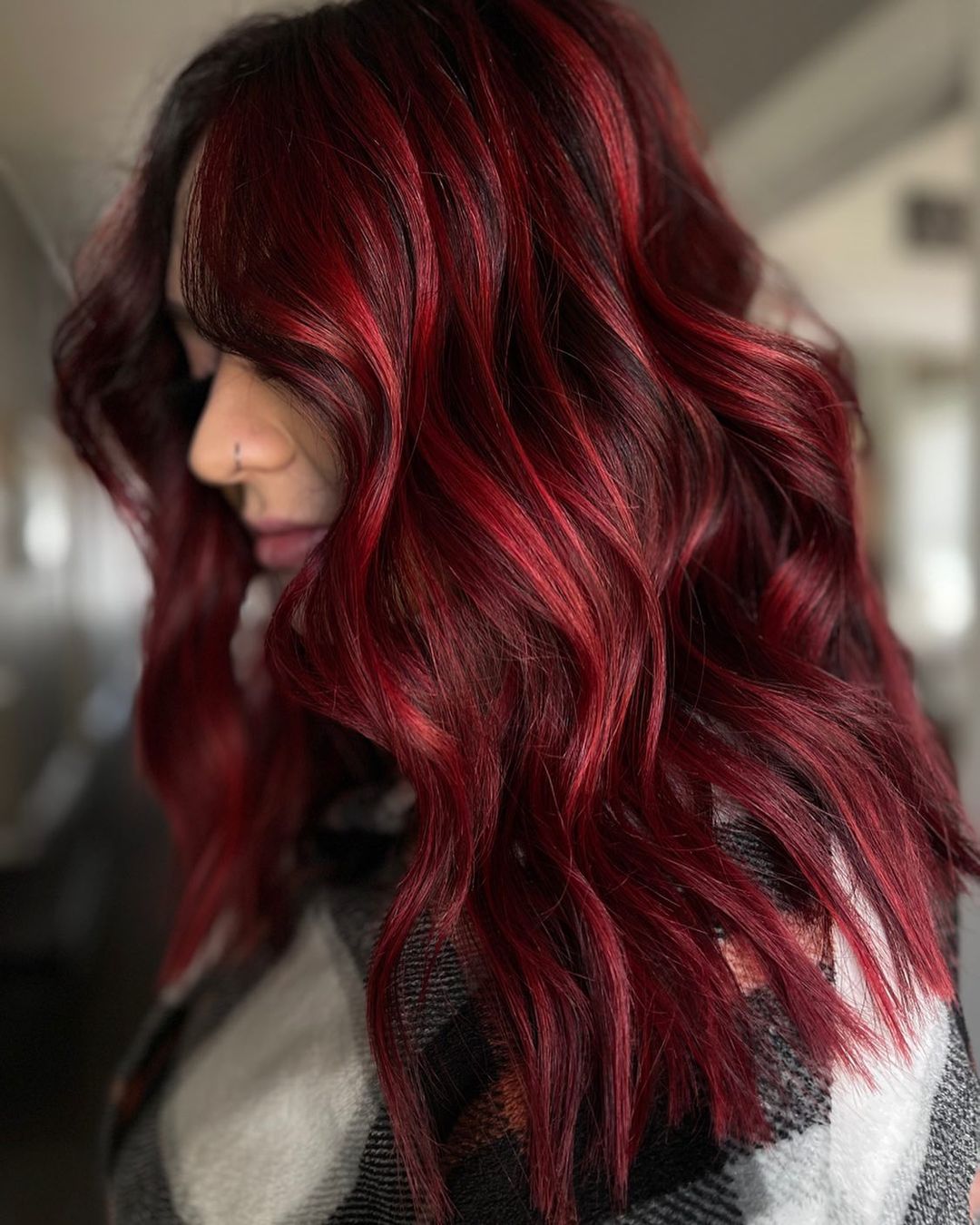
Dark red with cherry red highlights in loose waves
Source: hadviser.com
Loose waves on a dark red base with cherry red highlights. The contrast is the whole point. The cherry strands sit close to the base, so they look an accent, not a separate color. Fine, wavy hair with layers lets the highlights move without clumping. Most face shapes can pull this off. The upkeep: a texturizing spray on damp hair, then air-dry or diffuse. Layers need a trim every six to eight weeks to keep the shape from collapsing. A uniform color that needs no second thought is an alternative.
Red base with copper highlights and soft waves
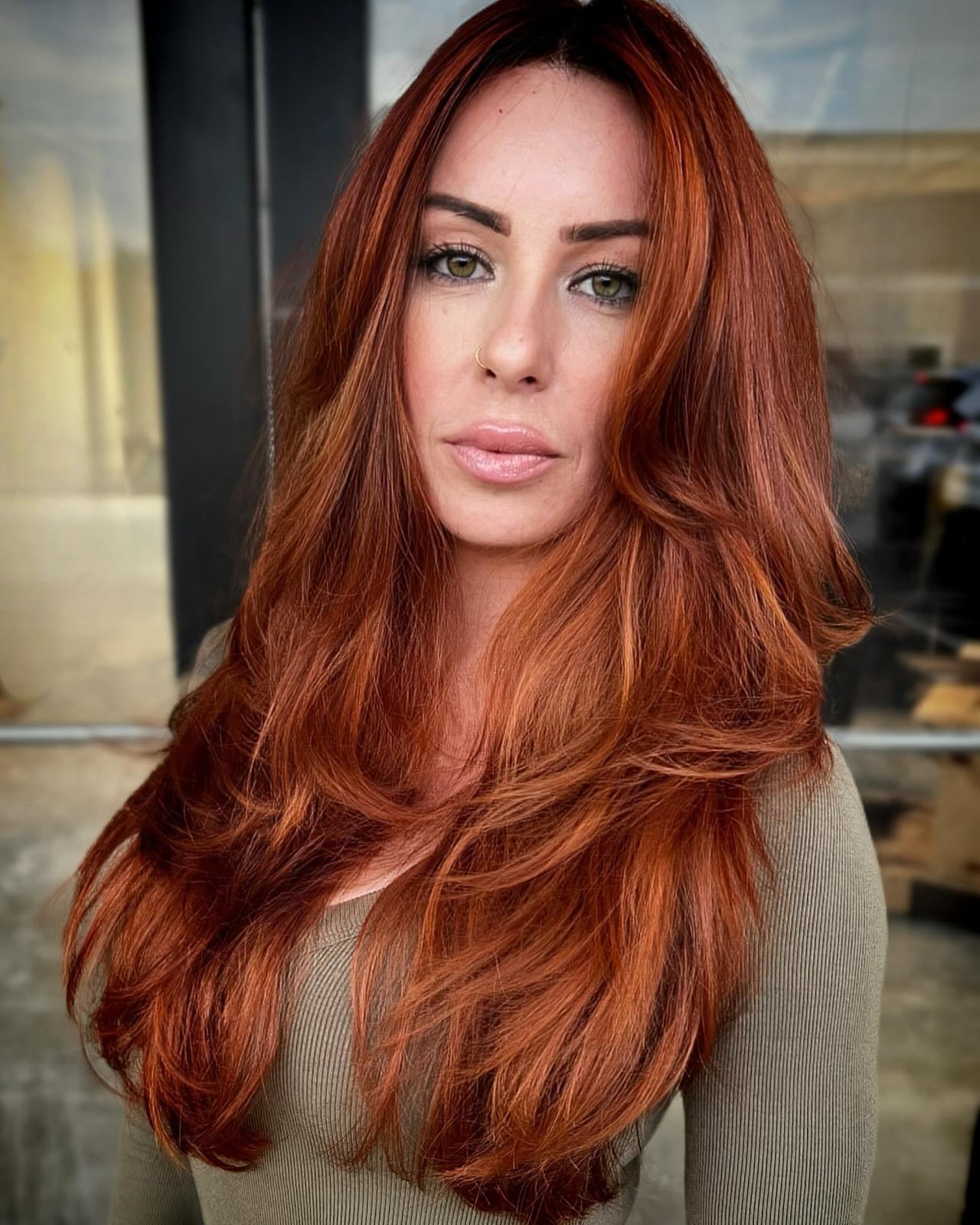
Via hadviser.com
Rich red base with vibrant copper highlights. The copper is warmer than the base, so the layers catch the eye one at a time. Soft waves help the color transition look natural rather than applied. Thick, wavy hair holds the shape best; the layers give the waves room to separate. One real drawback: the copper can fade faster than the red, leaving the base feeling flat while the highlights turn brassy. A heat protectant before styling helps, but the real solution is a toning gloss at week six.
Deep red base with vibrant cherry red highlights
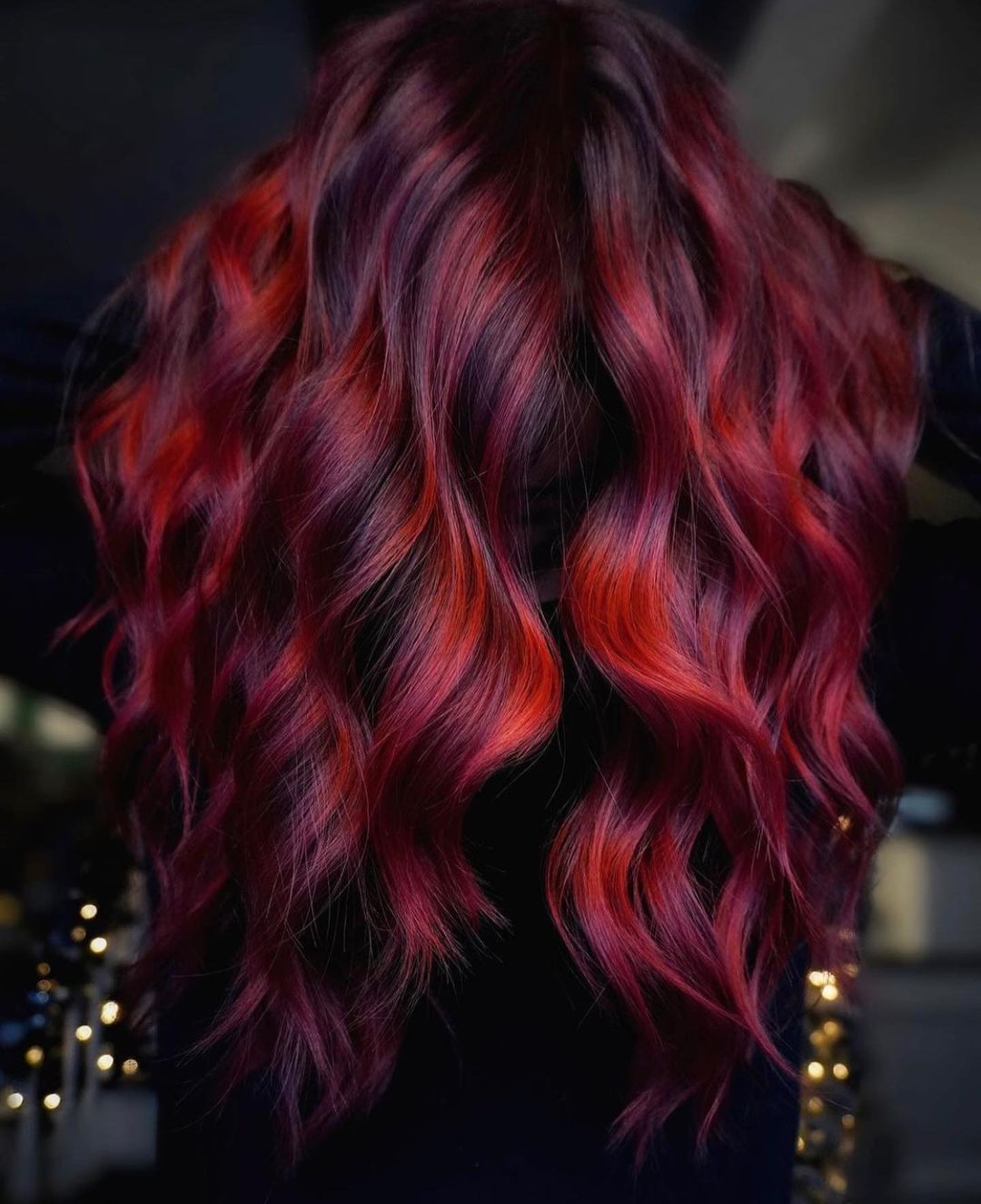
Courtesy of: hadviser.com
This one looks a close cousin to a solid red, but the cherry red highlights change the math entirely. A deep red base provides the weight, and the lighter pieces lift the whole look without shifting into orange territory. Thick, wavy hair carries the contrast best; the waves break up the color so neither shade dominates. A monochrome finish or fine hair that may not support the volume the technique relies on are two reasons to pass. Toning at week six keeps the cherry from fading brassy.
Bob with subtle copper highlights on a deep red base
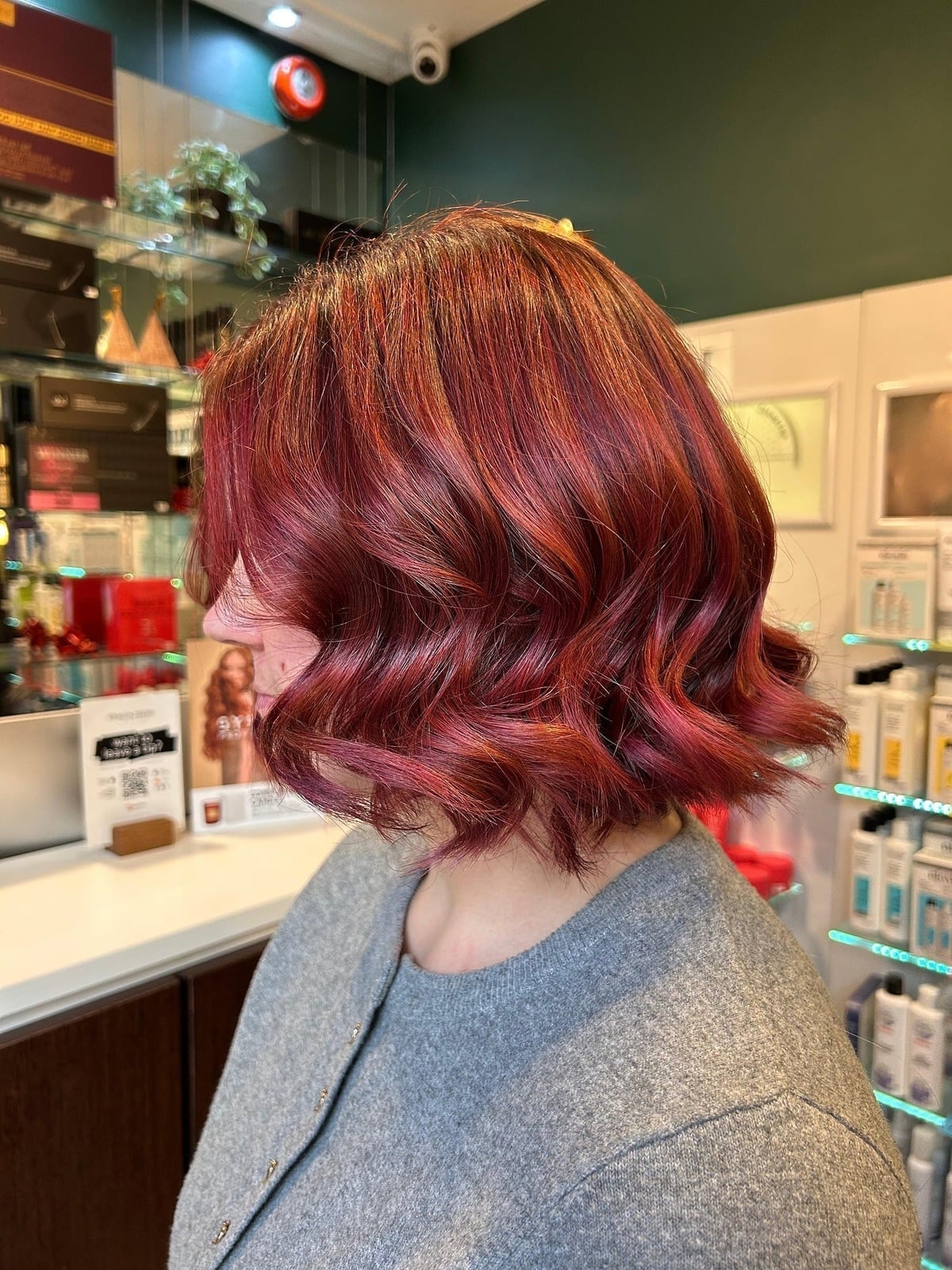
Photo credit: creativebooster.net
Does a bob handle red highlights without looking busy? Yes, when the copper is subtle and the base stays deep. The deep red anchors the cut, and the copper pieces add warmth without fighting the shape. Fine, wavy hair works well here because the bob holds its line while the color does the talking. Not for anyone who prefers longer hair or a more dramatic contrast between base and highlight. Tell your colorist: deep red base, subtle copper highlights. A trim every six weeks keeps the bob crisp.
Dark brown with cherry red highlights in layers and waves
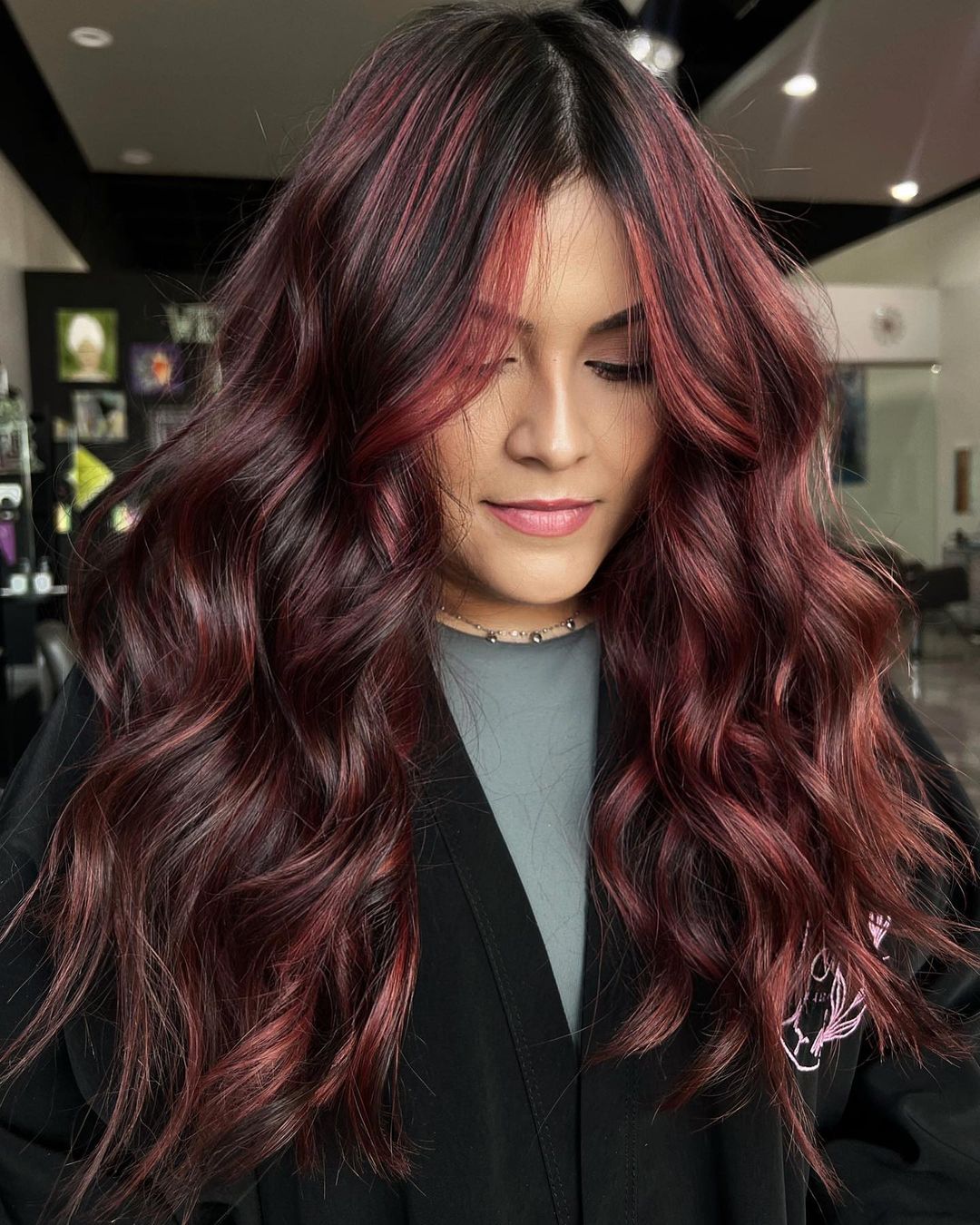
Image credit: therighthairstyles.com
The mistake people make with this combination is placing the cherry red highlights too close to the root, which creates a harsh line as the hair grows. A dark brown base with cherry red highlights works best when the lighter pieces start a few inches down, blending into the layers. Thick, wavy hair gives the layers room to move and the highlights room to be visible. The highlights are prominent, and fine hair may not hold the volume the cut needs.
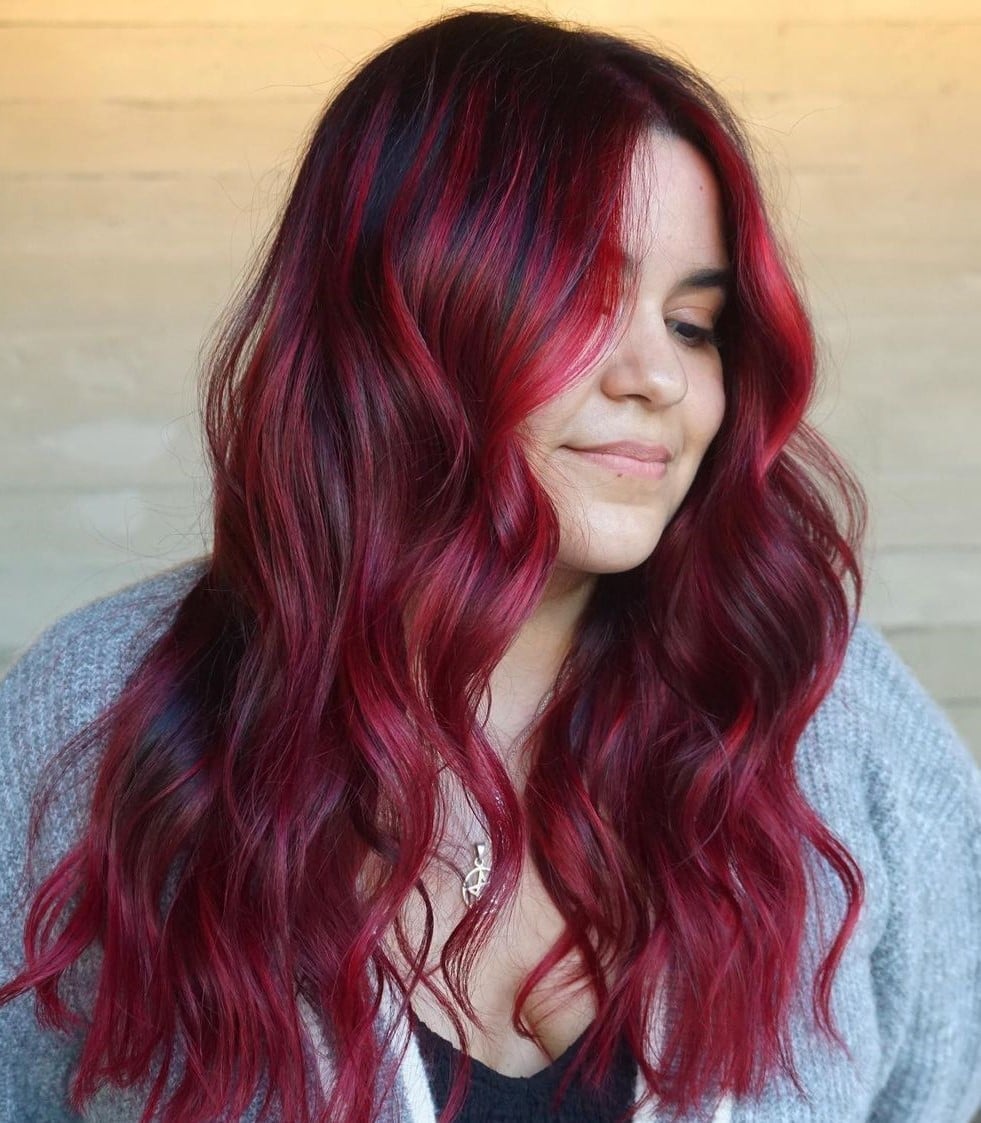
Dark red with crimson highlights and wavy blowout
Source: therighthairstyles.com
Balayage makes this combination possible. A freehand technique places the crimson highlights where they naturally catch light, avoiding the stripe effect of foils on a dark red base. The wavy blowout then softens the transitions, so the color blends smoothly. Thick, wavy hair is the ideal canvas; the texture scatters the color for a lived-in finish. This is a salon-only application. A DIY version risks muddying the two reds into one flat shade. Use a heat protectant for the blowout.
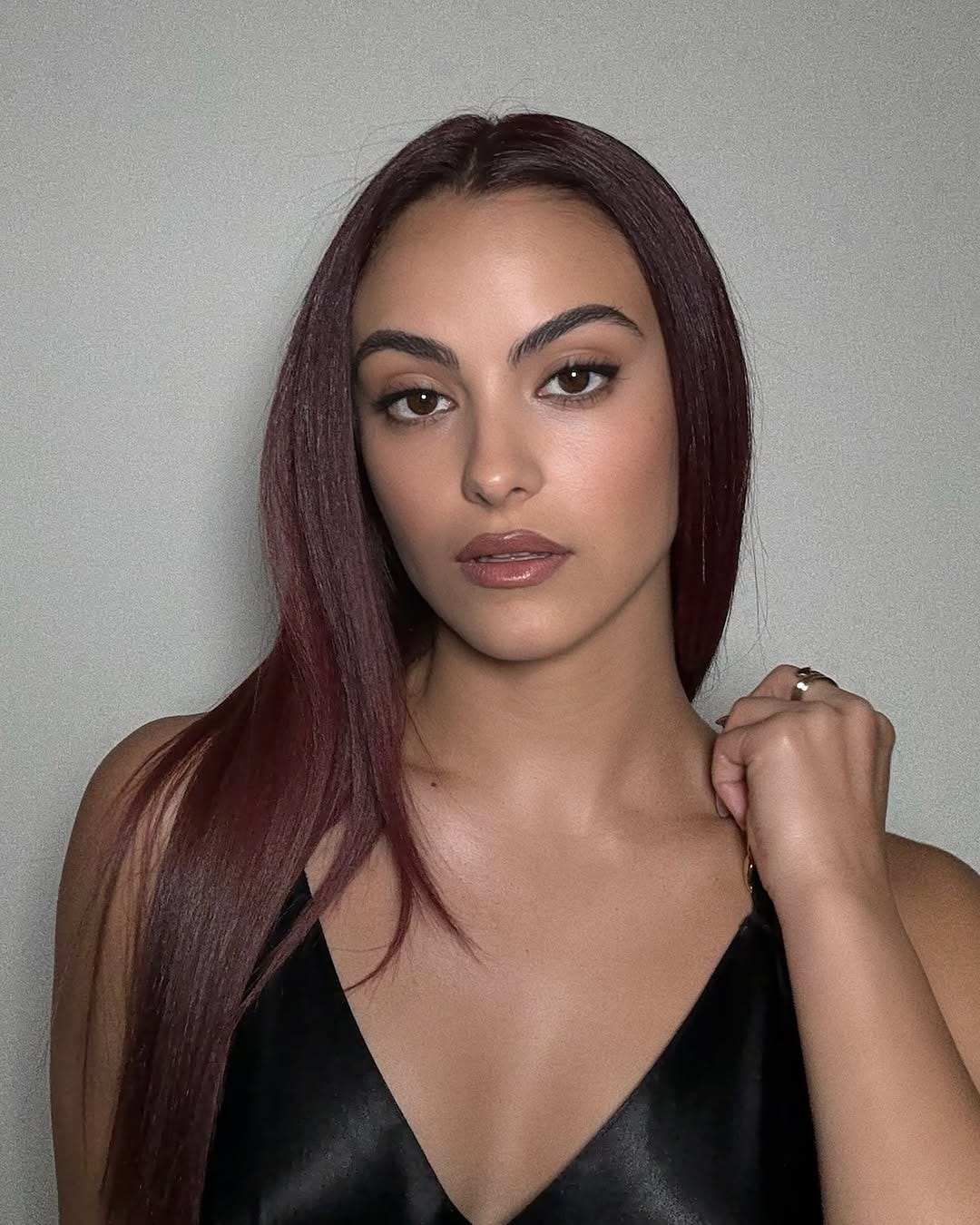
Burgundy base with subtle red undertones
Source: cosmopolitan.com
Where a true burgundy can look flat, this version adds subtle red undertones that surface in direct light. The deep burgundy base stays the star, and the undertones prevent the color from looking like a single coat of dye. Fine, straight hair wears this well because the smooth surface lets the undertones peek through evenly. Skip this color if you prefer a wavy or curly texture that would hide the subtle variation. Air-dry with minimal manipulation.
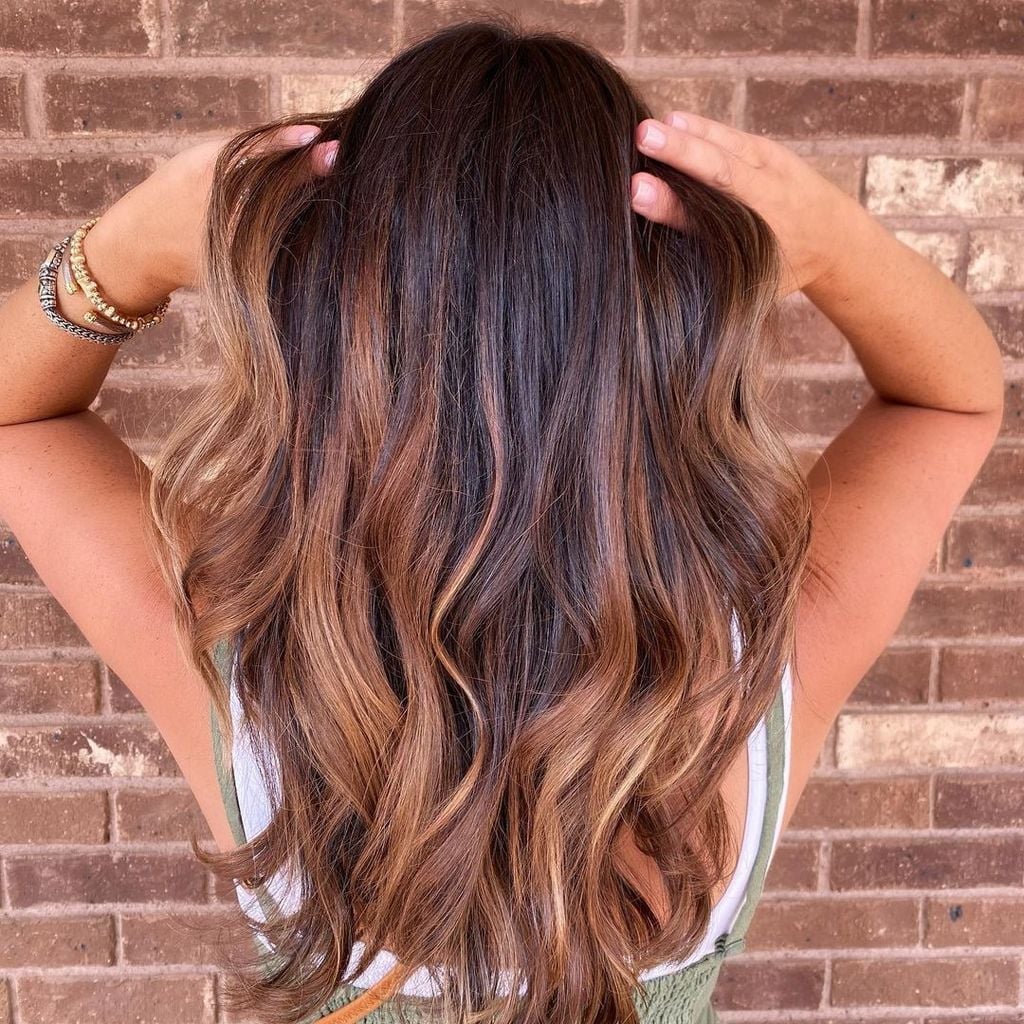
Dark brown with copper and caramel highlights in waves
Via glamour.com
Two lighter tones on a dark brown base means the colorist maps out where each shade lands. Copper sits at the mid-lengths, caramel moves toward the ends, and the dark base stays visible at the root. The back view shows the pattern: the highlights are spaced enough that the base looks the main color, not an afterthought. Thick, wavy hair carries this design best because the texture separates the strands naturally. A middle part keeps the distribution even on both sides. The catch: the contrast shrinks as the highlights fade, so expect a toning gloss around week six to keep the copper from turning brassy. A sea salt spray on damp hair rebuilds the wave shape in about five minutes.
Ask your colorist for: dark brown base, copper and caramel highlights, wavy styling.
Copper base with auburn highlights and curtain bangs

Courtesy of: thepioneerwoman.com
This one earns its keep in the chair. Copper base plus auburn highlights looks one cohesive warm tone, not two separate colors fighting for attention. The curtain bangs soften the front, and the layers keep the wave pattern from falling flat. Fine, wavy hair with a middle part takes to this shape best. A side part would change the balance of the fringe. Blow-dry the curtain bangs with a round brush each morning, then wrap the rest in a large roller while you do the rest of your routine. The trim rhythm lands at six to eight weeks because the bangs grow into your eyes first.
Dark brown base with auburn highlights, air-dried
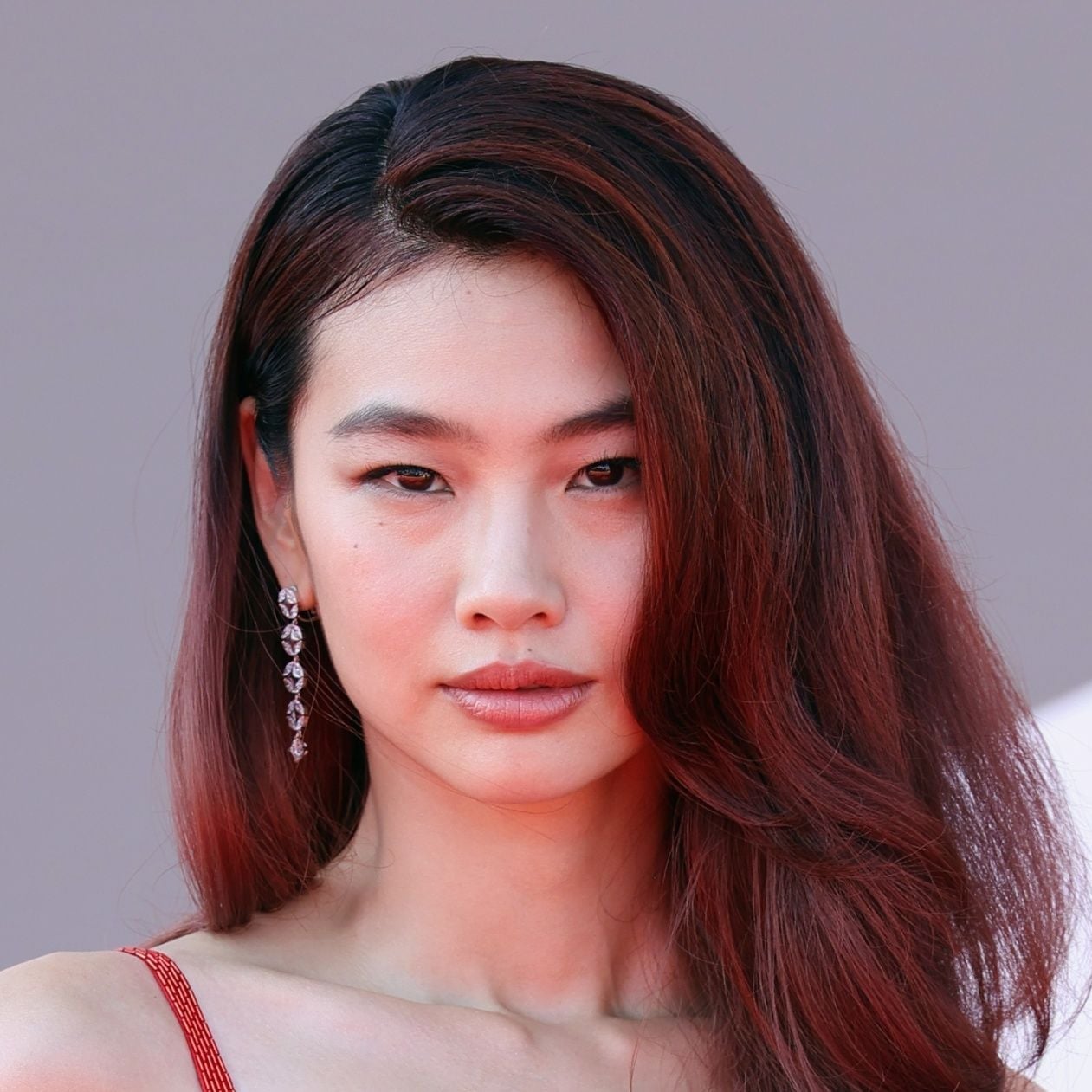
Photo credit: glamour.com
A dark brown base with subtle auburn highlights relies on texture to do the work. The middle part lets the color fall evenly on both sides, and the wave pattern keeps the highlights from looking painted on. Thick, wavy hair holds this finish without product; fine hair would need a texture spray to get the same separation. Air-drying is the actual wear pattern here, not a styling shortcut. A leave-in conditioner on damp ends prevents the auburn from looking dusty as it dries.
Dark red with copper and blonde highlights, balayage
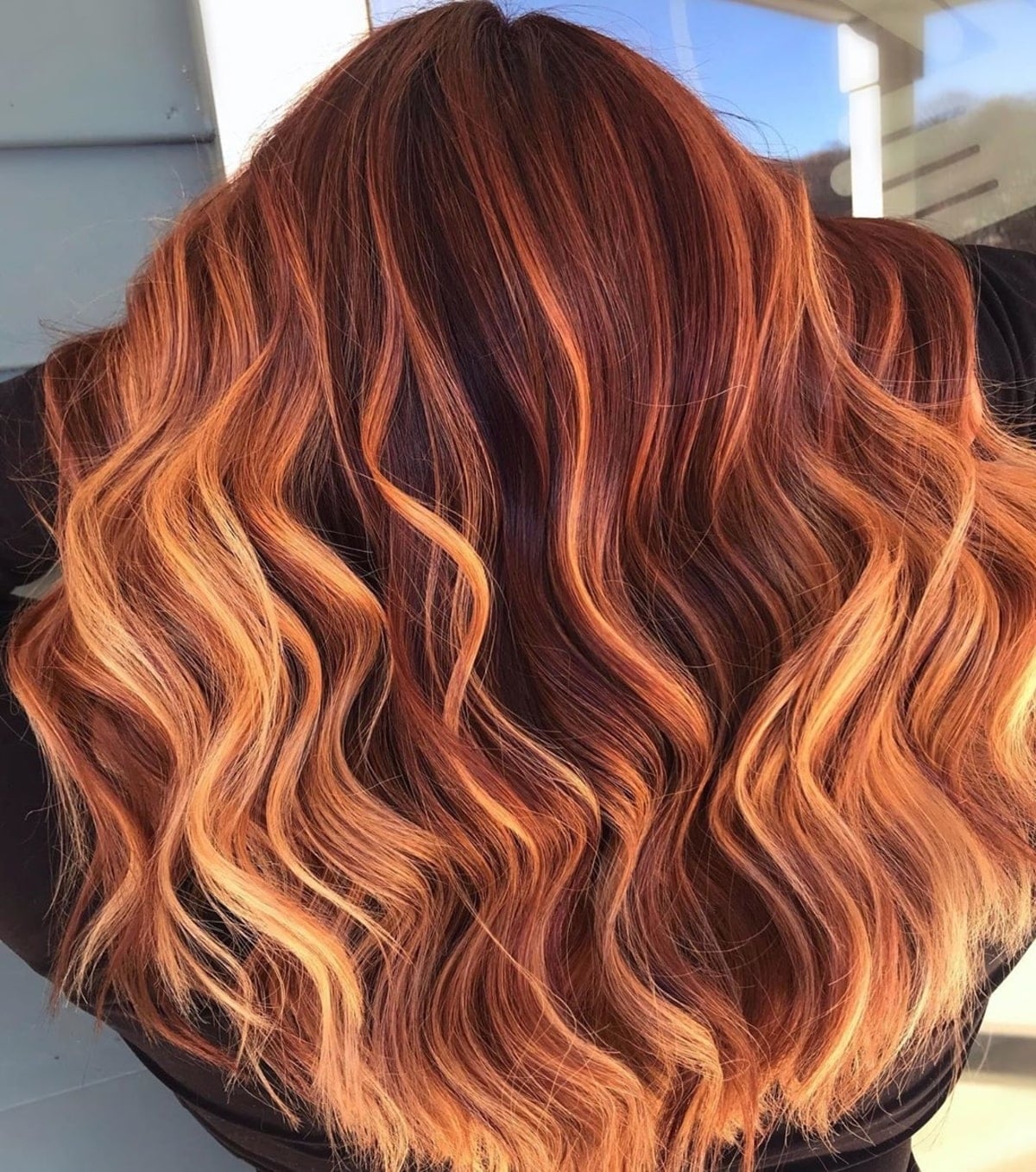
Image credit: latest-hairstyles.com
Three colors on one head means the placement has to earn its keep. The dark red base anchors the look, copper moves through the mid-lengths, and blonde lands toward the ends. Balayage keeps the transition soft, so there is no harsh line where one shade ends and the next begins. Thick, wavy hair separates the tones naturally; straight hair would blend them into a single muddy shade. The real drawback: the blonde pieces need a toner every four to six weeks or they pull yellow against the red. A uniform color that fades evenly is not the goal here. A color-safe shampoo and cool water extend the life of the copper and blonde sections.
Ask your colorist for: dark red base, copper and blonde highlights, balayage technique, loose waves.
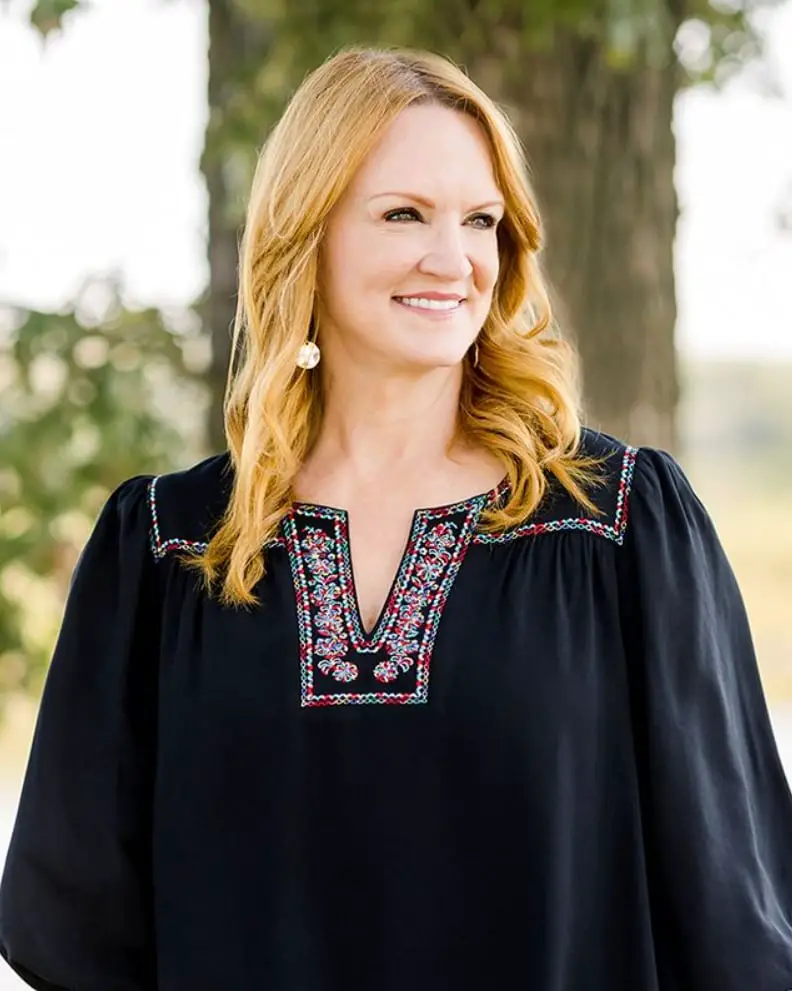
Strawberry blonde with copper highlights in layers
Source: thepioneerwoman.com
Strawberry blonde already sits in the warm zone, so copper highlights look a tonal shift, not a separate color. The side part changes how the light hits the layers, making the copper pop more on one side. Thick, wavy hair with a layered cut keeps the highlights visible through the ends. A blowout with a round brush smooths the top layer while leaving the under layers slightly tousled. This is a spring and early fall color because the pink notes in the strawberry base fade fastest under direct summer sun. A heat protectant before blow-drying keeps the cuticle flat and the color glossy.
Red with rainbow highlights and black underneath
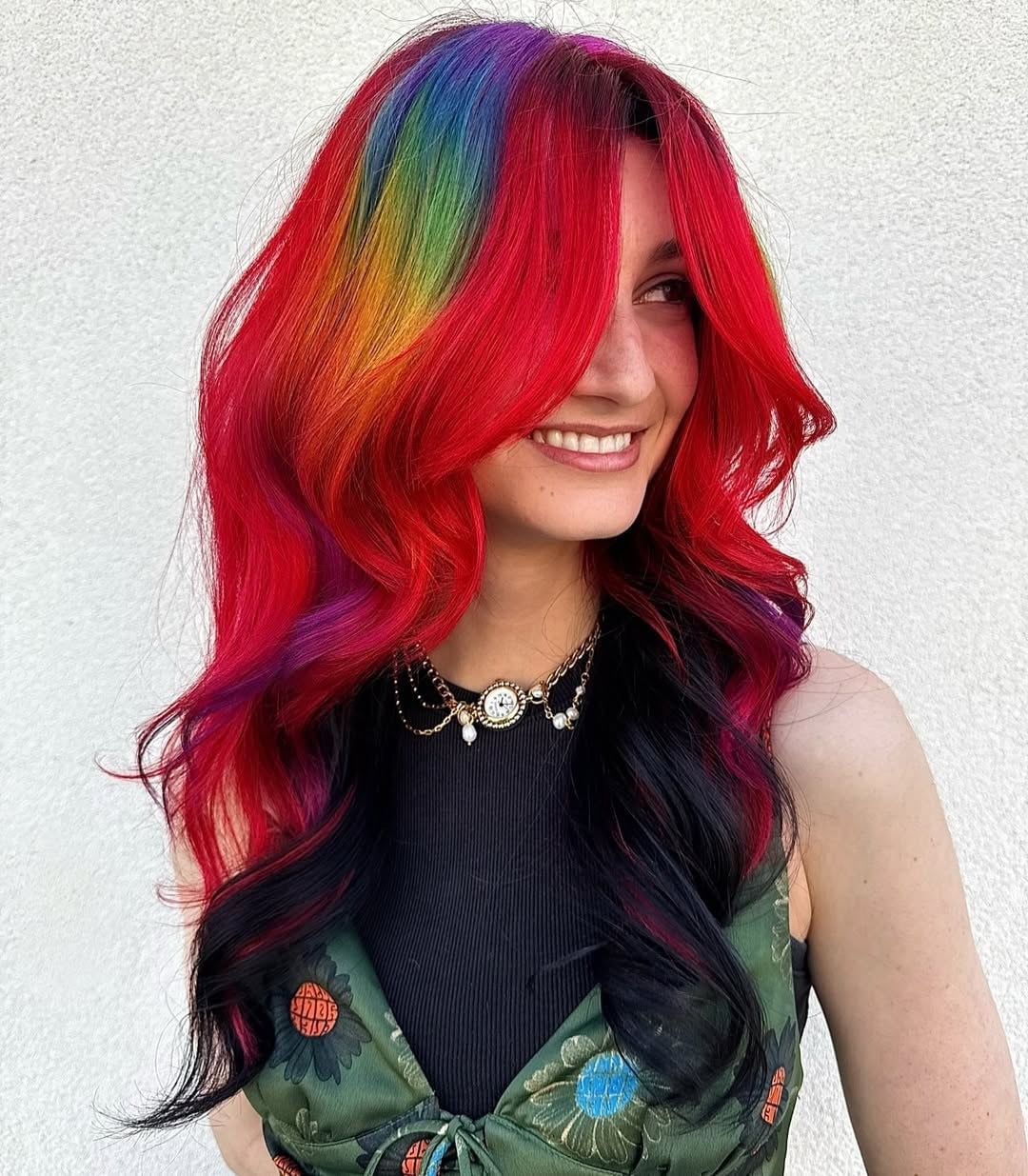
Rainbow streaks on a bold red base with black underneath is a design decision, not a whim. The side-swept fringe and thick, wavy texture carry the contrast without looking busy. Suits someone who treats their hair as a canvas and has the density to support the weight of multiple tones. Fine hair may not hold the black section underneath and the waves need bulk to keep the contrast clear. Ask your colorist for: bold red base, rainbow highlights, black underneath. The rainbow pieces will need a refresh every four to six weeks to keep each color distinct. That is the trade-off.
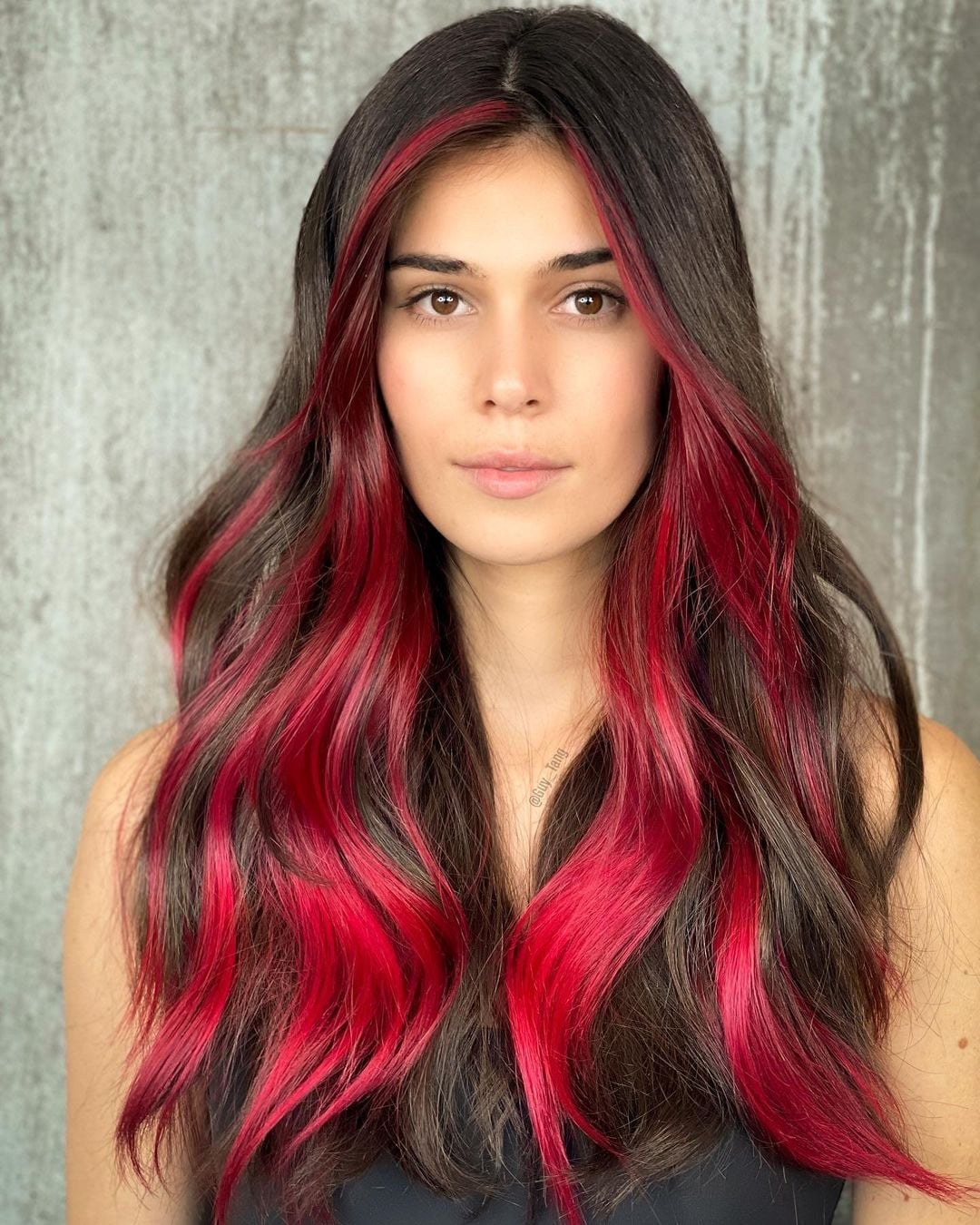
Dark brown with bright red face-framing highlights
Courtesy of: hadviser.com
The common mistake with dark brown and bright red face-framing highlights is treating them like all-over highlights. They are not. The color lives at the front, so the contrast stays concentrated around the face. A middle part and thick, wavy texture let each red strand read clearly against the dark base. The alternative is to weave red throughout the whole head, which spreads the impact thin. Keep it front-heavy for the maximum effect. Not for anyone who wants subtle, peeking color. These are meant to announce themselves.
The waves are part of the plan. Straight hair would let the red sit flat; waves push the strands forward so the contrast catches the eye from every angle.
Deep red with copper undertones and loose waves
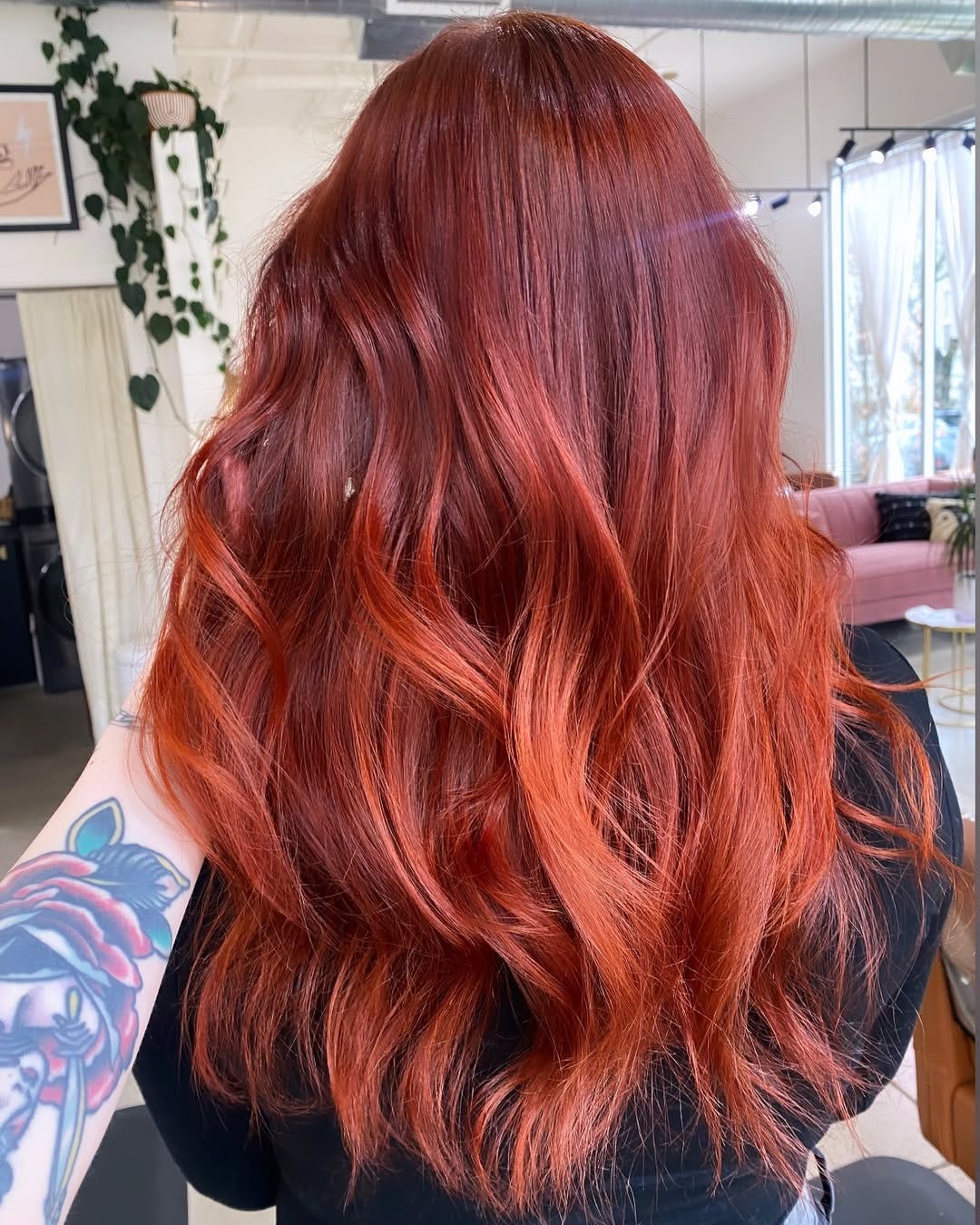
Photo credit: cosmopolitan.com
A deep red base with copper undertones that shift lighter toward the ends is a two-step process in the salon. First the base is applied, then the copper is painted through the mid-lengths and ends in a graduated technique. Thick, wavy texture is ideal, the waves catch the undertone differently at every turn. This is not a DIY color. The copper needs a professional hand to land at the right depth against the deep red without turning brassy. Loose waves are the finish, not the starting point. A blowout with a large round brush gives the smooth root and soft bend the look requires.
Dark brown with copper red highlights in curly texture
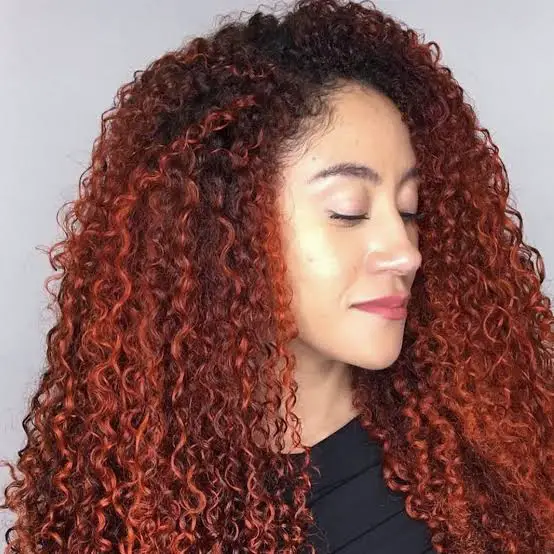
Image credit: byrdie.com
Copper red highlights on a dark brown base read differently on curly texture than on straight. The curl bends each highlighted strand, so the copper appears in flashes rather than solid lines. That is the advantage over straight hair, where the same placement would look like stripes. Thick, curly hair that is air-dried keeps the highlights looking lived-in from day one. Ask your colorist for: dark brown base, copper red highlights. A curl-defining cream applied to wet hair and left to dry without touching is the only styling involved.
Vibrant red layered cut ending around the ear
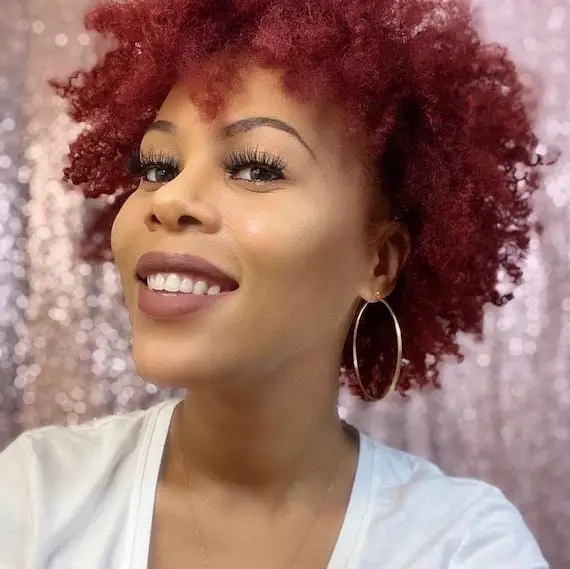
Layers on a vibrant red cut ending around the ear do the work that length cannot. The curly, thick texture is shaped so each layer stacks on the one below, building volume without bulk. A side parting breaks up the roundness that a centered part would create at this short length. The technique is straightforward: the stylist cuts each layer while the hair is dry and curly to account for spring. No bangs, no fringe, just the natural curl line around the face.
Deep red with darker undertones in waves
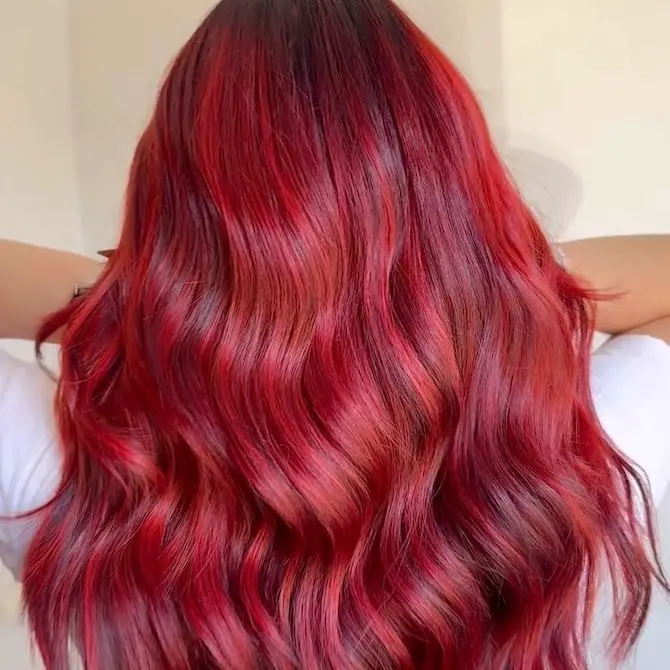
Courtesy of: us.wella.professionalstore.com
Wavy, thick hair shows a deep red with subtle darker red undertones best. The tone reads richer than a flat single-process dye, which is the point. You ask for a base that is deep red and then darker undertones blended through, not a highlight, not a gloss, a deliberate second tone that sits underneath. The catch: the effect depends on the wave pattern. Straight hair hides the undertones entirely. Fine hair may not hold the wave long enough for the contrast to register. A middle part and back view confirm the color wraps around, not just the surface layer. Thick, wavy texture is what makes this work, not the opposite.
Tell your colorist: deep red base, subtle darker red undertones. The result is a color that shifts in indirect light, which is the whole appeal. No bangs, no curtain, no distraction, just the color and the wave.
Fiery multi-tonal red, orange, and magenta highlights
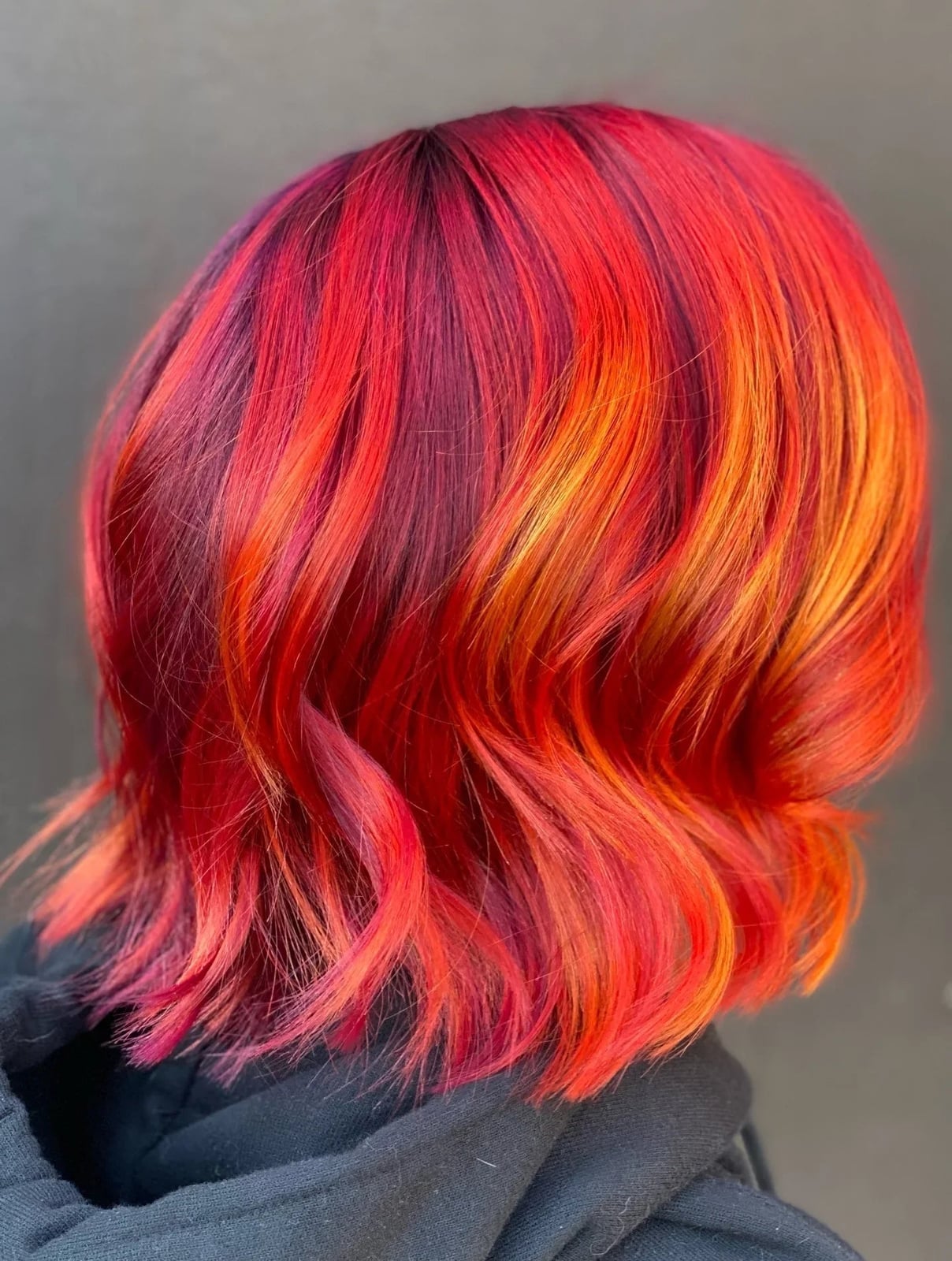
Photo credit: creativebooster.net
Three tones in one head of hair. Red, orange, and magenta highlights sit on a layered cut with a middle part, styled in a blowout that shows each color stripe. The technique is a color melt, the shades graduate, not stack. Fine, wavy texture keeps the ribbons of color visible; thick hair would swallow them. The upkeep is the trade-off. A purple shampoo tones the magenta at week three. The orange fades fastest, usually by week five, and needs a gloss to stay bright. The colors do not fade at the same rate, which means the look changes as it wears. That is the reality of a multi-tonal finish.
Copper red with blonde highlights in waves
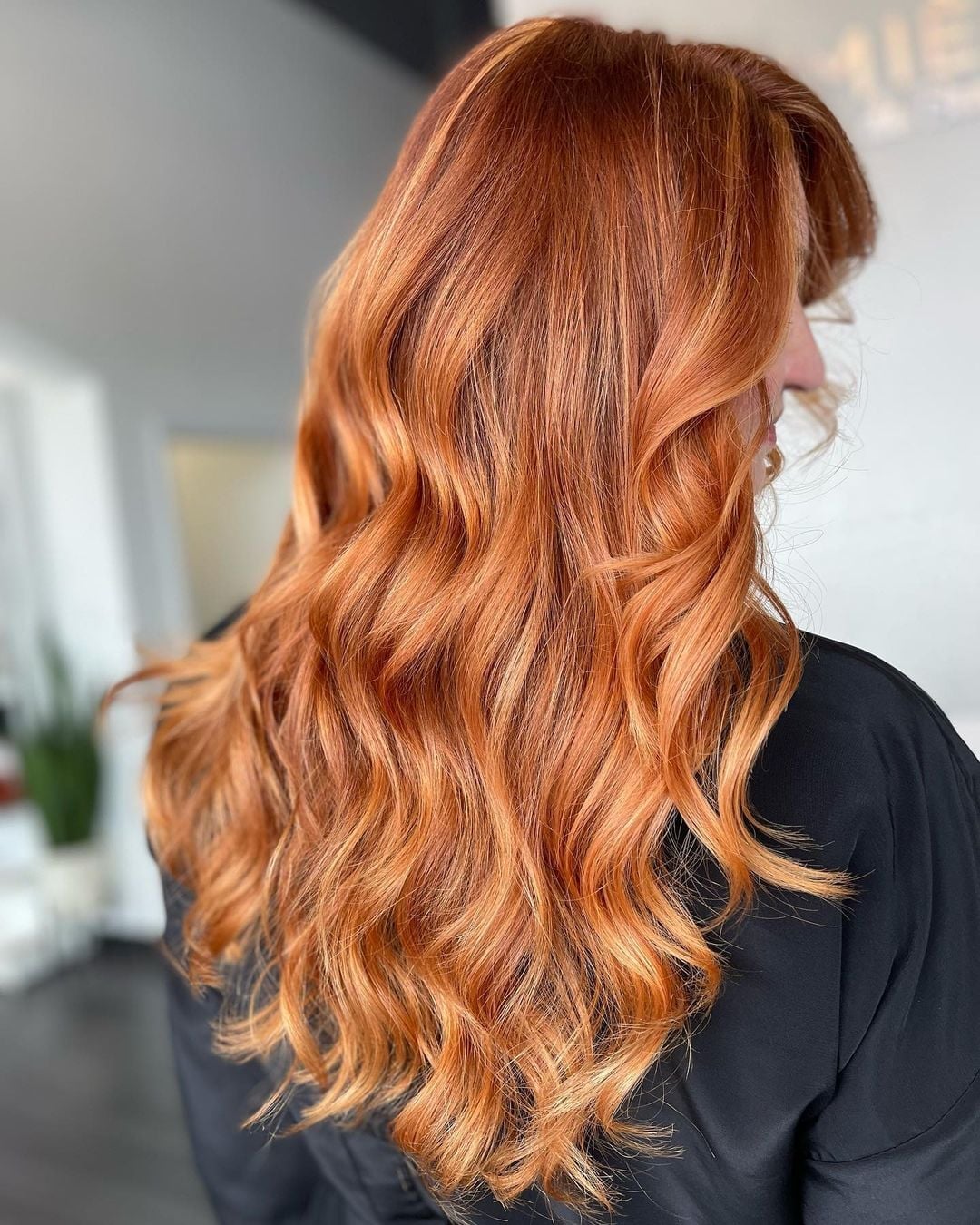
Image credit: therighthairstyles.com
Vibrant copper red plus blonde highlights works better on paper than in practice for some hair types. The copper red base is warm and strong. The blonde highlights cut through it, creating contrast that looks dimensional, not brassy. Thick, wavy texture with layers gives the waves room to show both tones. The drawback: the blonde needs a cool toner every six weeks or it pulls yellow against the copper. That is a regular salon commitment, not a one-and-done. Skip it if your hair is fine, the copper base dominates and the blonde disappears into it. The base color is vibrant, not muted, so the blonde has to be lifted several levels. A side part and side profile view show the highlights wrapping forward, which means root growth shows sooner along the part line.
Tell your colorist: vibrant copper red base with blonde highlights. The result is a warm, dimensional look that works for work and weekends.
Deep brown with cherry red highlights in a soft blowout

Source: latest-hairstyles.com
A deep brown base with cherry red highlights works for winter and spring both. The dark base grounds the bright cherry so it does not look like a costume. The soft blowout styling, subtle layers, middle part, fine wavy texture, shows the highlights as thin ribbons, not chunky streaks. The occasion is a step up from daily wear. A work event or an evening out where you want the red to be noticeable. The contrast is deliberate: the cherry red sits on the surface, the deep brown stays underneath. A soft blowout keeps the finish smooth, not curled, so the highlights stay visible instead of hiding in a wave. No bangs, no fringe. The color is the focus.
Deep red with lighter red highlights in long layers
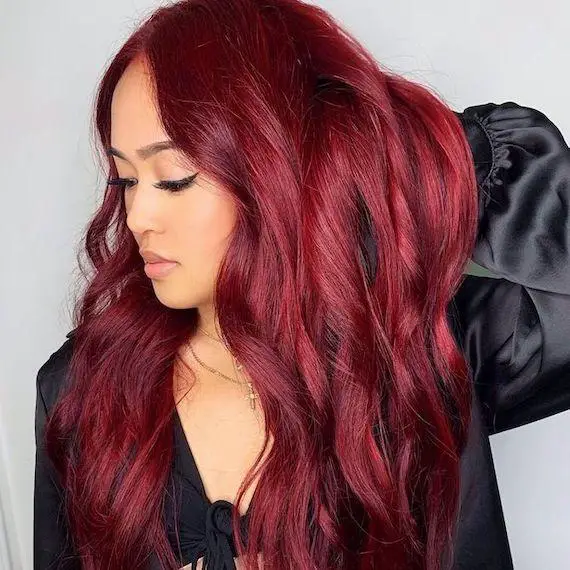
Thick, wavy hair with long layers shows a deep red base with subtle lighter red highlights best. The lighter red is a tone shift, not a separate color, close enough to the base that the transition is soft, far enough that the dimension shows. Long layers are the structure that makes this work. The waves fall at different points along the length, so the lighter red catches light in different places. The technique is a balayage-style sweep, not foils, which keeps the root soft. Most face shapes can wear this because the long layers and deep red shade do not add width or length. It works best for those who want dimension rather than solid color or short hair. The dimension needs length to travel. A middle part and front view confirm the lighter red wraps both sides evenly.
Tell your colorist: deep red base with subtle lighter red highlights. The effect is rich but not heavy.
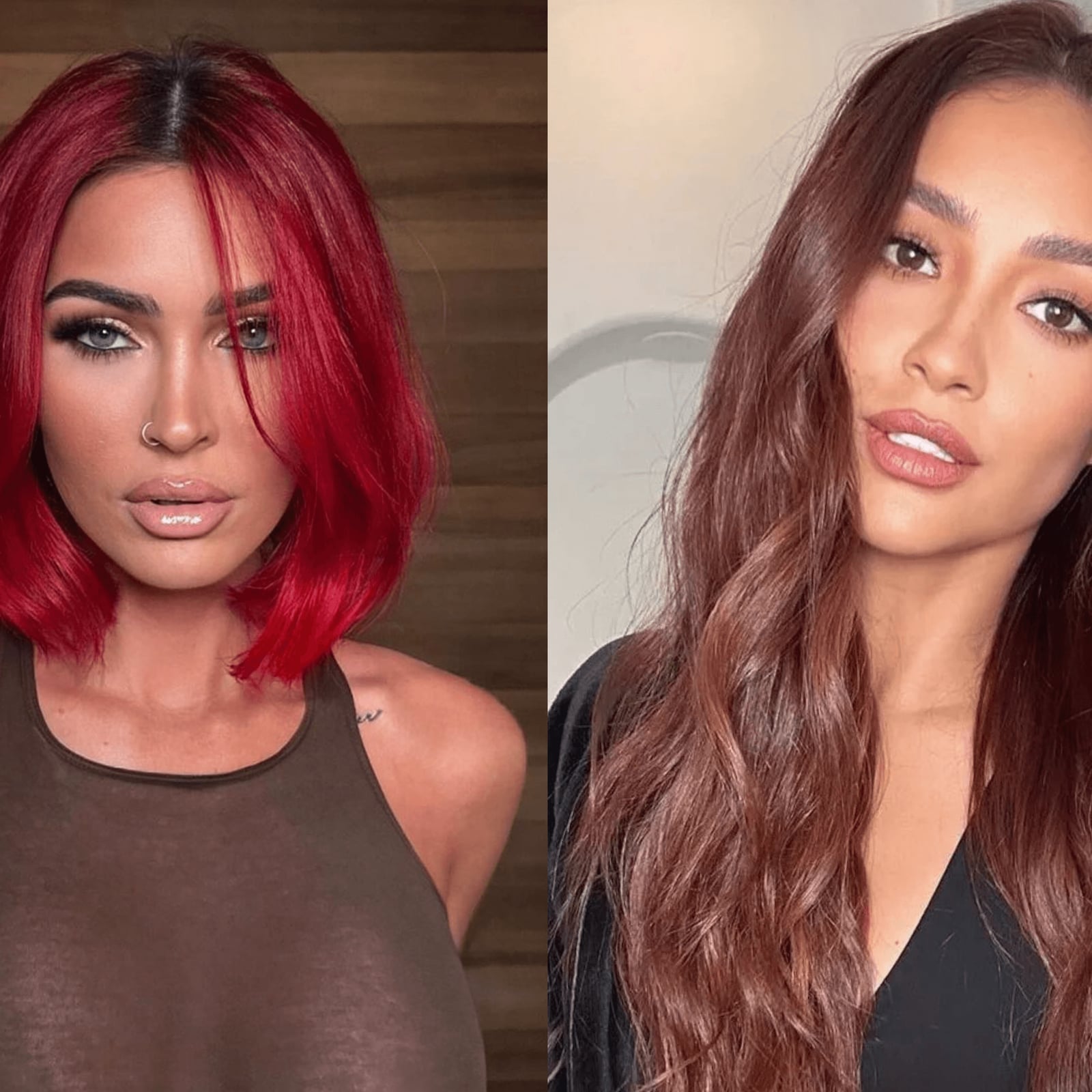
Vivid red bob with curtain bangs, air-dried
Courtesy of: glamour.com
Air-dry a vivid red bob with curtain bangs and the color does the talking. Fine, wavy texture takes the air-dried finish naturally, no blowout needed. Skip it if you prefer longer hair or very thick texture that resists a relaxed wave pattern. A leave-in conditioner is all the styling this look requires.
Dark red base with bright red highlights, wavy blowout
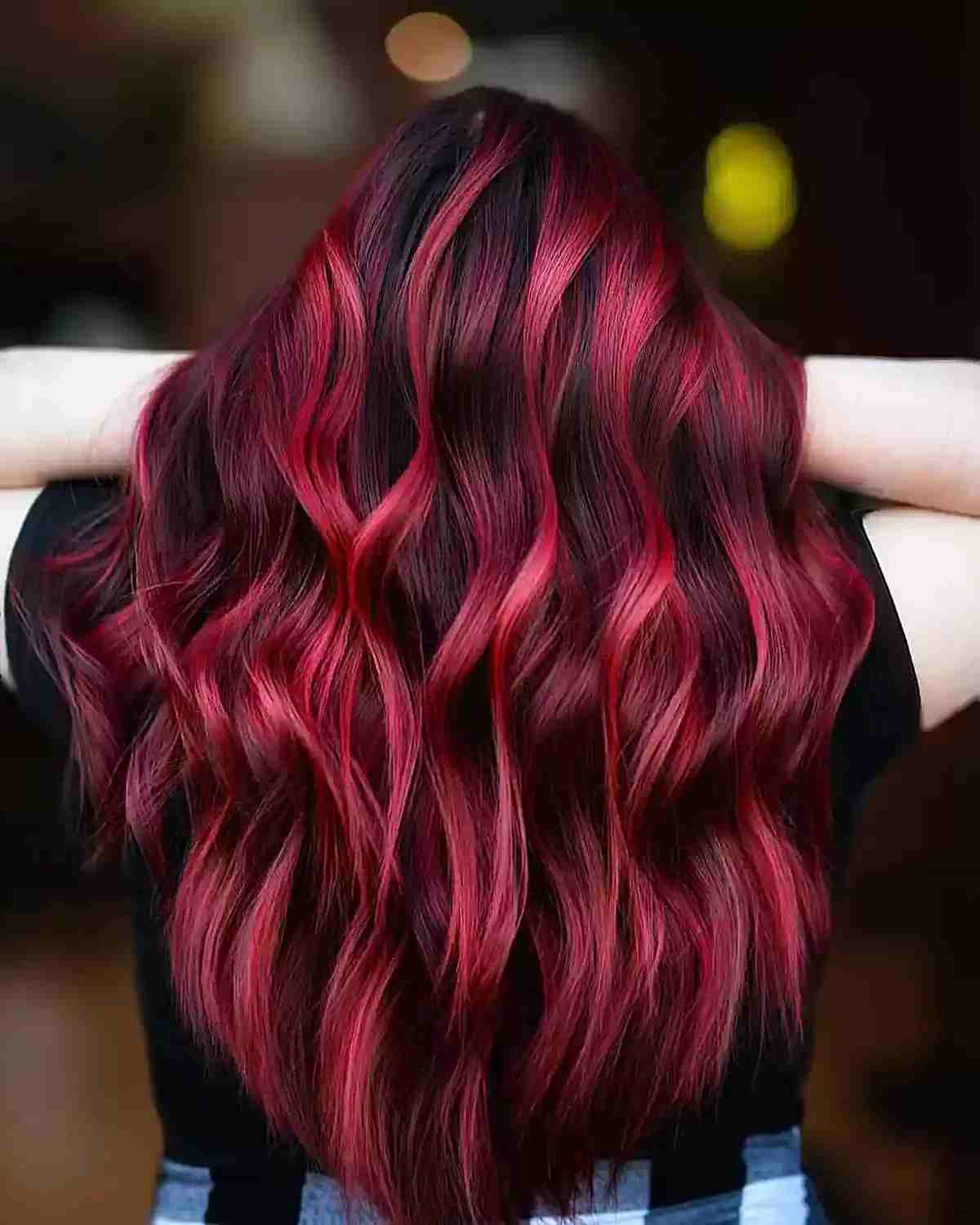
Photo credit: latest-hairstyles.com
Bright red highlights on a dark red base create a two-tone effect that is dimensional, not solid. Thick, wavy texture holds the wavy blowout well, so the contrast stays visible. It works best for those who want a multitone style and have hair thick enough to maintain waves. This is a salon-only design: the highlight placement needs a professional hand. Tell your colorist: dark red base, bright red highlights, wavy blowout.
Copper red with lighter copper highlights, air-dried

Image credit: allure.com
Copper red with lighter copper highlights sits between a solid shade and a full highlight weave. Air-dried fine, wavy texture lets the subtle copper pieces catch the eye without extra effort. A darker base like burgundy gives a closer, less contrasty effect; this one leans open and bright.
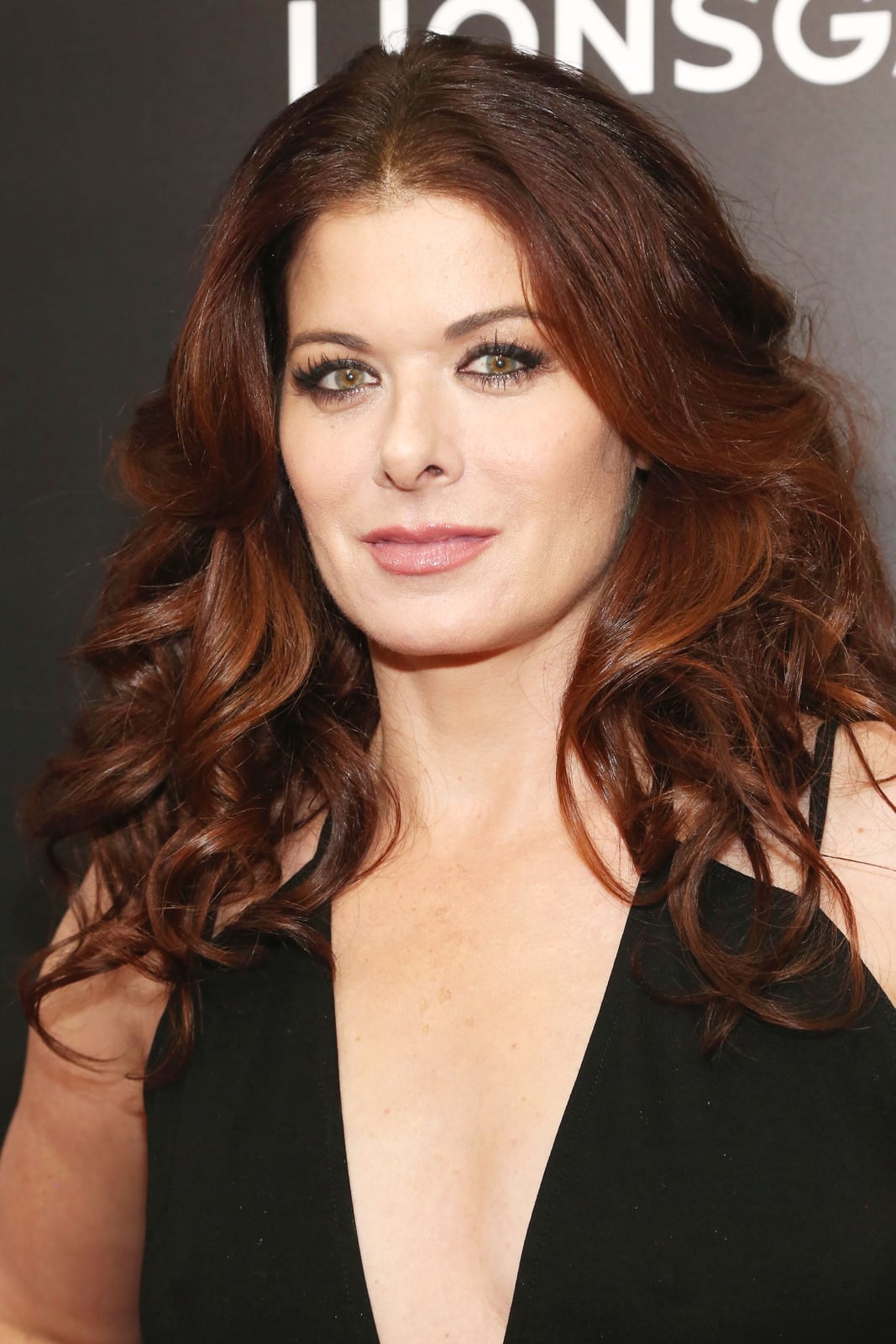
Auburn with copper highlights in layers and waves
Source: elle.com
Layers cut into thick, wavy hair give copper highlights space to look separate strands rather than one block. The technique starts with an auburn base, then copper pieces are woven through the mid-lengths and ends. A side part adds volume where the layers stack. Tell your colorist: auburn base, copper highlights, layered cut, wavy styling. A texture spray helps define the wave pattern.
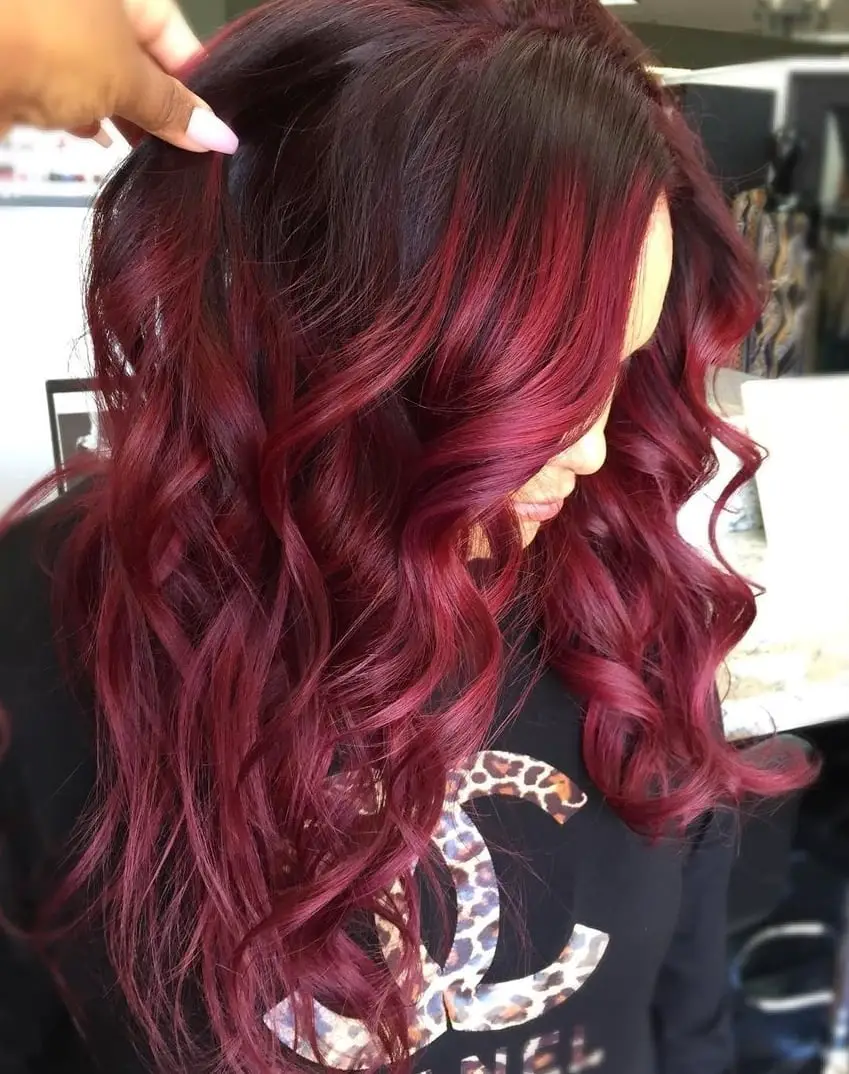
Dark brown with deep red highlights in a blowout, close-up take
Courtesy of: hadviser.com
Works as a single statement. Dark brown base with deep red highlights reads rich without the orange shift that lighter reds bring. The thick, wavy texture carries the blowout well, the waves hold their shape through the day. Most face shapes work, especially when the side part directs the highlights forward. Skip it if you prefer solid color or have fine hair that may not hold the wave pattern.
The layers give the blowout structure, so the volume sits evenly from root to end. A smoothing serum before drying keeps the deep red pieces glossy. The deep red reads strongest in the first four weeks, then settles into a warmer tone that still works with the brown base.
Vibrant red with orange undertones and loose waves
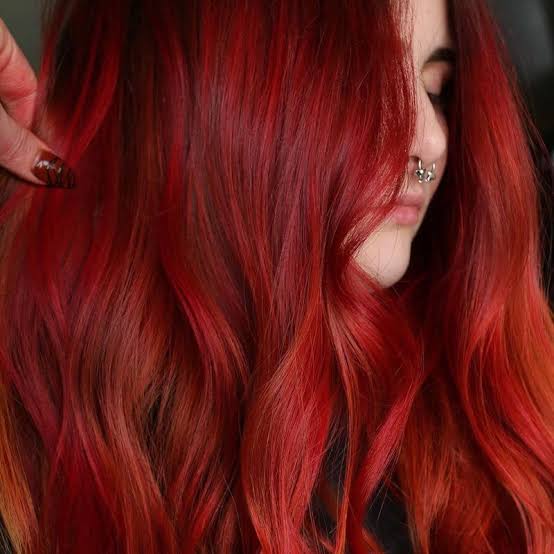
Photo credit: byrdie.com
Color this fiery fades faster than you expect. Vibrant red with orange undertones hits bright at first, then shifts toward a softer copper, so plan a gloss at week four to keep the orange in check. The medium density and loose waves carry the warmth without fighting it. The wave pattern lets the undertone catch light in patches rather than one flat block. This shade lives in the bright lane and never dims on its own. A texturizing spray on the mid-lengths keeps the waves from falling flat by afternoon.
Dark brown lob with copper highlights and waves, wavy
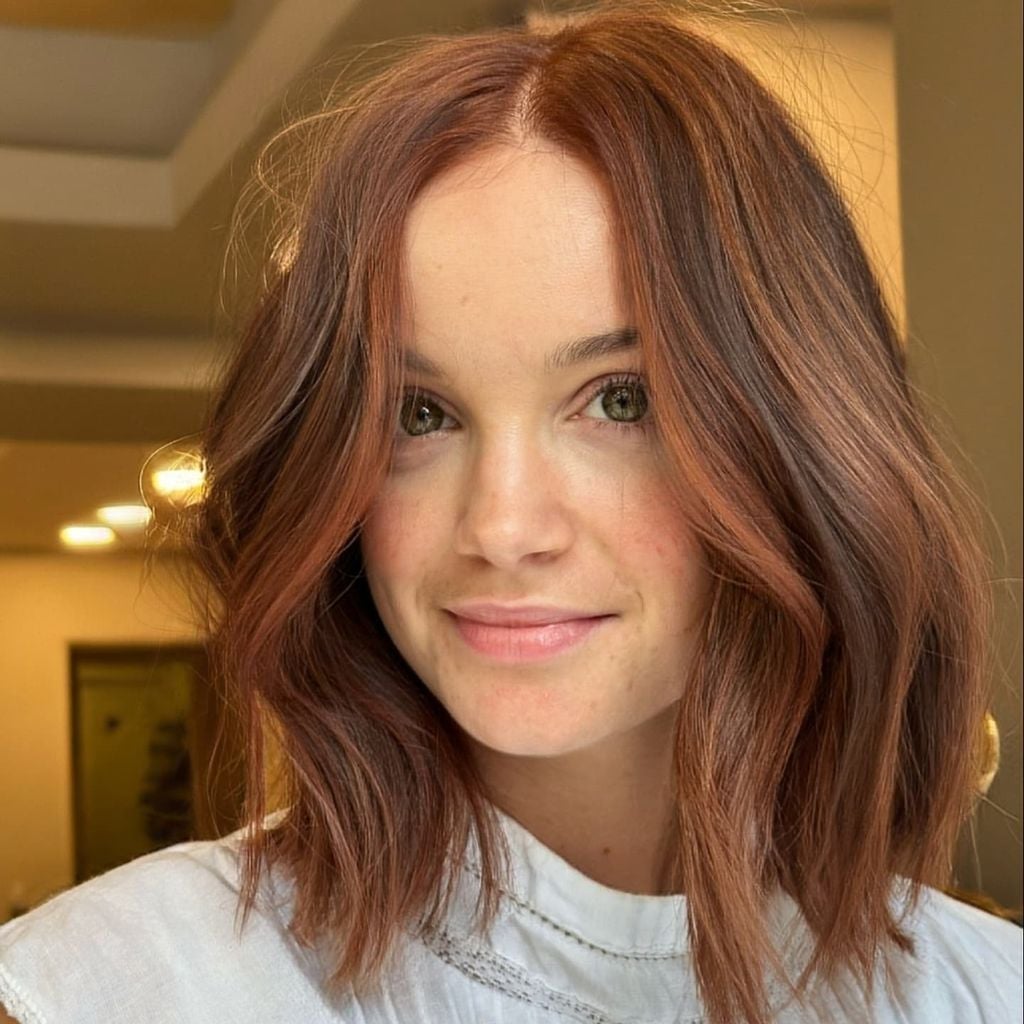
Image credit: glamour.com
A lob is a practical length until you add copper highlights. Dark brown lob with copper highlights works because the warm pieces sit close enough to the root to feel connected, not grown out. The middle part and wavy styling keep the shape soft, but the trade-off is that the highlights need a toner refresh around week six to stay copper instead of turning brassy. The contrast between dark brown and copper shifts fast. The waves help blend the regrowth, but straight styling makes the line more obvious. The lob itself is low-maintenance for styling: air-dry with a wave cream, then touch the ends with a flat iron for a soft bend.
Deep dark red with burgundy highlights and layers
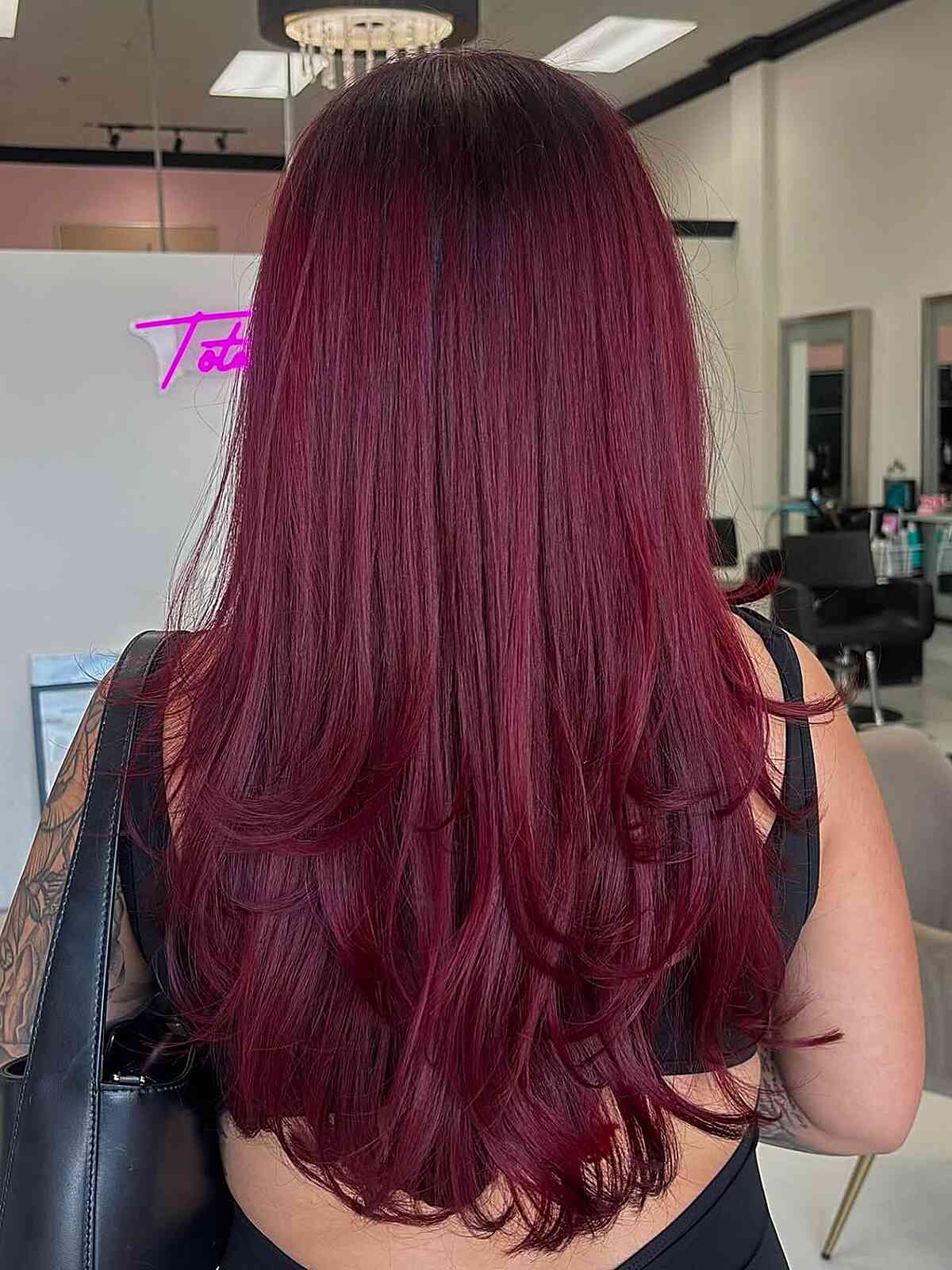
Source: latest-hairstyles.com
Deep tones land best when the weather turns cooler. Deep dark red with burgundy highlights reads richer in lower light, which is why it suits evening events and shorter days. The layers keep the color from sitting in one heavy block. The burgundy pieces sit deeper in the cut and catch light differently depending on the wave. This is a salon-only shade because the depth requires a precise base color and the burgundy highlights need a separate formula to look subtle rather than muddy. Centered parting and soft waves let the layers fall forward, so the highlights show from the front even on the back view. A color-safe shampoo preserves the red for about six weeks before the burgundy starts to fade toward brown.
Final Thoughts
Pick the shade that matches your morning routine, not the other way around.
- Wash twice a week: go for deeper reds that fade slowly.
- Ten minutes for styling: face-framing bright pieces skip the full head.
- Cool base that pulls brassy: schedule toning every six weeks.
- Fine hair: keep highlights fine and spaced to avoid a stripe effect.
Find your perfect red highlight shade and book the chair.
