You are sitting in the chair, the consultation card still in your hand. The stylist asks about braids, and you realize you want something that holds its shape past lunch and photographs well from every angle. That is the brief for every look here.
35 ideas span low-upkeep weekend styles to salon-built structures that last weeks. Fine hair, thick coils, blunt bobs, and lengths you have not seen in years all have a place here. Which is why Elegant Braids Styles 2027 fill so many saved boards: the right braid does not fight your texture or your schedule.
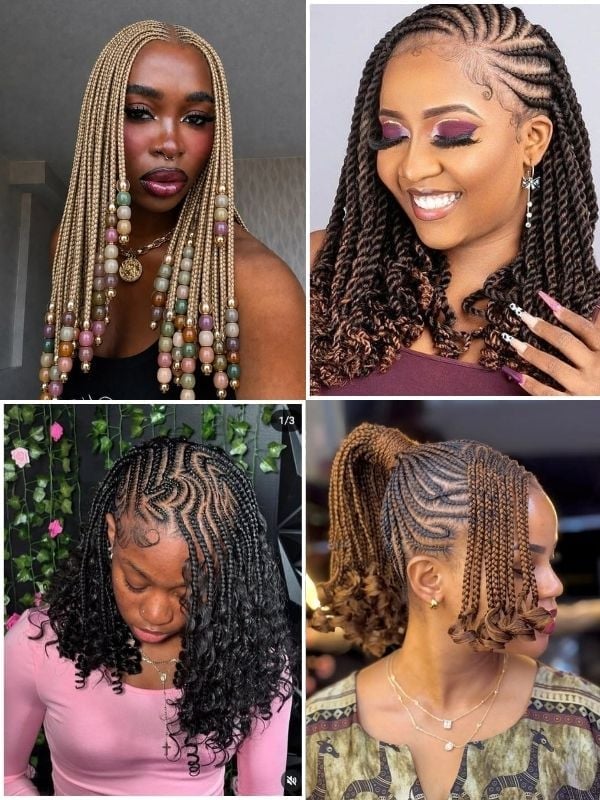
Fine blonde braids with colorful beads
Courtesy of: exquisitewomanlife.com
Middle part, fine blonde strands, and a thick density of individual braids, the design here relies on contrast between delicate hair and chunky, colorful beads. Each braid ends with a bead in a different shape and size, which gives the whole style a playful rhythm. You need starting hair at shoulder length with enough density to section into numerous braids without leaving gaps. The catch: those beads need checking. One loose closure and you are hunting for a tiny cylinder on the floor. Ask your stylist for long, fine individual braids with colorful beads.
Thick black hair in a geometric cornrow ponytail
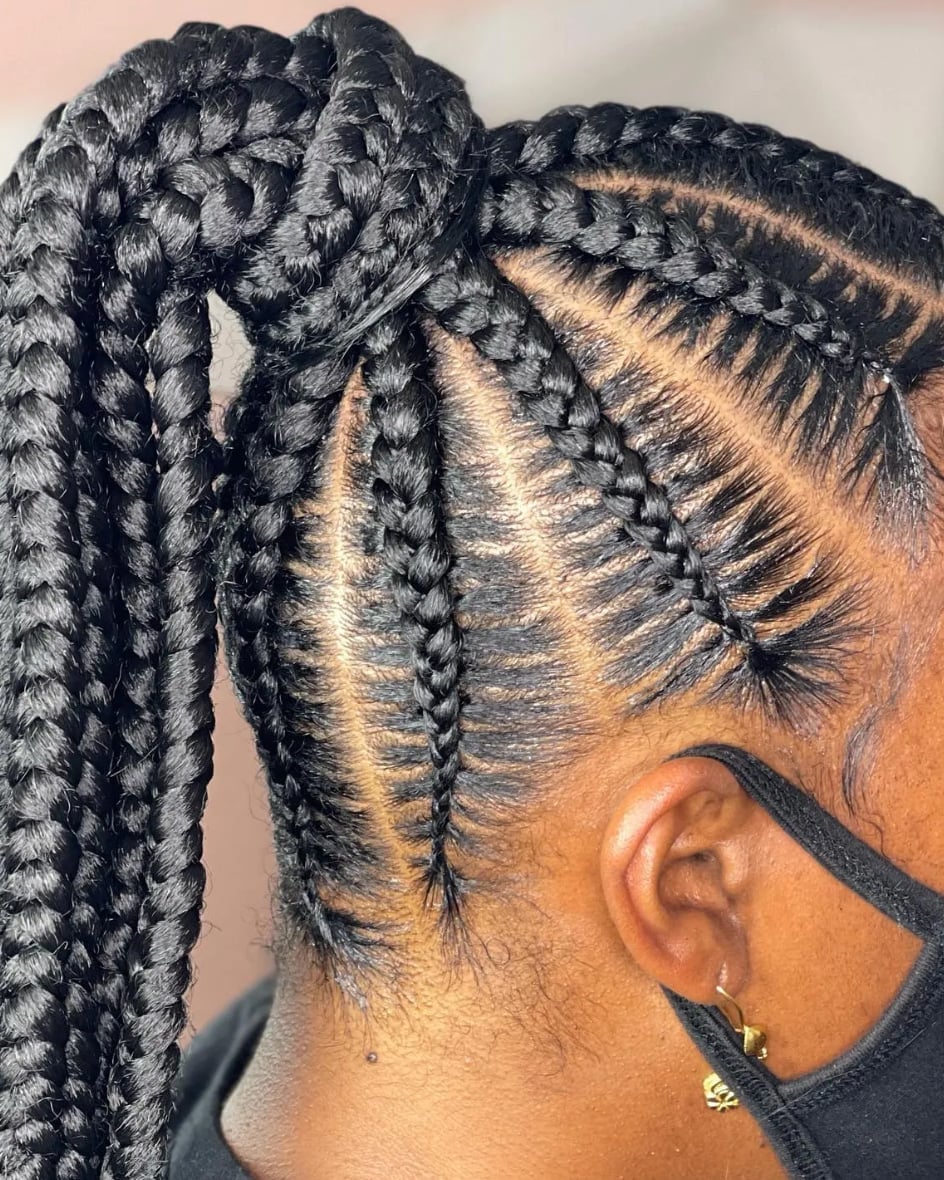
Photo credit: oprahdaily.com
Compare this to a standard cornrow style where the braids stay flat against the scalp the whole way. Here the geometric pattern only covers the top, then releases into a high ponytail of large, thick black braids that fall freely. The middle part keeps the scalp design symmetrical. Thick hair starting at shoulder length is needed, fine hair struggles to hold both the intricate cornrow base and the ponytail. A light hairspray across the cornrowed sections keeps those sharp angles from softening by midday.
Neatly parted thick black box braids
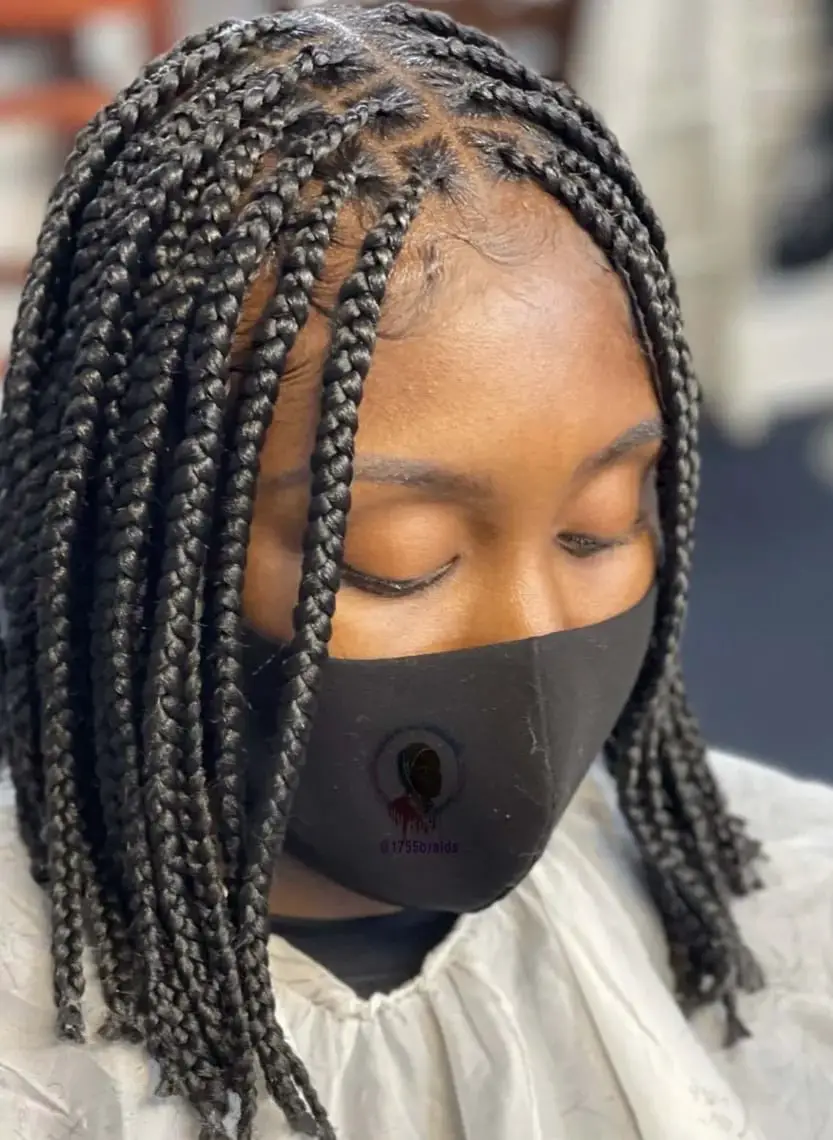
Image credit: styleseat.com
Each part here is a straight line from scalp to end, and every braid is the same thickness. The precision is the point. Thick, straight, deep black box braids provide a uniform finish. For very fine hair, the parting will show scalp too clearly and the braids may feel sparse. A middle part centers the look and keeps the framing even on both sides. This is a salon design. Those clean lines require a steady hand and sectioning clips. Condition the scalp every few days to avoid dryness at the part lines.
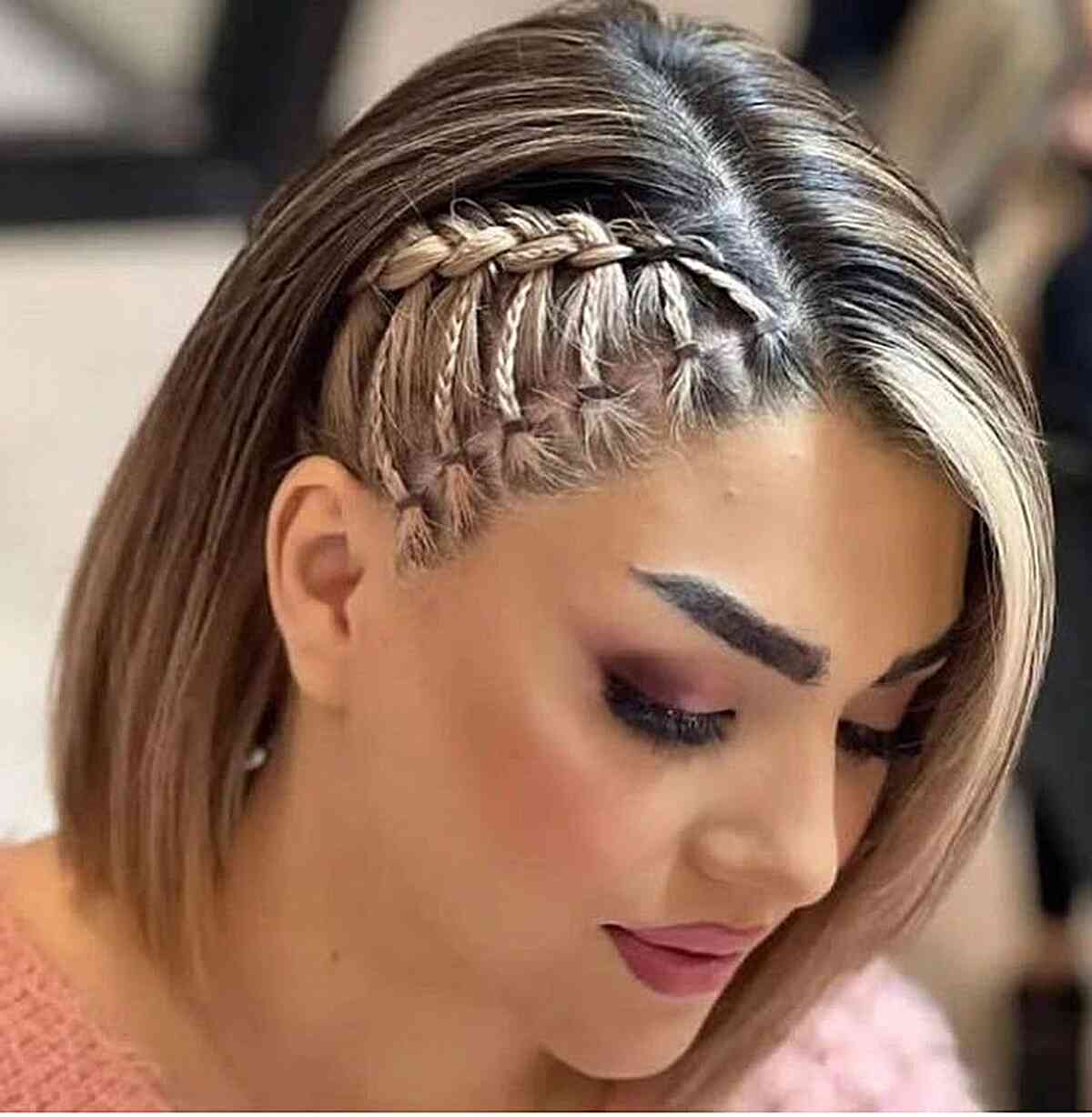
Bob with small blonde braids along the hairline
Source: latest-hairstyles.com
A straight bob with a middle part, fine texture, and subtle blonde highlights, then a row of small braids woven along the hairline changes the whole feel. Those braids sit like an unexpected detail on an otherwise simple cut. The bob length keeps the braids from overwhelming the shape. Tell your stylist: bob with small braids woven along the hairline. A touch of pomade on the braids keeps them neat, and the bob itself needs a trim every six to eight weeks to hold the line.
Sleek braided bun for fine, coily hair
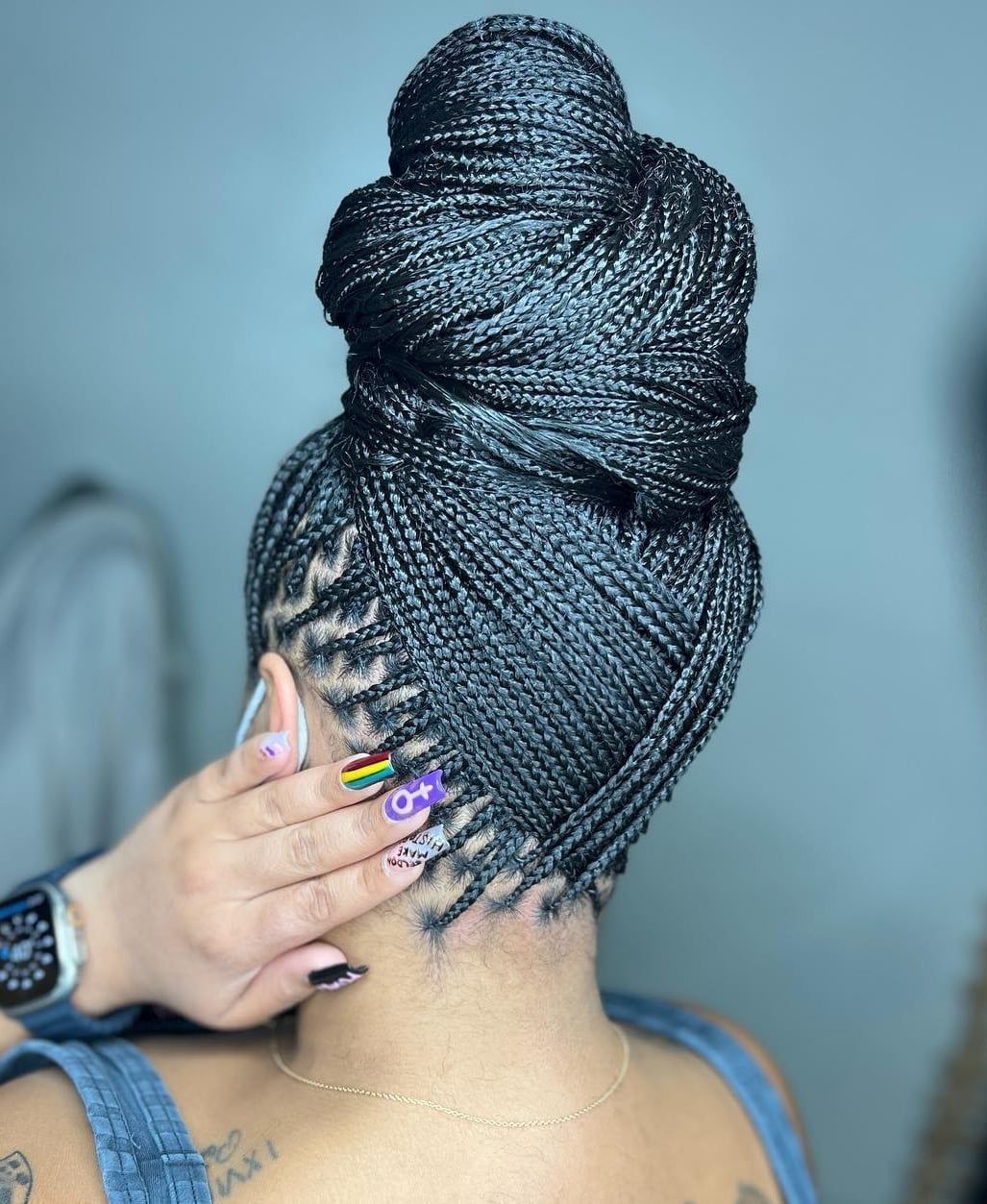
Via hadviser.com
The trade-off is straightforward: you get a neat, voluminous bun at the crown, but you spend time in the chair to get there. Micro braids are gathered upward into a large, sleek shape, the fine, coily texture grips the braids tightly, which is exactly what this updo needs. Any stray pieces can be smoothed to keep the finish clean. This is a salon-leaning style because the braiding is intricate and the bun requires even tension to sit centered. It works best for those who want an updo, as very straight hair may not hold tight braiding.
Ombre braids with cowrie shells and gold accents
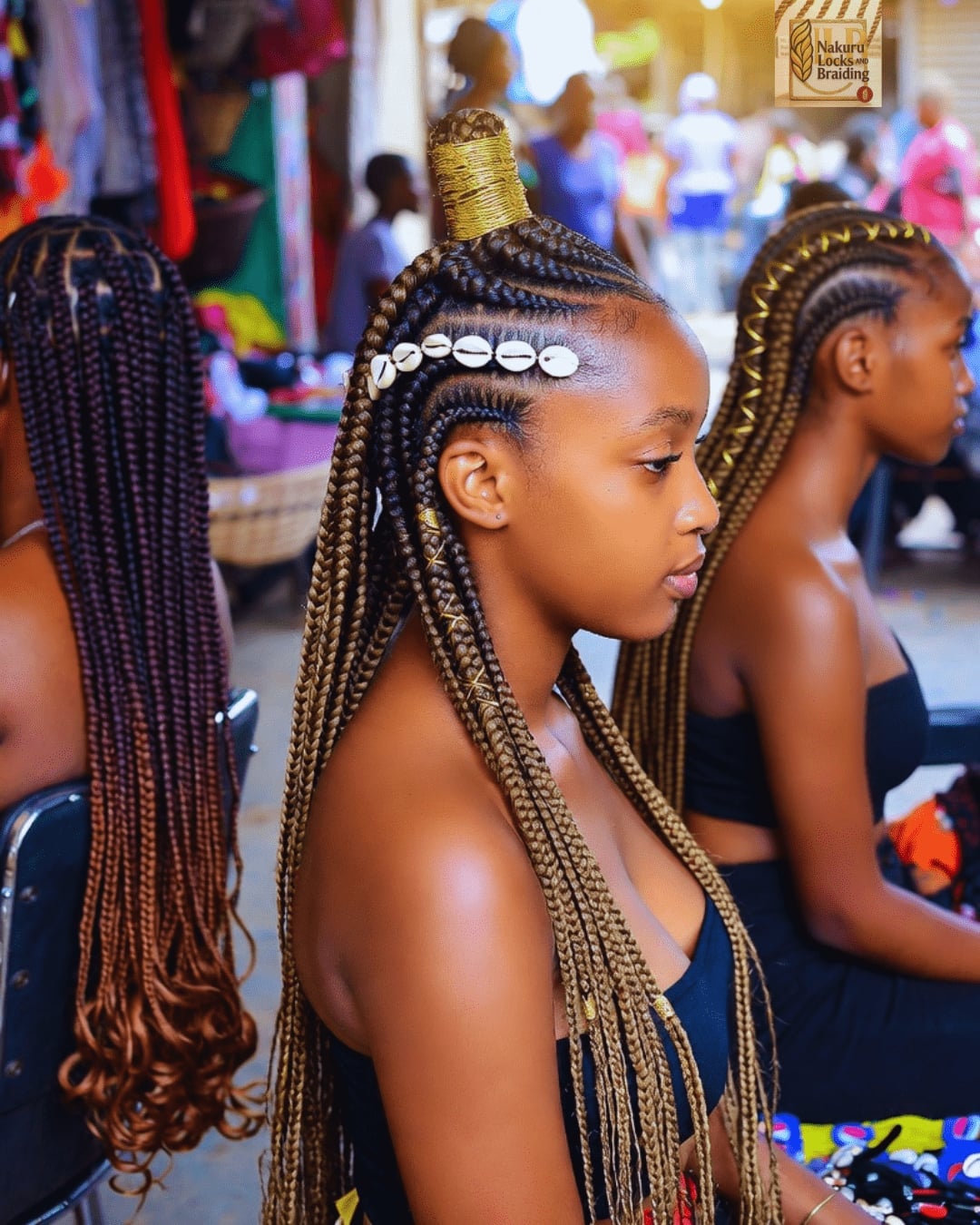
Courtesy of: nakurulocksandbraiding.com
What takes a braided updo from nice to unforgettable? Dark brown roots melting into blonde ends, then studded with cowrie shells and small gold accents. The high updo keeps the length out of the way while long braids still fall down the back. Thick, coily hair holds the ombre transition best; the color change needs enough contrast to read from a distance. A middle part keeps the shape symmetrical so the shells sit evenly.
Book it as: high updo with dark brown to blonde ombre braids and decorative shells. The embellishments are the whole point, so give your stylist a reference photo of the shell and gold placement you want. Handle the decorative pieces carefully when washing or sleeping to keep them attached. This style lands at festivals, cultural events and any occasion that calls for a second look. Pass when you prefer a solid hair color or zero embellishments.
Thick wavy black dutch braids with baby hairs
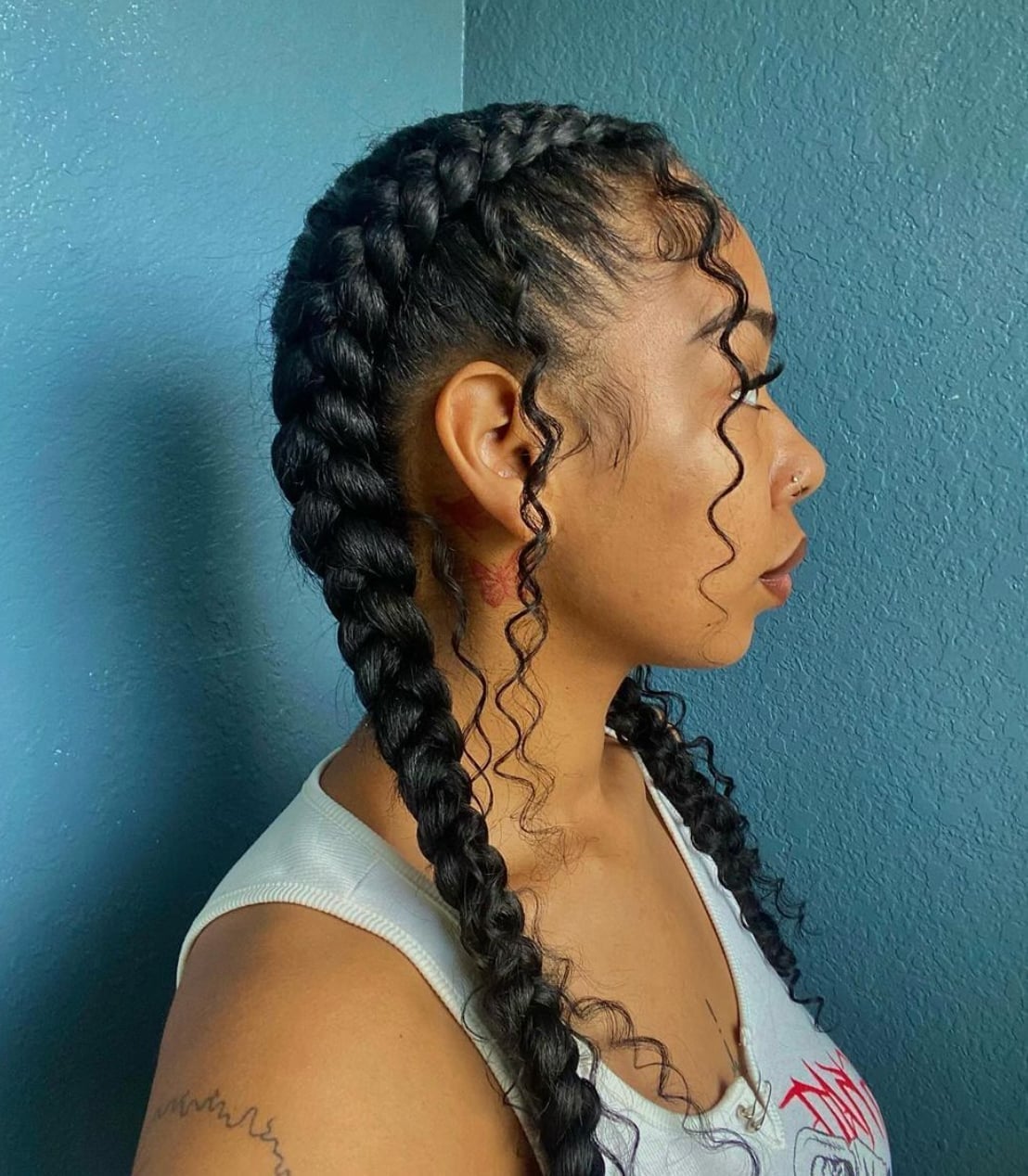
Photo credit: beautycon.com
Two thick Dutch braids sit closer to the scalp than a standard French braid, which means they hold tighter and last longer. The hair parts down the middle, then each section is braided from the nape down the back. Black, wavy texture gives the braids natural volume without added bulk. Defined baby hairs frame the face on both sides, softening the overall line.
The catch: this style needs medium to long length so the braids have weight. Tell your stylist: two thick Dutch braids with defined baby hairs. A light gel or edge control keeps those baby hairs in place all day. Very fine hair may not provide enough grip for the Dutch technique to stay snug. Skip it if you prefer a looser, more relaxed braid.
Cornrows to bantu knots with curly brown-highlighted ends
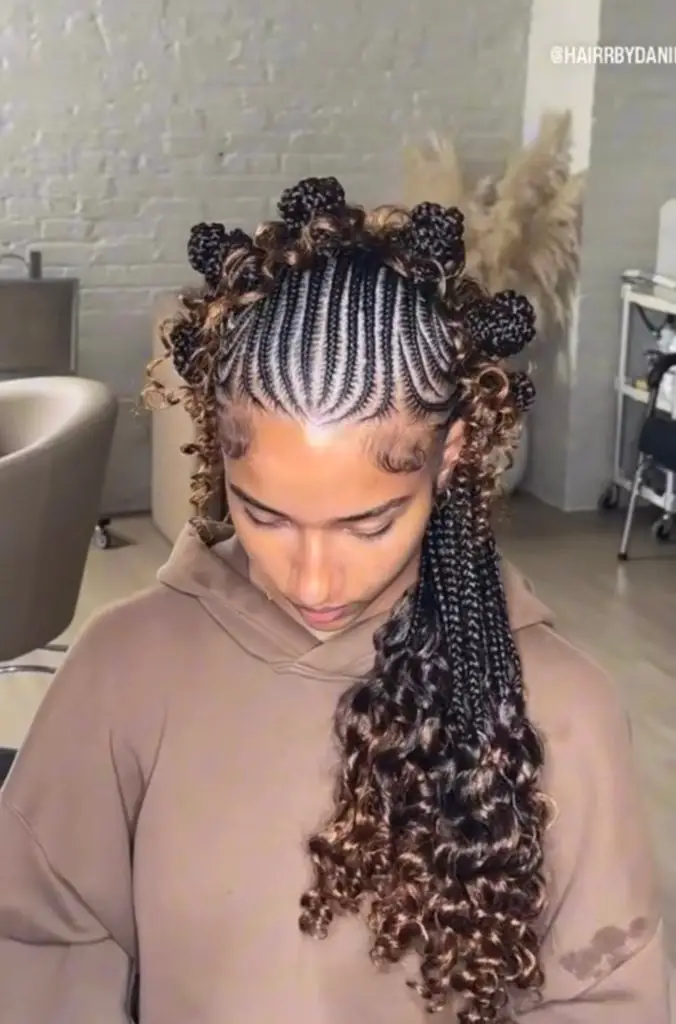
Image credit: zikoko.com
Cornrows alone look sleek. Bantu knots alone look sculptural. Combine them and you get a style that moves from crown to ends in three distinct acts: tight cornrows, then multiple bantu knots stacked on top, then long box braids that end in loose curls. The brown highlights in the curly ends separate them from the black base. The mistake people make is treating all three sections the same when they need different tension. Cornrows need firm tension to lie flat; bantu knots need slightly less so they coil without pulling; the curly ends need none at all. Give your stylist clear direction on how each section should feel against the scalp. Skip if you want a single braiding technique from root to tip.
Thin dark brown to blonde braids with beads
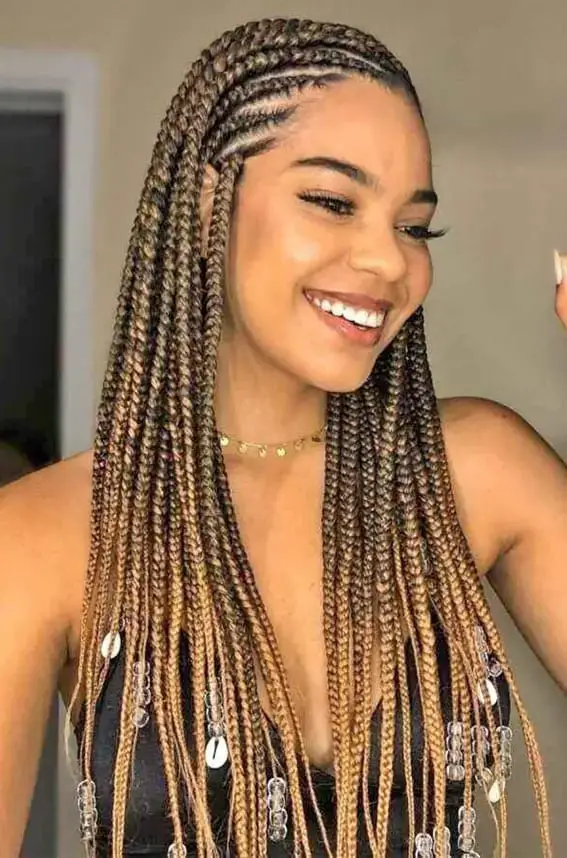
Source: fabmood.com
Numerous thin braids start dark brown at the roots and graduate to blonde toward the ends. A side parting breaks up the symmetry and lets the color shift read more naturally. Small beads and shells weave into the braids at intervals, adding weight that helps the thin sections hang straight. Thick hair sections well into this many braids without looking sparse. Ask your stylist for: thin braids with dark brown to blonde ombre and woven beads. The beads need to sit far enough from the scalp to avoid tugging during sleep. It works best for those who want a dimensional color and are willing to invest time in the installation process.
Intricate micro braids in dark brown wavy texture
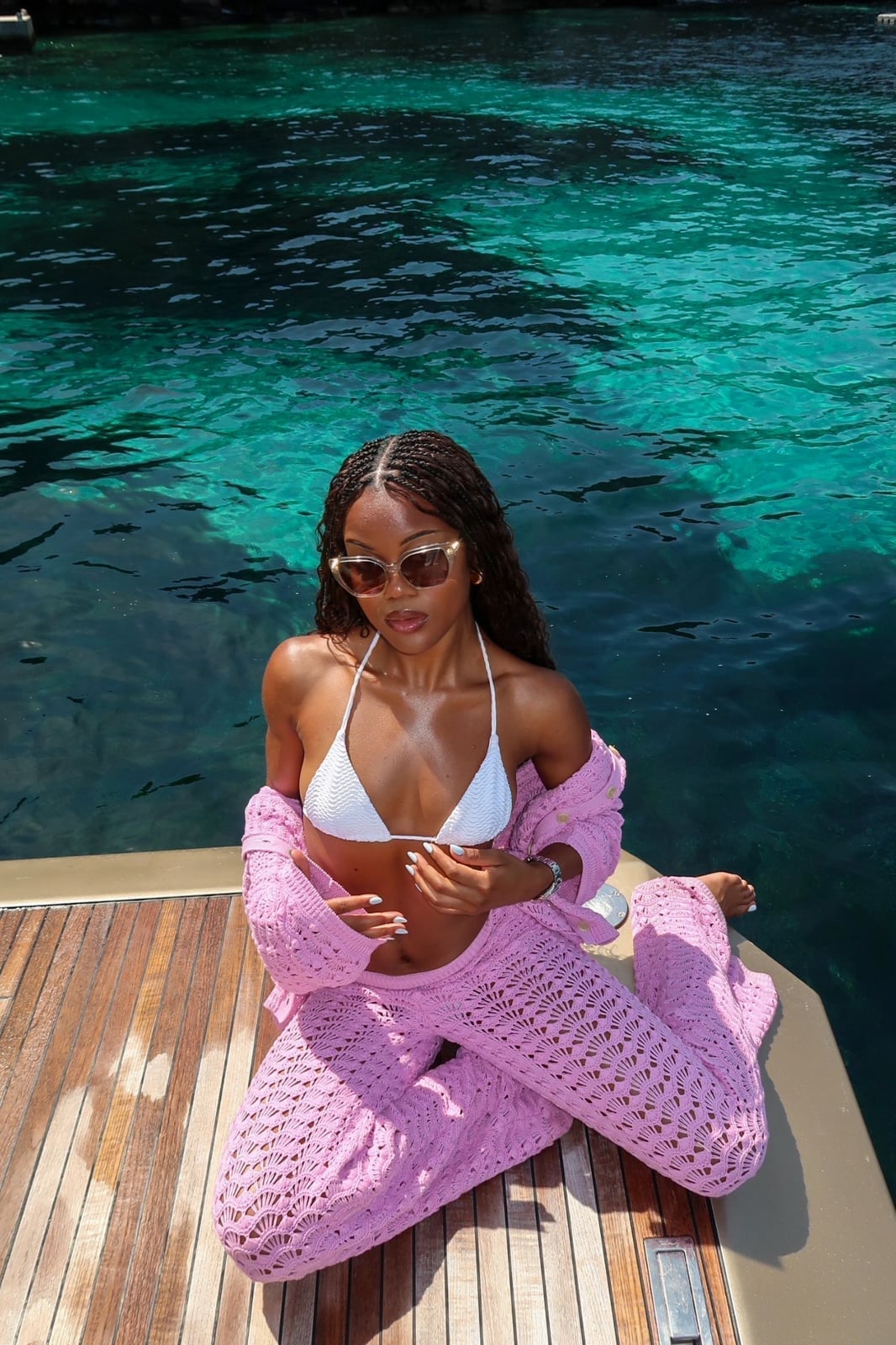
Source: vogue.com
Micro braids this fine rely on consistent sectioning from root to tip. A middle part gives the whole style a clean spine, then each braid follows the natural wavy texture of the hair. Dark brown throughout keeps the focus on the braiding pattern rather than color variation. Thick hair provides enough density for the micro sections to look substantial rather than sparse.
The technique takes time because each braid must be uniform in width from scalp to end. A silk scarf at night preserves the shape and prevents frizz between sections. Very fine hair may not have the bulk needed to make micro braids hold their form past the first week.
Dramatic side part with cornrows and loose waves
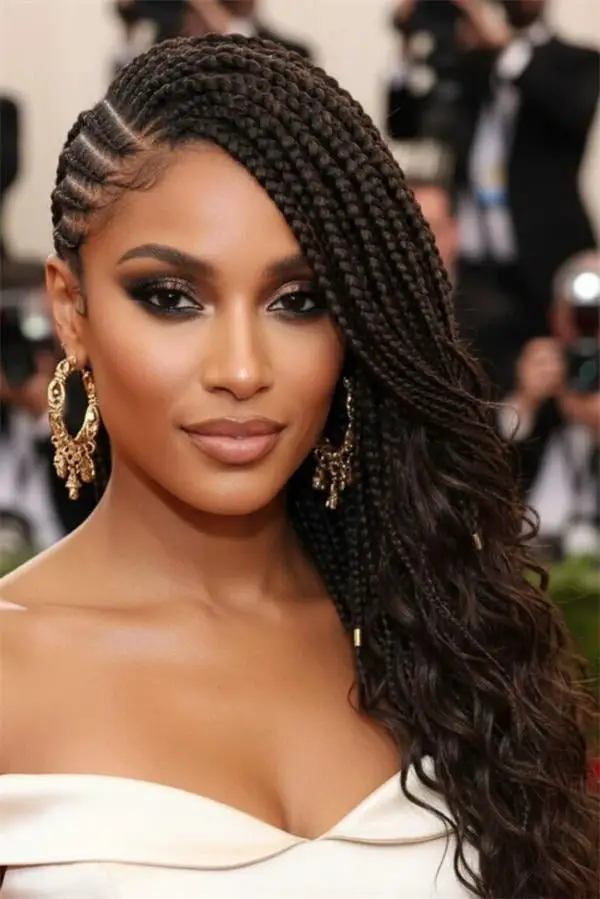
Via hotbraids.com
Cornrows on one side and voluminous box braids on the other. This is not a symmetrical style, and the deep side part makes the contrast deliberate. The dark brown color grounds the loose, coily waves on the heavier side. Thick hair that can handle the tension of cornrows on one half and the weight of box braids on the other is the starting point here. A middle part would ruin the drama. A balanced look or very straight hair that will not hold a coily wave without extensions does not suit this style. The waves need refreshing every few days with a moisturizing spray to keep their definition.
Tell your stylist: side-swept cornrows transitioning into box braids with loose waves.
Black braids with curly texture look sharp
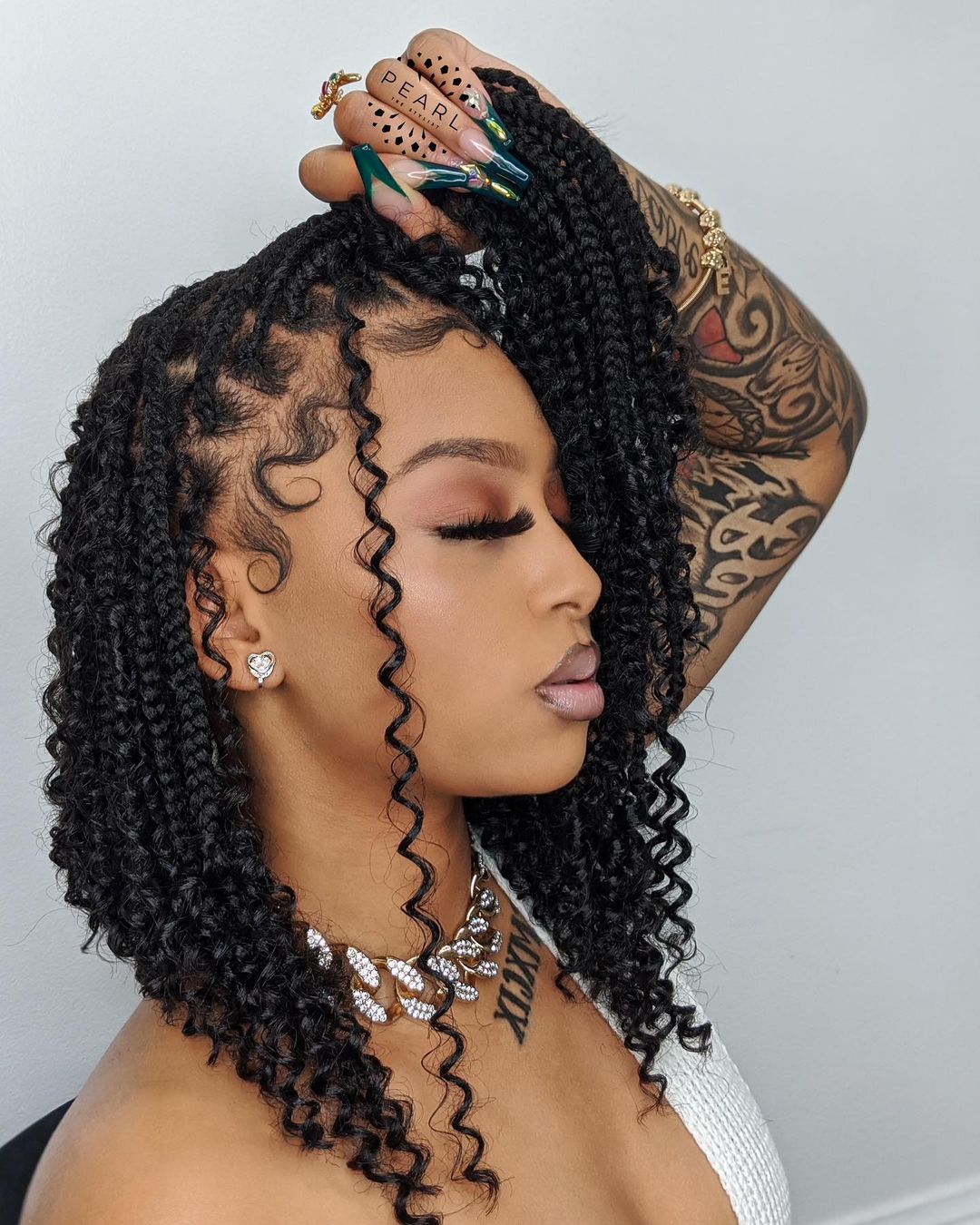
Courtesy of: therighthairstyles.com
Intricate braids with a curly texture and defined baby hairs at the hairline. The detail here is in the framing. The black color looks a single deep note, letting the curl pattern and the delicate swoop of the baby hairs carry the style. Thick, curly hair of medium to long length is the natural fit; the braids need enough density to look solid, not sparse. Pass when you have straight hair that will not hold a curly braid texture or prefer to skip the baby-hair styling entirely. A soft brush and a light-hold hairspray are the tools for the hairline. The effect is worth the ten extra minutes.
Long braids with curly ends and blonde highlights
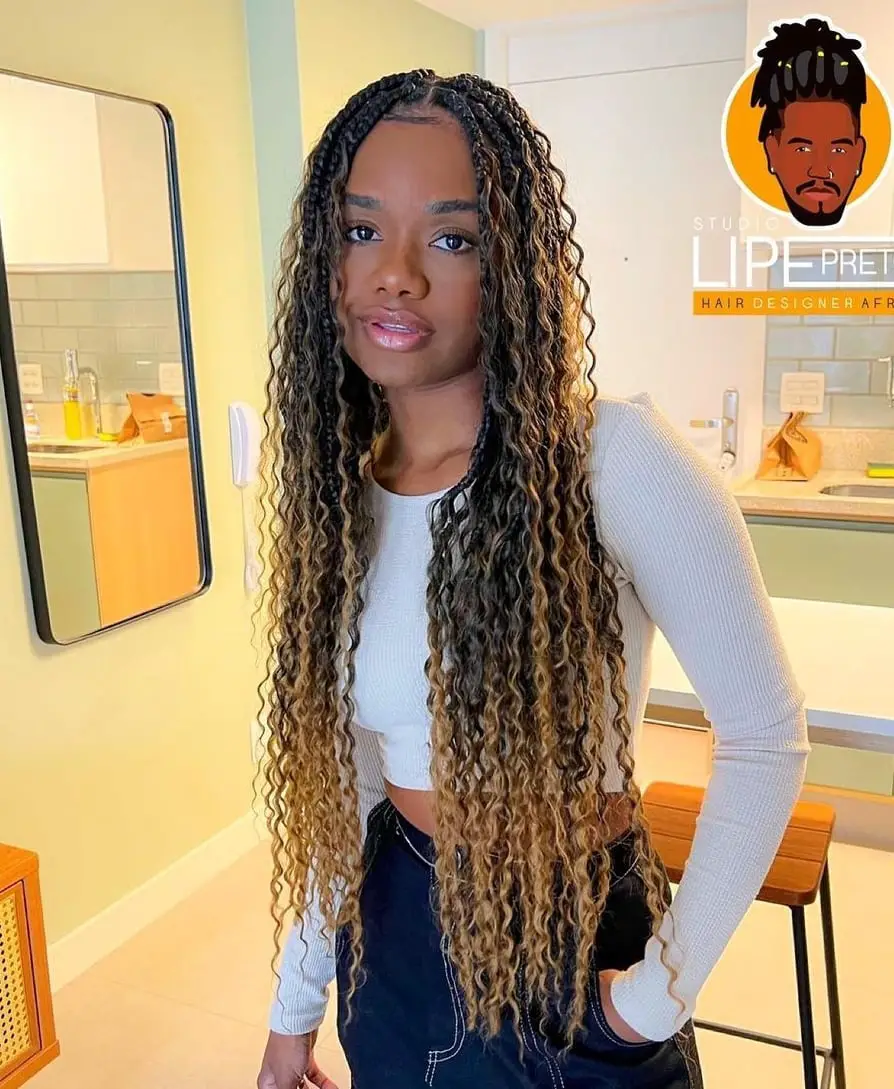
Photo credit: hadviser.com
The braid stops and the curl starts, a transition that gives you two textures in one style. A middle part keeps the look grounded, while the honey blonde highlights against the black base catch attention without needing a full lightening job. Thick, wavy hair of long length is ideal; the curls at the ends need enough weight to hold their shape, not flop. The upkeep is about the ends: a curl-defining cream applied after washing keeps the wave from turning fuzzy. The highlights will need a toner refresh around week eight to keep the honey tone from warming too brassy. Two textures, two maintenance windows.
Ask your colorist for: long braids with loose wavy curly ends and honey blonde highlights.
Chunky French braid with blonde highlights
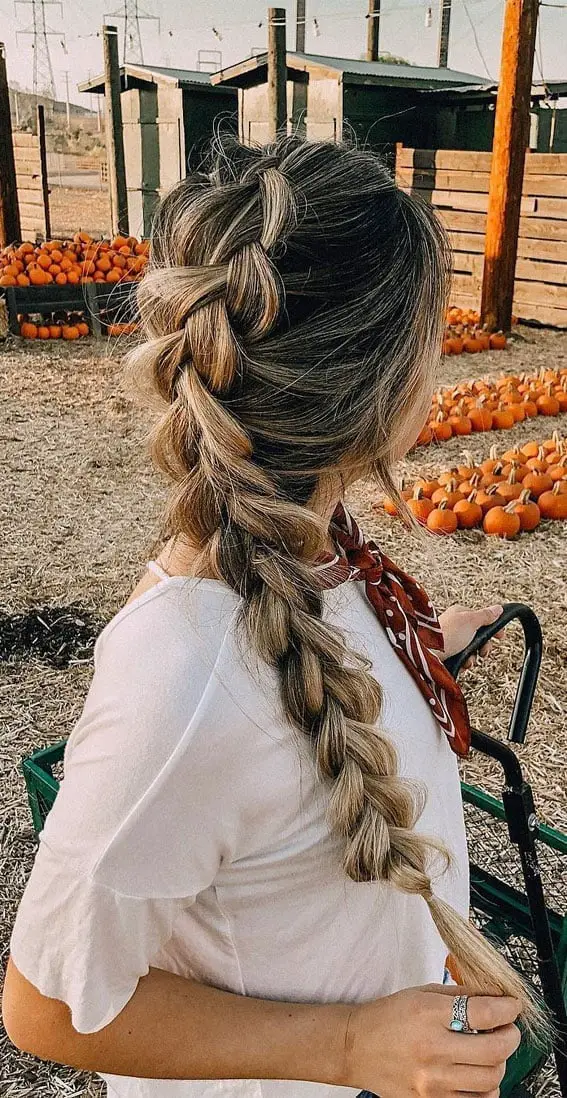
Image credit: fabmood.com
Still deciding between a braid and leaving it loose? A chunky French braid with face-framing strands pulled free gives you both. The braid starts high on the head, so the dark blonde base and the lighter blonde highlights show through the weave rather than disappearing into the nape. Thick, wavy hair of medium to long length is the requirement, thin hair would make the braid look skinny, and the loose strands would look straggly. A middle part and no bangs keep the silhouette clean. Pulling gently at the braid sections after securing it adds volume in about thirty seconds.
Uniform black box braids with metallic beads
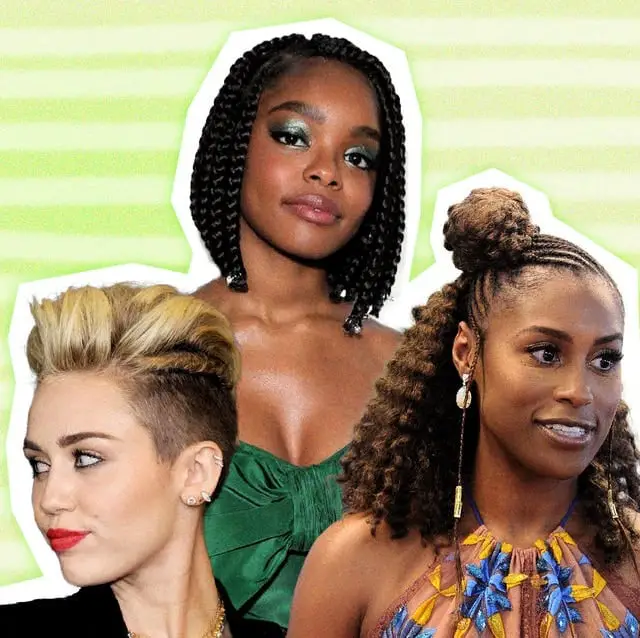
Source: seventeen.com
Box braids with a middle part and uniform thickness down the length. The precision is the point. No stray strands, no uneven sections, just rows of black braids ending in small metallic beads. The beads add a sound and a weight you will notice when you turn your head. Thick hair that sections cleanly is the starting point; the beads need to be fastened securely, or you will lose one every week. The drawback: the beads can catch on scarves and collars, so a scarf over the ends during sleep is a practical move. A scalp-conditioning spray keeps the roots from feeling tight between washes.
Tell your stylist: uniform thick box braids with metallic beads on the tips.
Cornrows transitioning to voluminous loose curls
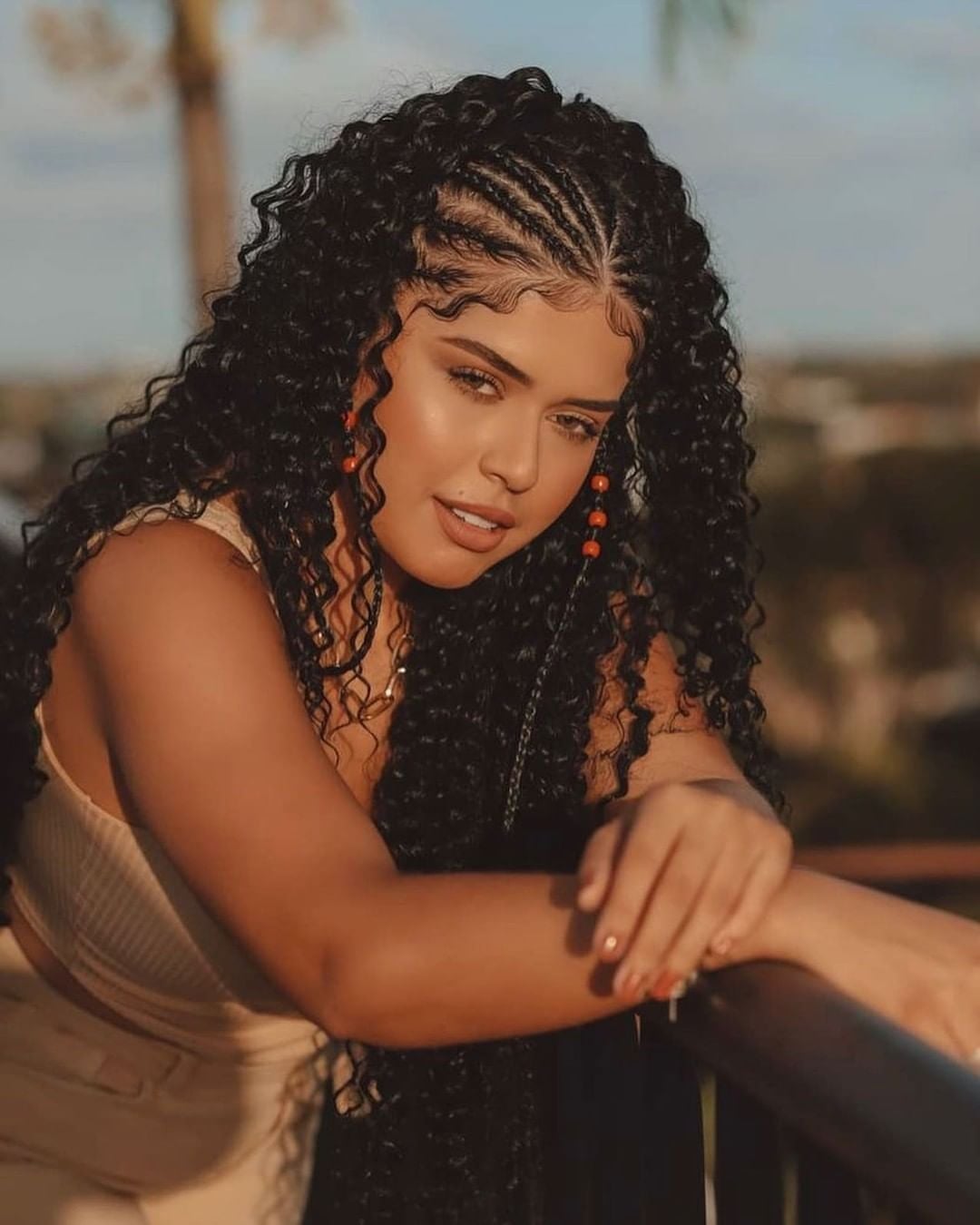
Via hadviser.com
A side part feeds neat cornrows into a cascade of voluminous loose curls, and the mistake most people make is treating the two halves as separate styles. They are one design: the braids anchor the short front, the curls own the length. You need thick, curly hair at mid-back or longer to make the transition look deliberate rather than abandoned. A salon builds this from clean sections, cornrowing tight against the scalp and leaving the ends free to curl. The catch: fine hair cannot hold the volume on the loose side, so the balance tips toward braid and away from curl. Black color here looks glossy weight. Styling a curl-enhancing product into the loose ends keeps the bounce visible for a full day.
Platinum blonde braids with wispy pieces and headband
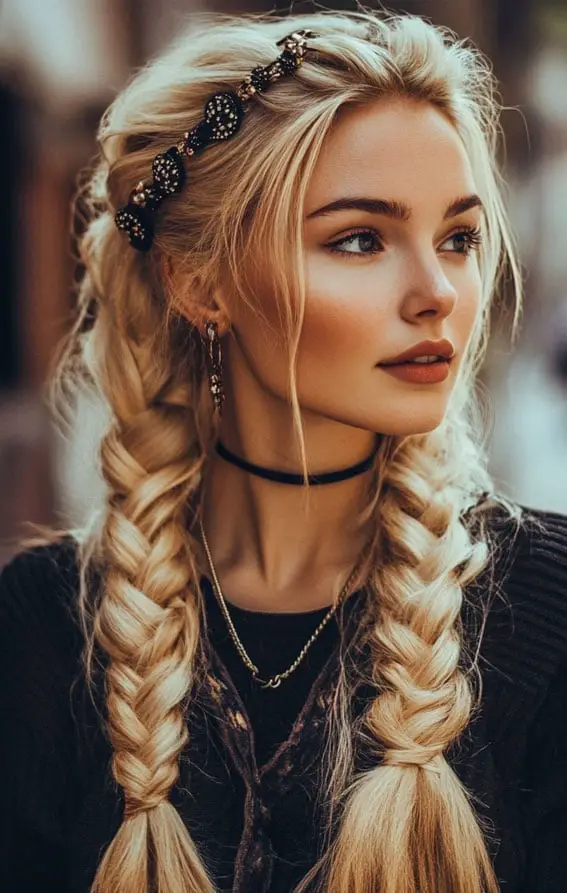
Courtesy of: fabmood.com
Two thick wavy braids come forward over each shoulder, and the detail that makes this style work is the face-framing wisps pulled loose from the middle part. Platinum blonde is a deliberate choice. You need thick, wavy hair for the braids to have substance. Ask your colorist for: two thick wavy braids with face-framing wisps and a headband. The headband sits behind the wisps, not over them, so the soft pieces stay visible. It works best with platinum blonde. A light serum on the wisps keeps them smooth against the platinum tone.
Box braids with curly ends and geometric parting
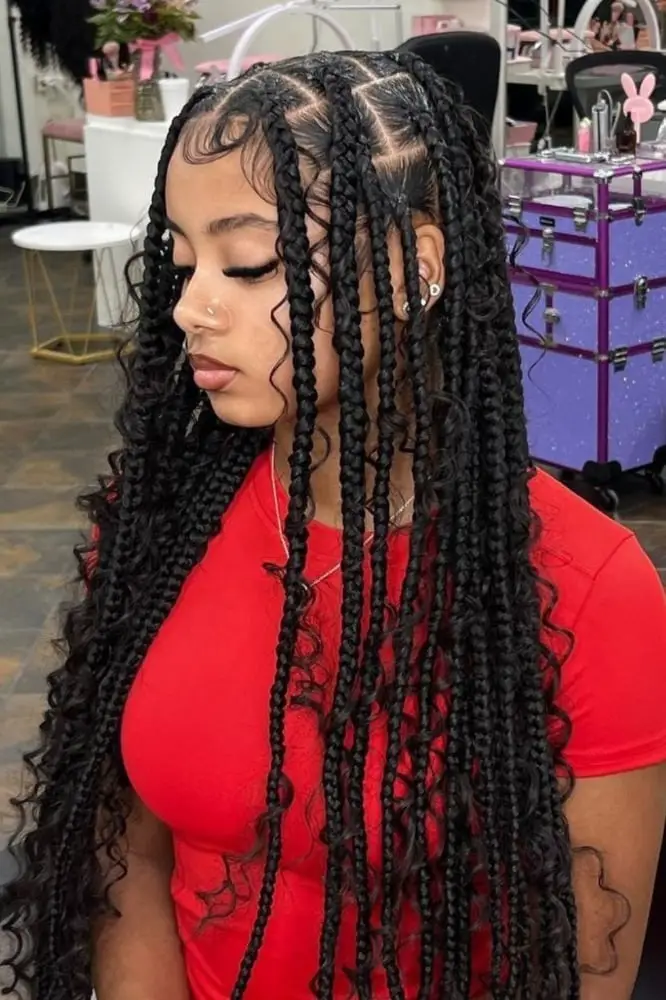
Photo credit: fabbon.com
A middle part is the expected choice. This one uses a middle part with a geometric pattern at the crown, and that shift changes the whole silhouette. The box braids drop straight until the ends curl, giving the length a softer finish than a uniform braid. Thick black hair at medium to long length works best here.
Delicate baby hairs keep the geometric crown from feeling severe. A light gel defines the baby hairs and holds the pattern visible through the day.
Fine braided updo with blonde and dark undertones
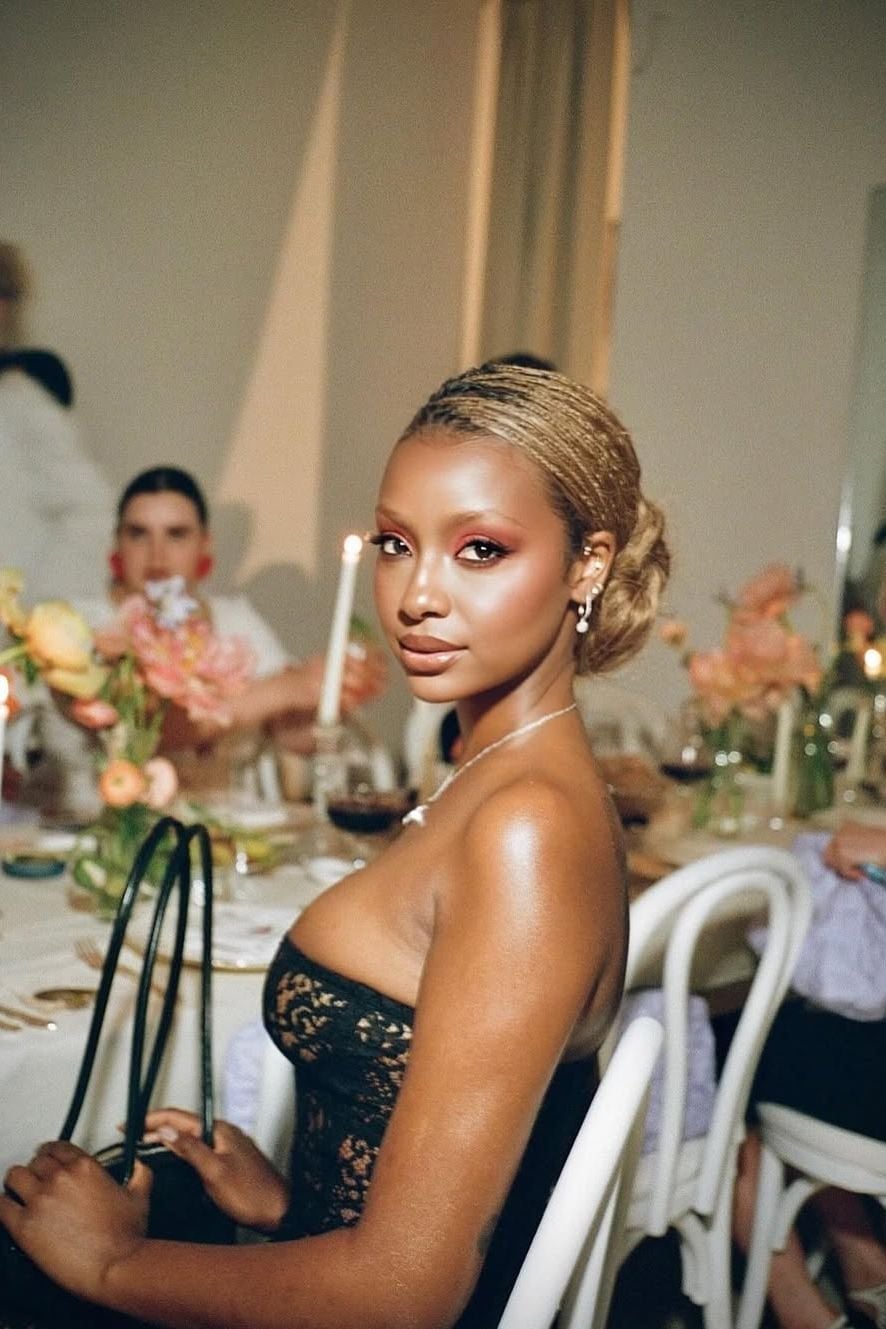
Image credit: allure.com
Fine braids wrapped into a bun at the nape read differently than a chunky braided updo. The fine scale lets the blonde with dark undertones show as layered ribbons rather than one flat shape. You need hair of medium to long length that can hold a tight braid without unraveling. The bun sits low, so the profile stays clean and the braid pattern stays visible. Ask your stylist for: fine braids styled into a grown-up bun at the nape. Compared to a larger braided bun, this one works better for fine hair that cannot fill a wide braid. A strong-hold hairspray keeps the bun secure through an evening.
Geometric cornrows leading into thick black box braids
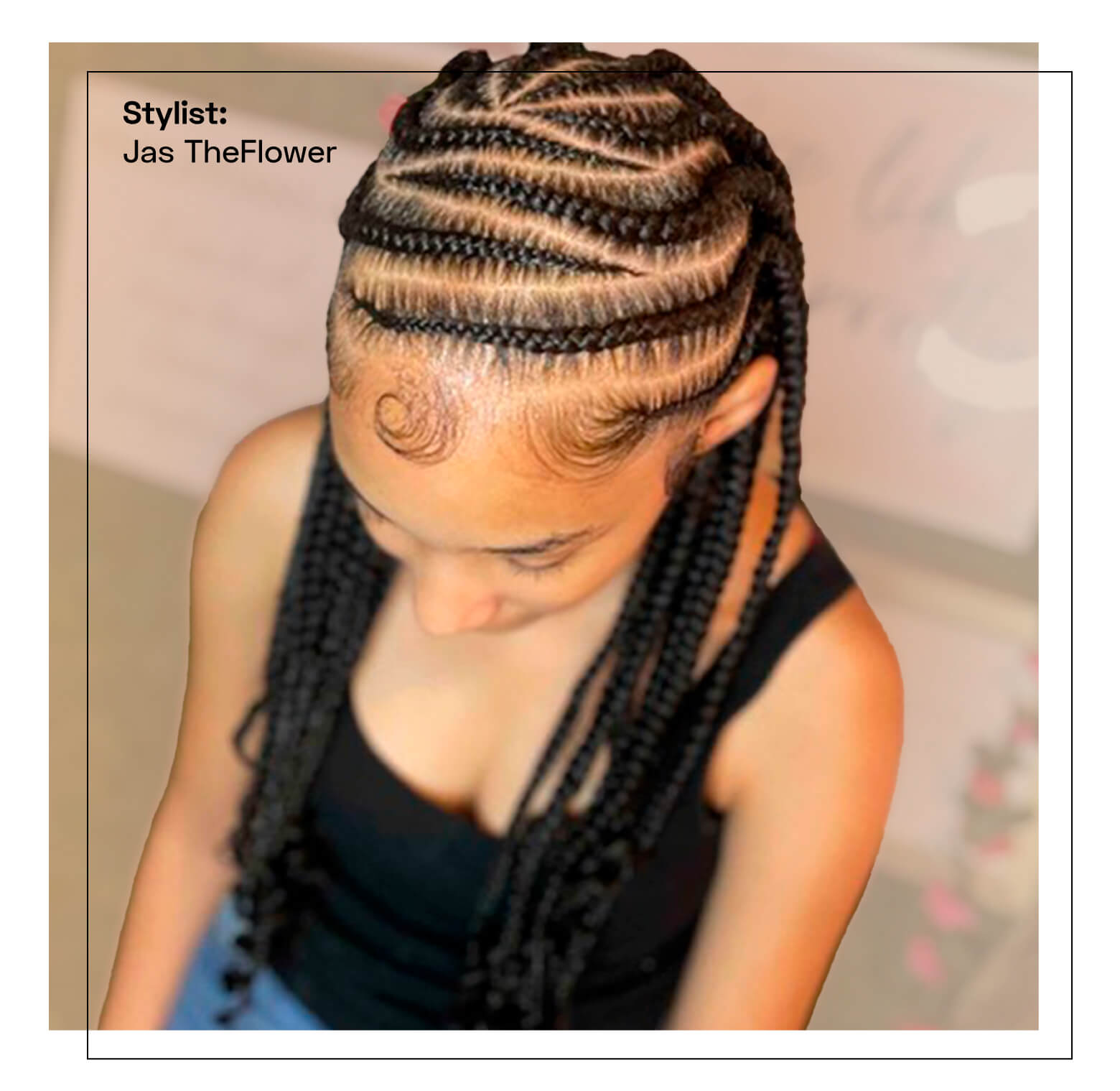
Via styleseat.com
Intricate cornrows at the crown shift into long thick box braids, and the geometric pattern gives the first few inches a modern edge that a straight part cannot match. Thick, straight black hair of long length takes the pattern cleanly. The cornrows hug the scalp, the box braids fall free, and the transition sits at the top of the head.
Skip it if you have fine hair that cannot support the cornrow tension or prefer a braid style without a geometric pattern. The middle part keeps the symmetry balanced. A scalp oil on the cornrowed sections prevents flaking as the style wears.
Medium brown braids in a high bun with auburn highlights
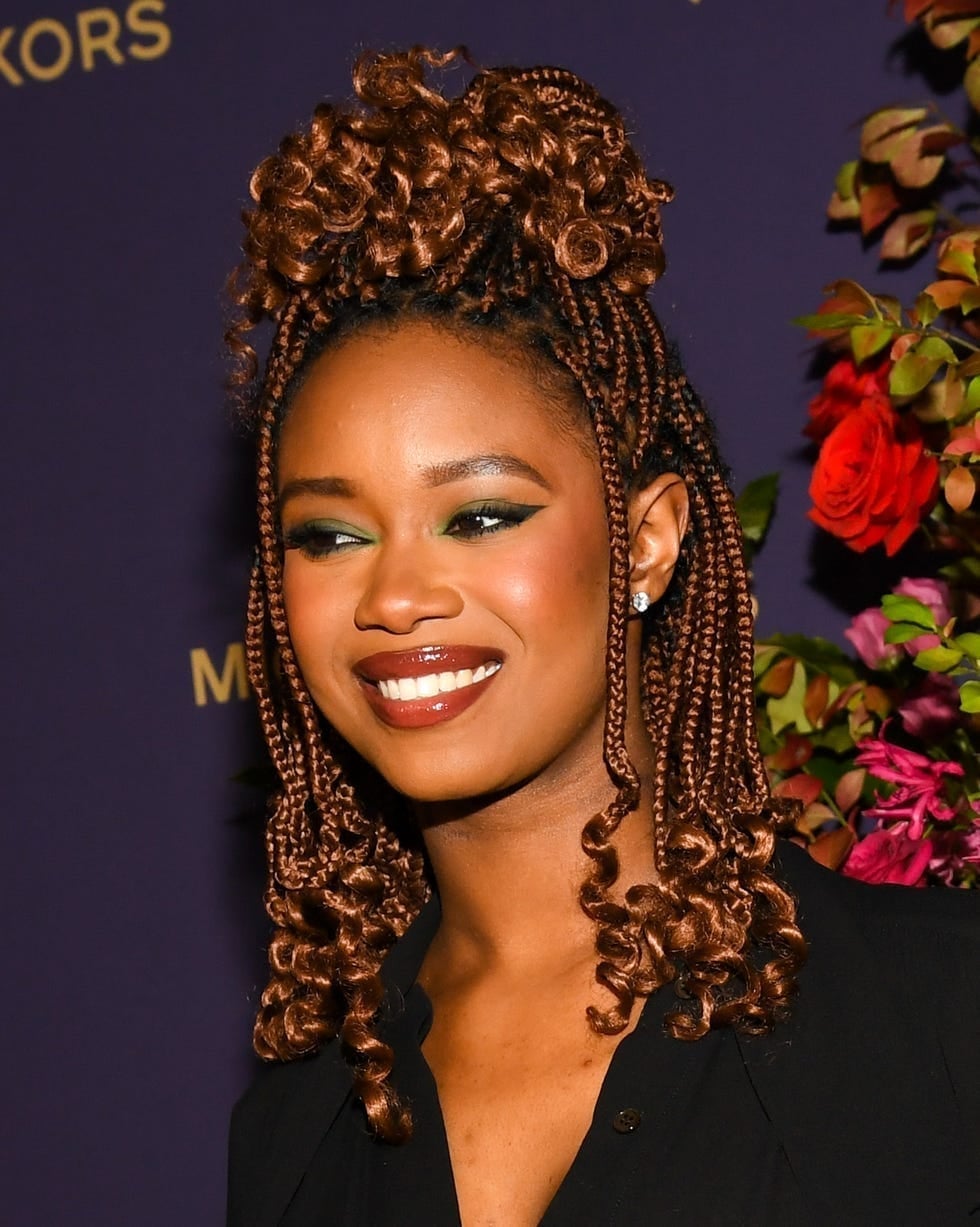
Courtesy of: elle.com
You might expect a high bun to mean no visible color work, but this one puts the auburn highlights where they matter. Medium brown braids are wrapped into a bun at the crown, and the curly tendrils left loose around the face show off those subtle warm streaks. The texture is thick and coily, which gives the bun enough body to stay put without pins slipping. A middle part keeps the front neat. Color holds well here because the curls at the ends trap the pigment longer than straight lengths would. Tell your stylist: medium brown braids with auburn highlights in a high bun with curly tendrils. Styling time runs about fifteen minutes once the braids are set. A light hairspray on the tendrils stops them from drooping by hour six.
Cornrows to long wavy braids in black
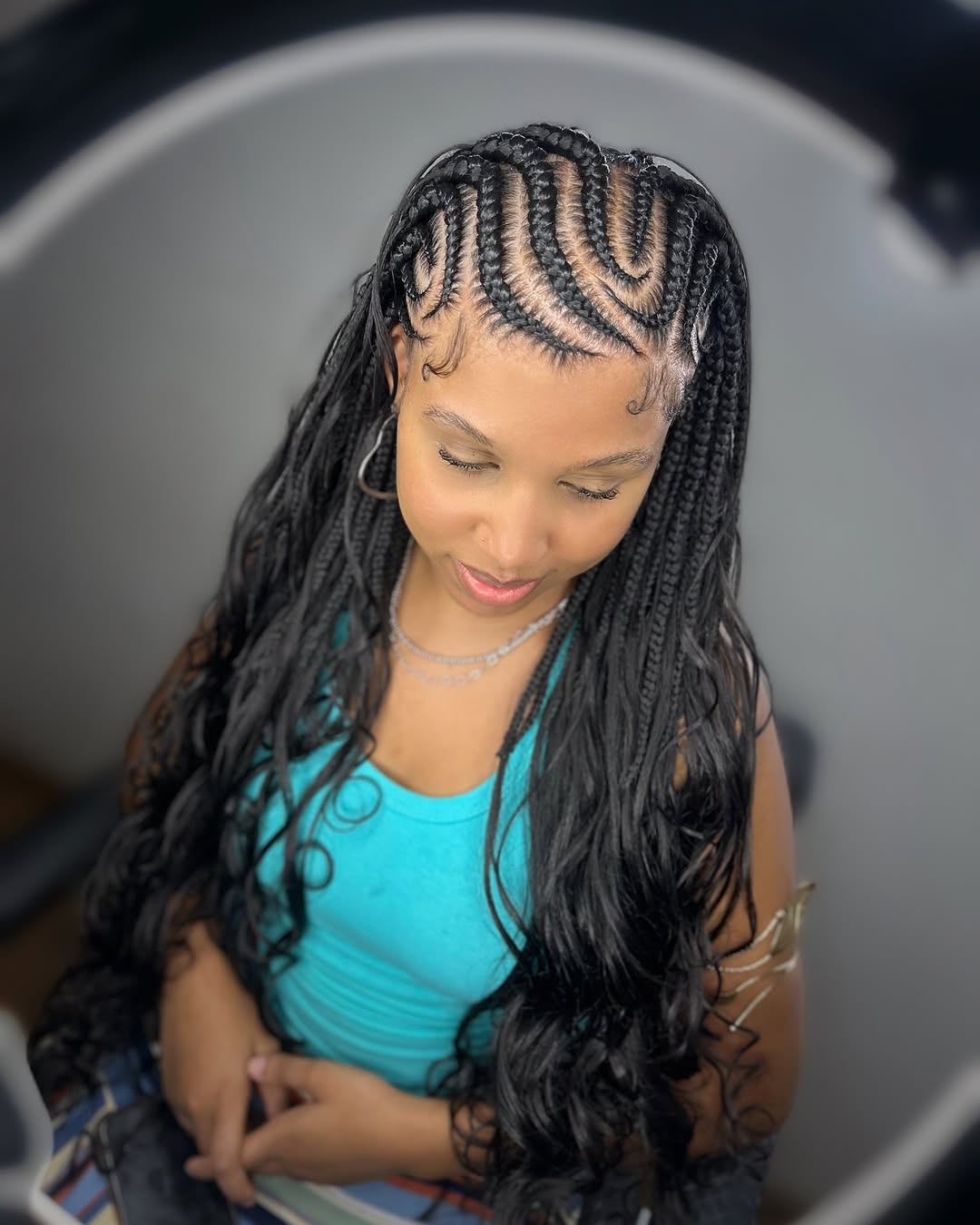
Photo credit: culturacolectiva.com
This is a cold-weather style that also works for warm evenings where you need hair off your neck but still want length. The cornrows lie flat against the scalp in a middle part, then transition into long wavy braids that fall past the shoulders. Texture is thick and wavy, which helps the braided section keep its shape without constant re-curling. Black is the base color here, so there is no root regrowth to track. The cornrow pattern requires a salon visit, about two hours for the braiding alone. Upkeep involves wrapping the hair at night to preserve the waves and a trim every ten weeks to clean up any frayed ends. Apply a heat protectant before refreshing the wavy section with a curling iron if the braids loosen.
Thin braids with butterfly charms and face-framing tendrils
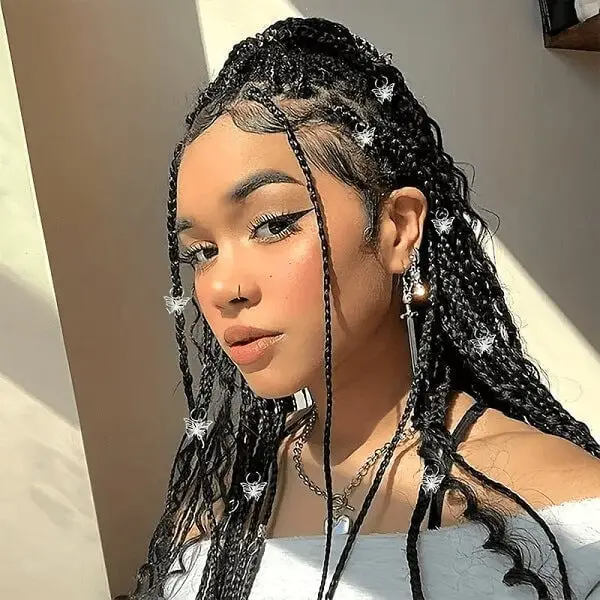
Image credit: mybraidedwig.com
Those tiny butterfly charms are not an afterthought. They are woven into the braids during installation, which adds about thirty minutes to the chair time. The thin braids start at a middle part and run straight down to mid-back, with a few tendrils left loose around the face for softness. Texture is thick and wavy, so the braids hold the charms without slipping. Black is the base color, which makes the metallic gold of the butterflies stand out. The catch: detangling around the charms takes patience, and a snagged charm can pull the whole braid loose. Styling is minimal, just arrange the charms so they sit evenly on both sides.
Thick black box braids with decorative knots
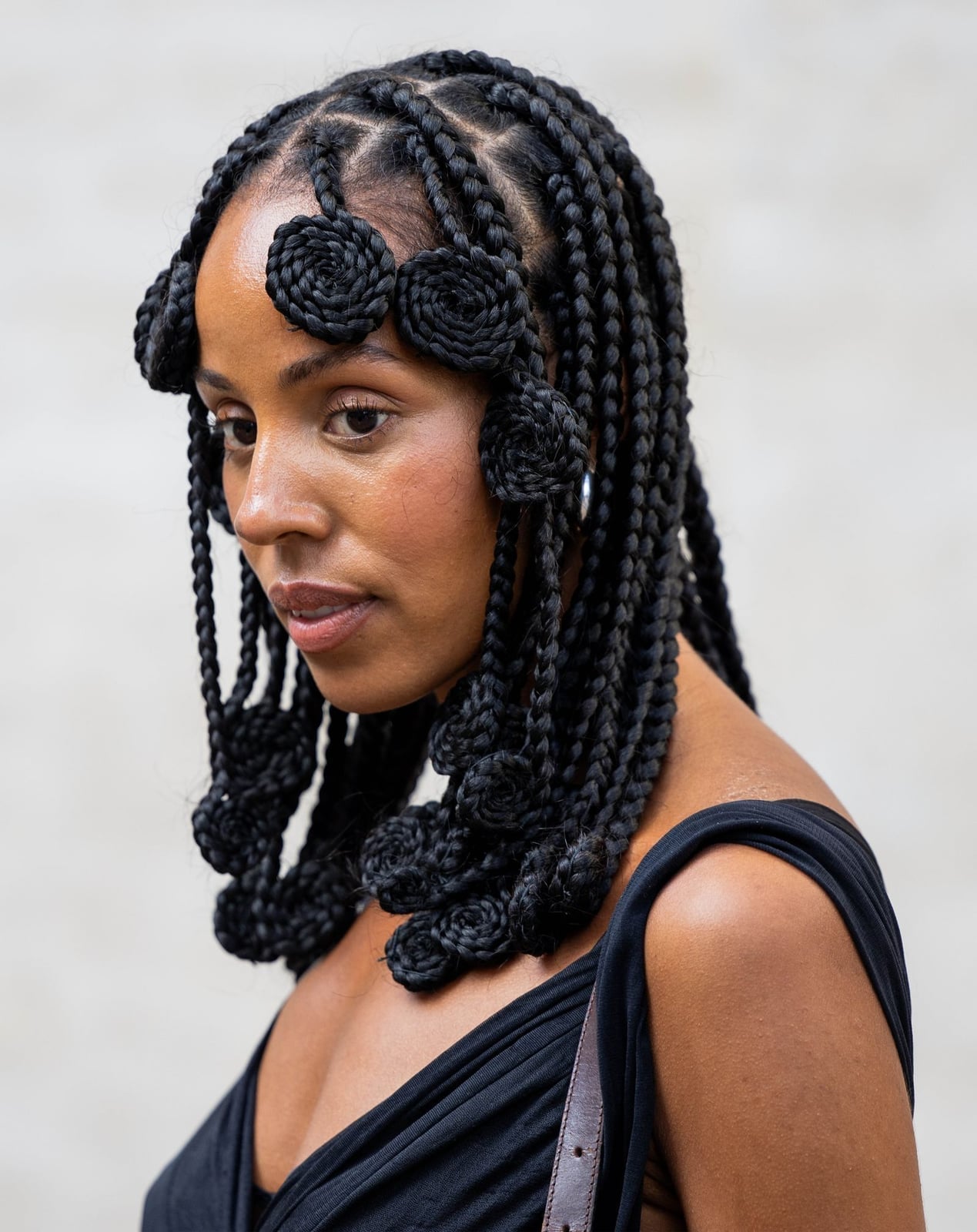
Source: allure.com
The common mistake with decorative knots is treating them as an afterthought, adding them after the braids are finished, which makes them look tacked on. Here the knots are built into the braid structure along the hairline, starting at the root and repeating every few inches. Thick black box braids fall from a middle part, and the knots create a raised texture that breaks up the visual line. The look is salon-leaning because the knot pattern requires even tension and consistent spacing. Skip it if you dislike anything that snags on collars or scarves, those knots catch on fabric. Styling is straightforward: a light pomade smoothed over the knots keeps them defined. Color is solid black, so no toning or root touch-up is needed between retwists.
Silver box braids in a low ponytail
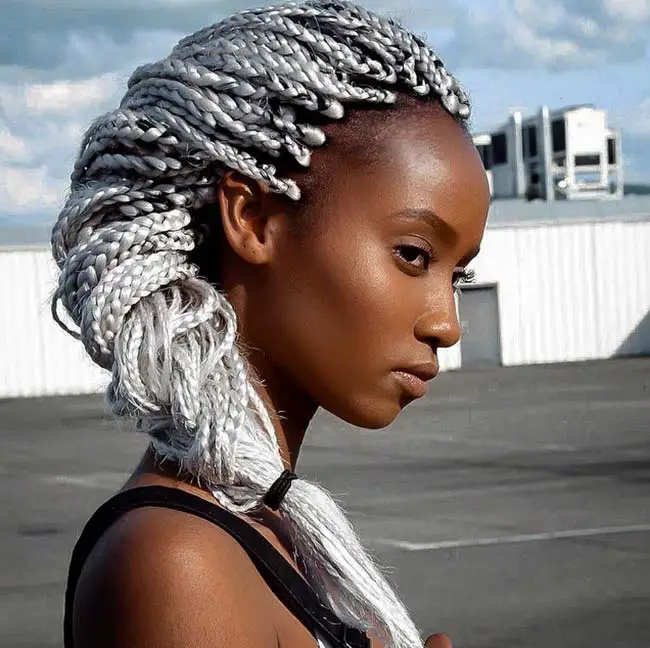
Via fashionisers.com
Silver box braids require a pre-lightening base, so this is a salon color job, not a weekend DIY. The thick braids are side-swept and gathered into a low ponytail at the nape, with a middle part visible at the crown. The silver tone is cool and even, which means you need to maintain it with a purple shampoo every two weeks to keep the brassiness away. Texture is thick, so the ponytail has weight, secure it with a strong elastic. Book it as: thick silver box braids styled into a low ponytail. The upkeep includes conditioning the scalp to prevent dryness from the extension weight. Styling time is under ten minutes once the braids are done; the ponytail sits low enough to stay comfortable under a jacket collar.
Long defined black box braids with wavy texture
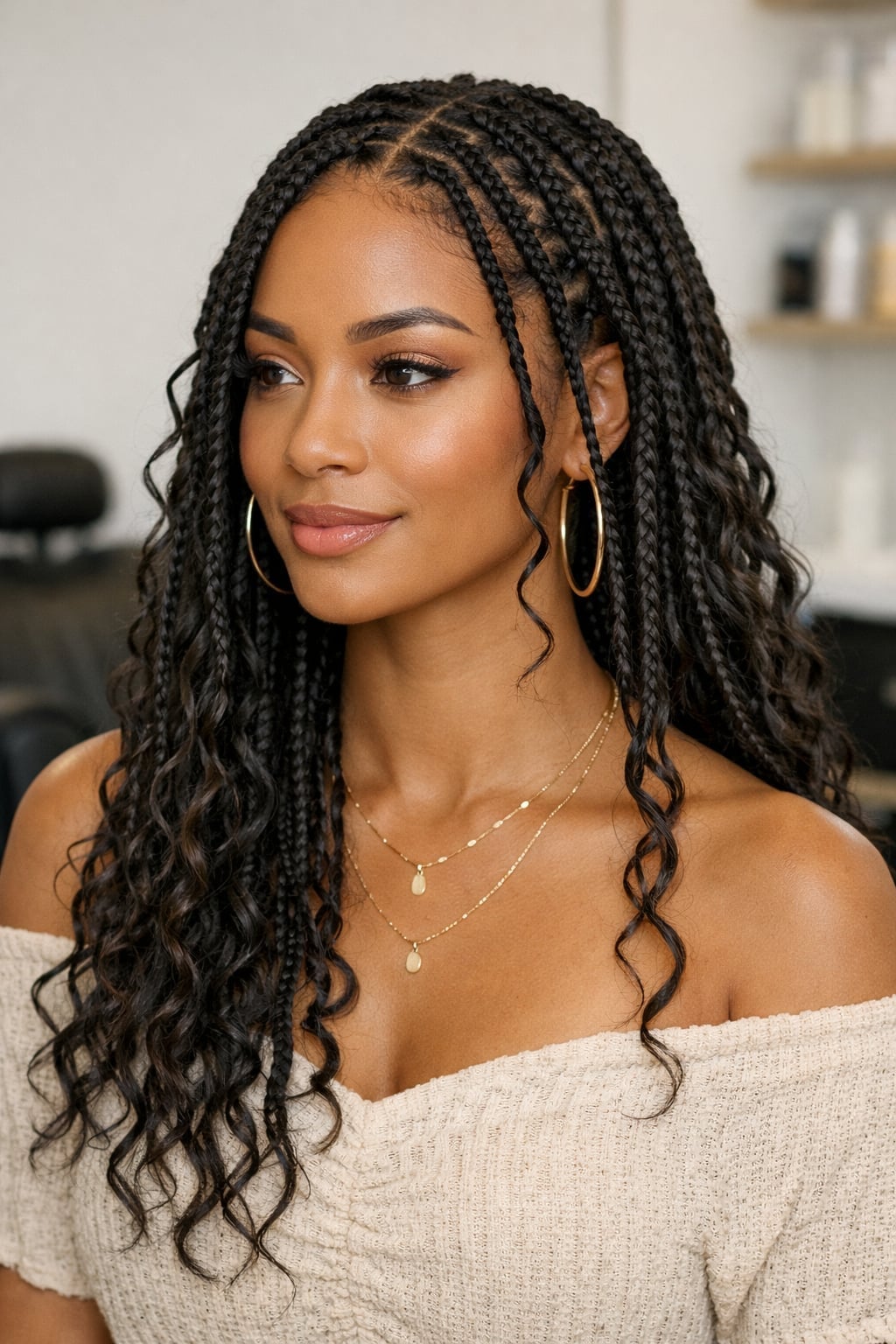
Courtesy of: pghairstyles.com
Middle parting and thick wavy texture set this style apart from smoother braided looks. The hair holds its wave because each box braid is wrapped around a rod during setting, then released for a soft, full finish. Start with black hair at a long length that reaches past the shoulders. The wavy texture adds volume, making the braids appear thicker than they are. A moisturizing spray every few days keeps the wave pattern defined and prevents frizz at the ends.
This approach works well for thick hair that can support the weight of numerous braids. A sleek, straight braided finish requires a different technique, and fine hair may not hold the wave. The salon session takes several hours due to the intricate braiding and setting process. Expect to refresh the waves with a light water mist between washes.
Thin braids with colorful beads and side parting
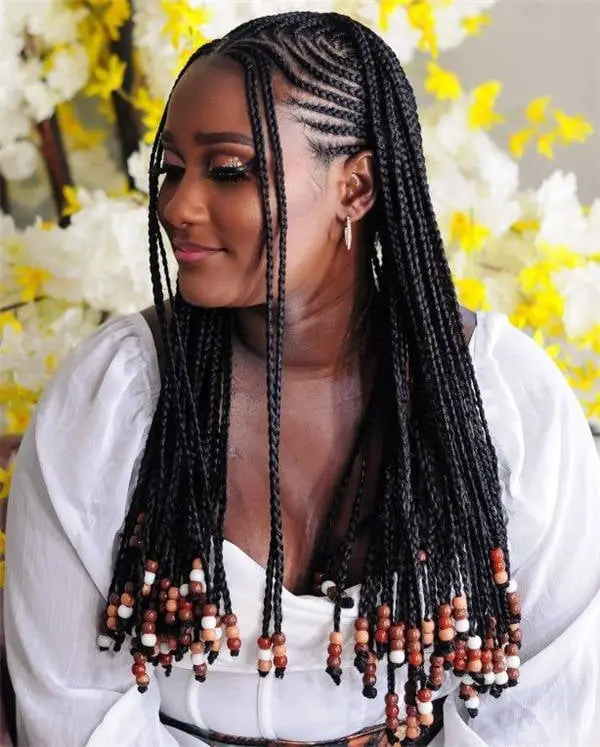
Photo credit: hotbraids.com
Thin braids with a side parting differ from uniform middle-part styles because the beads become the focal point. Here black hair is sectioned into many fine braids that start at the front hairline and continue down the length. The side parting lets the beads fall asymmetrically, which draws attention to the decoration. Colorful beads are spaced along each braid, adding a festive element that plain braids lack. It suits thick hair that can hold the thin sections without slipping. The weight and sound of beads may be a consideration for some, as is the asymmetrical layout. Ask your stylist for: thin braids with colorful beads and a side parting.
Micro braids in a ponytail look soft
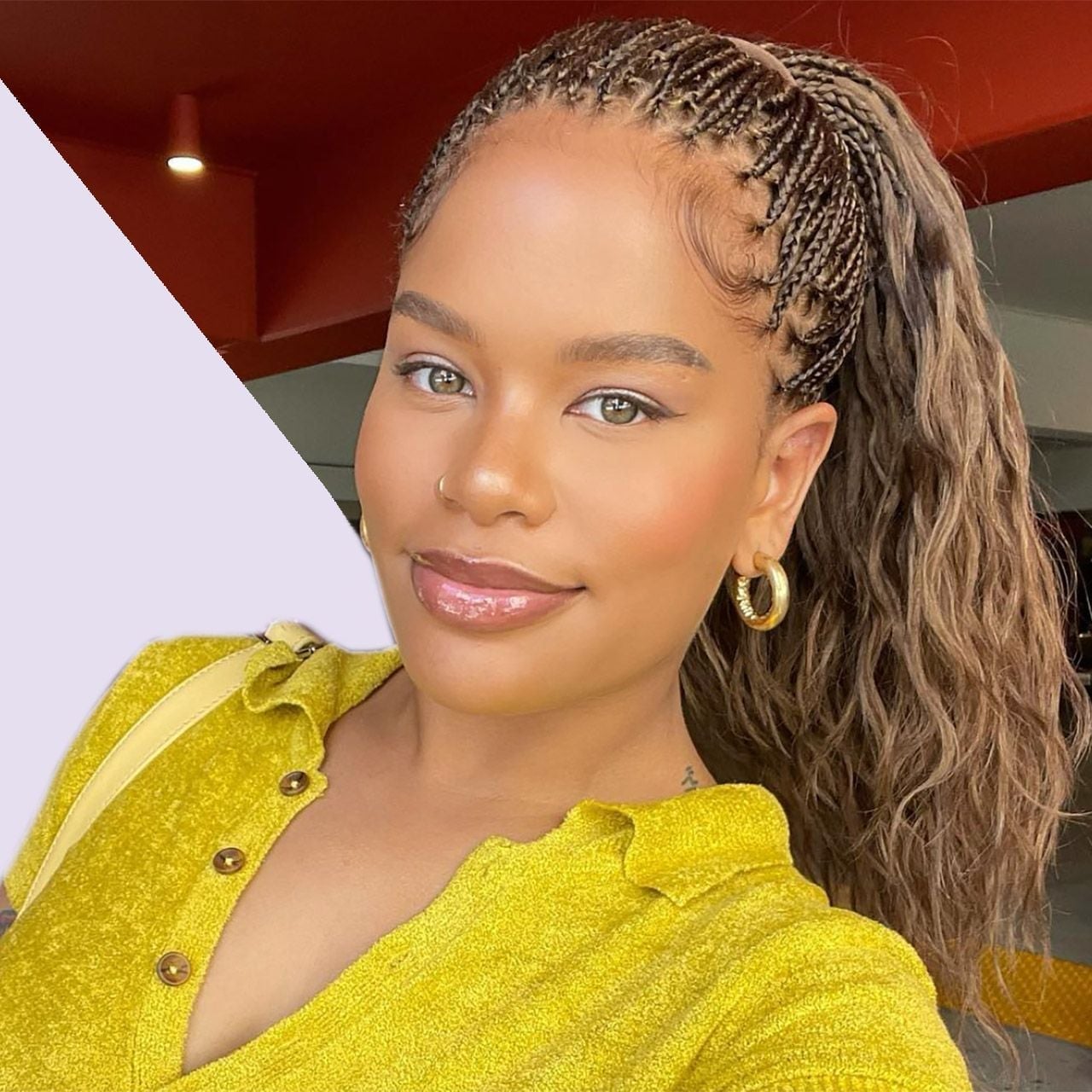
Image credit: glamourmagazine.co.uk
This style genuinely flatters those who want the intricacy of micro braids without the full-head commitment. The micro braids are gathered into a high ponytail, with the lower portion left loose and waved. Dark brown and blonde tones mix through the braids, creating a dimensional effect that a single color would not achieve. The high placement lifts the eye, which suits round and oval face shapes best. Pass when your hair is fine or cannot hold a high ponytail without tension. The salon session involves braiding each section tiny, then assembling the ponytail and styling the waves. A smoothing serum on the braids keeps them sleek, and the waves need a touch-up with a curling iron every few washes. The result is a grown-up ponytail that works for evening events.
Thick wavy hair provides the necessary grip for the micro braids to stay secure. The middle parting keeps the look clean and balanced. This style holds its shape well for a full day, though the waves may soften by evening. Refresh the ponytail with a light hairspray to maintain lift at the crown.
Thick black box braids with clear beads
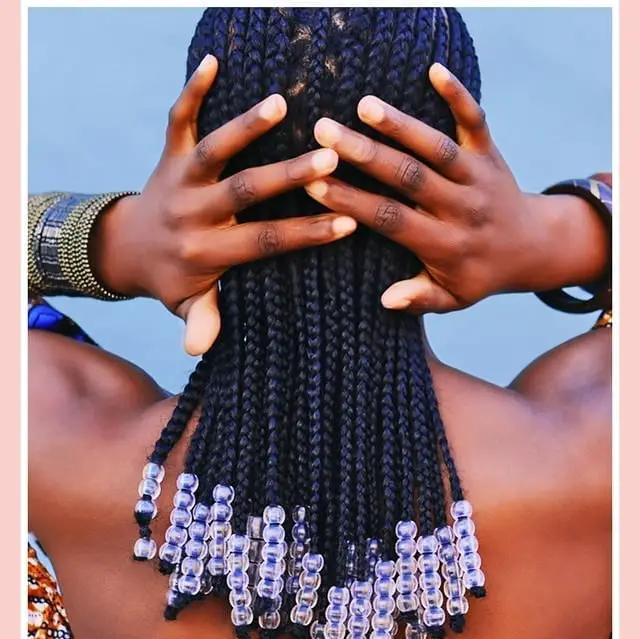
Source: goodhousekeeping.com
Thick box braids with clear beads look more neat than the same braids without adornment. The clean centered parting and uniform braid size create a structured base, while the clear round beads add a subtle shine without overwhelming the look. The catch: beads can slip if not secured tightly, and they add weight that may cause tension at the roots over time. It works best on thick hair that can be sectioned into neat, even parts. Skip it if you dislike the feel of beads against your neck or want a completely minimalist finish. Ask your stylist for: thick box braids with clear round beads and a centered parting. The salon session is lengthy due to the precision needed for even sections and bead placement.
Large thick black braids with side parting
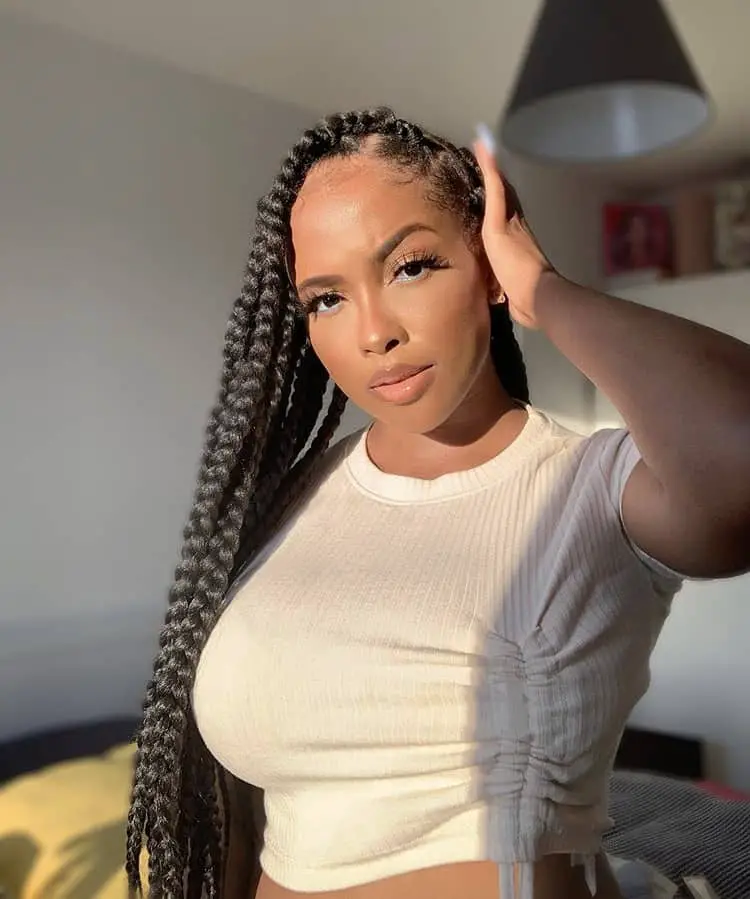
Courtesy of: blackbeautybombshells.com
Large thick braids with a side parting land well in cooler months when a substantial style feels intentional rather than heavy. The side parting breaks up the scale of the braids, preventing them from looking like a solid block. Black hair at a medium to long length provides enough weight for the braids to hang smoothly. The thickness of each braid means fewer total sections, which shortens the salon time compared to micro styles. This suits those who prefer bold, substantial braids that make a statement. Not for anyone with fine hair, as the braids may look sparse. A volumizing mousse at the roots before braiding enhances the overall thickness. The style holds for several days with minimal maintenance, though the side part may need a quick re-securing each morning.
Naturally thick hair is the ideal base for this look. The side-swept style frames the face differently than a center part, softening angular jawlines. The braids stay neat through casual wear and transition easily to dressier occasions. Expect the thickness to keep its shape without much styling effort.
Half updo with a loose side braid and auburn highlights
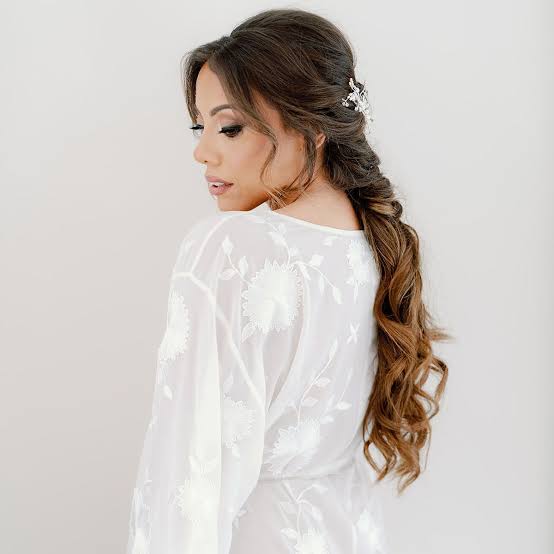
Photo credit: brides.com
Half-up takes about ten minutes once you have the right accessory. The top section sweeps back and secures with an ornate piece, while the rest of the wavy, thick hair falls into a loose textured side braid. A middle part keeps the front clean, and the dark brown base carries subtle auburn highlights that show when the braid shifts. The loose texture is what makes the look. Tell your stylist: half updo with a loose textured side braid and ornate accessory. Pin the accessory firmly, then tug a few strands loose around the face for a softer edge.
Micro braids with Ombre color and wavy ends
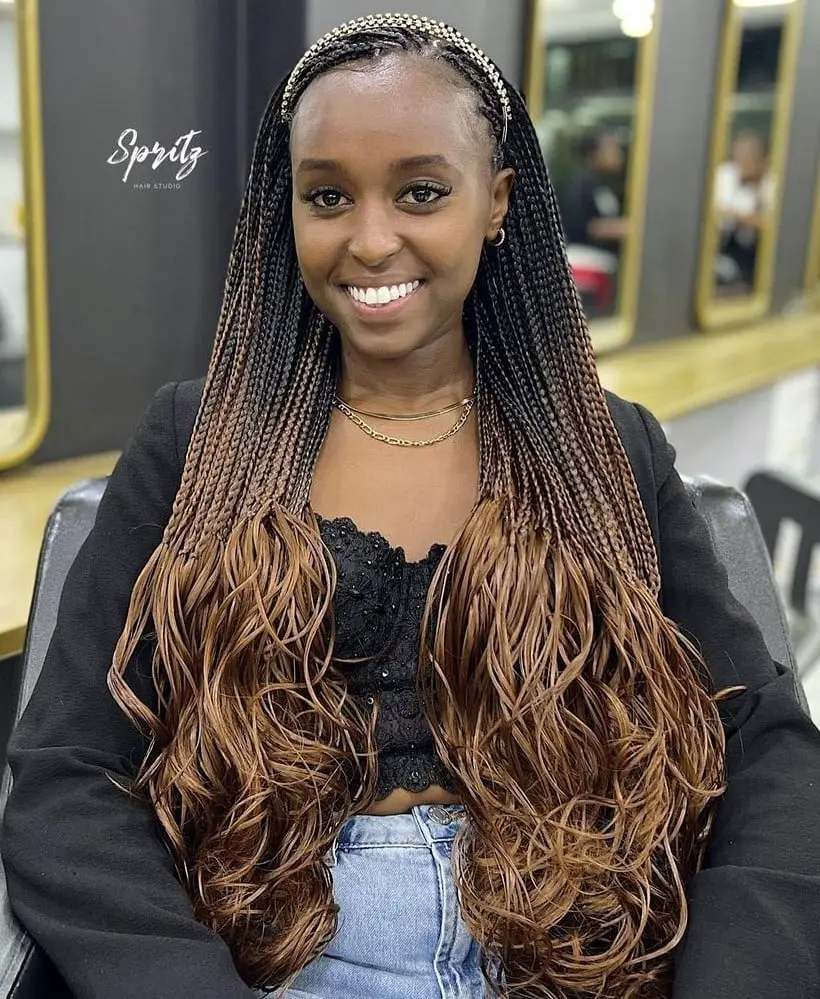
Image credit: therighthairstyles.com
The mistake is treating the ombre as an afterthought. This style needs the transition planned from the root, with black melting into rich brown over the length of each micro braid. A middle part frames the front, and the lower half is styled into loose, cascading waves that contrast with the sleek braided top. It suits thick, coily hair of medium to long length; skip it if you prefer a solid color or all-braid styles. A curl serum on the wavy ends keeps the definition and shine from fading by day three.
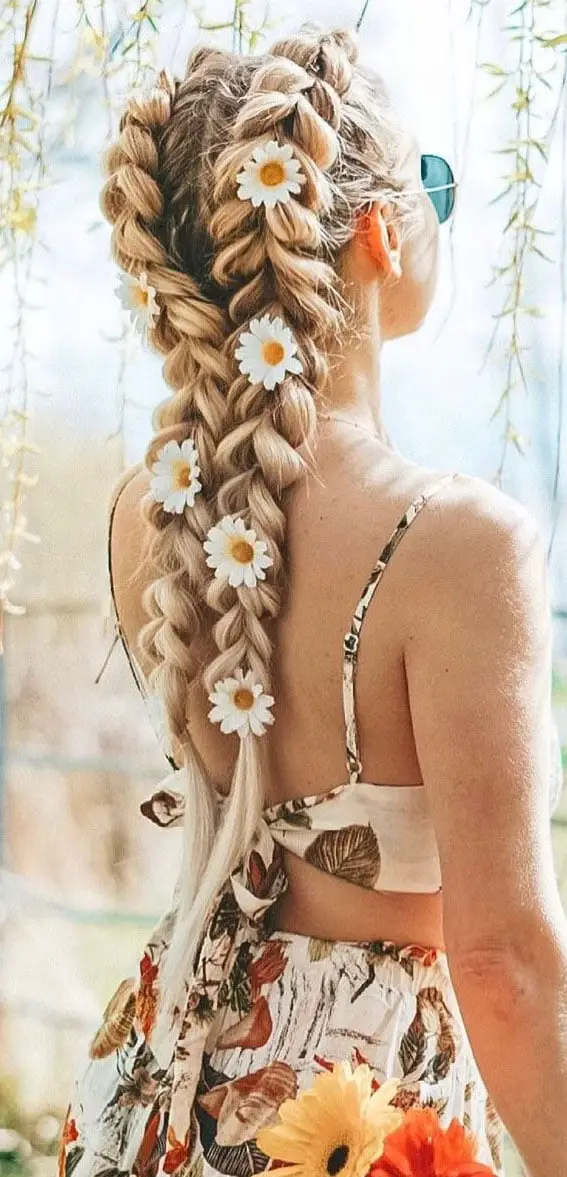
Ash blonde braids with daisy flower accessories
Source: fabmood.com
Book it as: ash blonde braids with daisy flower accessories. The thick, wavy hair is woven into two intricate braids that cascade down the back, and the daisies sit along the braid line, not scattered randomly. A side view shows the volume and the cool ash blonde tone working together. The drawback: flowers wilt, so they are a short-wear accessory, not a weekly staple. Skip it if you dislike floral accents or prefer a more subdued style. This one looks whimsical, which is the point, but it also means the flowers need careful handling to stay intact through an evening.
Thick box braids with defined sections and curly ends
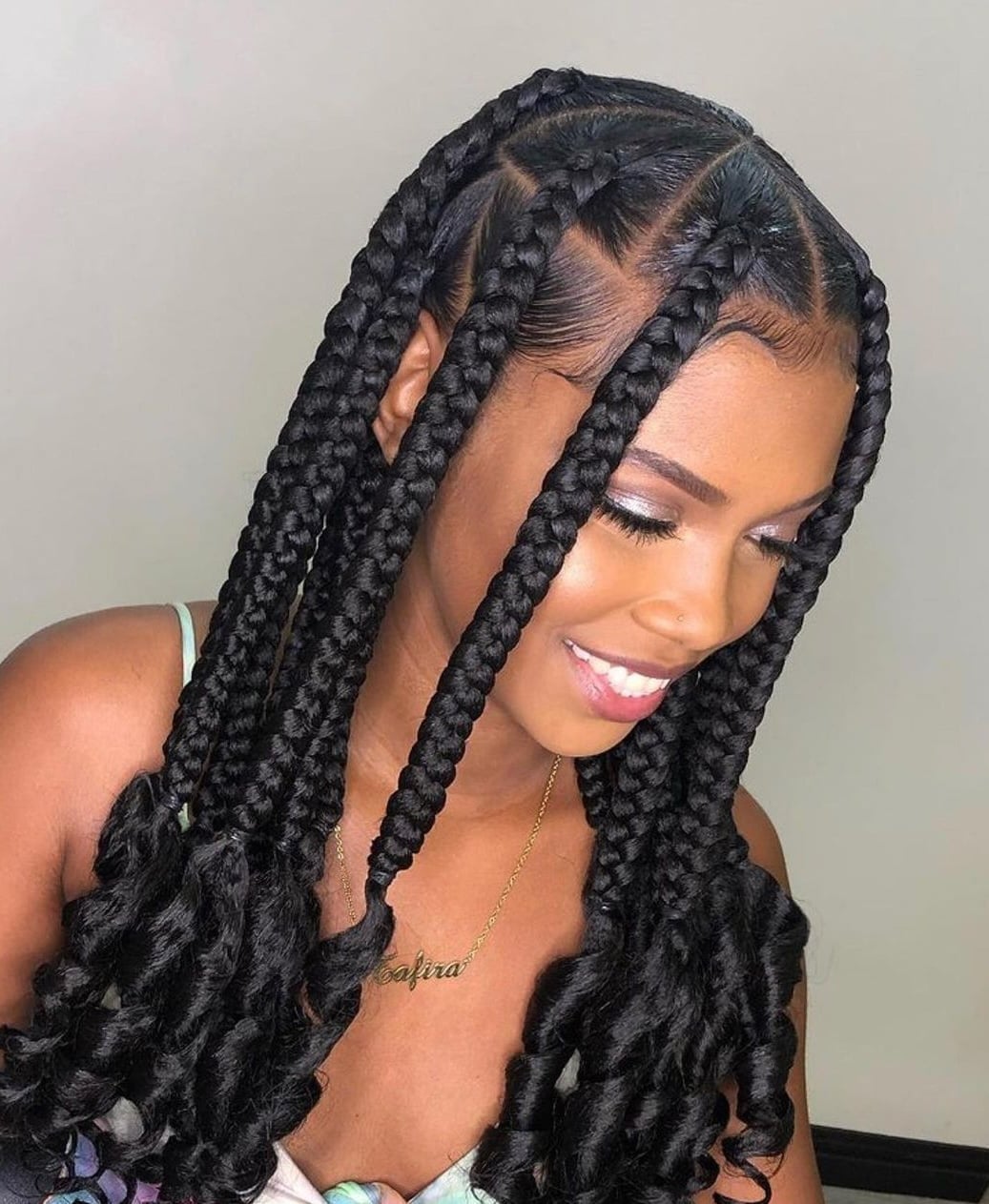
You need thick hair for this one, and you need the parting to be exact. The middle part splits the scalp into clean sections, each braid thick and defined, with the ends left loose and curly. The technique is straightforward: braid tight to the root, then switch to a looser tension at the last two inches so the natural curl can spring out. It suits medium to long hair that can carry the weight; fine hair will not hold the shape. Tell your stylist: thick box braids with defined sections and curly ends. A curl enhancer on the ends keeps the bounce, and a silk scarf at night preserves the parting.
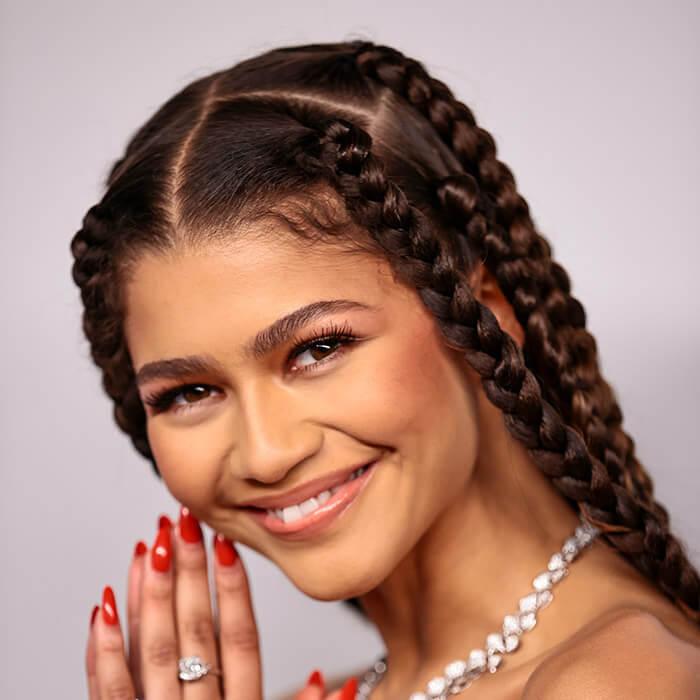
Four thick neat dark brown braids with sharp parting
Courtesy of: ipsy.com
Compared to a full head of micro braids, four thick braids are quicker to install and easier to maintain, but they demand a sharp middle parting to work. The dark brown hair is sectioned into four neat braids that cascade down, each one thick and even. The parting defines the look, so it has to stay crisp. It suits thick hair. Keep a fine-tooth comb and a light styling product on hand to redraw the line between washes.
Final Thoughts
Pick the braid that fits your morning routine and your next trim date.
- Fine hair: choose small braids with beads or a sleek bun to avoid tension.
- Ten minutes for styling: reach for a pre-braided ponytail or half-up style.
- Willing to visit the salon every six weeks: geometric cornrows or ombre braids reward the commitment.
- Protect braids at night with a silk wrap to keep edges and ends smooth.
Elegant braids offer endless grown-up possibilities.
