You have the consultation behind you, the parting pattern mapped out, and the first twists or coils in. Now the question is how to wear them from day one without undoing all that salon precision. Starter locs need a styling strategy that respects the formation while giving you something to look at in the mirror.
25 looks that actually work with the process, from salon-grade geometric partings to air-dried mornings, which is why Dreamy Starter Locs 2027 fill so many saved boards. The struggle is finding styles that hold their shape without constant redoing, and this collection solves exactly that.
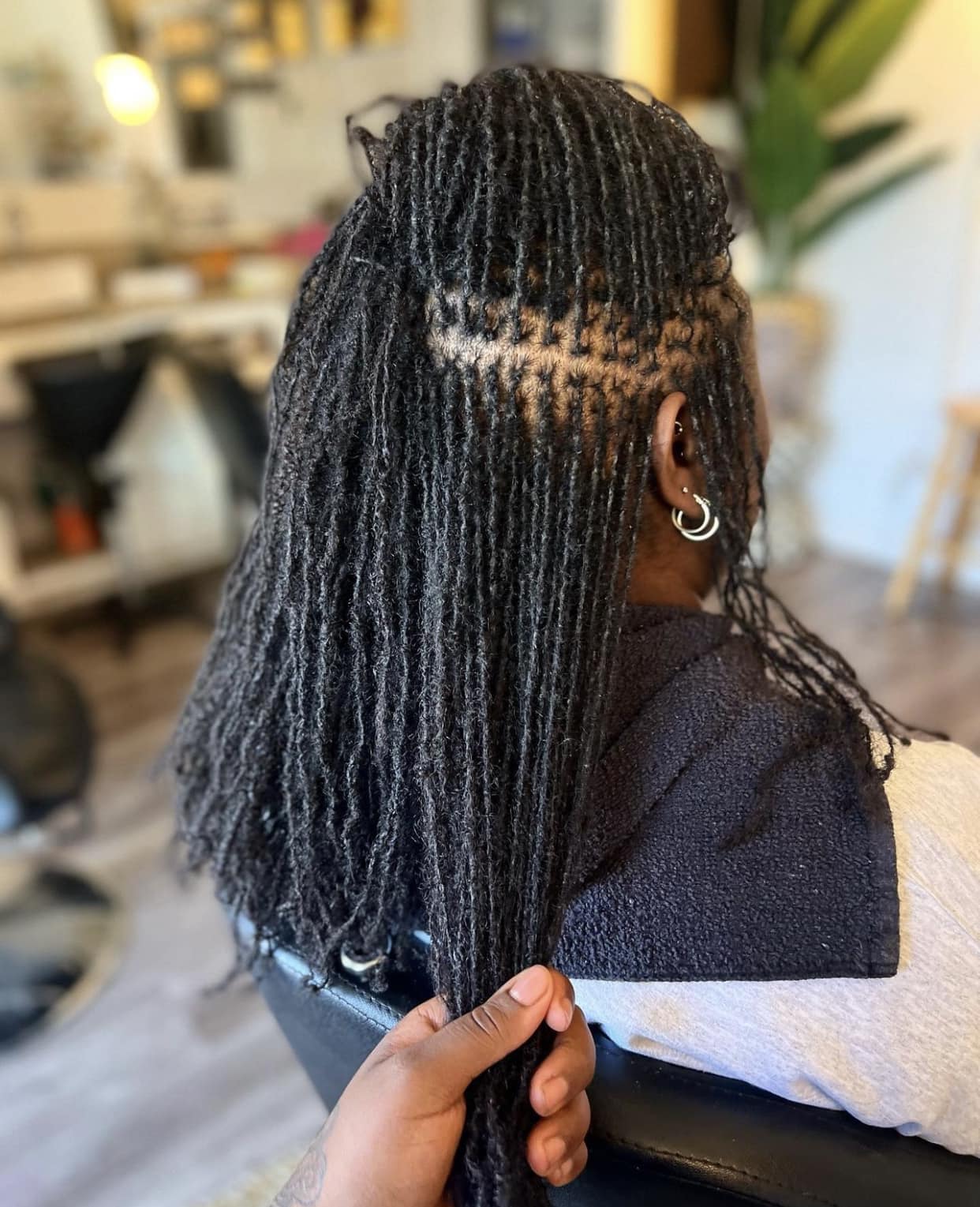
Neatly sectioned starter locs in a half-updo
Courtesy of: naturalsisters.co.za
Precise parting turns a half-updo into a deliberate style. Thick, coily black locs sit in neat, salon-formed sections, with the upper half gathered and the rest falling free. The middle part runs straight, each loc squared at the root. This is a look that announces you committed to the process early. A completely DIY approach to starting locs is not realistic here, the even grid demands a stylist’s hand. Ask your stylist for neatly sectioned starter locs in a half-updo. Expect to return every four to six weeks for the formation to stay sharp.
Two tones on starter locs with gold clips
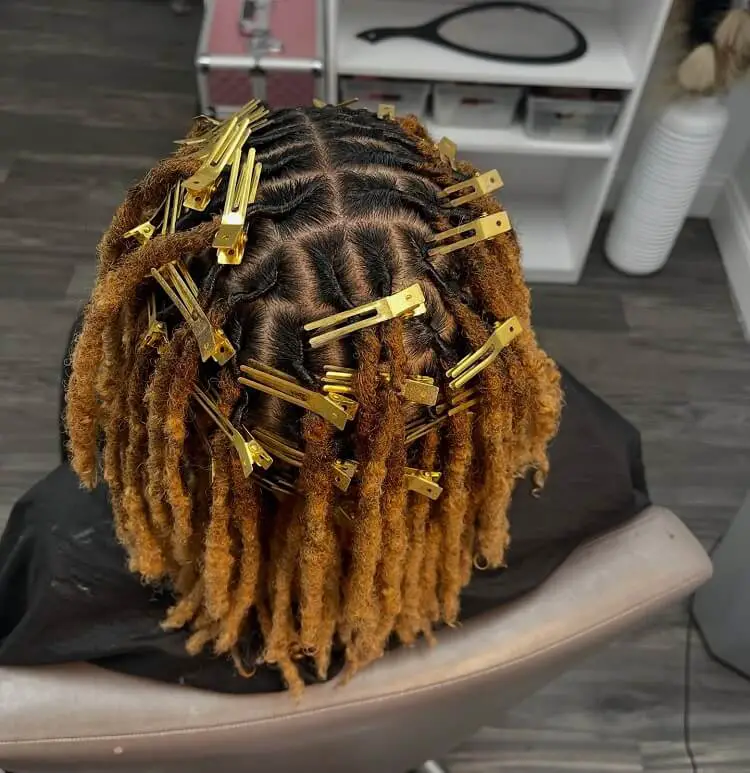
Photo credit: hohodreads.com
Compare this to a single-note set and the difference is immediate. Deep black at the root graduates into warm honey blonde at the tips, a transition that looks deliberate rather than grown out. Gold clips mark each section, holding the two tones apart so the contrast is clear from an overhead view. The center part keeps everything symmetrical. It works best if you enjoy hair accessories and two-toned color effects, both pull equal weight here. Salon precision is required for both the color line and the parting.
Geometric parting on side-swept starter locs
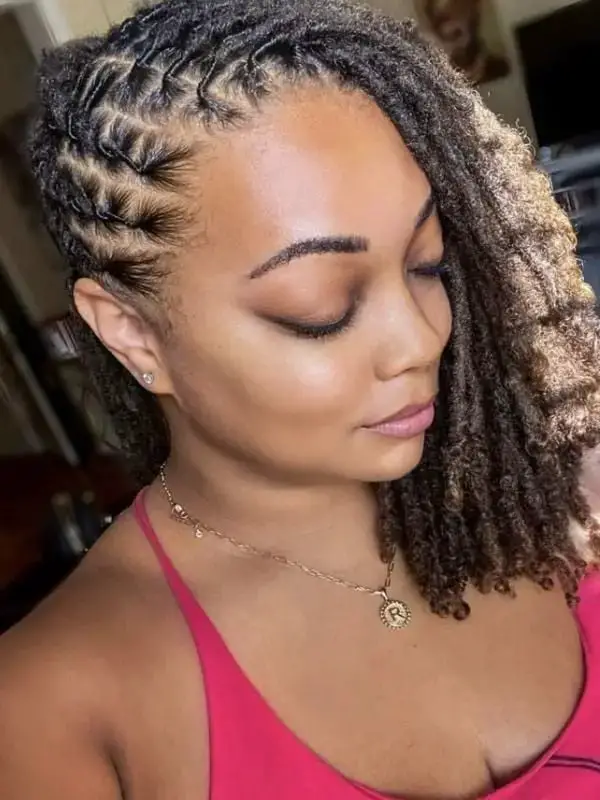
Image credit: jeladrew.com
How do you make a side part feel intentional? Add a sharp angle at the hairline. One side of the head shows a clean geometric line cut into the coily texture, while the rest of the locs sweep across in their natural black shade with brown undertones. The contrast between the precise shape and the air-dried finish creates a deliberate look. This parting suits those who want a bold, structured style. Request starter locs with a geometric side parting from your stylist. The line needs a professional to map and maintain.
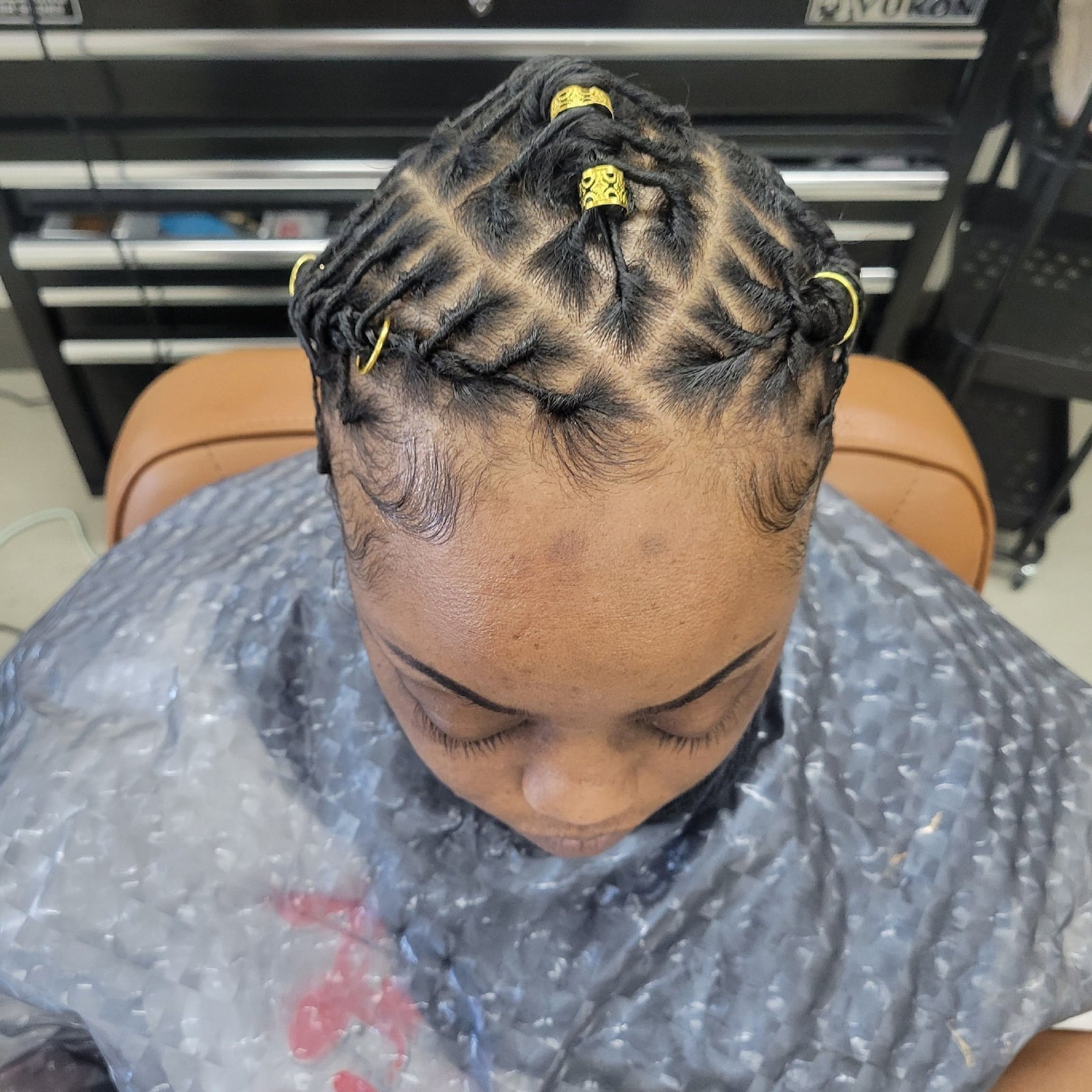
Zig-zag partings with gold accessories on black locs
Source: booksy.com
Gold rings and beads sit along each zig-zag line, turning the part itself into the accessory. The black coily locs are sectioned in a series of sharp angles visible from above, with the edges finished in soft waves. The result is a top-down pattern that looks like deliberate geometry. The metal pieces are central to the design here. Request starter locs with zig-zag partings and gold accessories from your stylist. A professional hand places each clip so the pattern stays readable.
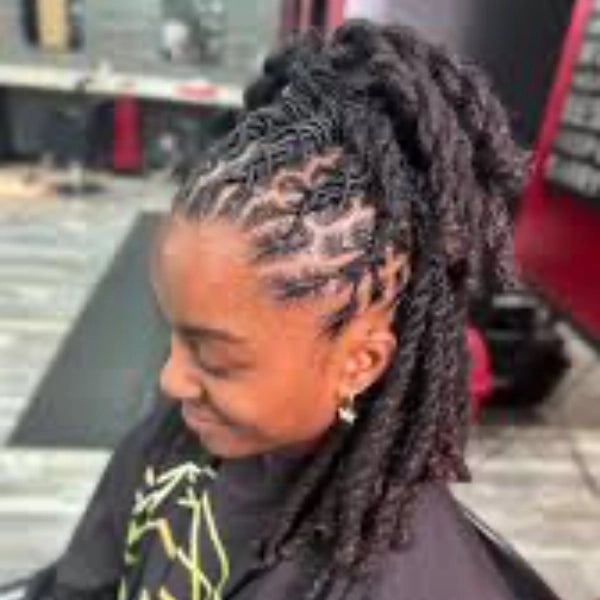
Geometric parting at crown pulled into high ponytail
Via laifentech.com
A geometric pattern at the crown pulls the eye upward before the locs gather into a high ponytail. Deep black, thick and coily, the locs fall from a clean center part, with the crown section mapped into precise shapes visible from the side. The ponytail keeps the focus on the parting work above it. Skip it if you prefer to wear your locs down. The crown detail is the anchor here. Request starter locs with a geometric crown parting and a high ponytail from your stylist. Maintaining the pattern requires professional styling each time.
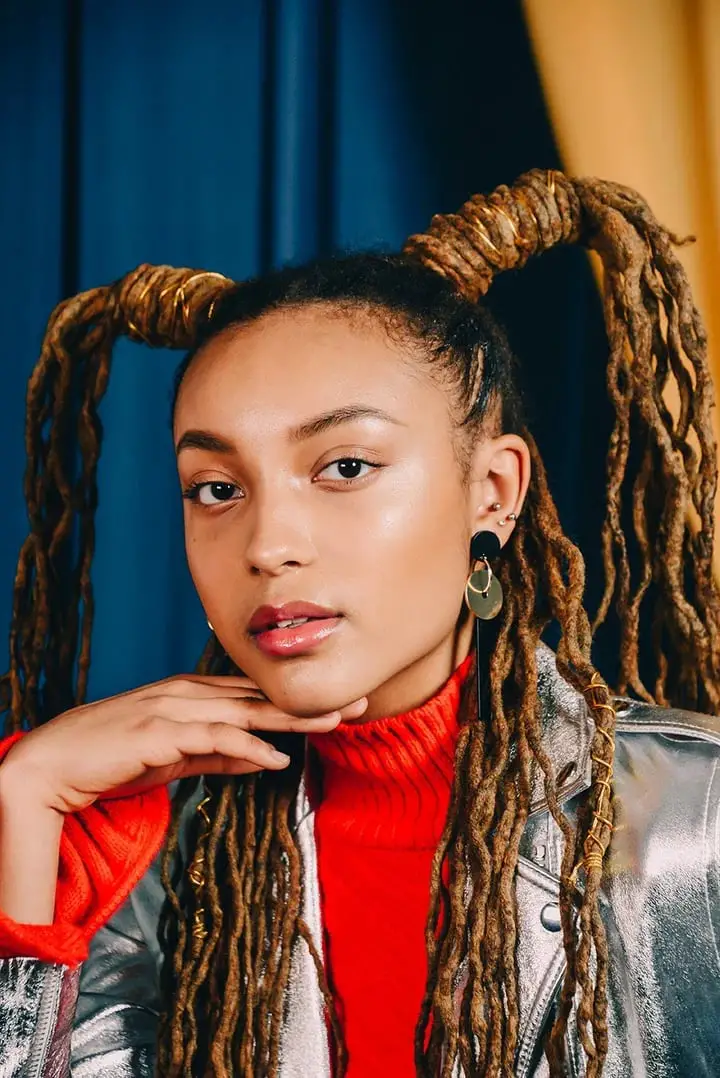
Brown locs wrapped with gold wire in two high pigtails
Courtesy of: refinery29.com
Two high pigtails read festival-ready before the wire enters the picture. On brown locs with subtle blonde undertones, that gold wrap shifts the look from casual to deliberate. Medium density coily texture holds the wrap best; finer hair risks the wire slipping. Professional application prevents the metal from cutting into the loc over time. Tell your stylist: natural brown locs with blonde undertones, two high pigtails, gold wire wrap. This style requires salon application due to the intricate wrapping.
Playful buns hide precise geometric parting
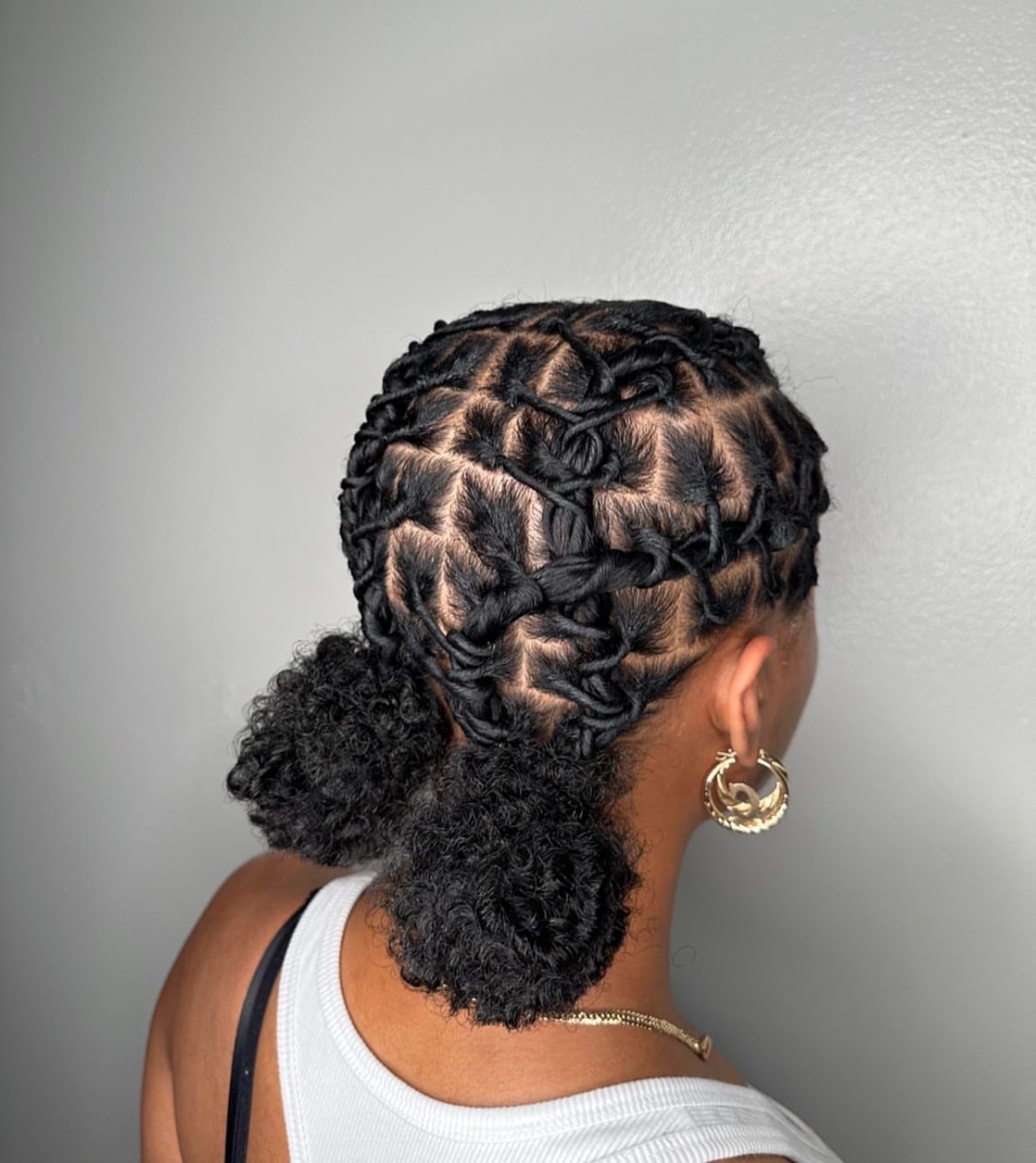
Photo credit: stylerave.com
From the back, this looks like two simple buns on black starter locs. The reveal is the geometric parting pattern hidden beneath them. Thick coily texture makes those sharp lines possible; the sections stay defined and do not blur together. The buns themselves are the easy part. You can pull those up yourself. The parting is not. That crown pattern requires a stylist who maps the scalp before starting. A trim every eight weeks keeps the lines crisp as the locs settle.
Braids transitioning into loose curls on the side
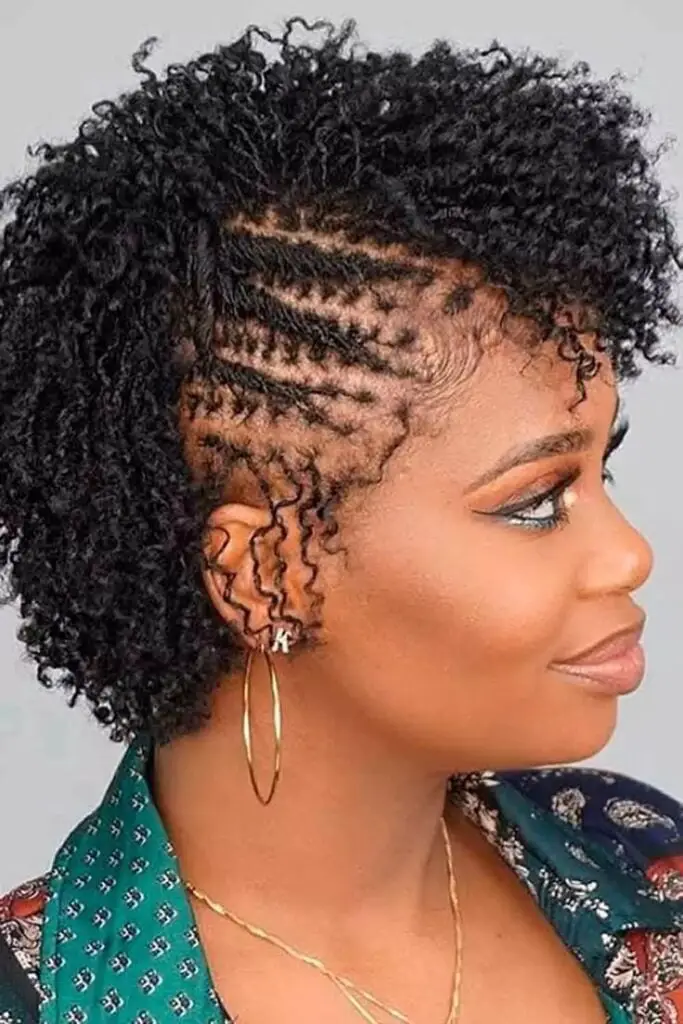
Image credit: ohyealocs.com
Braids and curls in the same style can look like two separate ideas. The trick is the transition point. Intricate braids on one side of black starter locs shift into loose coily curls near the ear. Thick texture hides the join; the braid gradually loosens its tension instead of stopping abruptly. Tell your stylist: starter locs with braided side and loose curls. The braids need a refresh every few weeks as new growth appears. The curls stay as they are.
Geometric braided loc pattern in a low bun
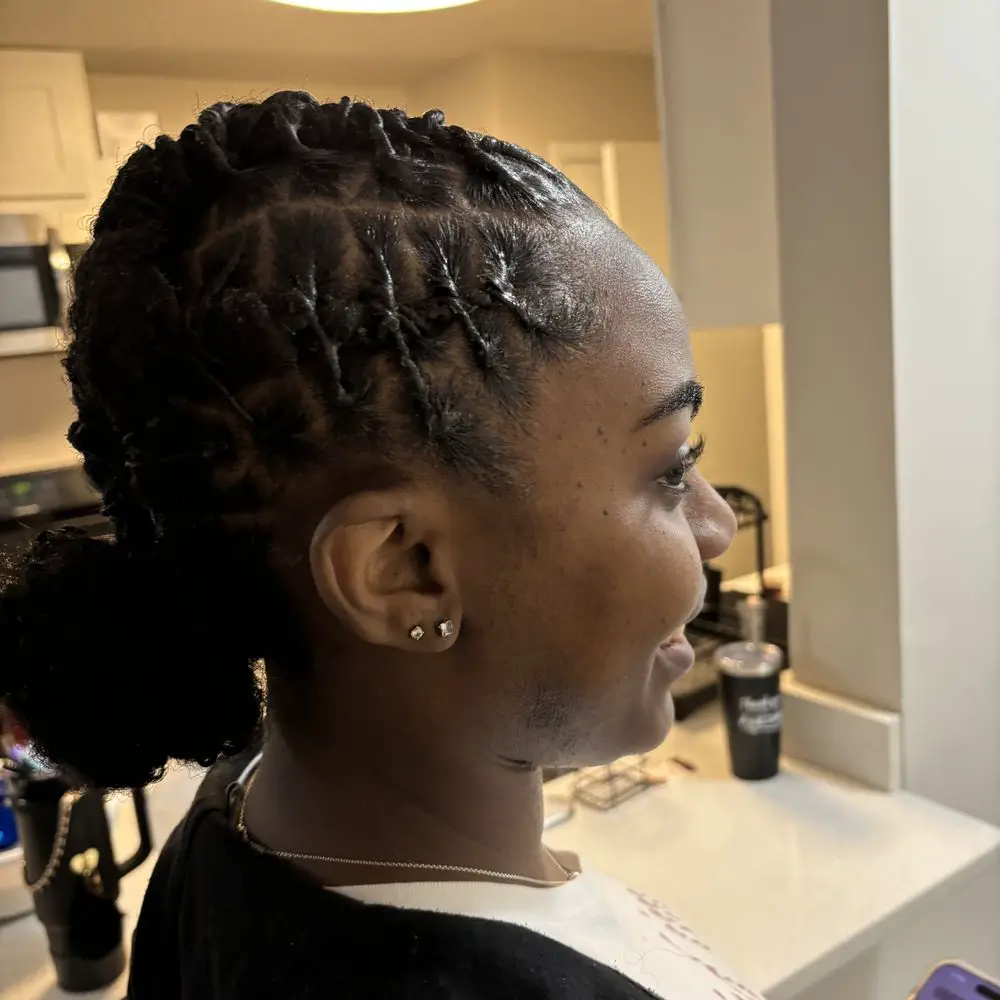
Source: m.yelp.com
A braided pattern across the scalp requires every loc to lie exactly where it was placed. On thick coily texture, the geometric lines look deliberate. The low bun at the nape gathers the length without disturbing the pattern above it. This is a salon-leaning style from start to finish. Shorter sections mean more visible geometry; longer locs soften the lines over time.
Black locs with v-shaped undercut in a high bun
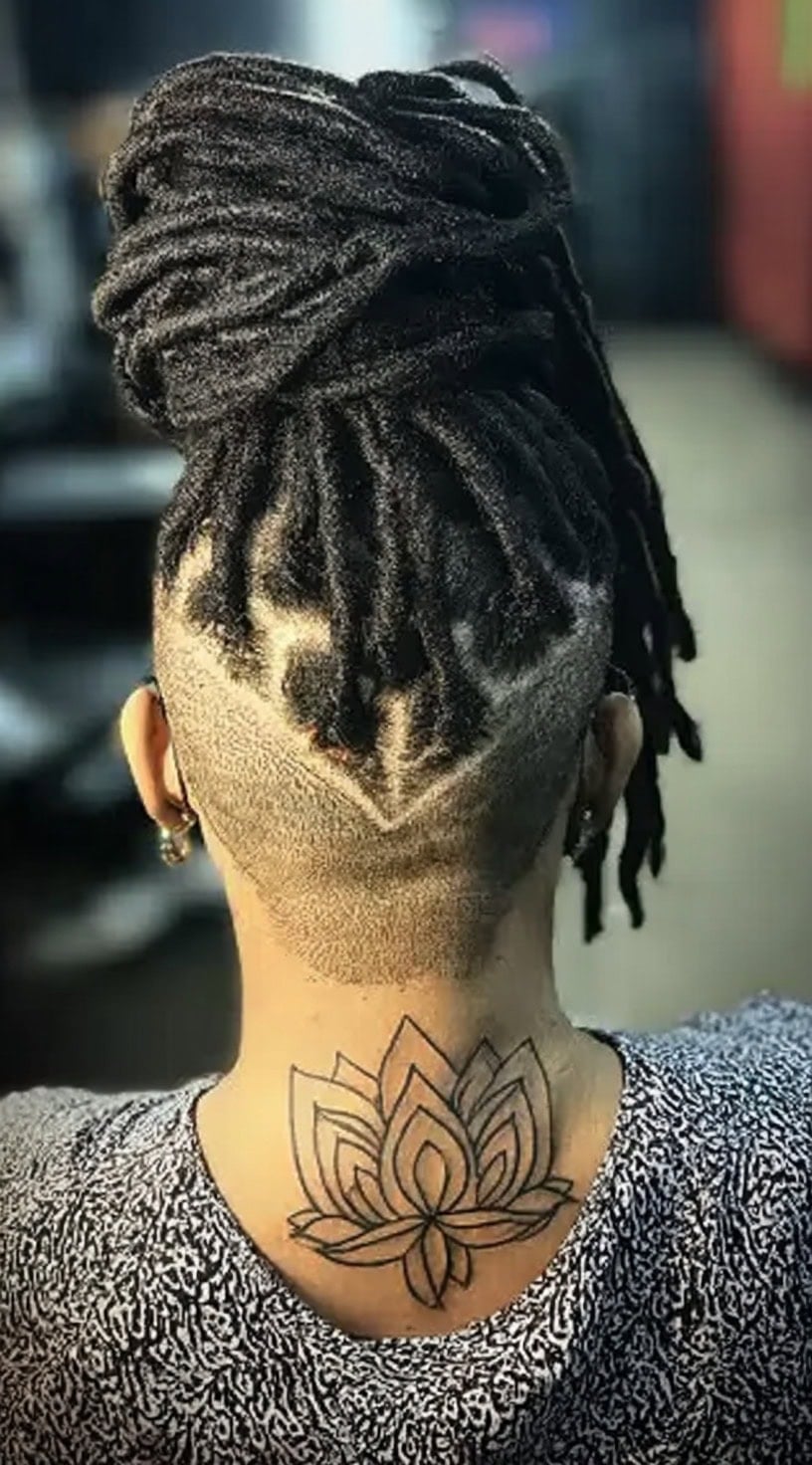
Source: looksniceonme.com
A v-shaped undercut changes the silhouette of thick coily black locs from the back. The high bun pulls the locs up and away, leaving the shaved V as the focal point. The contrast between dense loc and bare scalp is the entire point. Pass when you prefer the sides and back fully loc’d. This is a commitment to regular shaving. The bun itself takes five minutes. The undercut takes a stylist who can carve a clean V without wavering from the center line.
Short, spiky dark brown locs with undercut
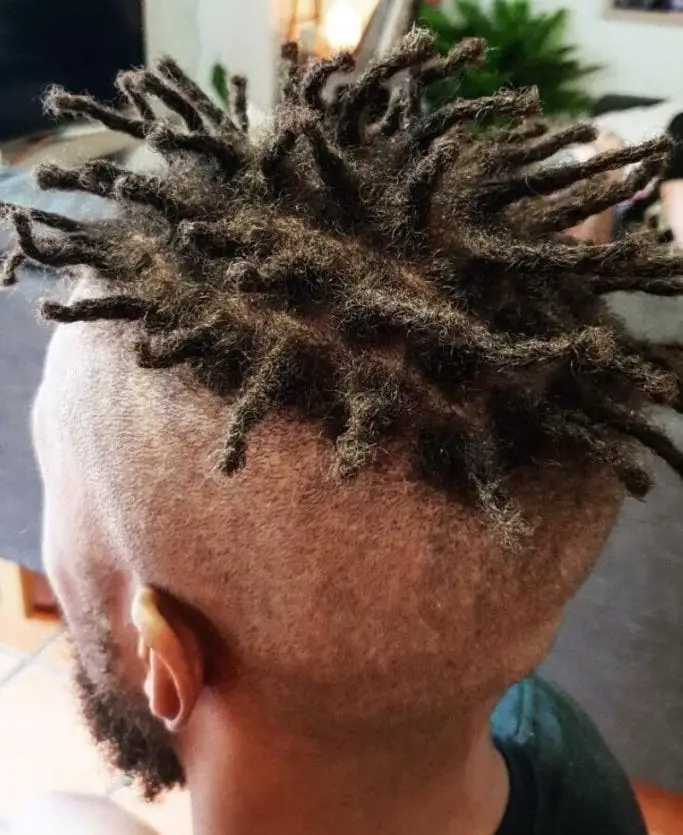
Not every loc journey starts long. Short, spiky starter locs rely on an undercut for contrast, keeping the silhouette sharp while the locs above stand upright. The thick, coily texture here holds the shape without product stiffness. Dark brown looks natural and grounded. Skip it if you want length you can pull back. This one lives on top. The undercut demands a trim every three weeks to stay clean. Request from your stylist: short spiky starter locs with undercut.
Dark brown starter locs in an intricate high bun
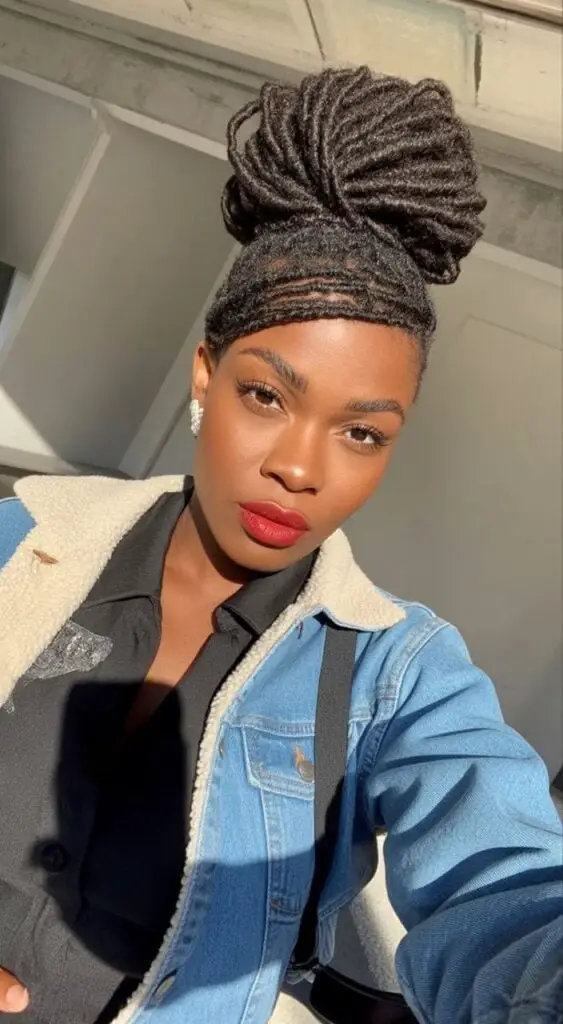
Courtesy of: ohyealocs.com
The center part sets the symmetry, then the bun takes over. Dark brown locs stack into a voluminous shape that looks salon-intricate, not rushed. Thick, coily texture gives the bun its weight and hold. Styling time is about forty minutes when you work with a mirror and clips. Not for days when you want hair down, the parting commits you. The bun stays intact through a full workday.
Ear-length black starter locs air-dried
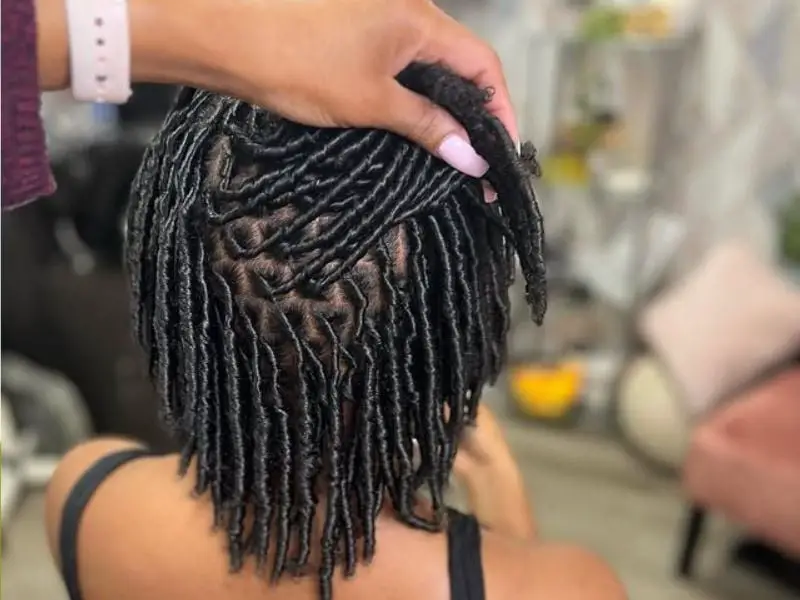
Photo credit: janeessence.com
Air-dried starter locs versus a styled set. This one lands on the side of precision. Ear-length black locs depend on a uniform coily texture and a rich black hue to look neat without heat. The neat formation comes from careful parting, not from a blow dryer. Skip it if you like your locs longer or looser. A salon visit every six weeks keeps the grid clean. The catch: air-drying takes patience, but the result holds its shape.
Ear length dark black locs with middle part
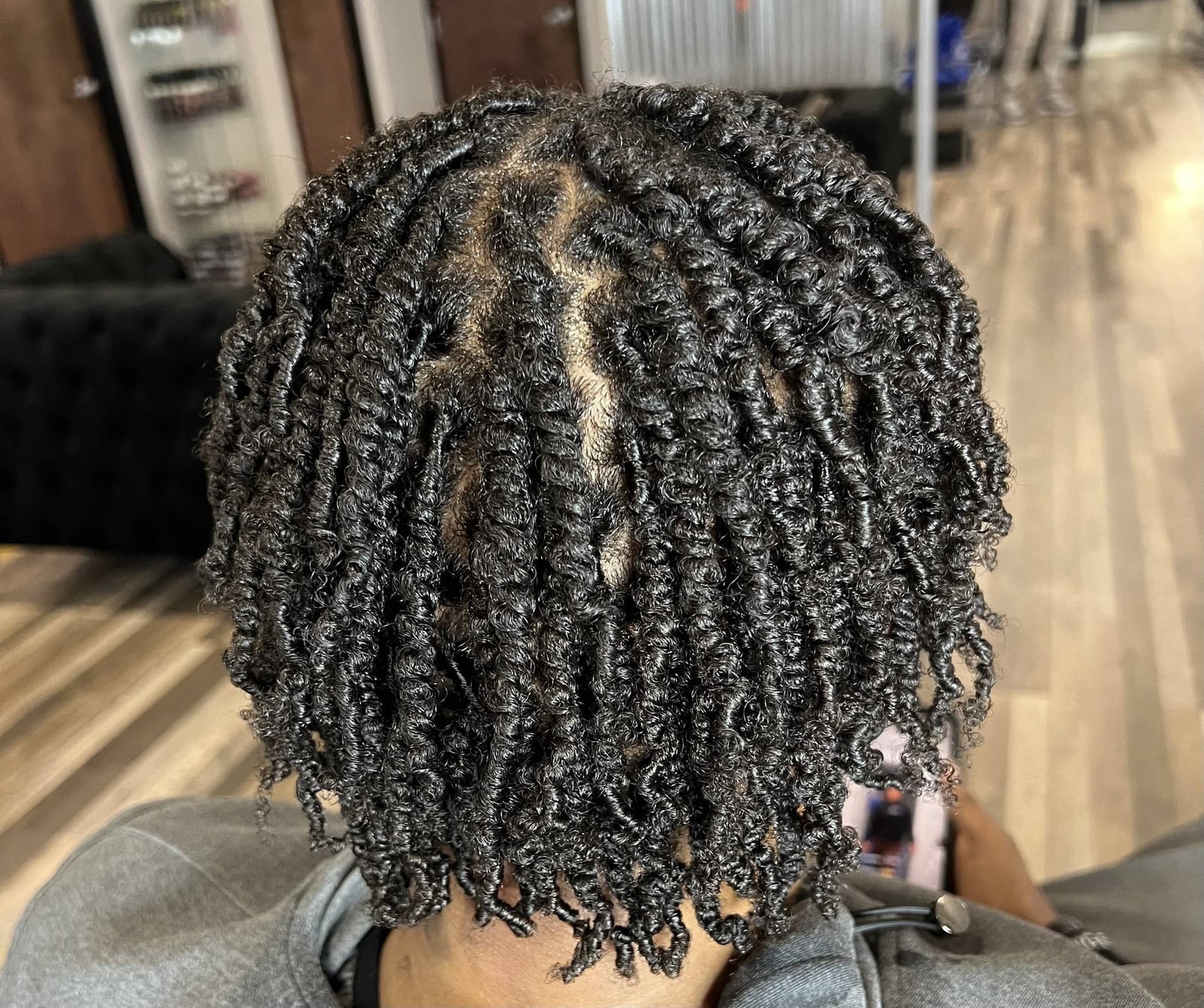
Image credit: dreadsbydotie.com
Neatly formed locs ending around the ear demand a center part that stays true. The dark black shade and thick coily texture create a clean finish that works for everyday wear. A middle part elongates a round face shape. Choose a side part or longer locs instead. The parting requires a salon touch each time. It will not survive a lazy week. Styling time is minimal once the locs are set.
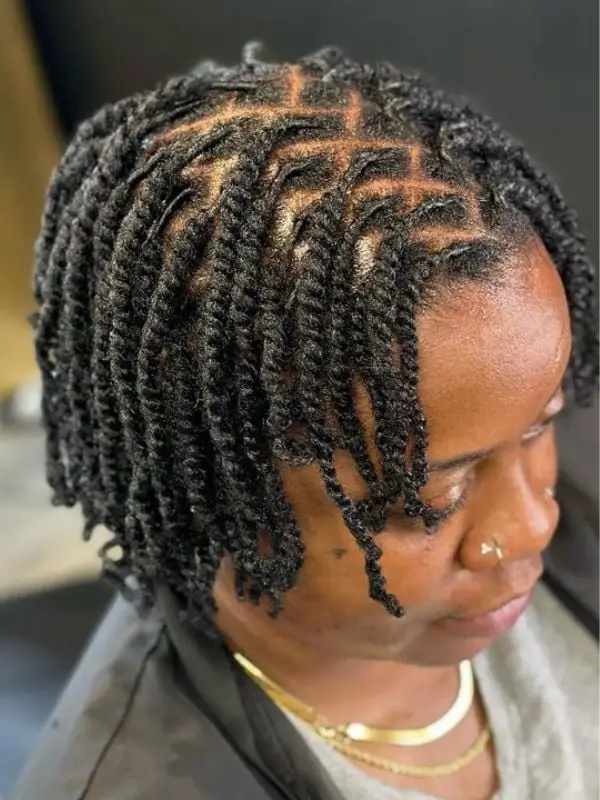
Grid parting on twisted black starter locs
Source: exquisitewomanlife.com
Book it as: starter locs with grid parting, twisted. The grid pattern uses precise sections to give each loc its own space, so the thick coily texture appears neatly sectioned. Black color keeps the focus on the geometry. The locs fall around the ear, staying short enough to avoid tangling against each other. A looser, free-form look is not the goal here. The grid holds best when retwisted every four weeks.
Salon precision for naturally styled air-dried locs
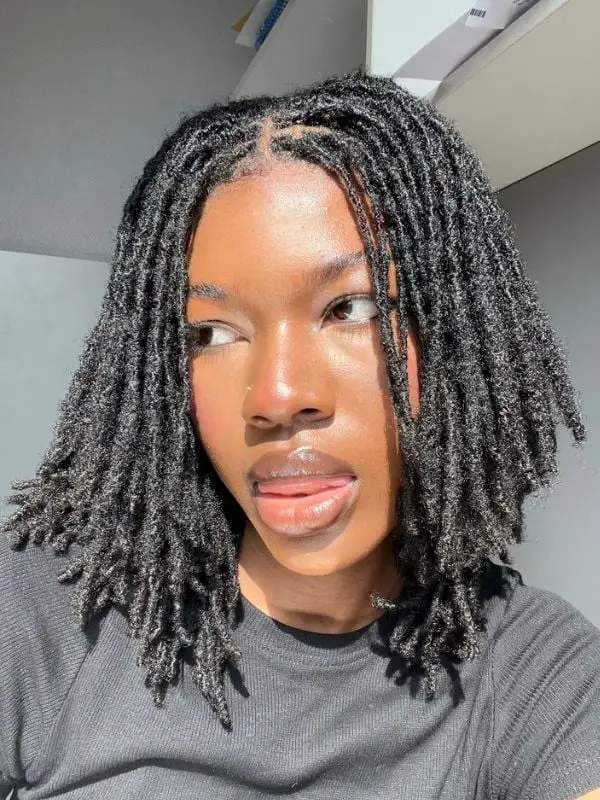
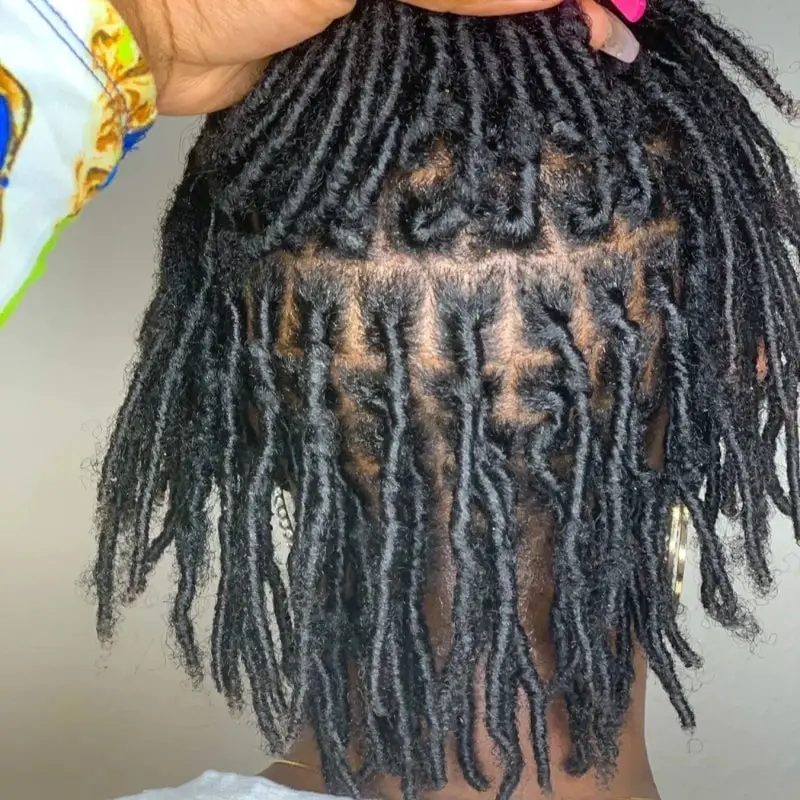
Neatly formed locs start with a center part that splits the scalp into two clean halves. Thick coily texture holds the shape without product, air-dried into definition you can see from across the room. A middle part works best for oval and round face shapes, elongating the silhouette with that vertical line. The catch: this look demands a stylist’s steady hand for the initial parting. Salon visits in the first few weeks keep each loc distinct and prevent merging. You walk out with a foundation that looks finished before the real locking begins.
Neatly sectioned air-dried starter locs with middle parting
Courtesy of: laifentech.com
Time in the chair pays off here. The center part runs straight from front to nape, each loc squared off and separate. Air-drying preserves the coily texture exactly as it was sectioned, no heat needed. You sit for the initial setup, then the daily routine is minimal. The back view reveals the real work: every section aligns, no wandering parts. That precision buys you weeks of low-effort mornings.
Fine coily locs with auburn highlights, air-dried
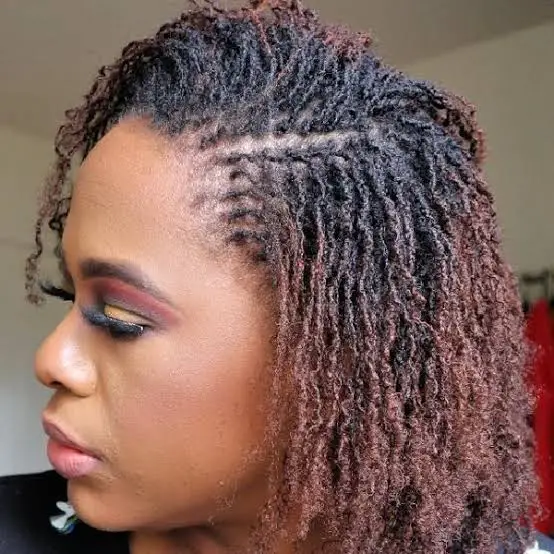
Photo credit: dreadlockssalon.com
Black with subtle auburn highlights reads differently on fine coily texture than it does on thick strands. The color sits close to the scalp, catching light without shouting. A side part shifts the weight forward, letting the finer locs fall where they want. This suits anyone with fine coily hair who wants a warm tone without full commitment. Not for those after thick, uniform locs. The fine texture stays delicate. The auburn pieces need a toner refresh at week four to keep the red from going brassy. Request from your colorist: black with subtle auburn highlights.
Air-dried black starter locs with silver cuffs
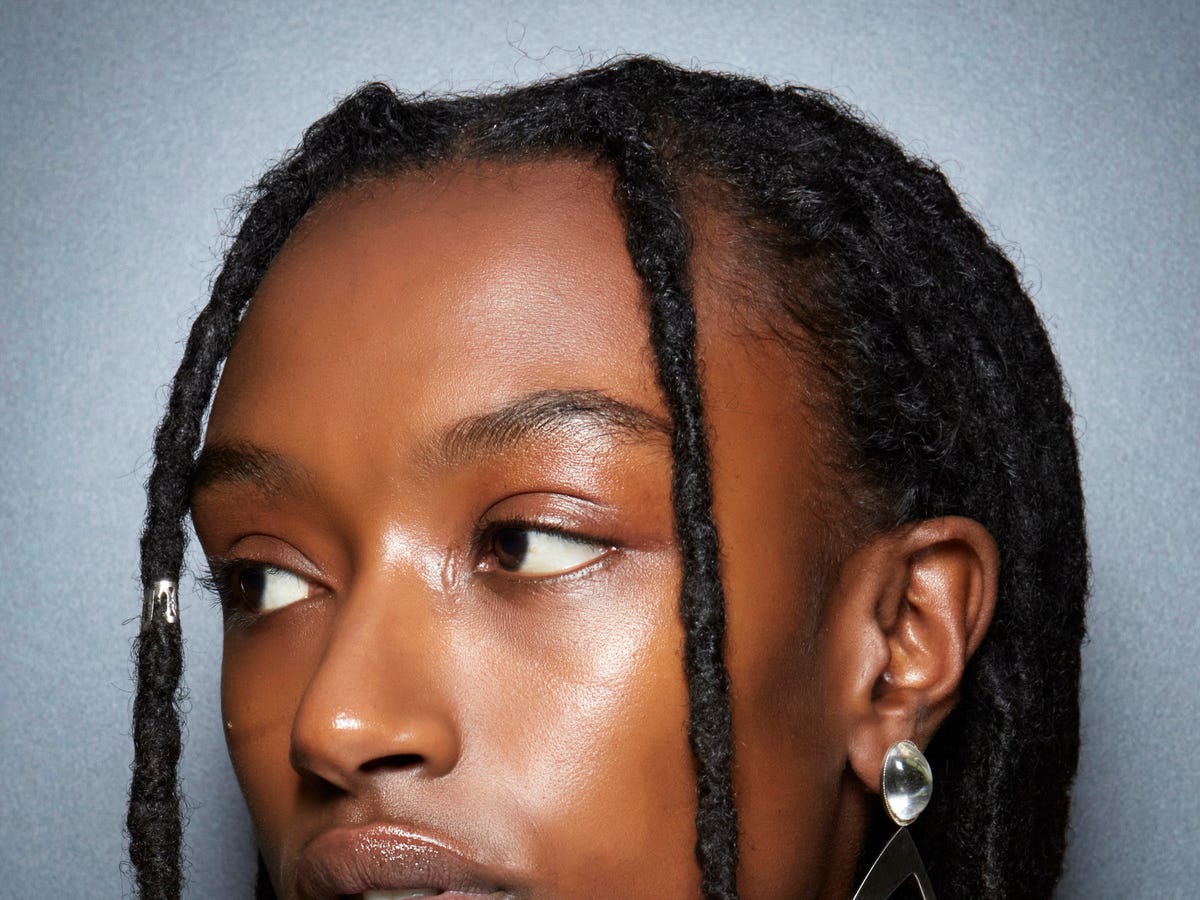
Image credit: elle.com
Silver cuffs slide onto a few locs and change the whole feel. Thick coily black hair, side-parted and air-dried, stays the star, the metal just accents the neat formation. The cuffs sit on locs that are firm enough to hold them, not too loose. A side part softens the look for round faces, adding asymmetry where a center part would be too strict. Skip the cuffs if you sleep without a scarf; they catch and tug. Professional formation keeps the locs uniform enough to adorn evenly.
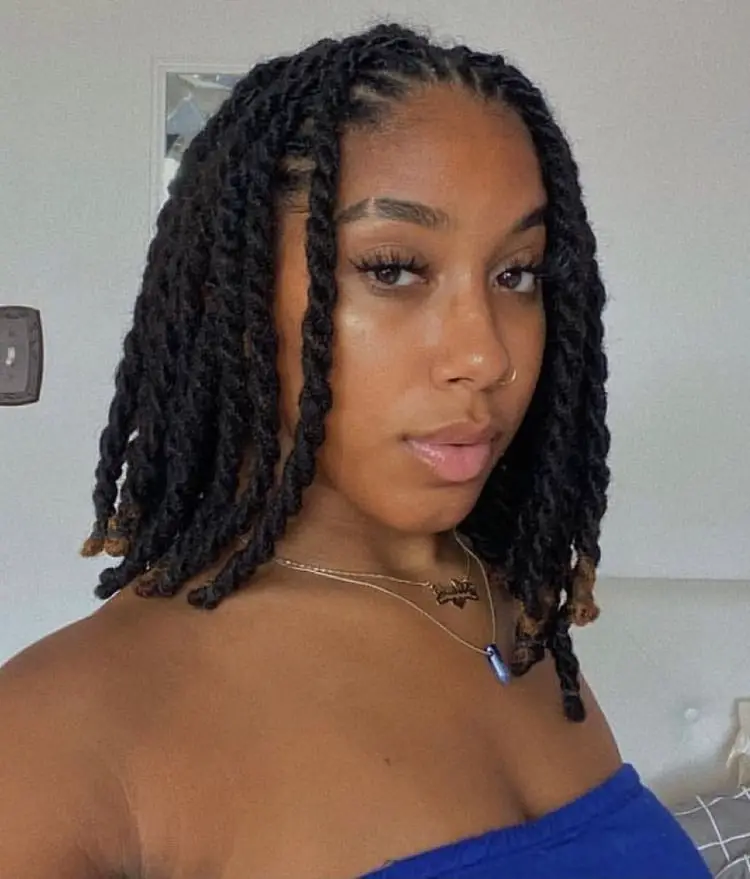
Thick twisted locs with brown tips framing the face
Via curlee.me
Twisted locs with brown tips sit between a solid single color and full highlights. The deep black base runs from root to mid-shaft, then shifts to a subtle brown at the ends. A center part lets the face-framing pieces land where they should, along the jawline. Compare this to all-over color: the brown tips add a softer finish without the grow-out line. Not for anyone who wants uniform darkness from root to tip. The twist technique keeps the locs thick and separate. Salon assistance for the parting is non-negotiable; uneven sections ruin the symmetry.
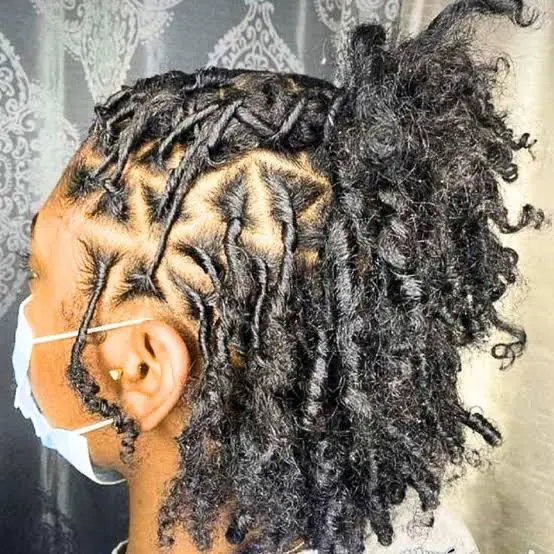
Geometric sections styled into a high ponytail
Courtesy of: coilsandglory.com
Keep the parting sharp and the sections even, or the whole effect looks accidental. A center part with geometric sections lifts thick, coily hair into a high ponytail that holds its shape through a workday. The precision comes from the salon; the ponytail itself is simple once the groundwork is set. The parting pattern only shows when the hair is up, so this style works best for locs worn up. Some pieces frame the face, softening the structure. Request from your stylist: starter locs with geometric sections, high ponytail. A professional styling session keeps the lines crisp, so book it before an event for the cleanest look.
DIY air-dried starter locs with neat formation
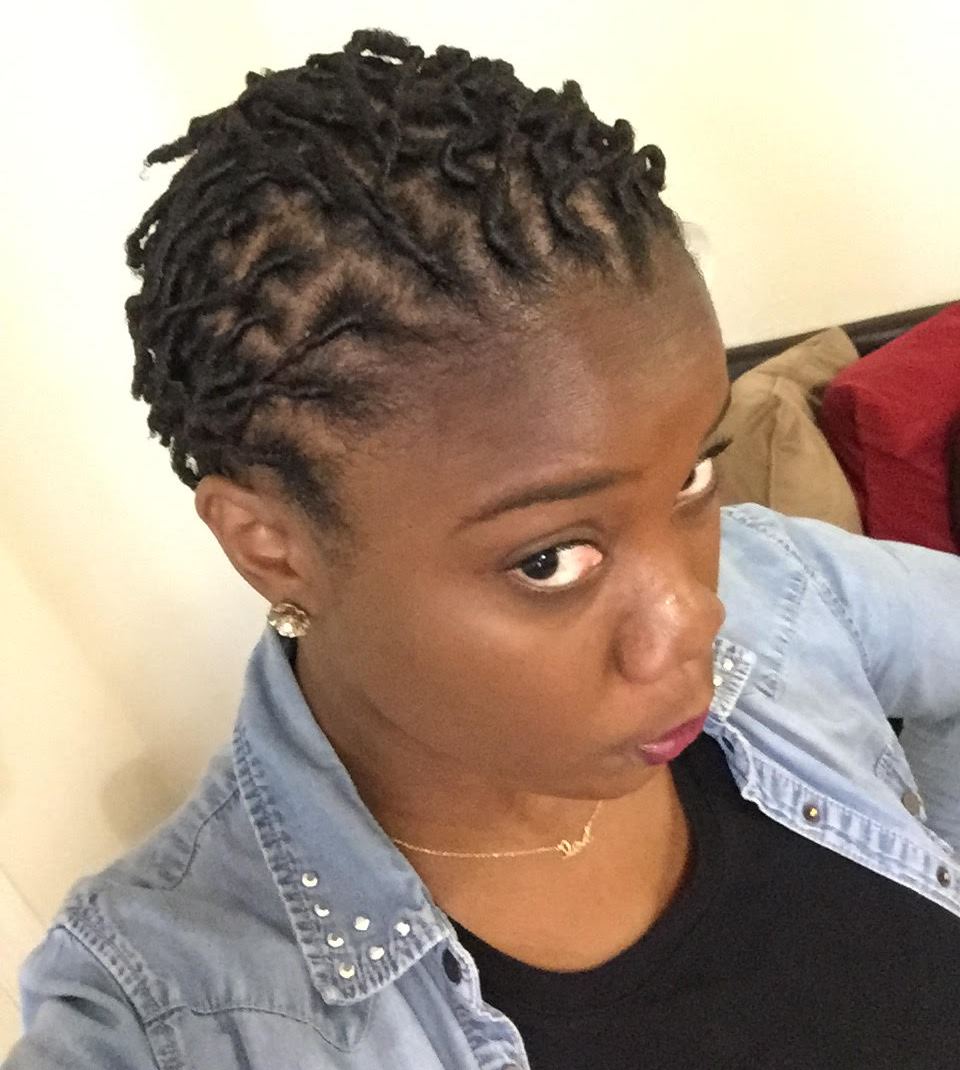
Photo credit: themariaantoinette.com
Neat formation starts with the parting, not the locs themselves. Black coily hair at the beginning of the loc journey air-dries into a textured finish that needs no heat and no fuss. The front framing shows off the clean lines, a detail that makes a DIY approach look deliberate rather than thrown together. Skip it if you are seeking intricate salon-level parting, because the charm here is consistency, not complexity. Focus on keeping each section uniform as you go; the hold depends on how evenly you part from the start.
Long uniform air-dried dark brown locs

Image credit: perfectlocks.com
Uniformity is the goal, and the mistake is chasing it with your own hands. Long, dark brown coily locs fall naturally when air-dried, and the side profile shows what consistency looks like: every loc the same thickness, the same direction, the same hold. Salon guidance matters here because starter locs set the foundation for years of growth. The catch: skipping the professional step often means uneven sections that only get more obvious as the locs lengthen. Request from your stylist: long dark brown starter locs, air dried, uniform appearance. Let the locs dry without manipulation, and resist the urge to twist or palm-roll them yourself. The texture does the work, provided the initial parting was done right.
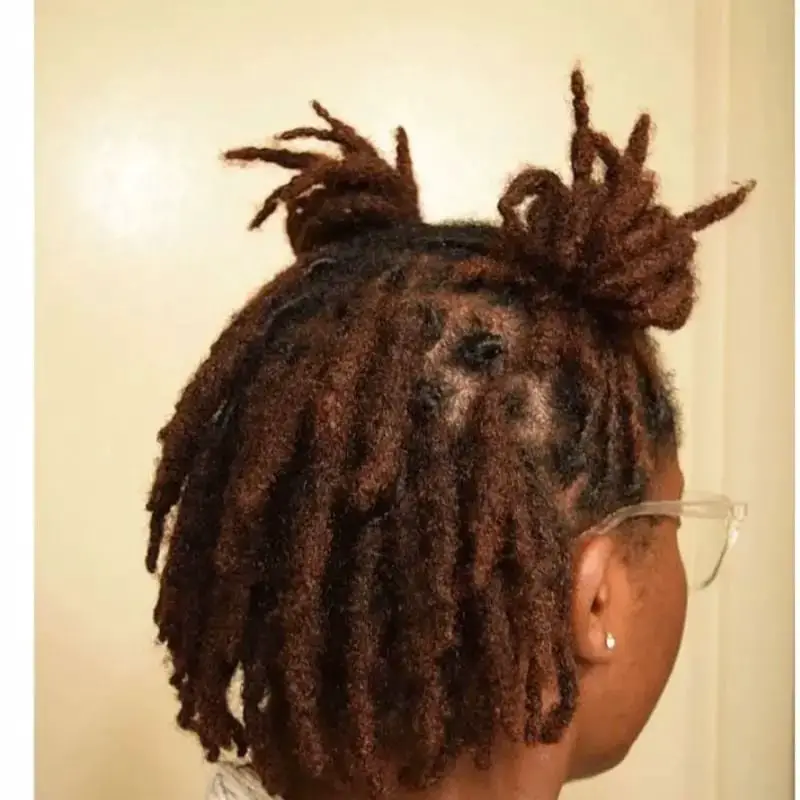
Space buns suit dark brown locs with auburn
Source: exquisitewomanlife.com
Two playful space buns on top of the head give coily medium-density locs a lift that lasts all day. Dark brown with auburn undertones adds warmth without a full color commitment. The style suits anyone with enough length to gather into buns, and the DIY difficulty is low. Since the buns keep everything off the neck and shoulders, this works best if you want your locs up. The hold comes from the twist and pin, not from product, so it works for a casual day or a playful evening.
DIY air-dried starter locs with natural texture

Via un-ruly.com
Air-drying is the honest finish for starter locs, and the mistake is treating them like mature locs. Thick, coily black hair forms into locs that hold their shape when left alone, with a natural textured finish that needs no manipulation. The DIY approach works if you accept the process. Skip it if you are seeking salon-perfected precision, because the appeal here is the organic, uneven charm. Request from your stylist: DIY starter locs, air dried, natural texture. Let the locs dry fully before touching them; the hold strengthens as the coil sets.
Final Thoughts
Pick the look that matches the time you have today.
- Starter locs require salon maintenance for precise parting every 4-8 weeks.
- Air dry locs whenever possible to maintain their shape and natural texture.
- Avoid excessive manipulation to prevent breakage and ensure even growth.
- Cleanse gently and dry fully to prevent mildew.
Starter locs offer a canvas for creative styling from day one.
