You are sitting in the chair with a dark base that has gone a little flat, wondering if lighter pieces will look like a costume or just a mess. The trick is in the blend, soft, smooth, and specific to your texture and length, which is why a classy balayage on dark hair 2027 fills so many saved boards.
27 real examples move from a short caramel bob to long ash-blonde layers, covering straight, wavy, and curly textures. There is a decision here for every grow-out rhythm and styling time, whether you need ten minutes or an hour. The struggle this collection solves is simple: how to go lighter without looking like you tried too hard.
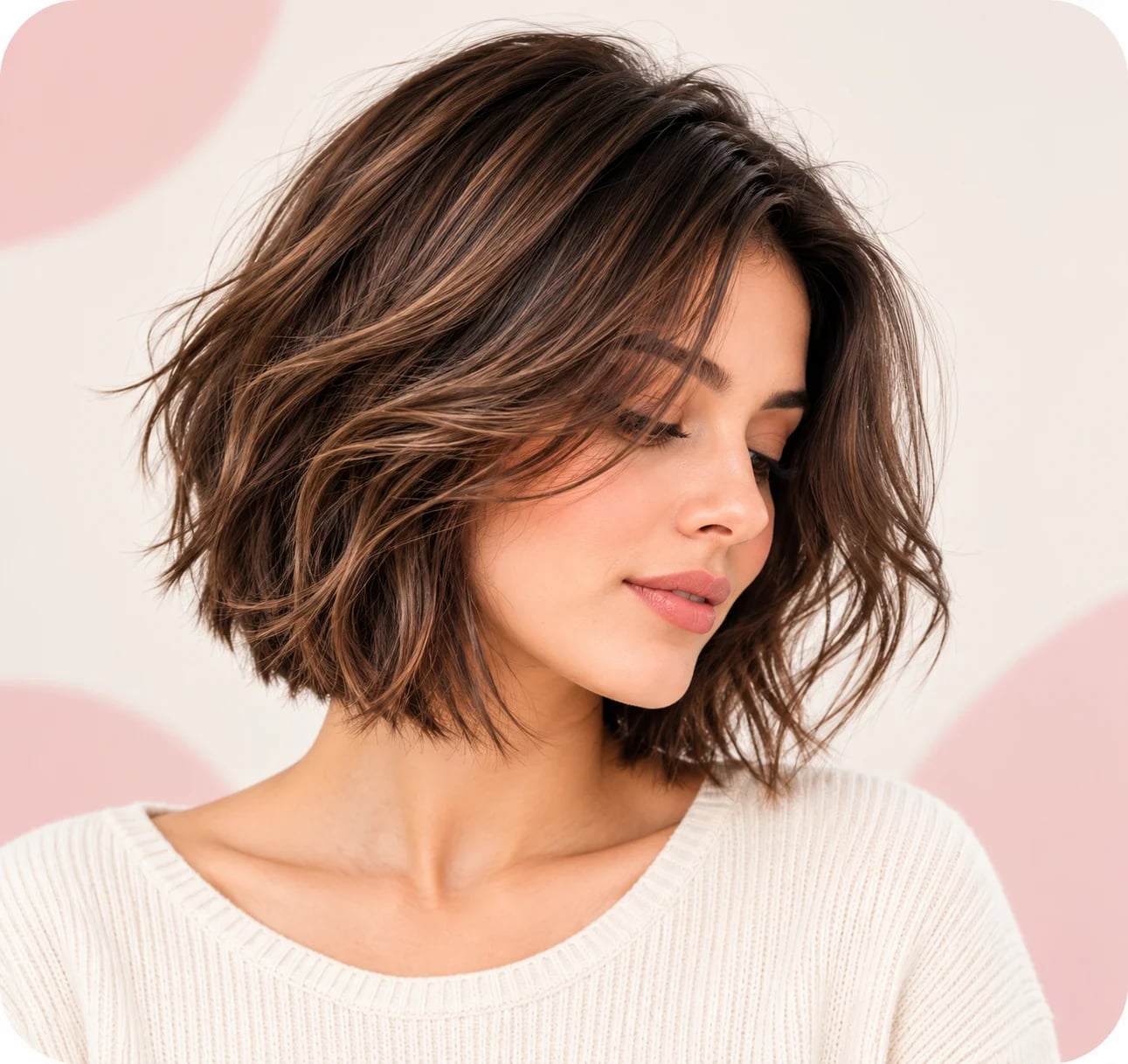
Dark brown bob with caramel balayage highlights
Courtesy of: hairellestyle.com
Thick, wavy hair cut into a bob with a side part gets a lift from caramel balayage highlights on a dark brown base. The air-dried finish keeps it low-key, but the color placement is intentional: lighter pieces catch the movement of waves without turning chunky. Tell your colorist: dark brown base with caramel balayage, bob cut. The texture adds volume here, no round brush required, just a good cut and time to dry. A sleek, straight finish is not the goal; the bob can flip at the ends when air-dried, and that look demands a flat iron you may not want to reach for daily.
Rich dark brown lob with warm caramel blend
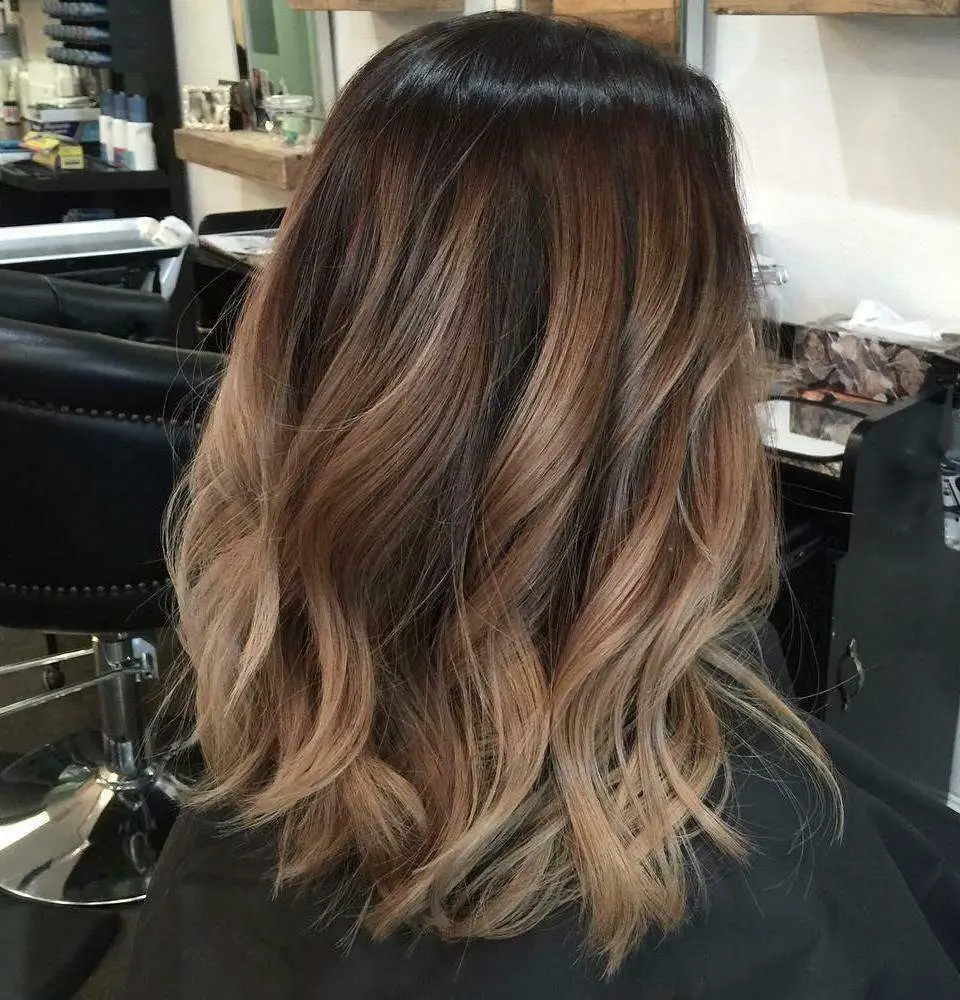
Photo credit: dollyluxuryhair.com
This lob is a step up in formality from the bob. A dark brown base meets a smooth caramel balayage, the warmth stepping down through the mid-lengths to the ends. The wavy blowout styling makes the difference: the lob lands just above the collarbone, thick texture holding the bend without teasing. Oval and long face shapes get the most from the middle part and the horizontal weight of the lob. The catch: this look air-dries into a flatter wave, so expect about fifteen minutes with a round brush or a large-barrel iron to keep the blowout shape you see here.
Natural dimension with caramel balayage in soft layers
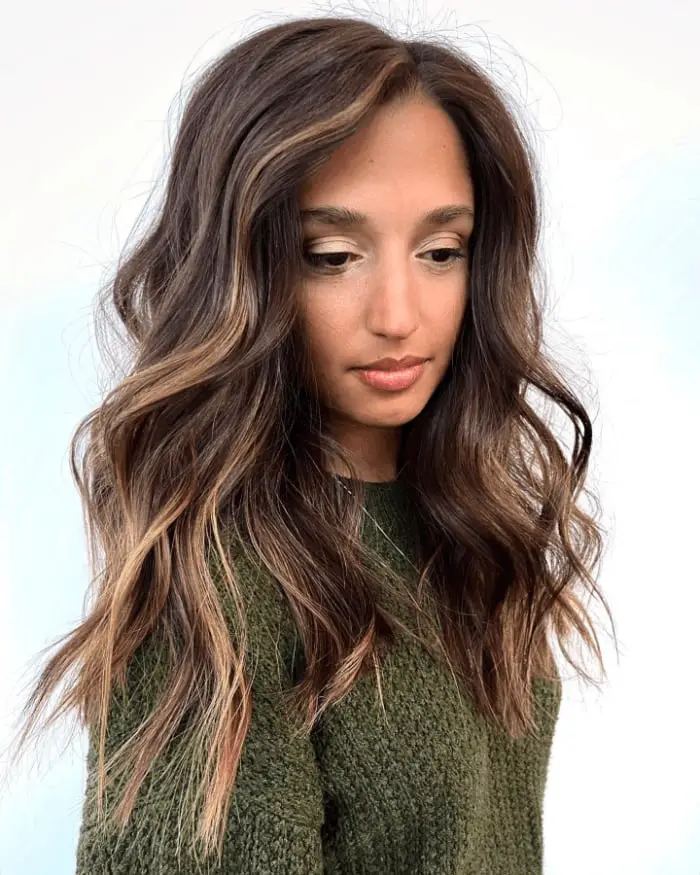
Image credit: hairstyleonpoint.com
Soft layers let a dark brown base with caramel balayage look grown-in rather than applied. The loose waves create light pockets around the face without a hard line between the base and the lighter ends. Thick, wavy hair suits this approach best, the layers remove weight without sacrificing density. A trim every ten to twelve weeks keeps the shape honest, though the color itself fades gradually enough that six months pass before the tone needs refreshing. The decision: most face shapes work here, but a blunt cut person will fight the softness from day one.
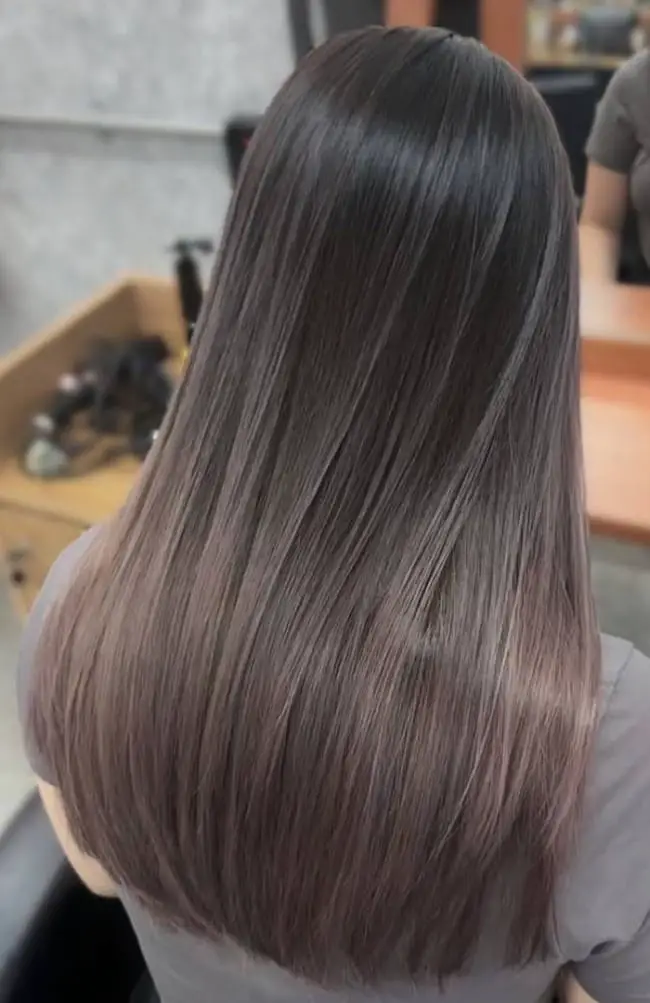
Salon finish with ash blonde transition on straight hair
Source: fabmood.com
A dark brown base lifting to ash blonde ends requires precision: the transition from warm to cool tones needs a colorist who understands neutralization. Straight, thick hair shows every graduation, so the balayage must feather evenly from the mid-lengths down. The middle part and air-dried styling let the color speak without distraction. Round and long face shapes benefit from the vertical elongation. Tell your colorist: dark brown to ash blonde balayage, straight cut. Toning comes every six to eight weeks to keep the ash from warming into brass. Three hours in the chair is the initial investment.
Grown-up dimension with ash blonde balayage in layers
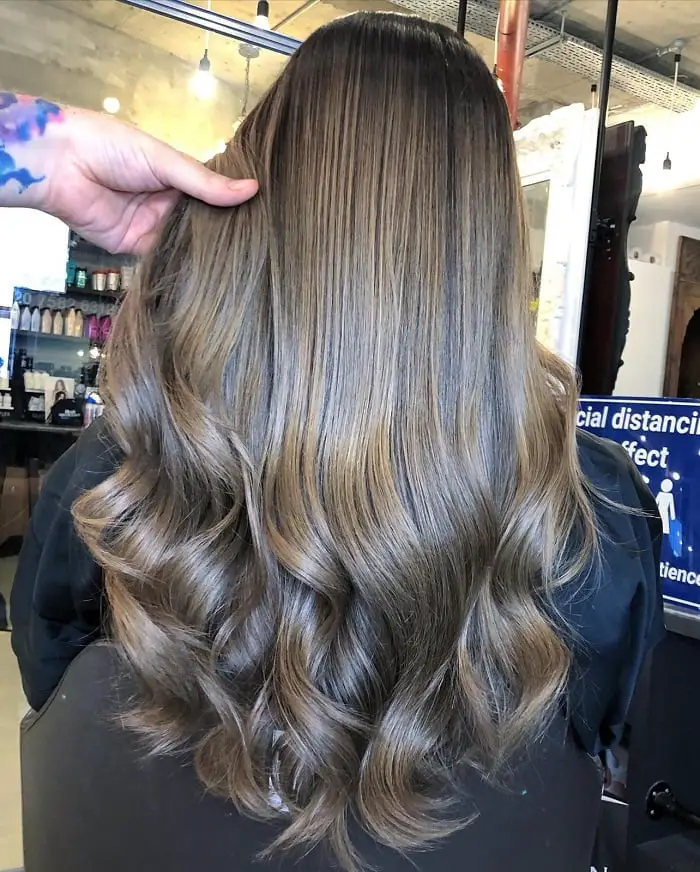
Waves break up a dark brown base with ash blonde balayage, the lighter pieces sitting deeper in the layers rather than on top. The effect is dimensional without being busy. Thick, wavy hair holds the wave pattern well, and the middle part keeps the color distribution even on both sides.
The real talk: ash blonde on dark hair requires upkeep. A warm tone is easier to maintain, but ash needs a toning appointment every six to eight weeks. One skipped visit and the ends pull greenish or muddy. The layers help: they let the color grow out with a softer line than a blunt cut would. Skip it if you prefer warm tones or a color that doesn’t demand a standing appointment.
Expertly blended ash blonde balayage on dark brown
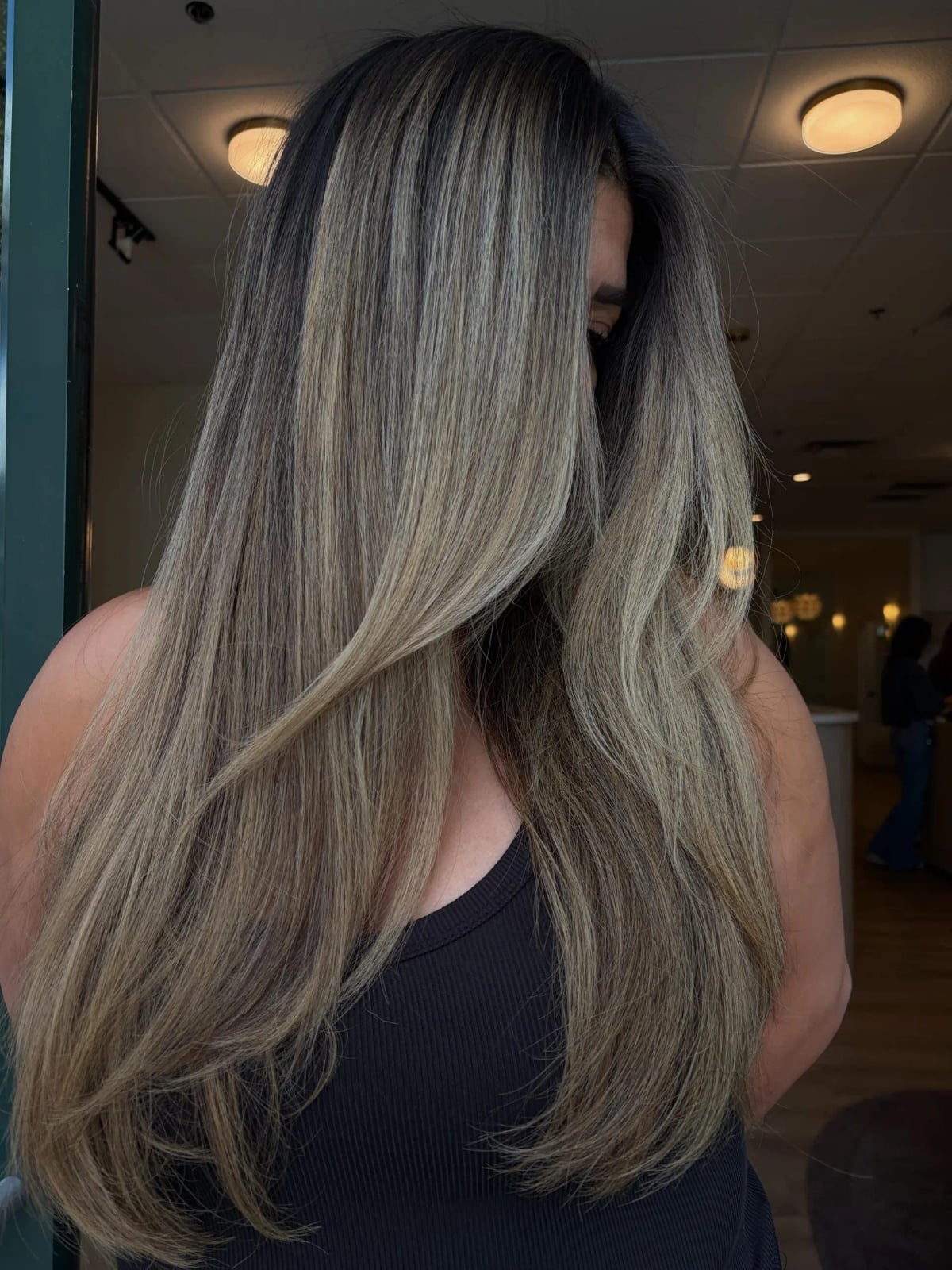
Courtesy of: kiri-me.com
An ash blonde balayage on a dark brown base reads cooler and more restrained than a warm caramel balayage, a deliberate shift away from honey tones. Thick, wavy hair with a middle part carries the contrast naturally, the ash strands sitting against the dark base without fighting it. Book it as: dark brown base with ash blonde balayage. This suits oval and heart face shapes best, but fine hair may need more styling for volume. Air-dried waves offer a natural finish, though the ash tone needs refreshing every six to eight weeks.
Smooth color melt with caramel balayage and long layers
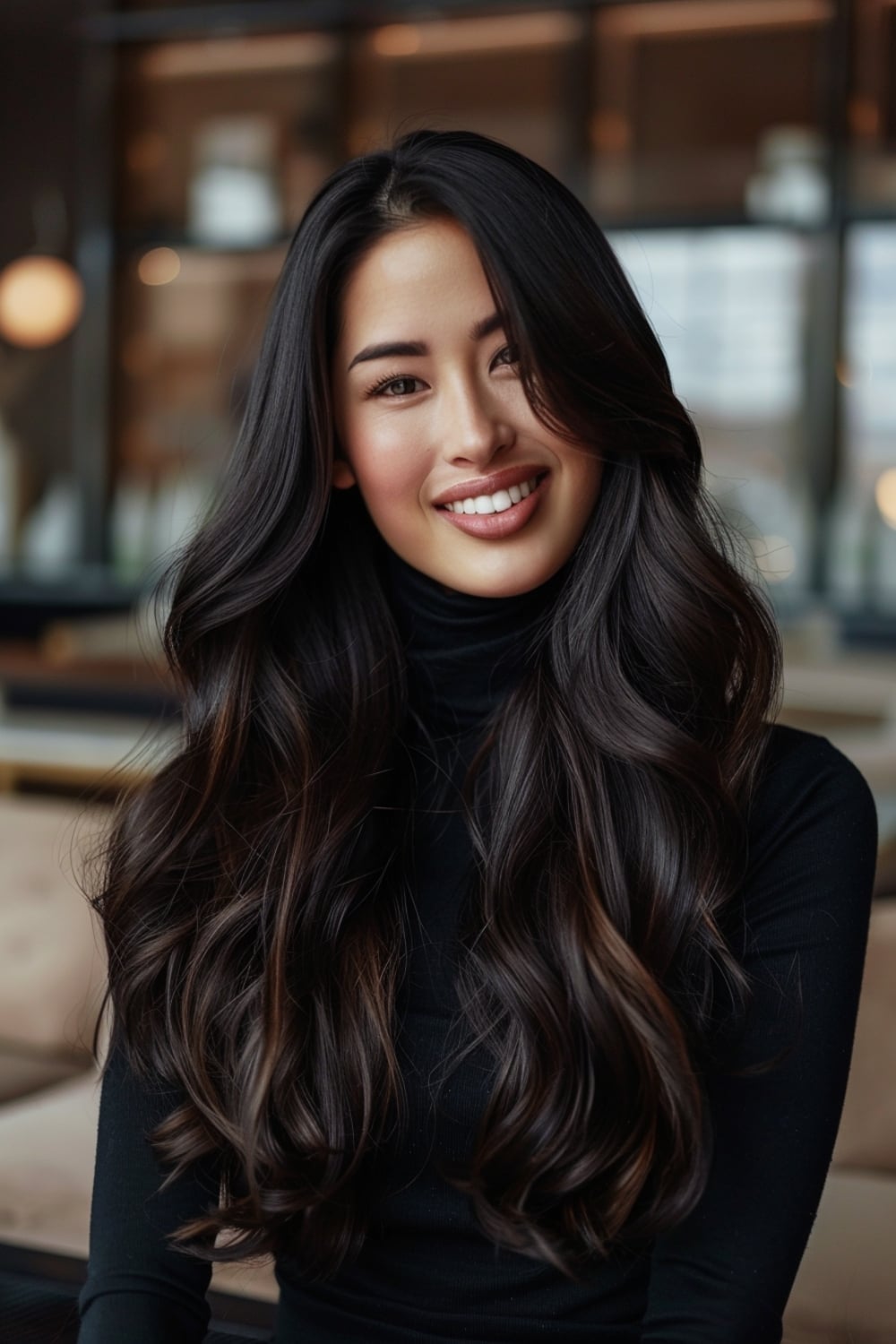
Photo credit: momooze.com
Wondering how to get that soft, melted look where caramel seems to seep into dark brown hair? Long layers are the reason it lands so naturally. The caramel balayage is painted low on the lengths, leaving the root area untouched, so the transition looks a smooth color melt rather than a stripe. Thick, wavy hair with a middle part shows the shift best. Tell your colorist: dark brown base with caramel balayage, long layers. The soft waves from a blowout enhance the blend, and trimming those long layers every ten to twelve weeks keeps the shape light enough to carry the color.
Rose gold balayage pops on dark brown curly hair
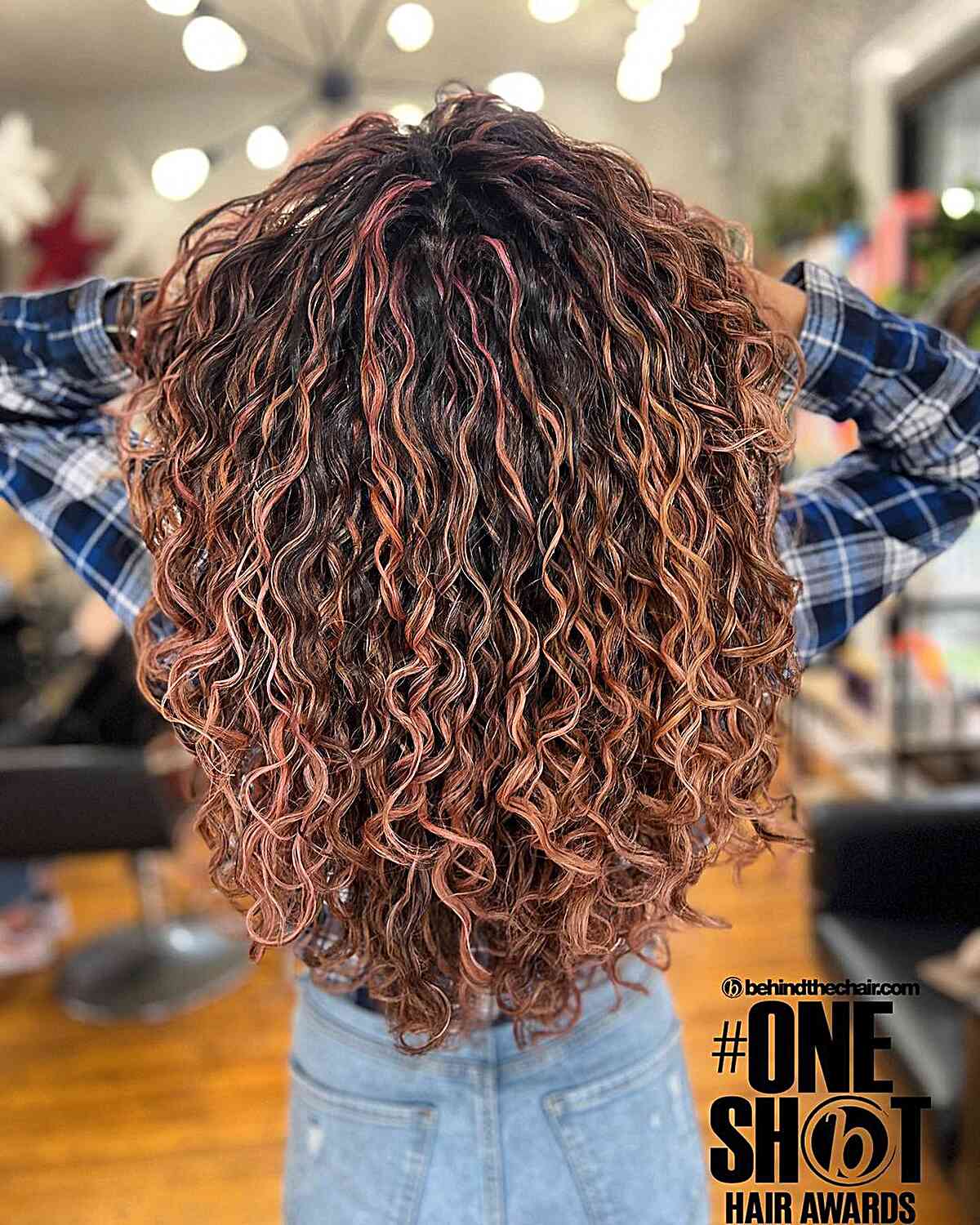
Image credit: latest-hairstyles.com
Rose gold on a dark brown base is a technical move: the colorist lifts selected strands to a pale gold first, then lays the rose tone over it. This creates a warm, coppery-pink shift that only shows in the curls. Thick wavy curls, air-dried, let the rose gold sit in the bends of the hair. This works for most face shapes. A color refresh every eight to ten weeks keeps the rose from dulling to a muddy peach.
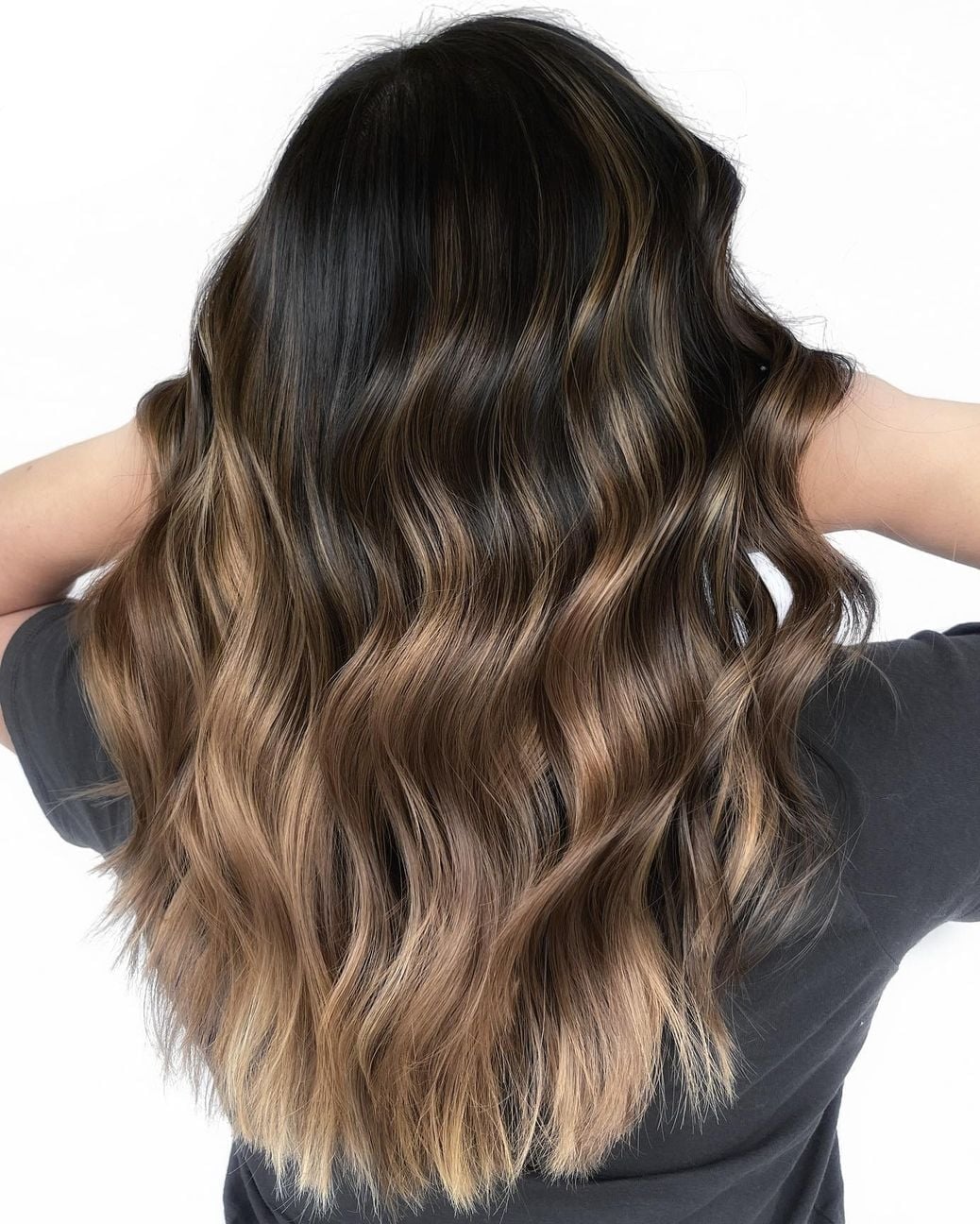
Caramel tones subtly frame dark brown wavy hair
Source: hadviser.com
Caramel strands placed around the face change how a haircut reads. On dark brown wavy hair with a layered cut, the balayage is painted to hit the cheekbone area on both sides, then fades into the lengths. The warm caramel against the dark base creates a soft frame that works with the waves, not against them. This genuinely flatters most face shapes. Pass when you have fine hair that may not hold the layered shape. A wavy blowout adds polish for days when you want the caramel to read clearly. Trim the layers every ten to twelve weeks to keep the framing precise.
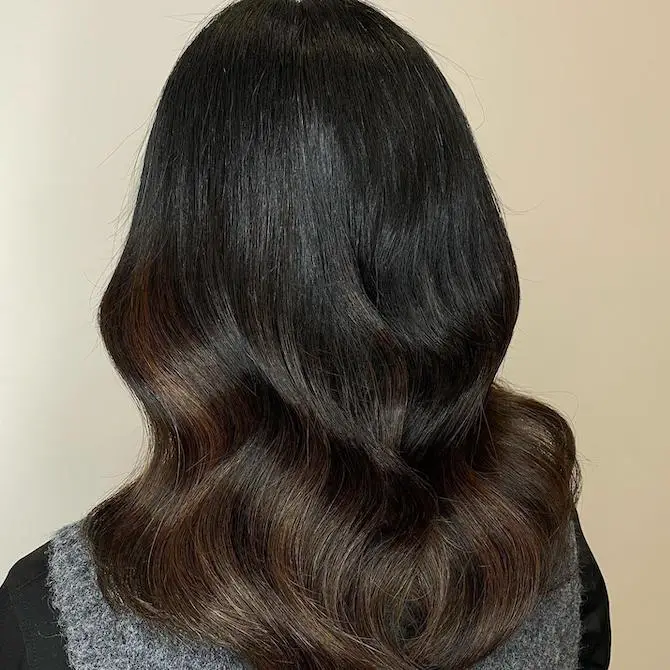
Dark brown base with subtle caramel balayage waves
Source: us.wella.professionalstore.com
Subtlety means the color grows out without a hard line. A subtle caramel balayage on a dark brown base stays close to the natural depth, lifting only a few shades warmer. The waves in thick hair pull the caramel through the layers, so the color looks a soft sheen rather than a bold stripe. The drawback: subtle balayage can look like grown-out highlights if the colorist lifts too few strands. A layered cut helps the caramel sit visibly in the movement.
Lighter effect with blonde balayage on dark brown hair
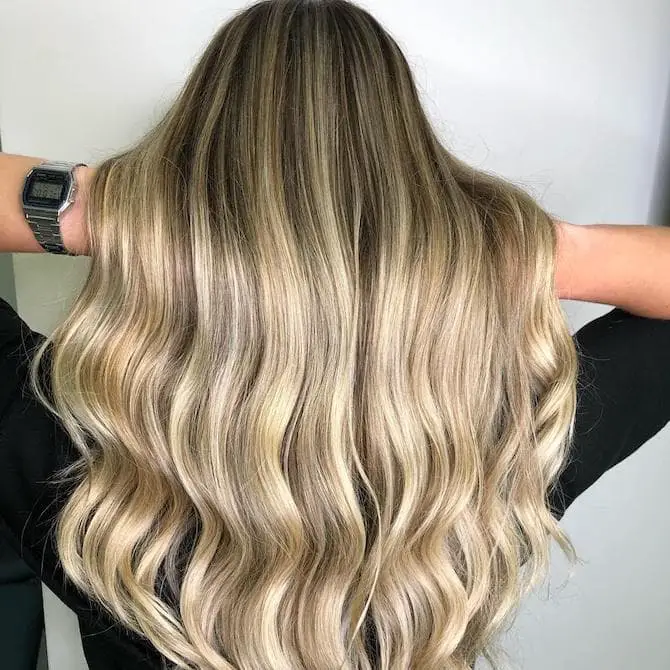
Caramel balayage gets all the attention, but blonde on dark brown is a different animal entirely. This version uses a cool, sun-bleached blonde that lands closer to ash than honey, painted through thick, wavy hair from a middle part. The back view shows the real trick: the blonde concentrates on the mid-lengths and ends, leaving the root area untouched for a grown-out look that actually means to be there. If you prefer warm-toned highlights like caramel, the contrast reads sharper. Thick, wavy hair carries the blend best; round and long face shapes both work with the soft framing.
Tell your colorist: dark brown base with blonde balayage, layered cut. The waves are essential here, a flat iron flattens the lighter effect into something that just looks like old highlights. Toning every six to eight weeks keeps the blonde from veering yellow.
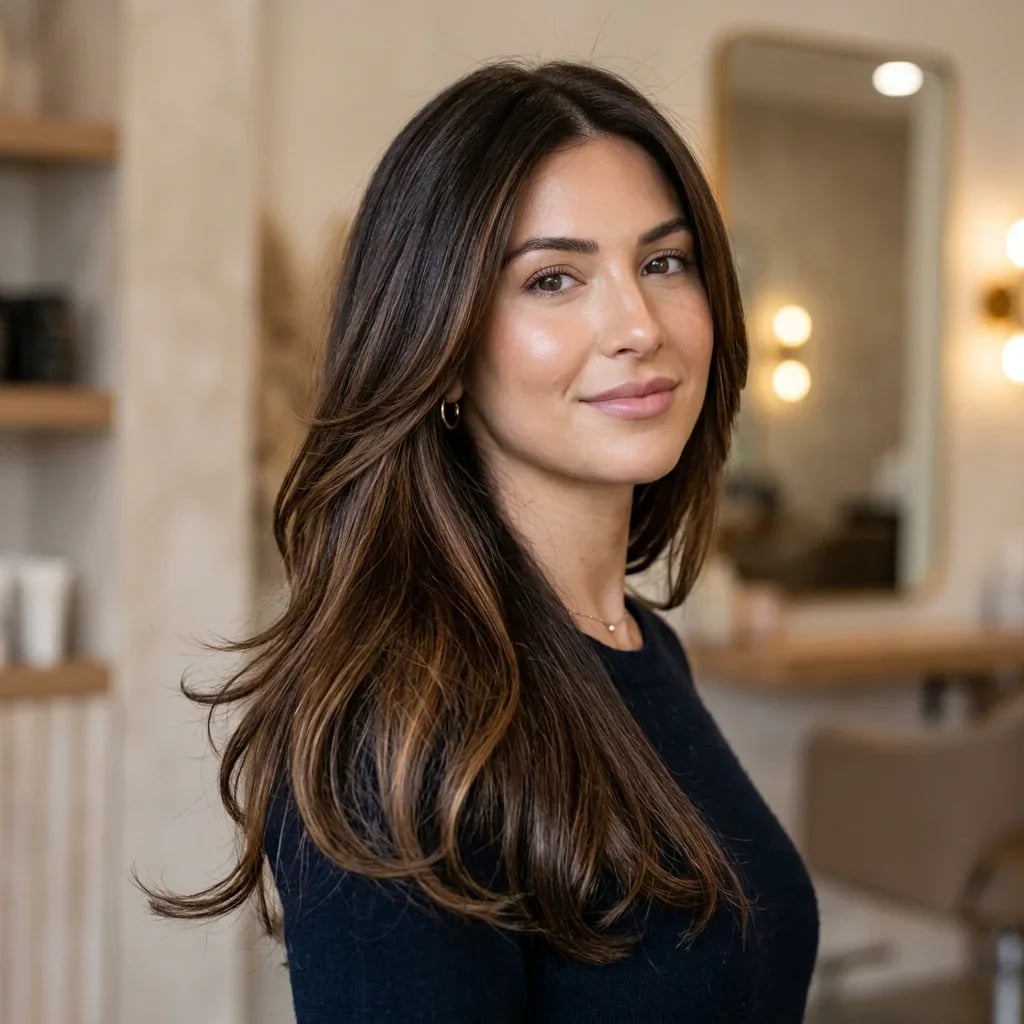
Caramel balayage through face-framing layers
Courtesy of: crowncurlss.com
How do you get caramel balayage to actually show up without going full highlight? Face-framing layers. The dark brown base stays rich through the back, while caramel sweeps forward along the jawline and cheekbones, painted onto thick, wavy hair and finished with a soft blowout. The middle part lets the color sit evenly on both sides. The precision is in the placement. The caramel needs to hit exactly where the layers fall. Most face shapes suit this because the lighter pieces act as a visual lift around the front.
Warm caramel balayage on straight dark brown hair
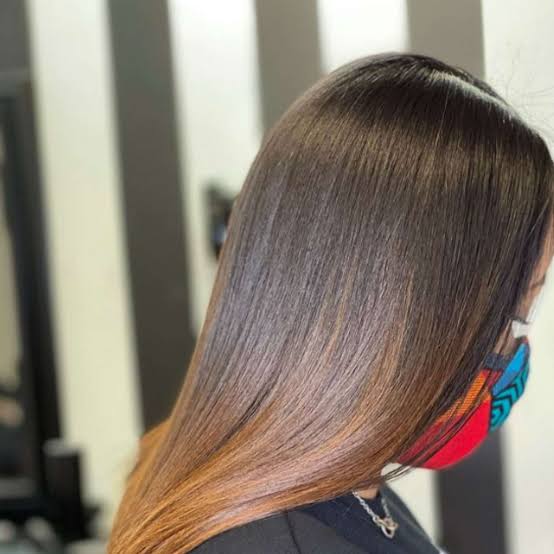
Photo credit: byrdie.com
Straight hair reveals every mistake in a balayage. This one works because the warm caramel transition is smooth, no hard line where the dark brown base ends and the lighter tone begins. A middle part splits the color evenly down the center, and the fine, straight texture lets the caramel sit flat against the dark without looking painted on. The technique relies on a soft hand: the lightener is swept on in thin sections, then blended back into the base with a gloss. Oval and long face shapes suit the straight fall best. Not for very thick or naturally curly hair. The blend reads differently on texture that wants to expand.
Dark brown with caramel balayage and visible layers
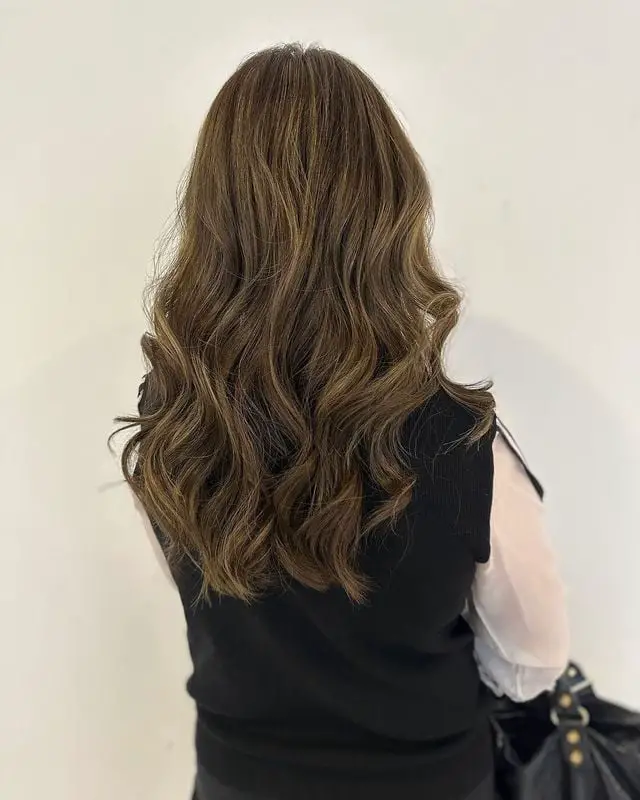
Image credit: kimage.com.sg
Visible layers and caramel balayage work together here like a system. The dark brown base holds the depth, while the caramel catches on each cut edge, turning a standard wavy blowout into something with clear structure. A middle part keeps the back view symmetrical. Loose waves are the default styling. They let the layers separate and the caramel appear as individual pieces, not one solid stripe. It suits those who want dimension from choppiness; a blunt cut with no layers won’t show the same effect. Thick, wavy hair gets the most out of this combination.
Natural grown-up look with caramel balayage highlights
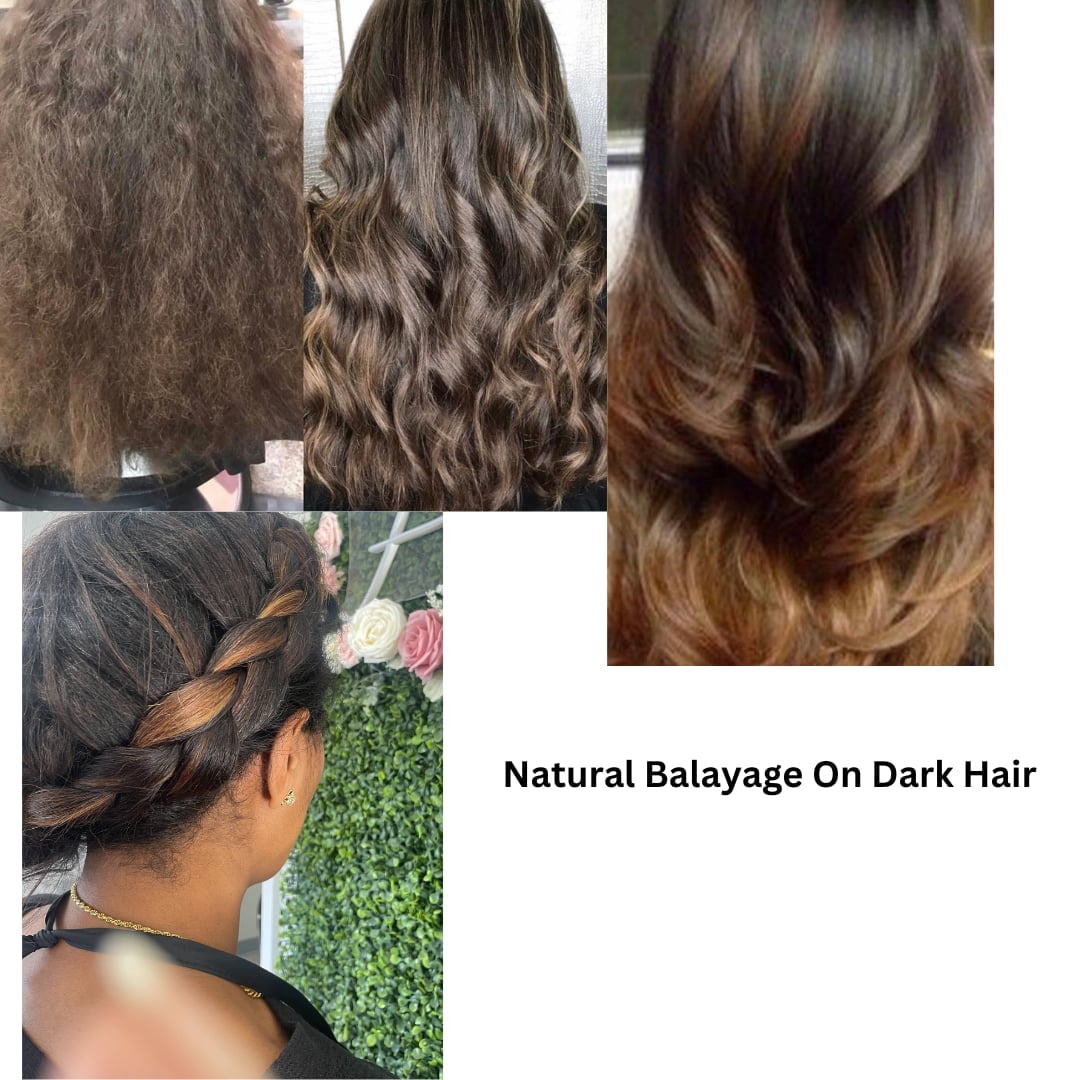
Source: noellesalon.com
Subtle caramel balayage highlights on a dark brown base sound simple until you see the reality: the lighter strands are sparse enough that the base still looks dark, not highlighted. Thick hair styled in waves lets the caramel peek through without dominating. The drawback is visibility, on straight hair or fine texture, these highlights can disappear entirely. You need enough density for the caramel to register as separate pieces. The overall effect is natural, but natural in this case means a salon appointment, not a happy accident.
Caramel balayage on dark brown lob with side-swept bangs
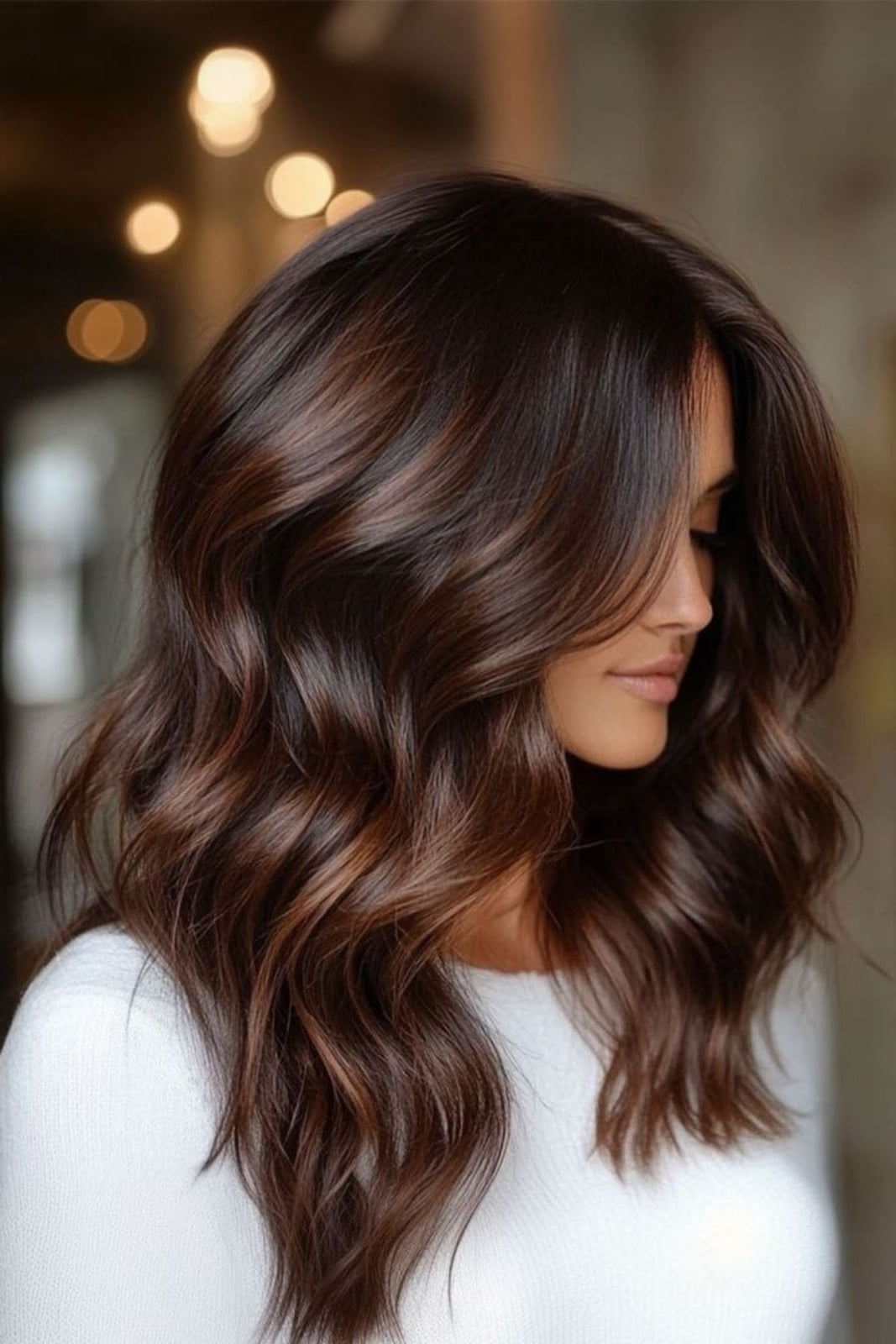
Via haiirology.com
You might be weighing a lob against a longer cut; this version settles it. The dark brown base carries caramel balayage that starts mid-length, so the lob keeps its weight while the color adds movement. Thick, wavy texture holds the side-swept bangs without constant re-blow-drying. Tell your colorist: dark brown base with caramel balayage, lob cut, side-swept bangs. Round and heart faces gain softness from the diagonal bang line.
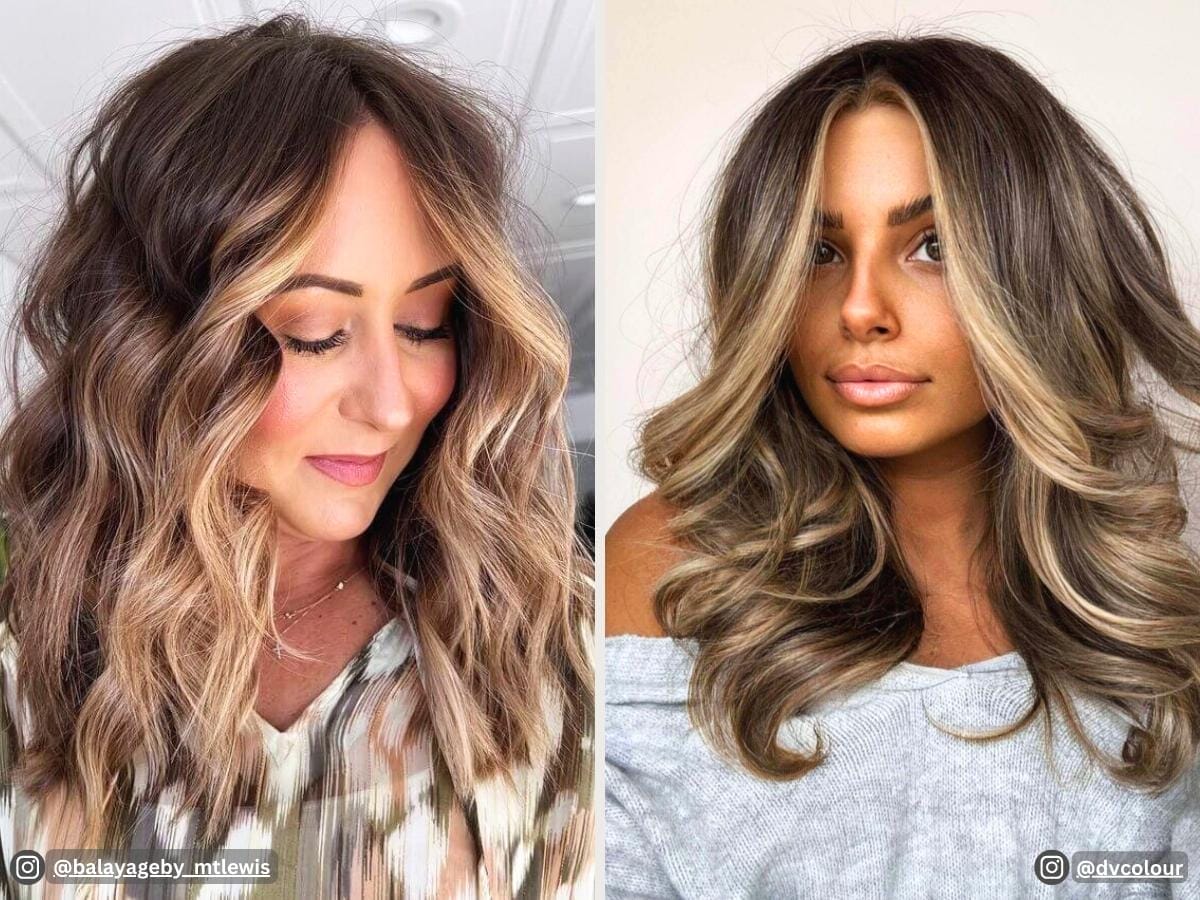
Face-framing blonde highlights on layered dark hair
Courtesy of: snazzylair.com
The blonde starts right at the cheekbone, not the root. That placement makes the face-framing highlights look deliberate, not grown out. A dark brown base grounds the look; the soft layers keep thick, wavy hair from turning into a triangle. A middle part lets the lighter pieces fall evenly on both sides. Most face shapes benefit from the brightness near the eyes. Tone the blonde every six to eight weeks so it stays pale, not brassy.
Ash blonde balayage with side-swept bangs and layers
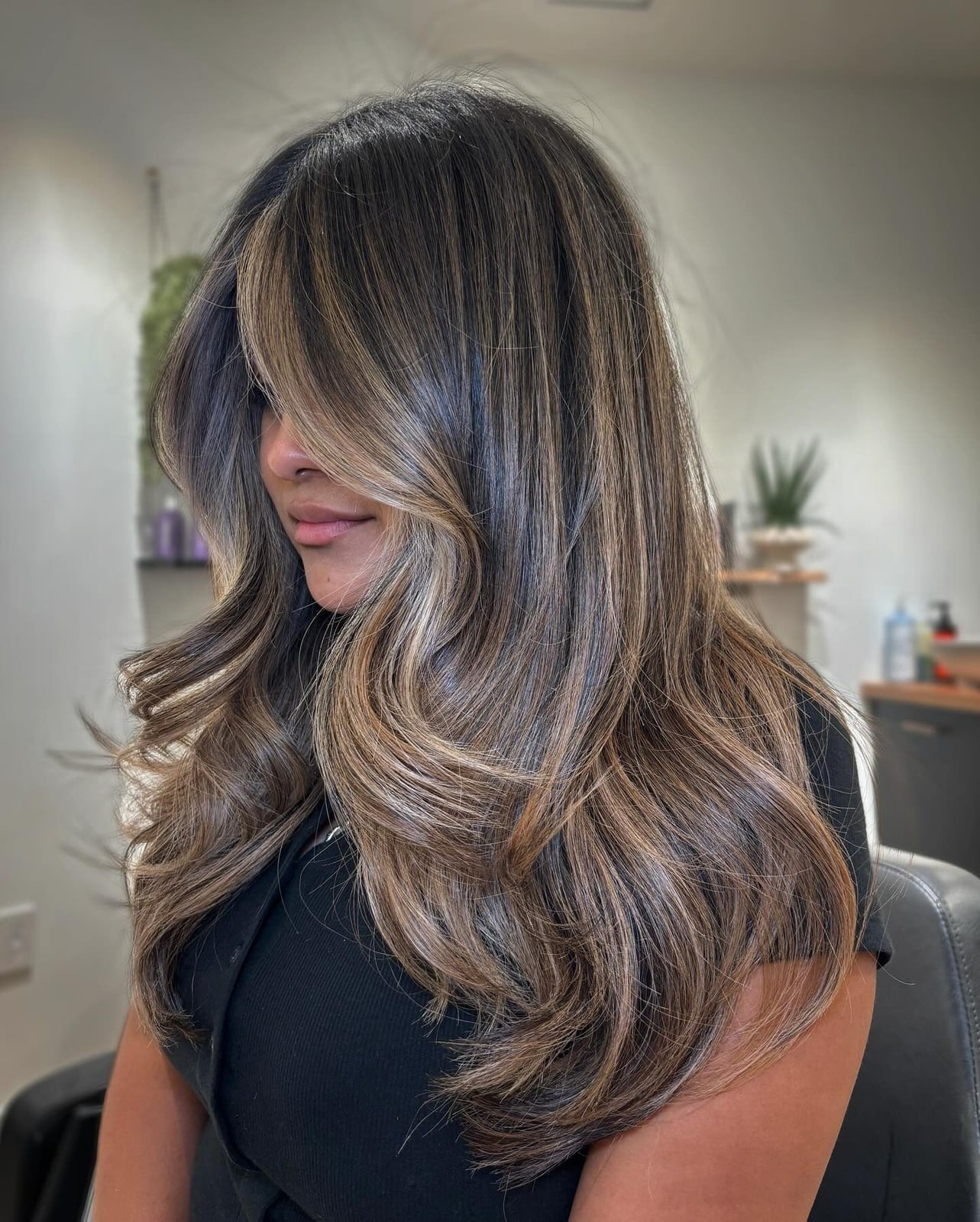
Photo credit: creativebooster.net
Ash blonde reads cooler than caramel, which matters when your base is dark brown. The balayage technique here keeps the lighter pieces fine and dispersed through the layers, so the side-swept bang does not end up as a single blonde stripe. Thick, wavy texture gives the ash tone enough visual weight to look intentional. Tell your colorist: dark brown base with ash blonde balayage, layers, side-swept bang. The side part and diagonal bang soften a round face.
Blonde balayage creates natural blend on dark waves
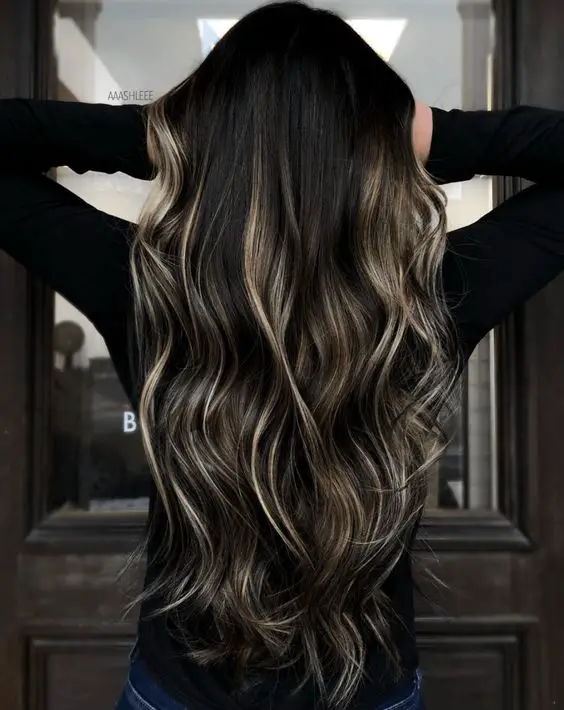
Image credit: momooze.com
The freehand application leaves the root area untouched. That is what makes the transition from dark brown base to blonde balayage look sun-bleached. Thick, wavy hair benefits from the contrast, as the waves catch the lighter pieces irregularly, which is exactly the point.
Who it suits: most face shapes, provided your texture has some wave or bend. This one wants to be seen. Loose waves enhance the contrast; a purple shampoo once a week maintains a cool tone.
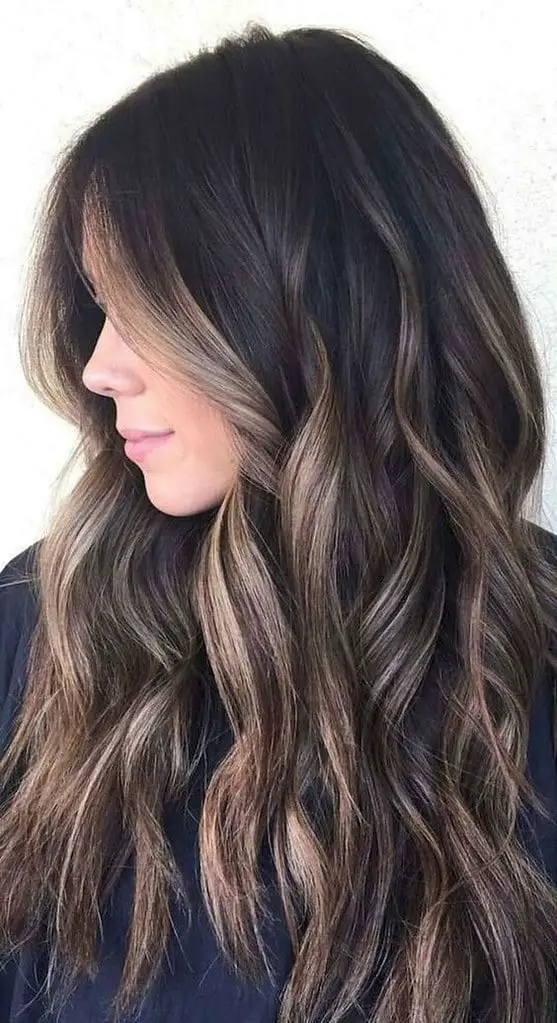
Ash blonde balayage on long layered hair with side-swept bangs, wavy
Via flickr.com
Long layers and ash blonde share a problem: the color can look flat if the cut lacks movement. Here the waves fix that. The dark brown base keeps the ash from washing out the whole head, and the side-swept bangs break the horizontal line that long layers sometimes create. Thick, wavy texture holds a blowout for two days before needing a refresh.
The catch: ash blonde fades faster than warm tones. You will see a yellow undertone around week six, which means a toner visit before the eight-week trim.
Ash blonde balayage with curtain bangs on layered hair
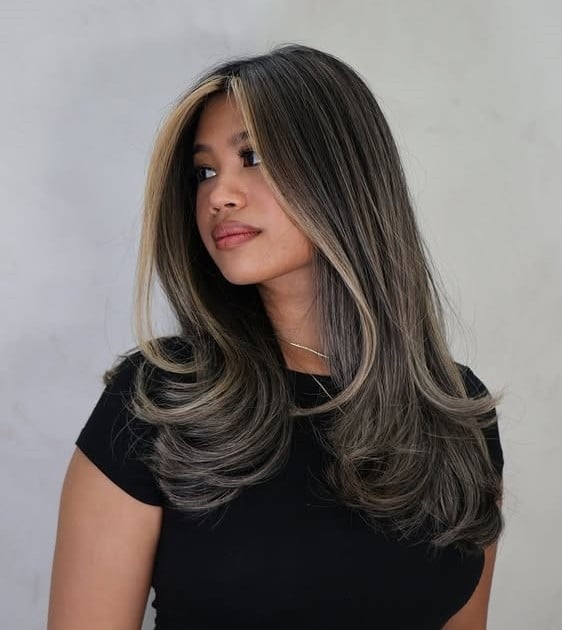
Courtesy of: ebay.com.au
Curtain bangs versus a blunt fringe is the real fork in the road here. The bangs sweep open, so the ash blonde balayage shows up in the face-framing pieces instead of hiding behind a heavy line. Thick, wavy hair carries the layers well, and a middle part suits most face shapes. Tell your colorist: dark brown base with ash blonde balayage. Skip it if you prefer no bangs at all; a blunt fringe changes the whole balance of the color placement. The blowout sets the curtain bangs with a round brush, and the ash tone needs a refresh every six to eight weeks to stay cool.
Soft blonde tones blend smoothly on dark wavy hair
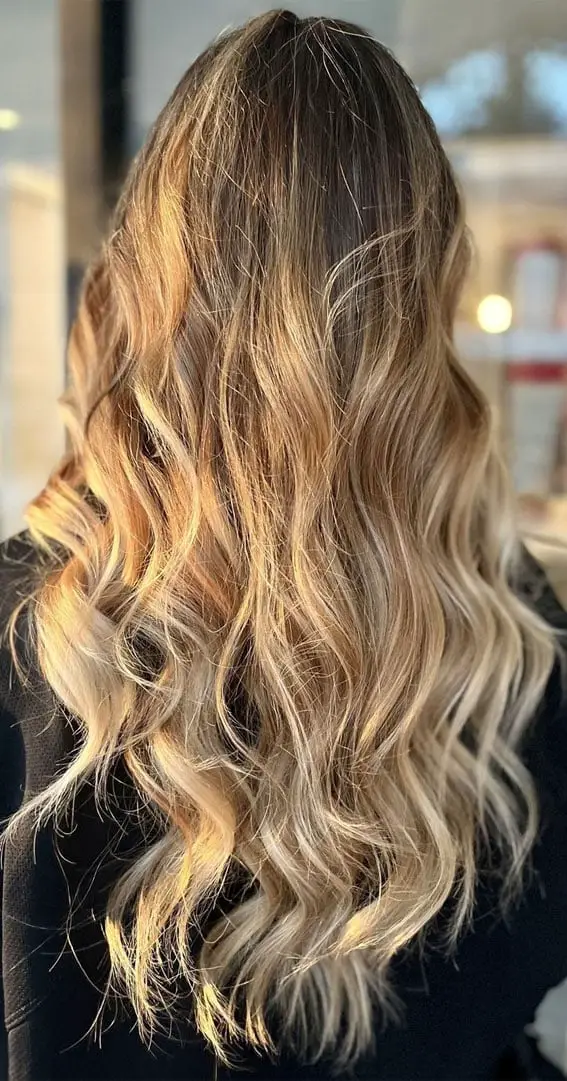
Photo credit: fabmood.com
This balayage prioritizes the transition over contrast. The dark brown base melts into soft blonde tones with no hard line, and the waves carry the blend through the lengths. Thick, wavy hair shows the dimension without extra styling. This stays warm and gradual rather than bold and cool toned. The waves are the finish, so a quick diffuser dry does the job. A toner every six to eight weeks prevents brassiness.
Caramel balayage waves on long layered dark hair
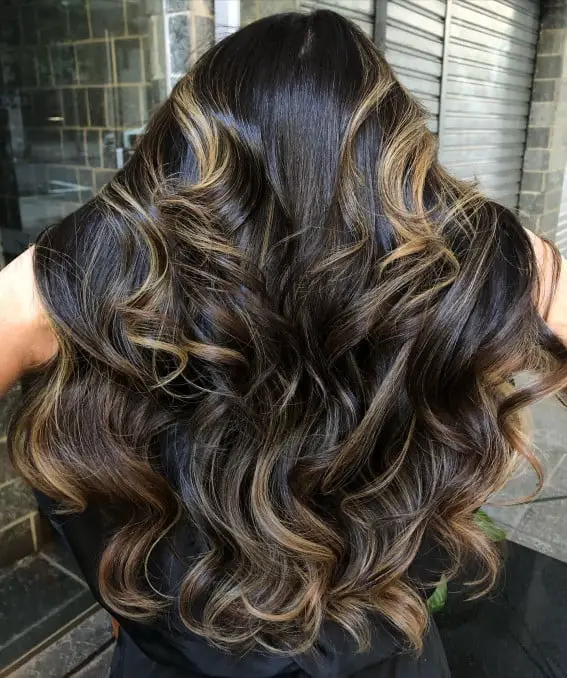
Image credit: fabmood.com
Start with the base, then build the color. The dark brown stays put at the roots, and the caramel balayage is painted through the long layers so the lighter tones land where the waves bend. Thick hair holds the shape; fine hair might not carry the volume. The middle part and no bangs keep the focus on the color melt. Tell your colorist: dark brown base with caramel balayage. The layers are what let the balayage breathe. The blowout with a large barrel brush gives the voluminous waves that show the transition.
The caramel warms the whole head. The placement is precise, so the light pieces sit in the wave crests, not scattered. That is the difference between a classy balayage and a streak job.
Natural texture with caramel balayage on layered hair
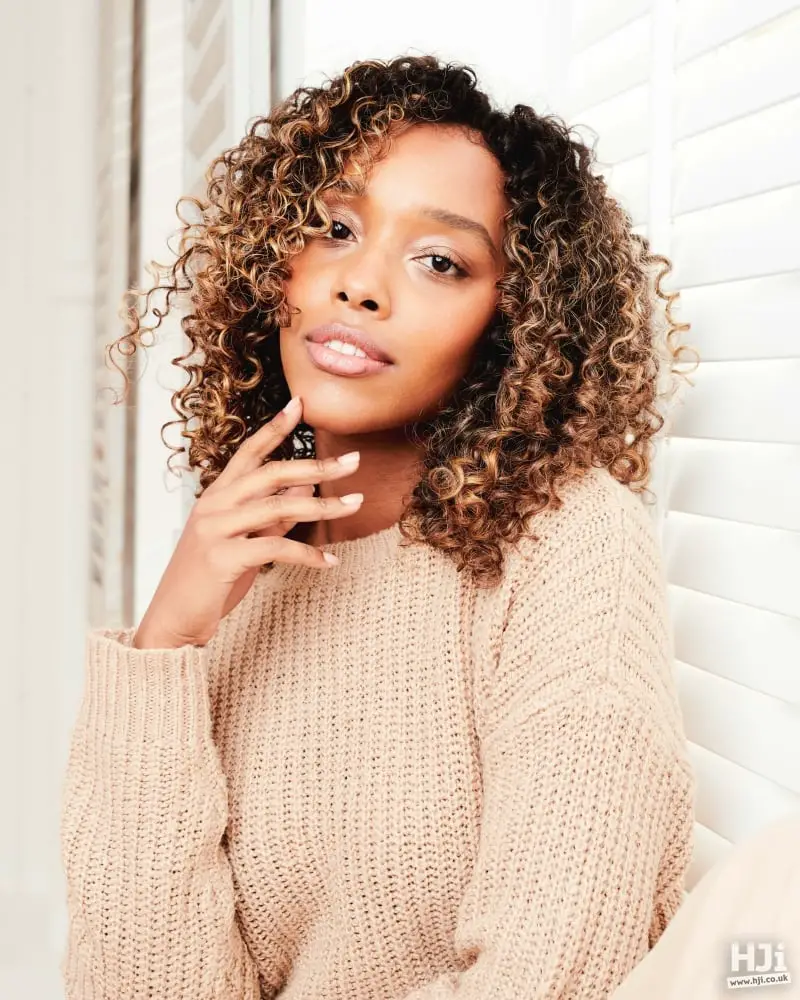
Source: hji.co.uk
This one rewards hair that does what it wants. The layered cut on thick, wavy to curly hair lets the caramel balayage settle into the bends, and the dark brown base keeps the roots grounded. Air-drying is the styling method; no heat needed. Pass when you want a sleek, neat finish, because this look lives in the texture.
The catch is the grow-out. The balayage is painted high enough that new growth blends softly, but the caramel pieces near the face will need a gloss between full appointments to stay fresh.
Caramel balayage highlights framing the face on layered hair, wavy
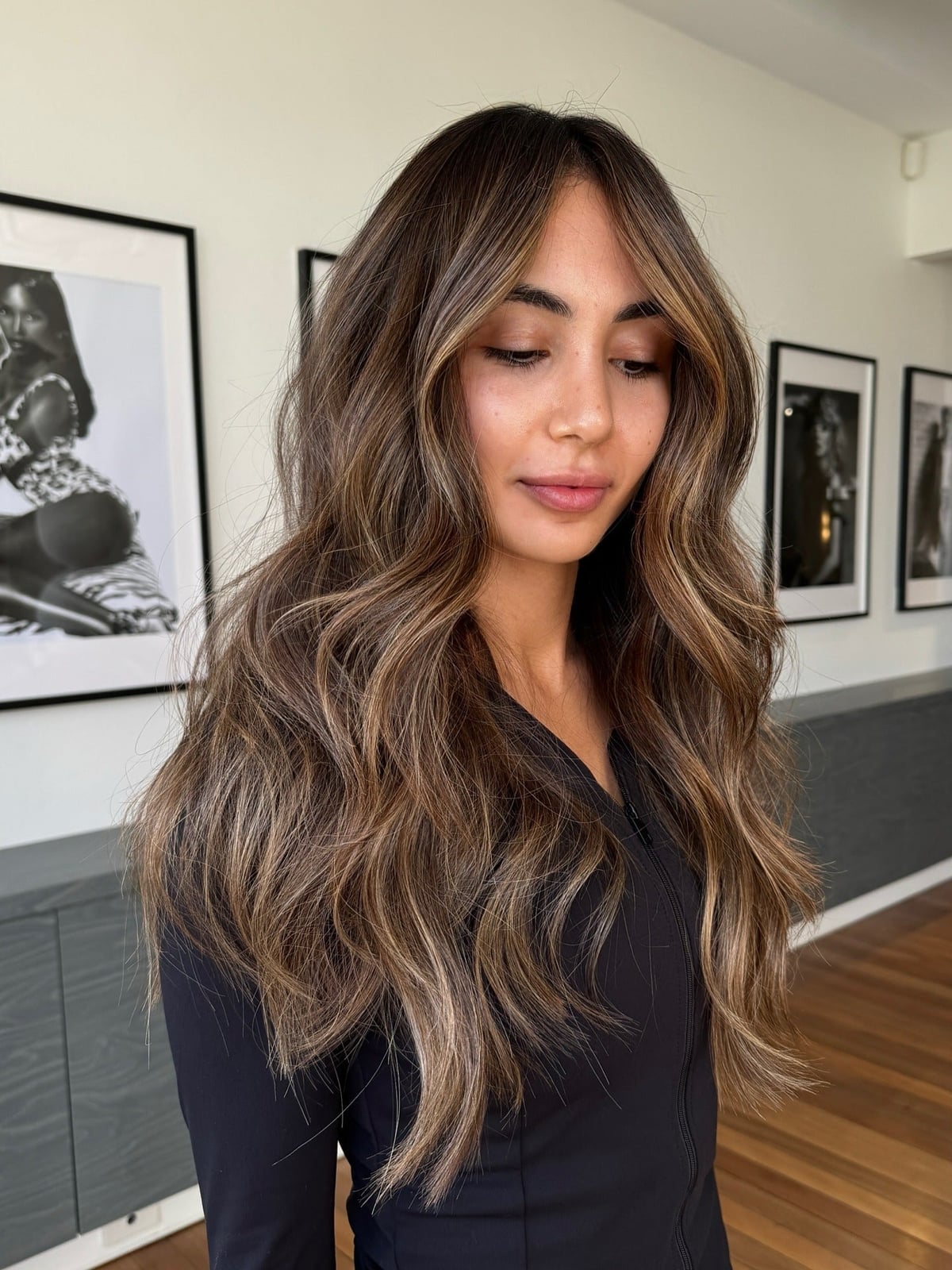
Keep the color close to the face and the rest follows. The caramel balayage is placed to frame the front, so the lighter tones catch the eye without covering the whole head. Thick, wavy hair with layers gives the movement; the middle part lets the face-framing pieces fall forward. Tell your colorist: dark brown base with caramel balayage, face-framing layers. Skip it if you prefer all-over color, because the contrast is the point here. The wavy blowout sets the shape, and the layers do the work. One drawback: the framed pieces lighten faster than the rest, so they need a toner touch-up sooner, around week six.
Neat finish with caramel balayage transition on layered hair
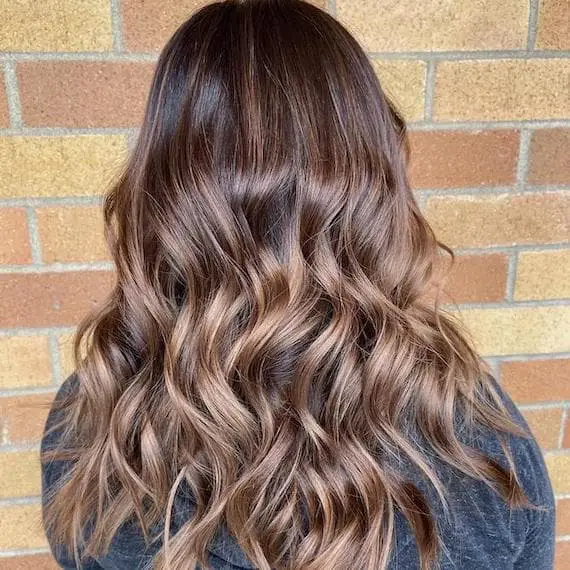
Courtesy of: uk.wella.professionalstore.com
Against a straight, blunt lob, this version wins for anyone with thick, wavy hair and a layered cut. The dark brown base melts into caramel tones through the mid-lengths and ends, so the transition looks like a smooth gradient. Waves carry the color through the layers, which makes the blend look deliberate. It works best with a layered cut and wavy texture; a blunt cut or straight styling flattens the transition into a single line. The polish comes from the finish, not the formula; a blowout with a round brush sets the waves that show off the depth.
What you trade is time. The color looks expensive and the dark base grows out quietly for months.
Lighter blonde balayage highlights on layered hair
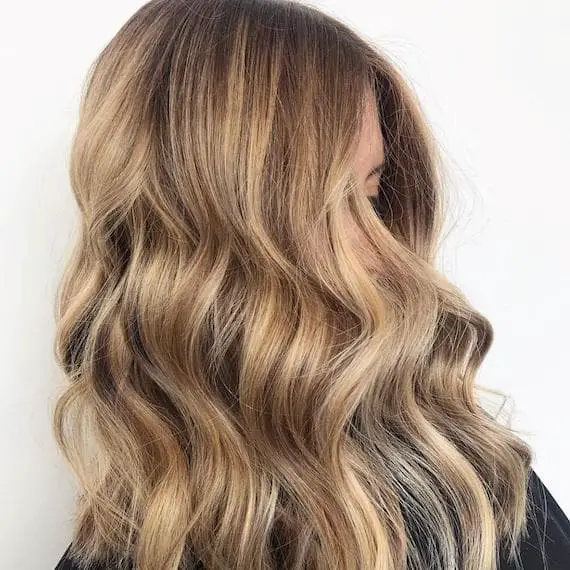
Photo credit: au.wella.professionalstore.com
Start with a dark brown base and ask for blonde balayage highlights placed where the sun would hit: around the face, through the layers, and lighter at the ends. The layers catch the color, so the waves show off the dimension instead of hiding it. Thick, wavy hair carries this best, because the texture moves the highlights around and keeps the blend from settling into a flat stripe. This stays cool and soft, so it suits those who prefer neutral tones over warm or very bold color. Tell your stylist: dark brown base with blonde balayage highlights, layered cut. The side view shows the careful blending that keeps the roots dark and the lengths bright; that contrast defines the look. Tone the blonde every six to eight weeks to keep the lighter look from turning brassy.
Final Thoughts
Your choice comes down to two things: how often you want to see your colorist and how much time you have for styling.
- Fine hair: request a root shadow for depth at the base.
- Ten minutes in the morning: pick soft waves that hide grow-out.
- Cool base that pulls brassy: book a toner every eight weeks.
- Thick hair: ask for long layers to let the balayage breathe.
Select the classy balayage that fits your lifestyle and desired look.
