You have the consultation in three days and a Pinterest board full of screenshots that all look slightly different. The cut you keep circling back to sheds weight without losing length, works with air-dried texture, and photographs well even on week four. That is the worth of the chair time here.
23 variations of the Sharp Hush Cut 2027 fill this collection, from low-upkeep blunt silhouettes to high-density shags. One gallery solves the problem of finding a cut that survives your actual routine, whether you have fine strands, a cowlick, or a color appointment every ten weeks.
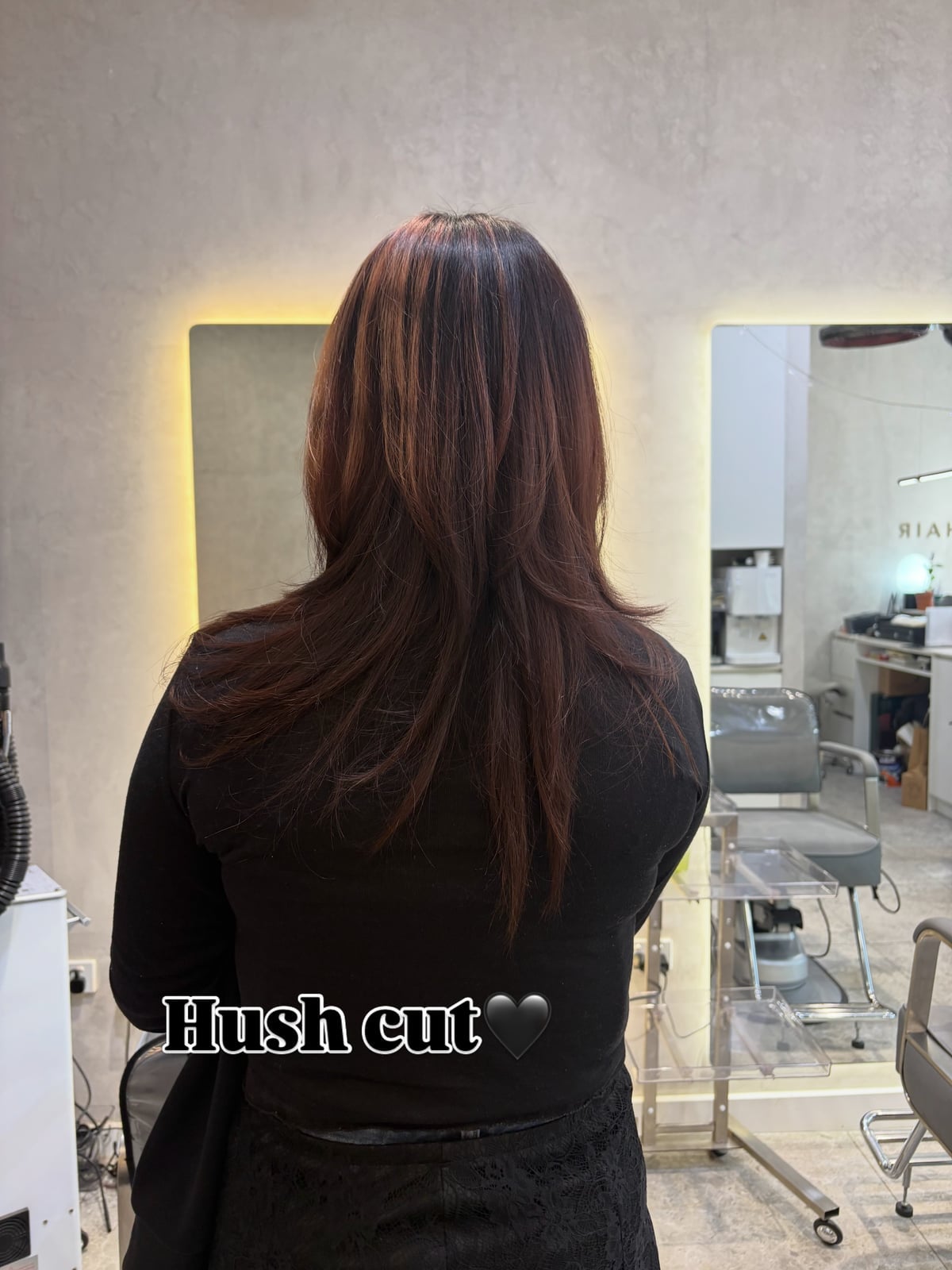
Softly blended layers on a dark brown base with auburn highlights
Courtesy of: nabihair.com.au
Precision layering that dissolves into the length rather than announcing itself. The dark brown base carries subtle auburn highlights, spaced so the color looks one piece with a warm shift in light. Fine, straight hair is the texture that lets these blended layers move without puffing. Start at collarbone length or longer; anything shorter loses the gradual taper that defines the hush cut with blended layers. A blunt, one-length cut does not work for this shape. This shape depends on soft interior graduation. Air-dry, no brush, and the layers fall into place. Trim every six to eight weeks keeps the blend from turning into a shelf.
Face-framing curtain bangs on a dark brown shag

Photo credit: chezvoushair.com
Do curtain bangs actually work on a shag, or is that just Instagram math? They do, provided the shag layers are cut to meet the bangs at the cheekbone. The dark brown color and middle parting keep the look grounded while the face-framing pieces shorten the visual width of a round face. Fine, straight hair at collarbone length gives the curtain bangs the weight they need to drape. Curtain bangs demand a quick blow-dry forward and a split-second cool shot. Tell your stylist: shag haircut with soft curtain bangs and face-framing layers.
Wispy bangs and choppy layers on a dark brown shag
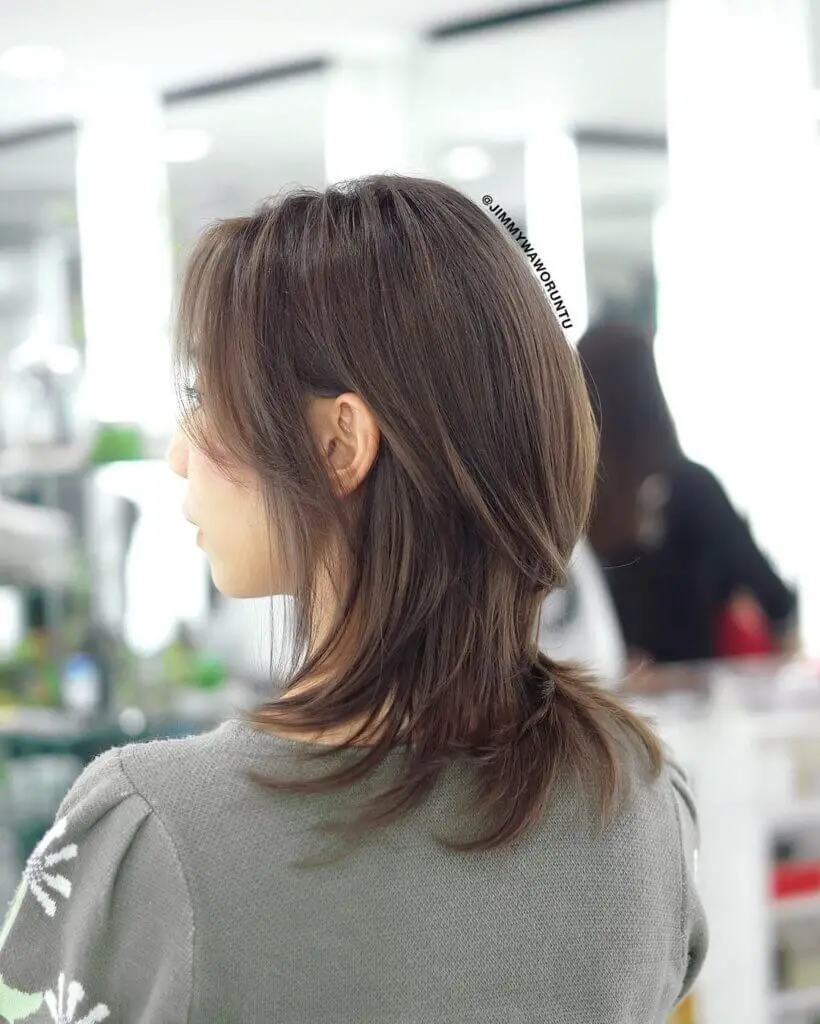
Image credit: professionalbeauty.in
Not blunt bangs, not micro fringe, wispy bangs that land somewhere between eyebrow and eyelash, cut into the dark brown shag so they look part of the choppy structure. The subtle highlights catch the light at the ends, which prevents the fine texture from looking flat. A middle parting splits the wispy pieces evenly. The words for the chair: layered shag with wispy bangs and choppy layers. You cannot approximate this with kitchen shears; the choppy sections need a stylist who carves rather than snips straight across.
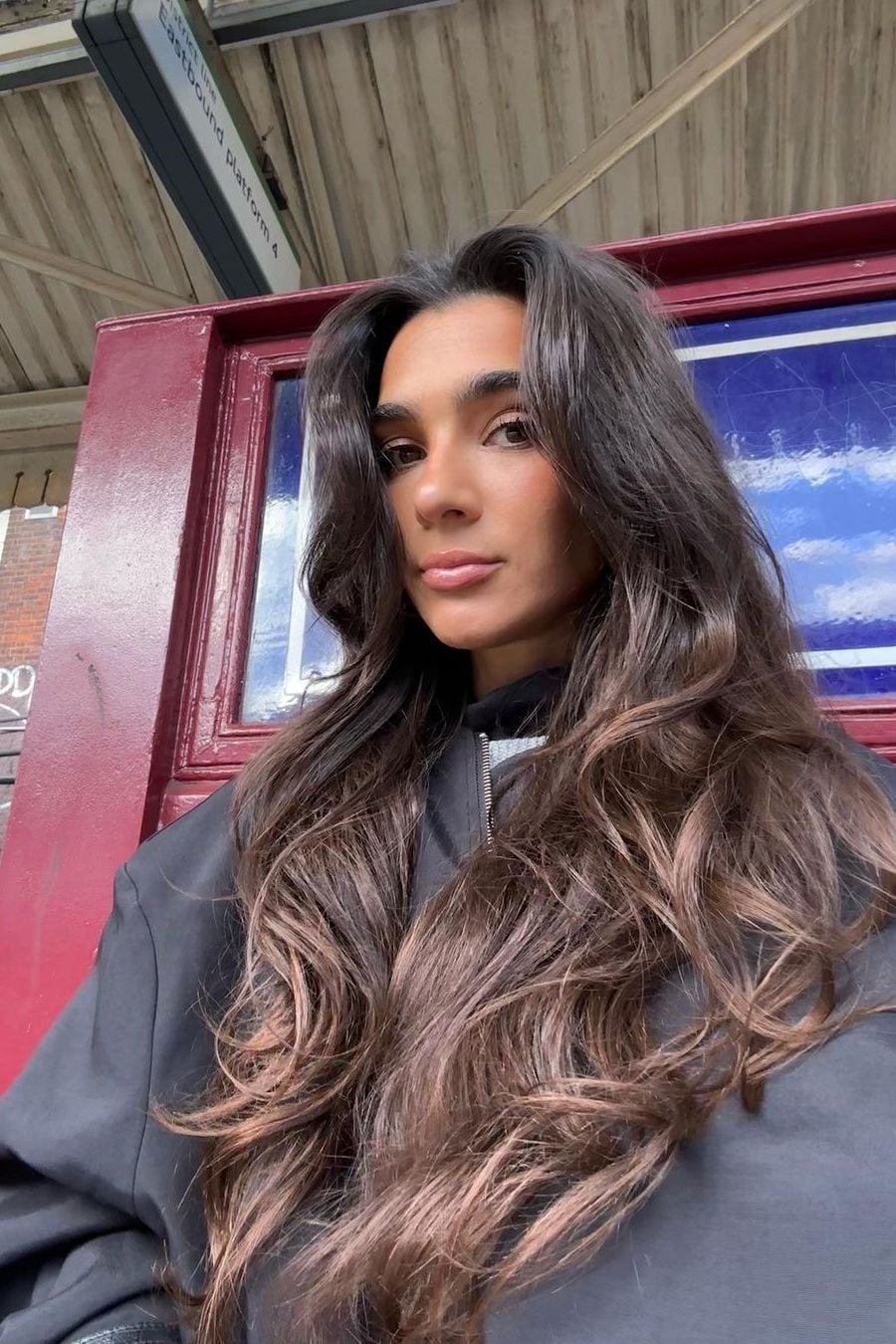
Long flowing layers with auburn highlights on dark brown hair
Source: vogue.co.uk
Long layers that actually move. The auburn highlights are spaced through the dark brown base so the wave pattern looks one fluid shape rather than separate streaks. Thick, wavy hair carries this weight best; the layers reduce bulk without sacrificing length. A middle part and loose waves give it a finish that works for both a work video call and an evening event.
Upkeep is where this design earns its keep. The auburn highlights need a gloss or toner refresh every eight weeks to keep the warmth from pulling brassy. The long layers themselves hold shape for about ten weeks before the ends start to feel heavy. A curling wand at medium heat sets the wave, but the real time goes into sectioning so the highlights line up with the curl.
Feathered layers and curtain bangs on dark brown hair
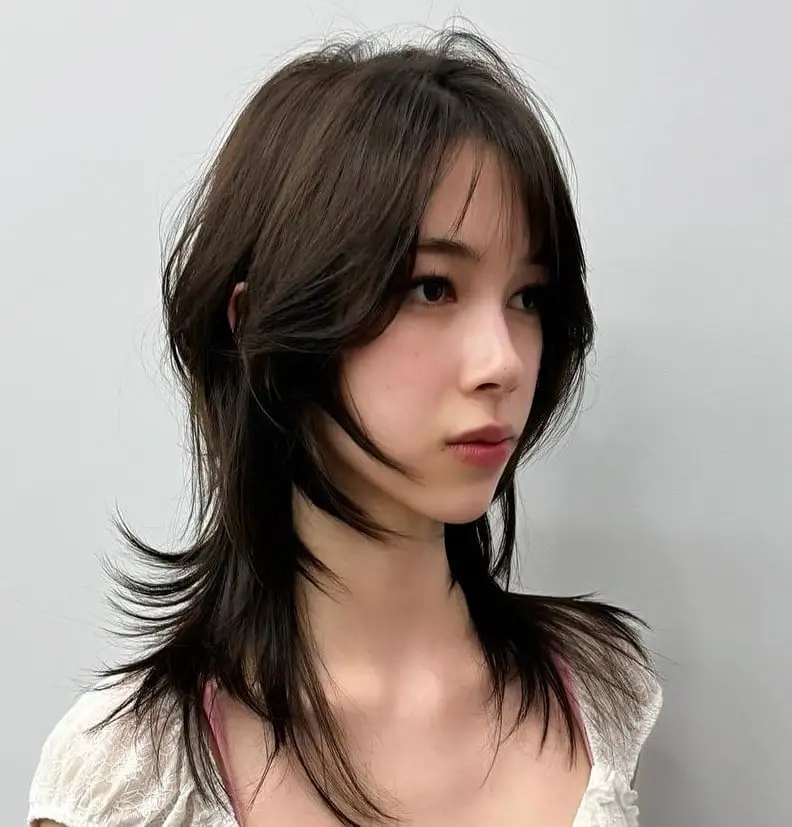
Feathered layers that start at the cheekbone and feather outward, not downward. That is the difference between this shag and a standard layered cut. The curtain bangs connect to those cheekbone layers so the face-framing is one continuous line of movement. Fine, straight hair at collarbone length or longer allows the feathering to fan open rather than clump. Skip it if you prefer blunt layers or no bangs; the feathered shape depends on the curtain bangs for its front-to-back flow. Tell your stylist: shag with feathered layers and curtain bangs. Air-dry with a texture spray for definition.
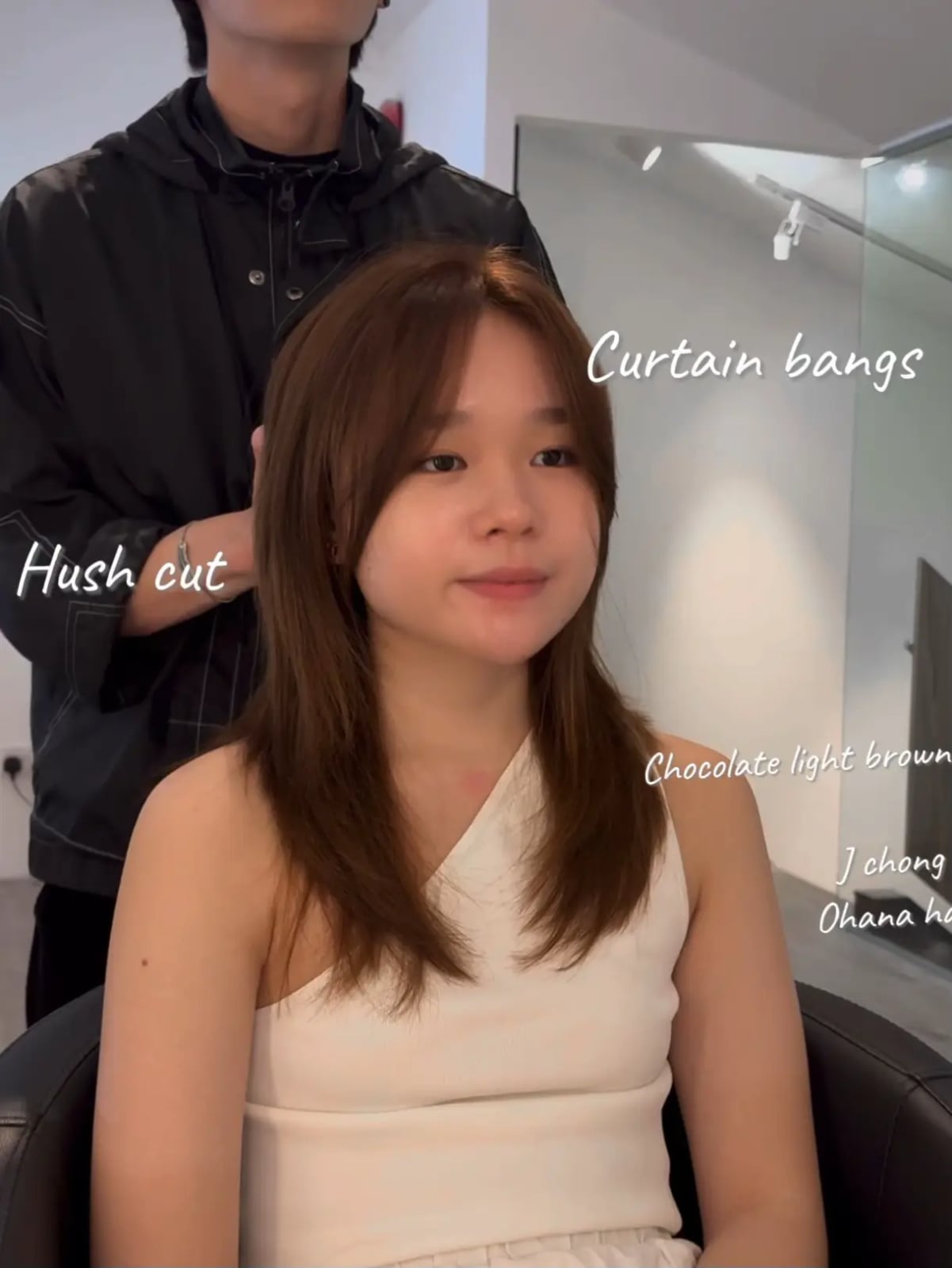
Face-framing layers and curtain bangs in chocolate light brown
Courtesy of: lemon8-app.com
Chocolate light brown as a base shifts the whole feel of the hush cut. Curtain bangs and layers that blend into the length give fine, straight texture a shape that holds without product. Air-dried here, which is the honest test. Start at collarbone length or longer for the proportion to work. A darker base color changes the look. The lightness is part of the structure. The layers are subtle; the bangs do the framing. Trim every six to eight weeks keeps the curtain shape defined.
Sleek bob silhouette with wispy bangs and undone texture
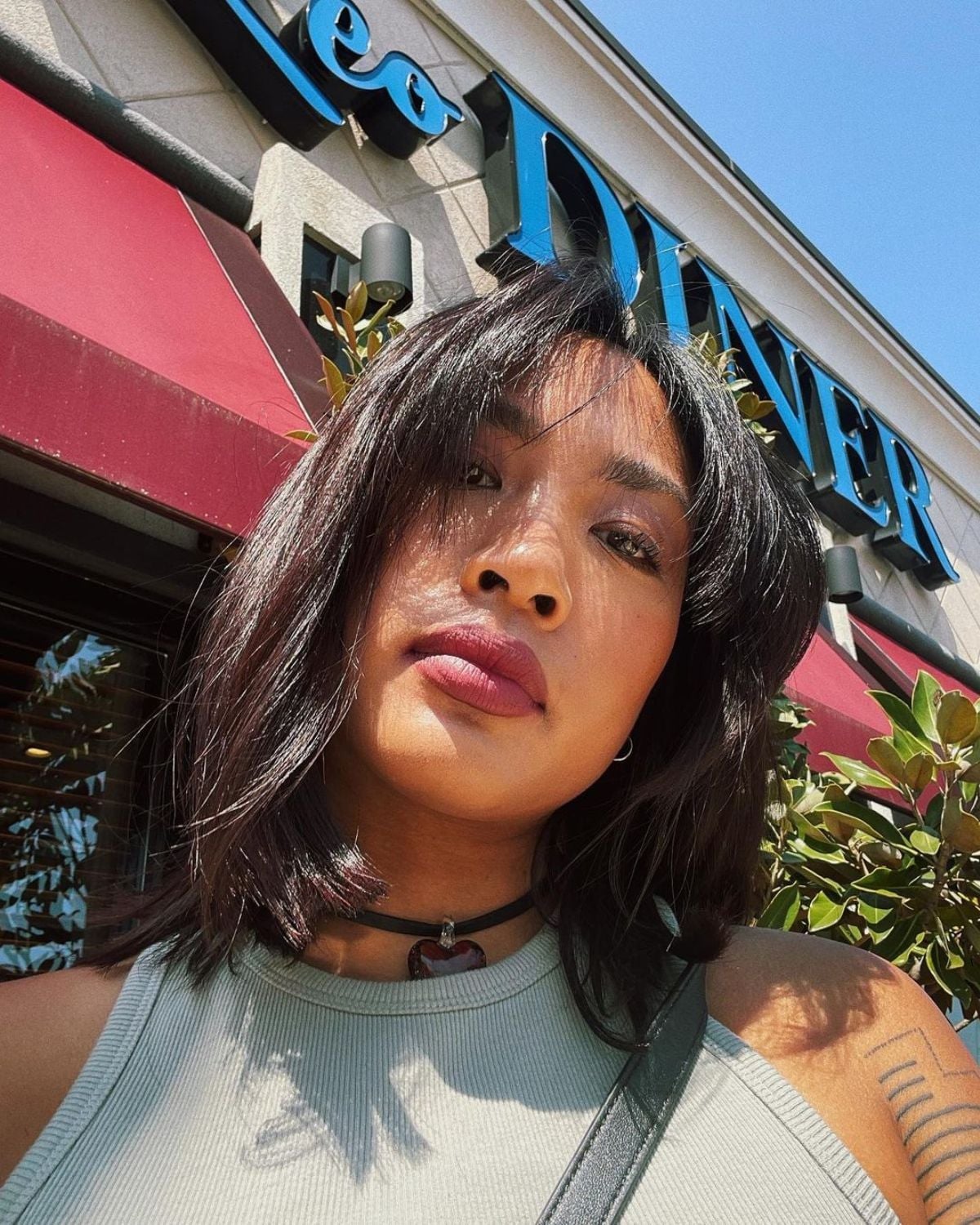
Photo credit: whowhatwear.com
Blunt bob with wispy bangs is a controlled contradiction. The baseline is clean, the bangs are soft, and the undone texture keeps it from looking a secretary cut from 2008. Fine, straight hair at jaw length takes this shape best. Skip it if you want significant movement or layers. This is a silhouette cut, not a texture cut. The DIY reality: a texturizing spray and air-dry gets you close to the undone look.
Blunt bangs on dark brown fine hair with long layers

Image credit: whowhatwear.com
Long layers on fine, straight dark brown hair look airy until you add blunt bangs. Then the bangs become the whole conversation. The mistake people make: treating the bangs as a casual addition. Let them grow a week past the eyebrow and the whole cut shifts shape. The fine texture air-dries well, which is the one easy part. Oval and heart faces carry the blunt line best.
The catch: the long layers disappear if you over-style. Keep the air-dried texture and let the blunt bangs do the work. This is not a grow-and-forget situation. Tell your stylist: long layers, blunt bangs, fine straight texture. Precision matters more here than in any other section of this article.
Shag haircut with curtain bangs and subtle layers

Source: dojeonmedia.com
Shag with curtain bangs and subtle layers works on fine, straight hair because the layers are not aggressive. The curtain bangs soften the face without adding bulk at the cheekbone. Collarbone length or longer gives the layers room to sit. Round and square faces benefit from the soft opening the bangs create. Skip this cut if you prefer a sleek, one-length style. This cut lives in movement, not gravity. Air-dry and enhance with a texturizing spray. The shag structure does the rest.
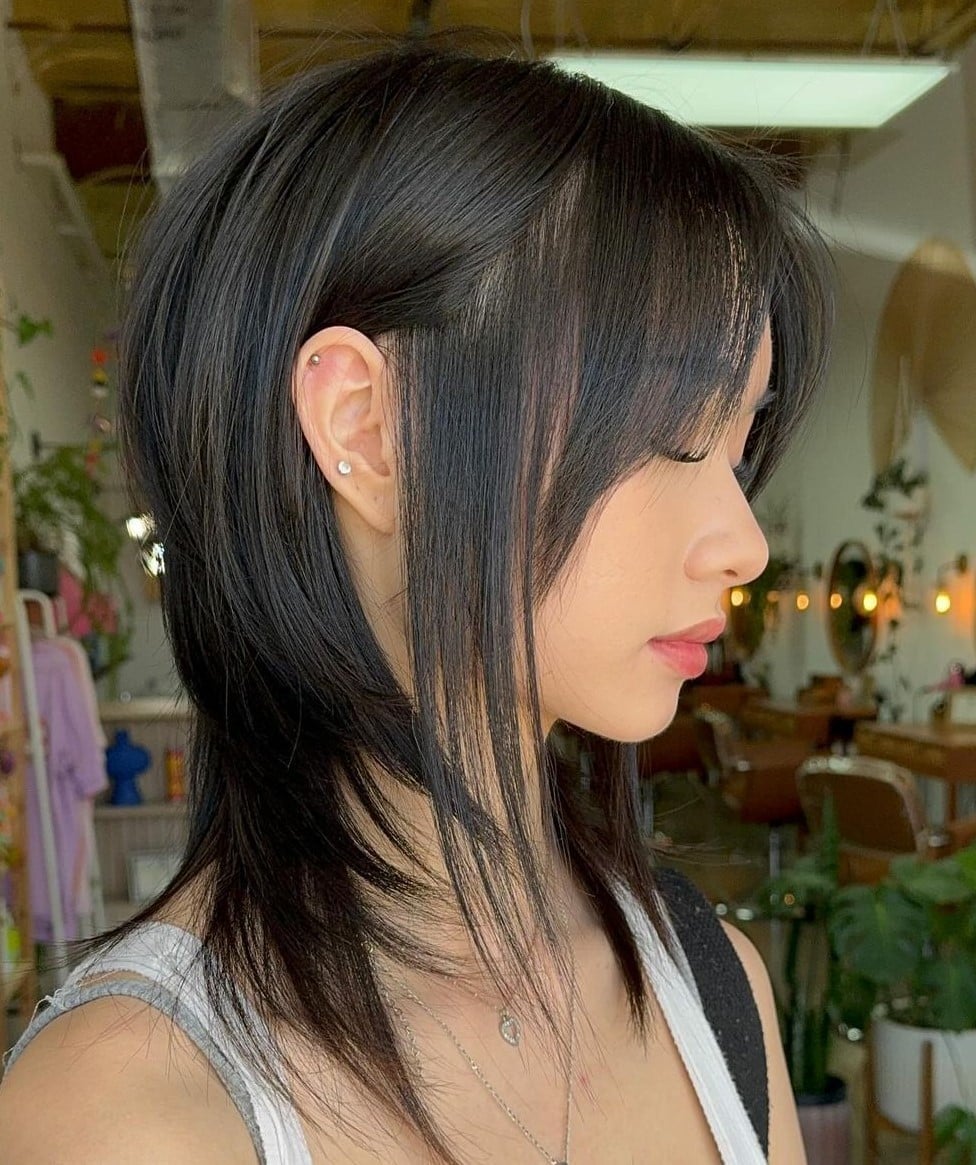
Choppy layers around the face with wispy bangs and side parting
Source: therighthairstyles.com
Side parting changes the weight distribution of a shag. Choppy layers around the face and wispy bangs create an asymmetrical frame that works with fine, straight texture. The choppy sections are cut into the top layer, not carved out of the density. Start at collarbone length so the shorter front pieces have somewhere to land. The whole design depends on the fringe and the face-framing. A texturizing paste defines the choppy ends without weighing them down.
Emerald green highlights on a layered shag with curtain bangs

This is not a subtle copper or a bayalage blend. It is a color that announces itself. The look pairs a dark base with emerald green highlights placed around the face, and the cut is a layered shag with curtain bangs that soften the contrast. Wavy, fine texture holds the shape without fighting it.
Ask your colorist for: layered shag, curtain bangs, emerald green face-framing highlights. The effect lands best when the base stays dark and the green pieces stay concentrated at the front. A single process or a blunt cut shows every grow-out line.
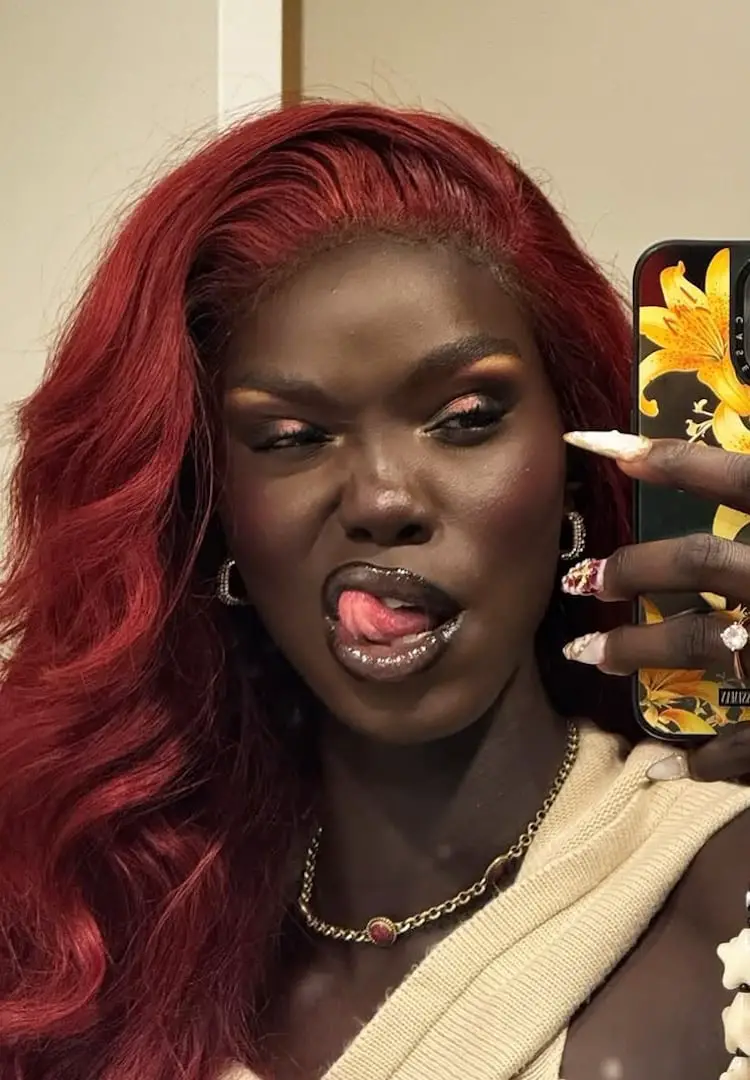
Vibrant deep red on long layers with gentle waves
Courtesy of: fashionjournal.com.au
Long layers and a deep red shade make a straightforward combination. The cut keeps the length while the layers prevent the thick, wavy texture from turning into a triangle. Gentle waves and a side parting let the color read clearly.
Deep red demands upkeep. A color-protecting shampoo and a weekly color mask are standard, not optional. The shade fades faster than brown or black, so refresh the gloss every four to six weeks.
Parted fringe sweeps across forehead, smooth blowout
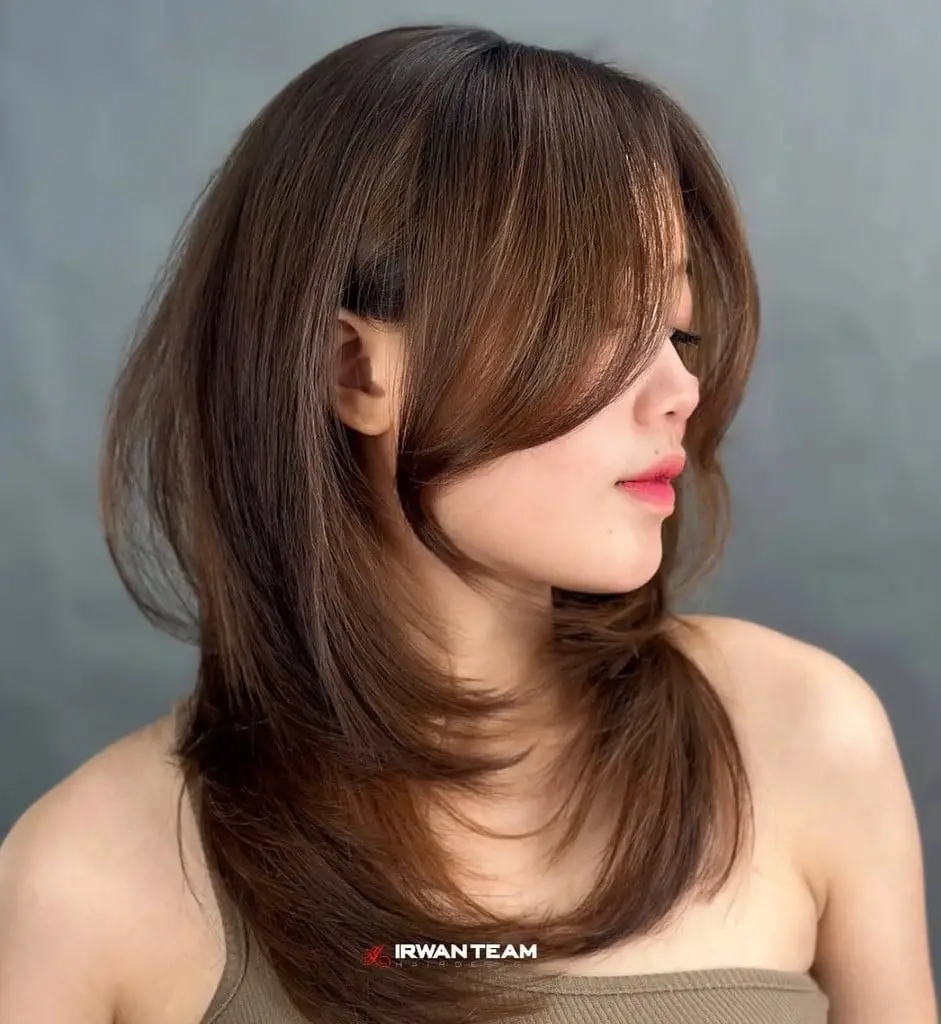
Photo credit: therighthairstyles.com
A parted fringe that sweeps across the forehead changes the geometry of a layered shag. The cut uses face-framing layers on medium brown hair with subtle highlights, and the smooth blowout shows the fine, straight texture clearly. Tell your stylist: layered shag, parted fringe, face-framing layers. The fringe pieces should connect into the shortest layer, not sit separate. Skip it if you dislike any hair near your forehead or want a single-length line.
Face-framing curtain bangs on dark brown hair, close-up take
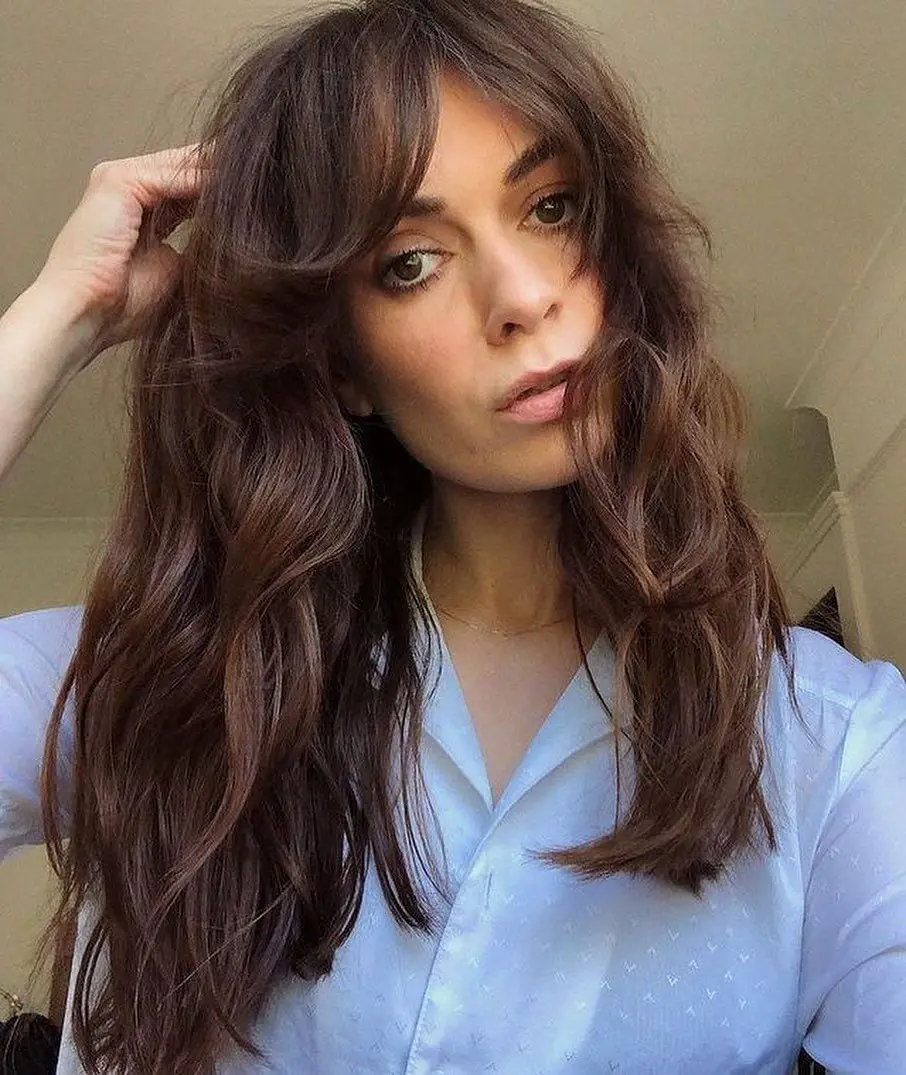
Image credit: vogue.co.uk
Curtain bangs on dark brown hair with subtle auburn highlights rely on the cut, not the styling. Long layers add movement without removing density, and the thick, wavy texture keeps the shape from collapsing. The bangs open at the center and blend into the sides, which softens the transition from short to long. A middle part and air-dried waves complete the look. It suits those who want soft face framing rather than a blunt edge or a cut with no layers.
Voluminous blowout with dramatic curtain bangs on a layered shag
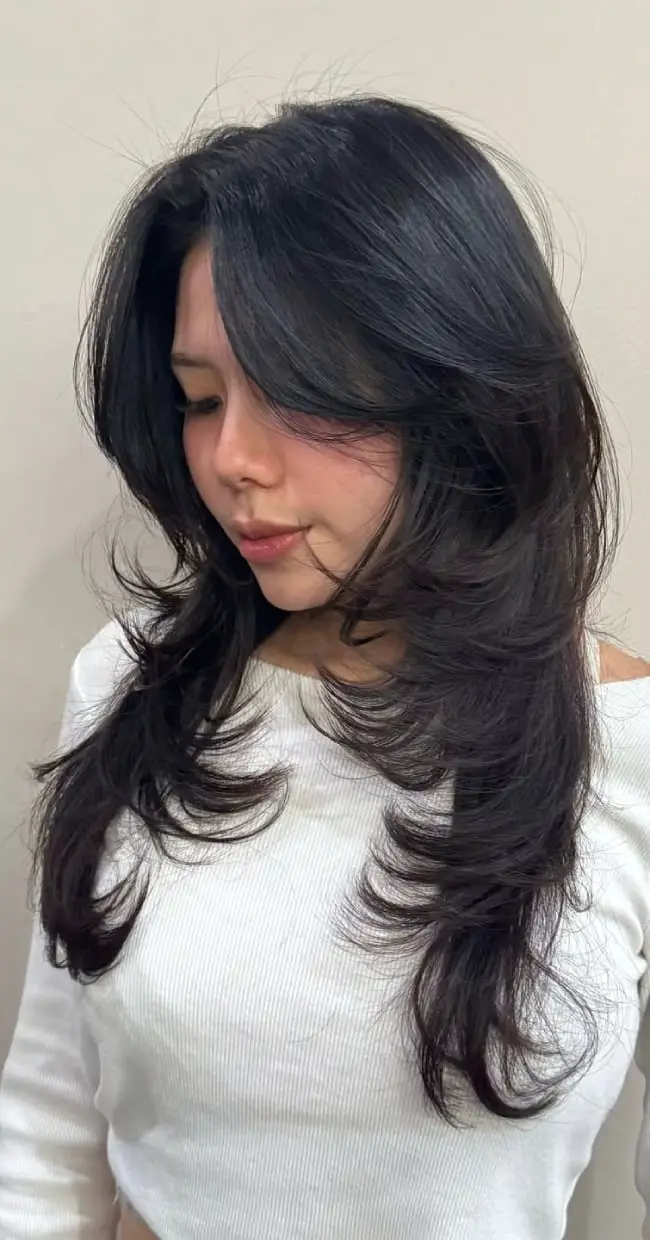
Source: fabmood.com
A voluminous blowout works best on thick, wavy hair that has the density to hold lift. The layered shag provides the structure, and the dramatic curtain bangs sweep away from the face to show the darkest brown base. Tell your stylist: layered shag, dramatic curtain bangs, voluminous blowout. The blowout needs a large round brush and a heat protectant. Skip it if your hair is fine or you rely on air-dried texture every day. This shape demands the lift from a proper blow-dry.
Soft waves with face-framing curtain bangs on a layered shag
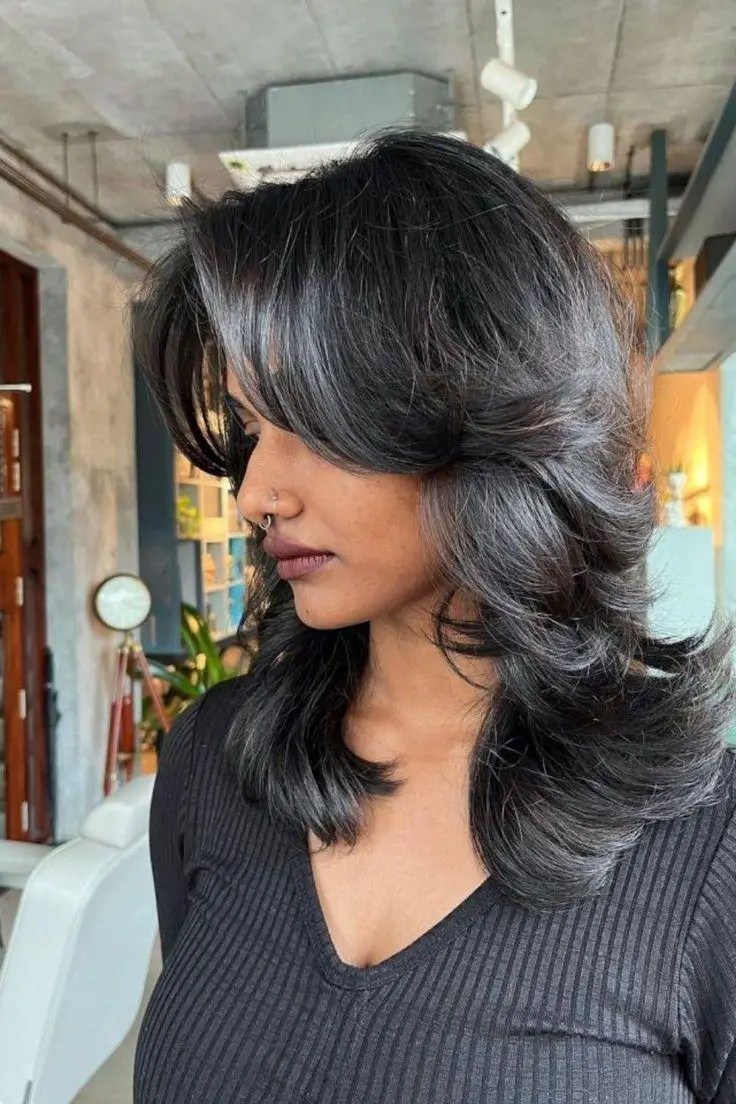
Via m.nadula.com
Consider the blowout version of this cut before you book. Soft waves and a blow-dryer transform a layered shag into a neat style. The dark brown base keeps it grounded while the curtain bangs frame the face without demanding a full fringe commitment. Thick, wavy hair starting at collarbone length or longer holds the shape best. Straight hair or no bangs at all may not suit this style. A sea salt spray at the mid-lengths keeps the wave pattern from falling flat by midday.
Heavy feathered layers with curtain bangs on medium brown hair, middle
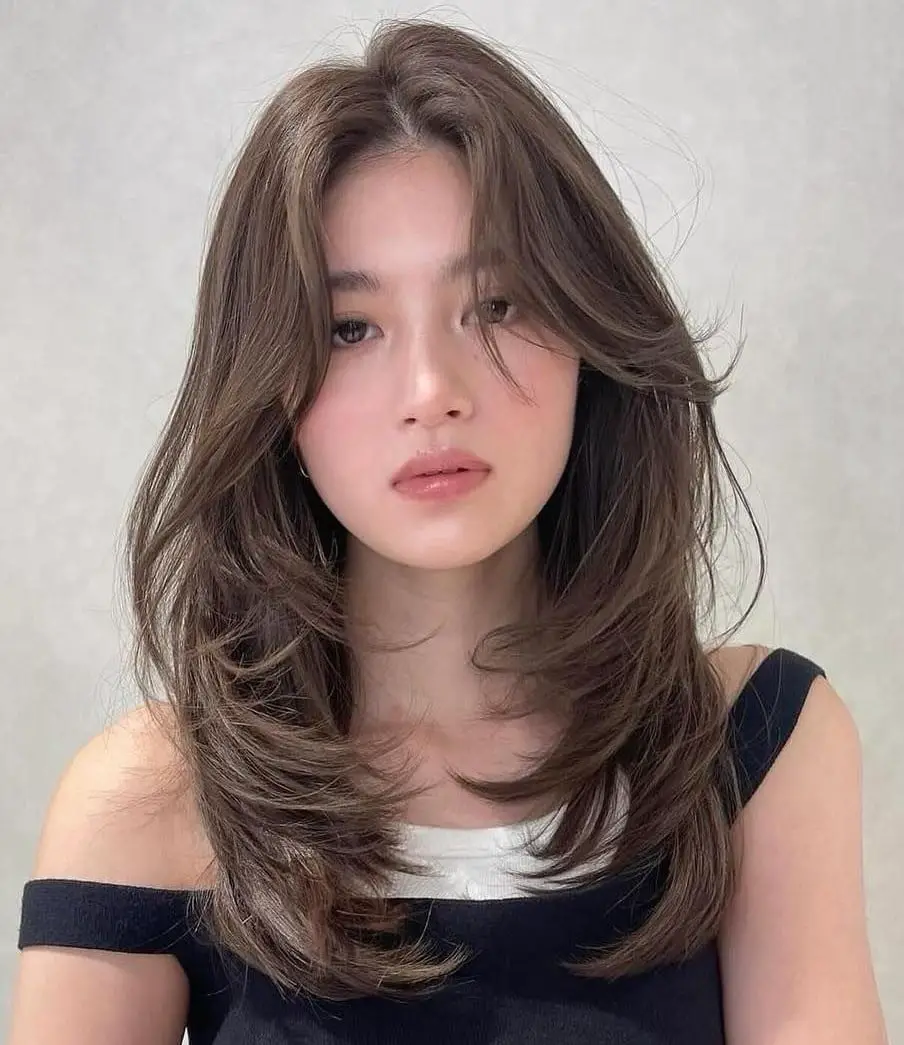
Courtesy of: therighthairstyles.com
This cut earns its keep with one clear design choice: heavy feathered layers that stack volume at the crown and taper through the ends. The medium brown base with subtle lighter strands keeps the look natural rather than high-contrast. Curtain bangs open the face without hiding it, and a middle parting keeps the weight balanced.
Fine to medium density hair at collarbone length or longer benefits most from the feathering. A round brush during drying is the only way to make those layers sit properly. Tell your stylist: layered cut, heavy feathered layers, curtain bangs. The shape holds for about six weeks before the feathered ends need refreshing.
Shorter front sections on a wavy, fine layered shag
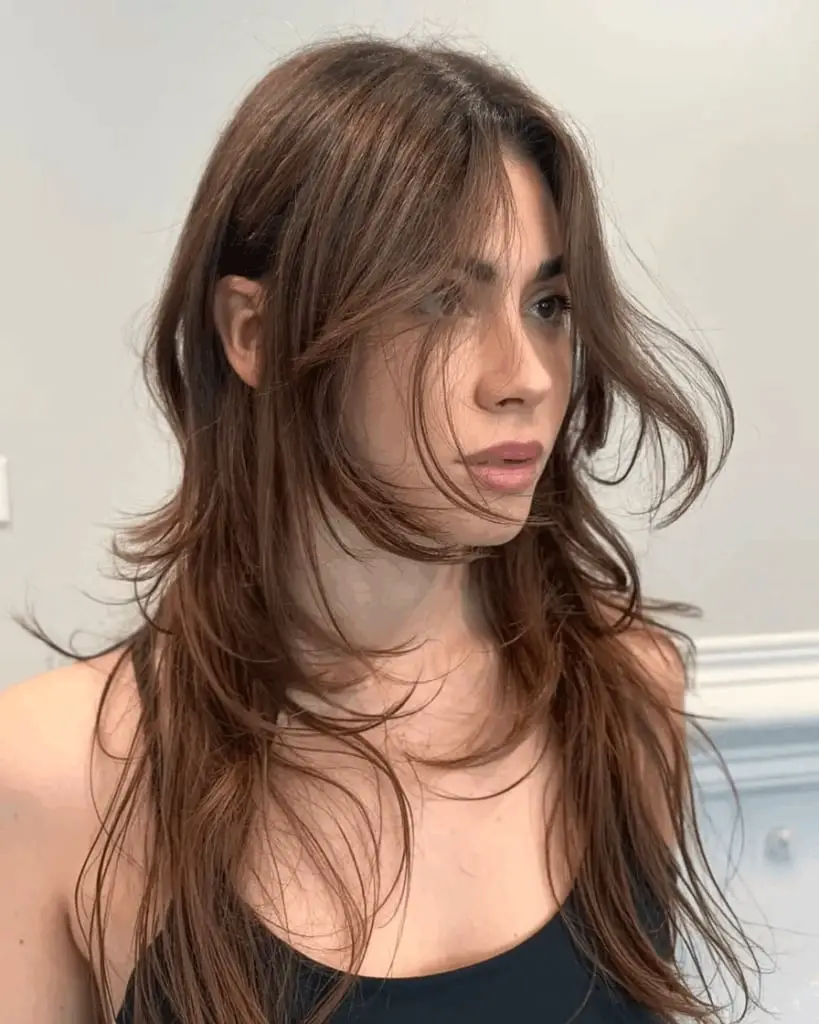
Photo credit: gustohair.com
Shorter front sections make a wavy, fine layered shag look deliberate. The medium brown base with subtle highlights keeps it from looking flat, and air dried texture works with the shorter pieces instead of fighting them. Curtain bangs soften the transition. The catch: those front sections grow out fast and start blending into the longer layers by week five.
Voluminous curly layers with blonde highlights on dark brown
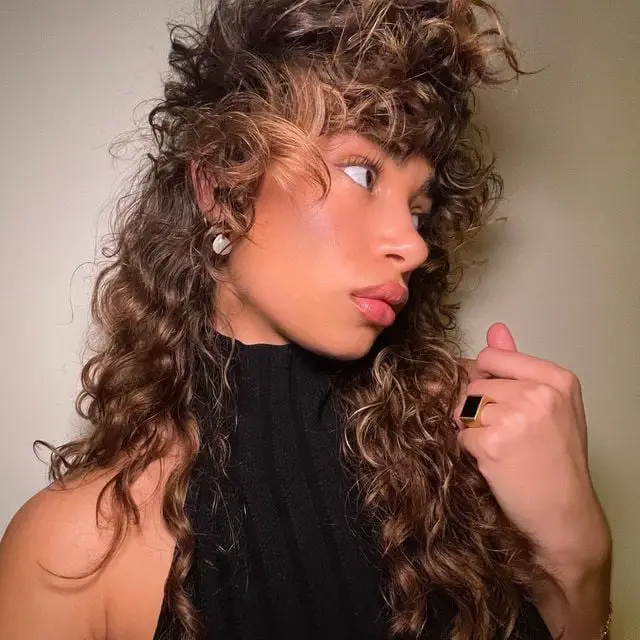
Image credit: glamourmagazine.co.uk
A practical rule: curly hair needs layers that follow the curl pattern, not fight it. This shag does that with voluminous curly layers that stack height at the crown and taper through the sides. The dark brown base with blonde highlights creates contrast without the heavy commitment of all-over lightening. Curtain bangs frame the face and air-dry naturally. Thick, curly hair starting at collarbone length or longer is the ideal candidate. Not for fine or straight hair, which will not support the volume through the top section. A curl-defining cream applied to wet hair is all the styling this needs.
Face-framing layers on platinum blonde hair with curtain bangs
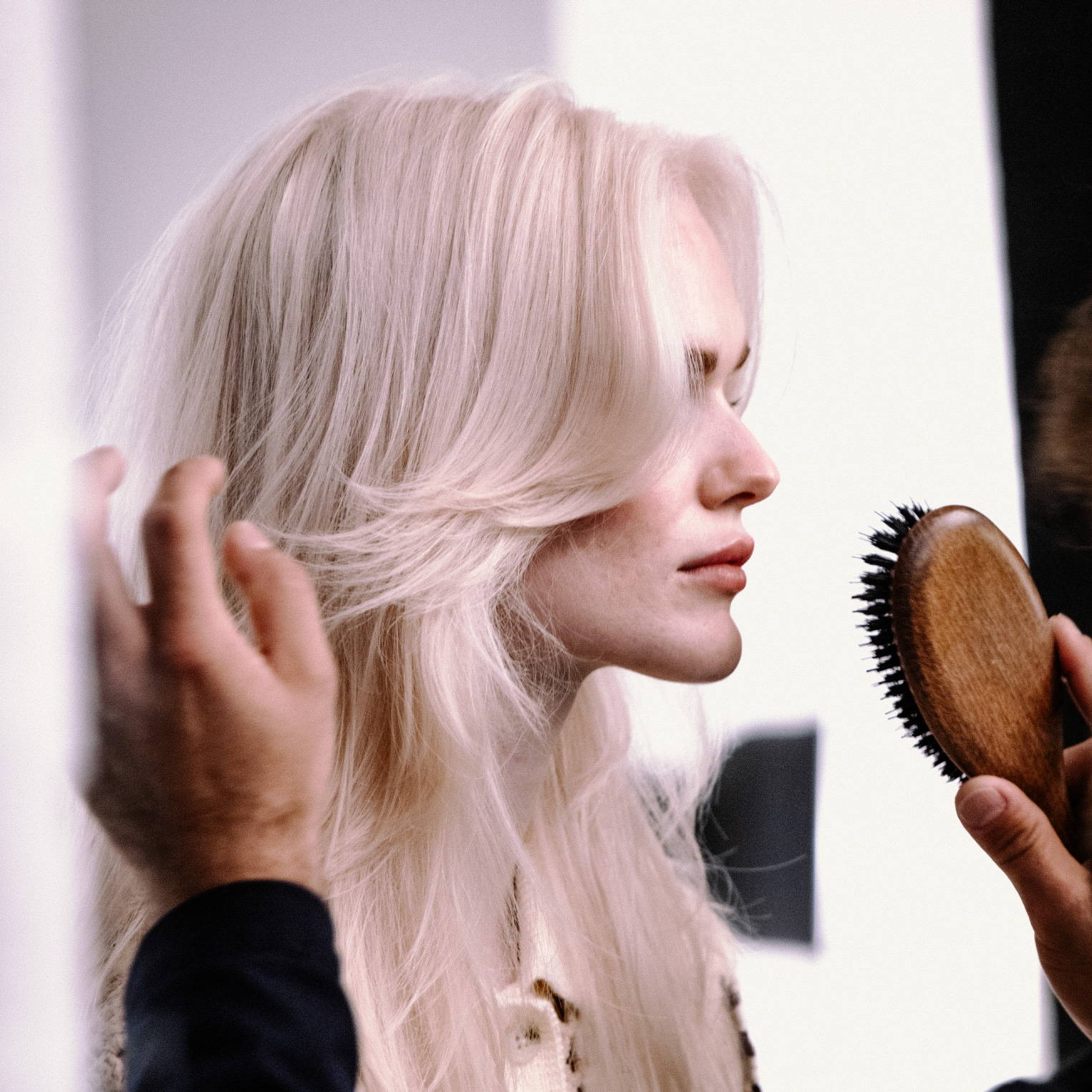
Via us.davines.com
Set this against a traditional blunt bob and the difference is clear: face-framing layers and curtain bangs keep platinum blonde from looking severe. The long layers move with the hair rather than stopping at one blunt line. A middle parting opens the face evenly, and the natural texture keeps the look from feeling over-styled.
Fine, wavy hair starting at collarbone length or longer works best because the layers add movement without losing density. The catch: platinum blonde demands toning every two to four weeks to avoid brassiness. Tell your colorist: long layers, face-framing curtain bangs, platinum blonde. This cut requires precision layering, so choose a stylist experienced with fine hair.
Layered bob with wispy bangs, softly layered ends
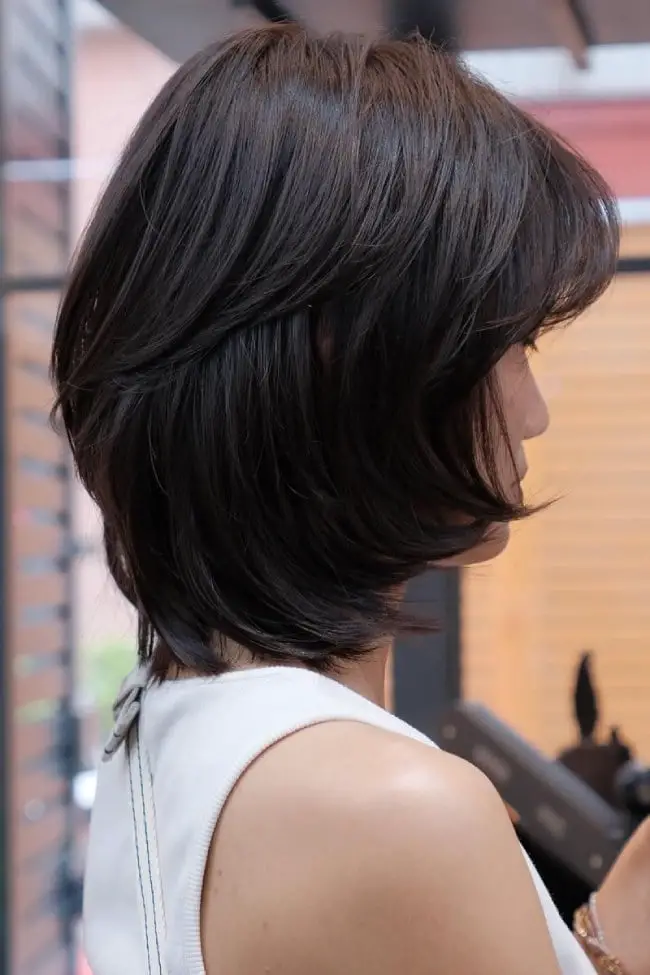
Courtesy of: itakeyou.co.uk
Fine, straight hair needs exact layering to avoid looking stringy. A layered bob with wispy side-swept bangs and softly layered ends creates shape without bulk. The dark brown base keeps it neat. Skip it if you prefer blunt ends or no bangs. A side part and a round brush give the bangs direction.
Lob with wispy bangs, loose waves suit fine texture

Photo credit: gogumacider.com
A blunt lob sits heavy on fine hair. A layered lob with wispy bangs and loose waves keeps things lighter. The dark brown shade adds richness without weight. Ask your stylist for: layered lob, wispy bangs, loose waves. A texturizing spray at the mid-lengths refreshes the wave pattern between washes. You get movement that actually holds.
Soft curtain bangs and face-framing layers on a dark brown lob
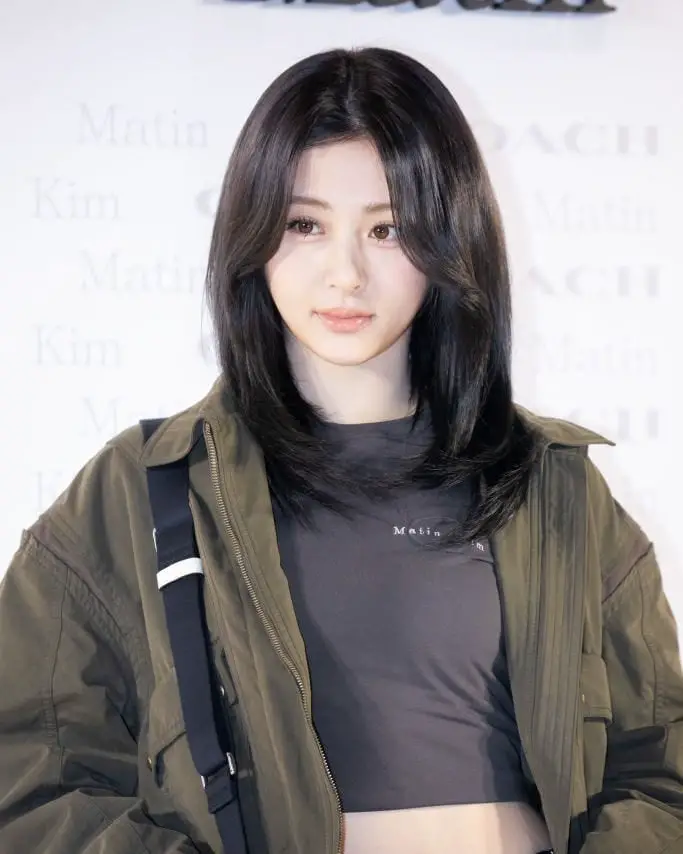
Image credit: cosmopolitan.com
This lob works because the layers and bangs are precise. Soft curtain bangs sweep away from the face while face-framing layers add movement to the collarbone length. The dark brown blowout stays sleek. It suits fine, straight hair that needs volume at the front. Pass if you want a one-length cut.
Final Thoughts
Choose the style that best fits your daily routine and desired maintenance level.
- Fine hair: ask your stylist for softer, shorter front layers.
- Ten minutes in the morning: go with curtain bangs and air-dried texture.
- Cool base that pulls brassy: add a gloss every four to six weeks.
- Thick, wavy hair: heavy feathered layers reduce bulk without losing shape.
Find your perfect Sharp Hush Cut variation.
