You sit in the chair, the stylist lifts a section of your top layer, and there it is, a flash of something unexpected underneath. That is the whole appeal of peekaboo color: a surprise that stays hidden until you decide to show it. No full commitment, no grow-out line you will hate by week three.
These 35 ideas cover the range, from subtle blonde streaks on dark brown to bold rainbow flashes under black layers. Some need ten minutes with a curling iron; others work with air-dried texture. Which is why Beautiful Peekaboo Hair 2027 fill so many saved boards. The hard part is picking the right one for your cut.
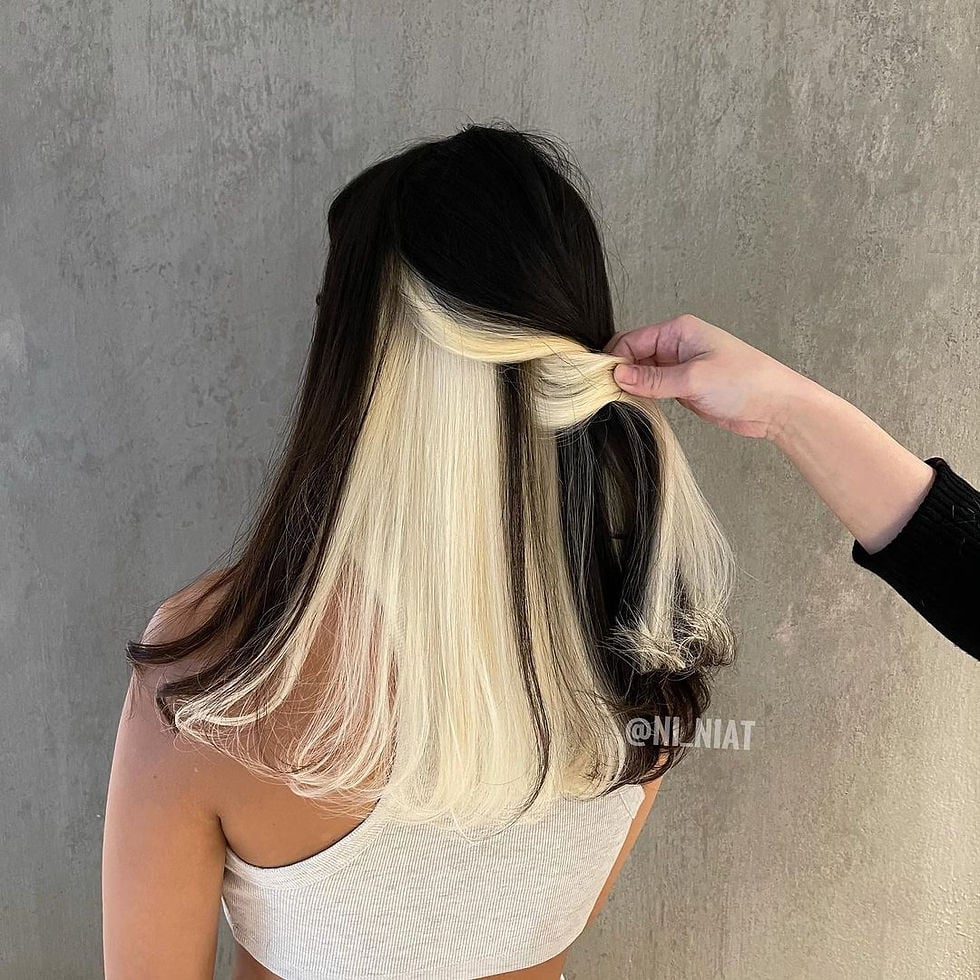
Bold blonde peekaboo highlights on a dark brown base with subtle
Courtesy of: shampoolounge.com
Dark brown base, blonde pieces pulled forward to frame the face. Subtle layers keep the weight line intact so the peekaboo placement looks precise. Middle part, air-dried texture, no bangs. Fine, straight hair starting at shoulder length or longer takes this best. Oval and heart face shapes get the most from the face-framing effect. This style needs high contrast and enough length for the peekaboo placement. Ask your stylist for: subtle layers, bold blonde peekaboo placement.
Edgy shag with undercut and blunt bangs revealing pink and green
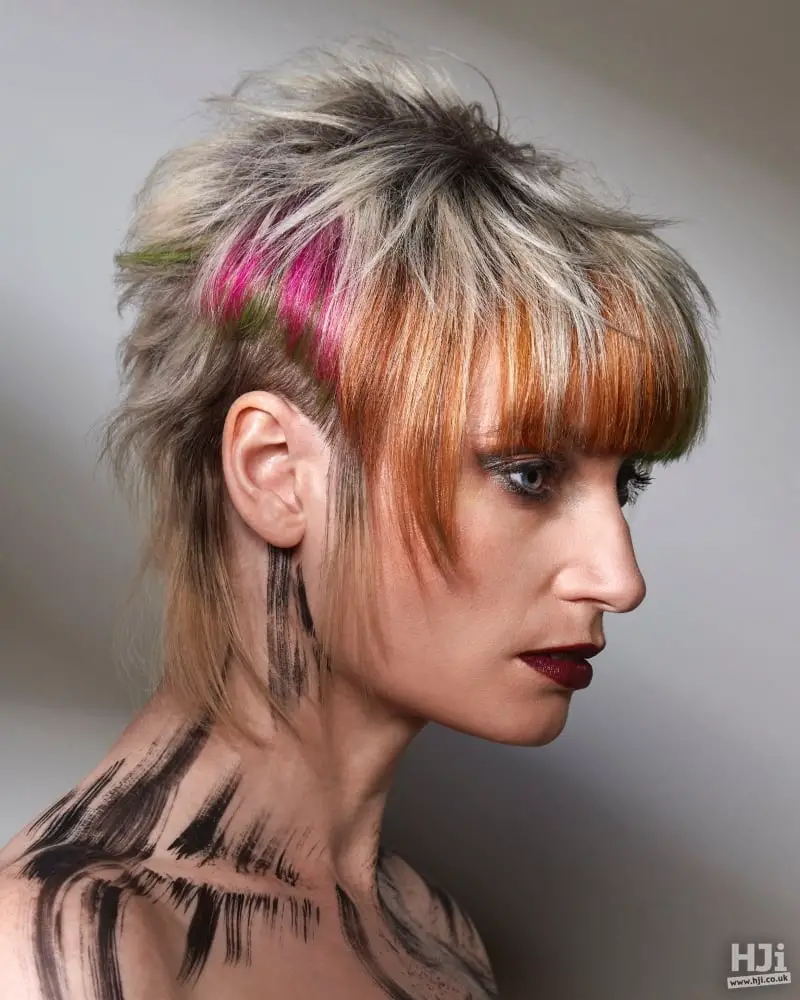
Photo credit: hji.co.uk
You might think a shag with an undercut is too niche. But swap a standard shag for this version and you get a cut that shows color only when you move. Platinum blonde top, pink and green streaks underneath, blunt bangs that hit just above the brows. The side profile makes the undercut visible; the piecey texture keeps it from looking severe.
Square and oval faces suit the blunt fringe. Fine, straight hair holds the texture well. Undercuts and a fringe that needs regular trims are not low maintenance. Trim and tone every six to eight weeks. Apply a texturizing spray on damp hair, then air-dry.
Vibrant magenta peekaboo highlights on a dark brown angled bob
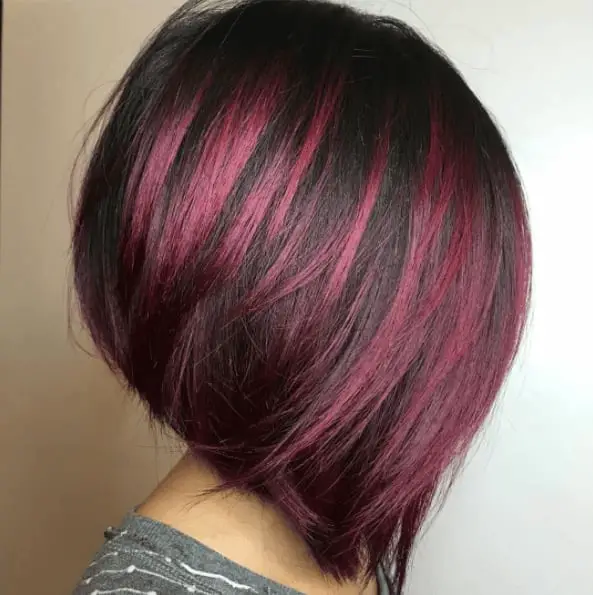
Image credit: behindthechair.com
How do you get that precise bright accent without it looking like an afterthought? The words for the chair: angled bob shorter in back, dark brown with magenta peekaboo. The cut hits at the chin in front, shorter at the nape. Side part, sleek blowout, no bangs. Fine, straight hair keeps the angle sharp. Round and oval face shapes benefit from the forward length. Skip it if you prefer longer hair or a less structured cut. A salon visit is essential for both the angle and the color placement.
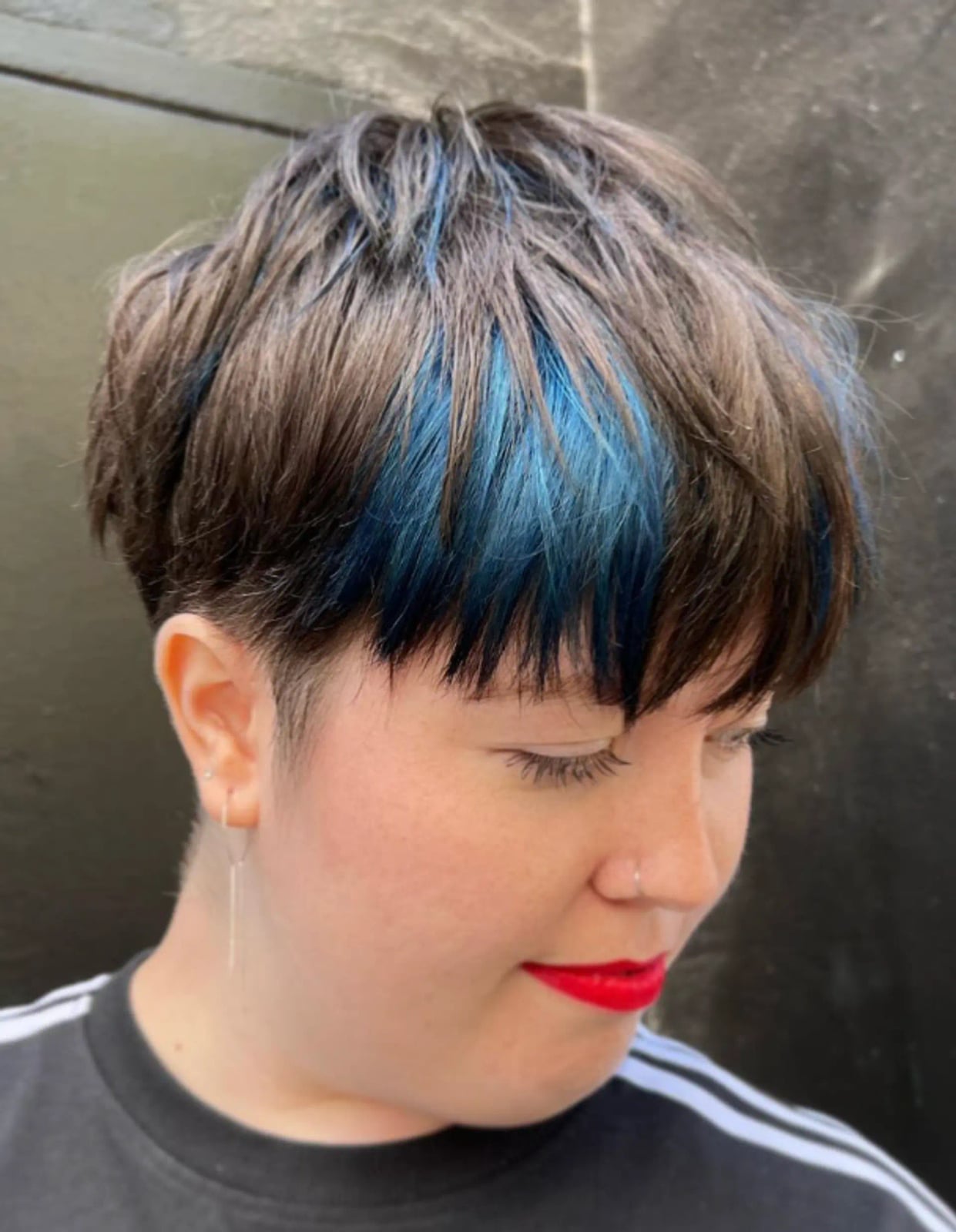
Playful blue peekaboo highlights in a textured pixie cut
Source: kiri-me.com
Blunt bangs, tapered sides, blue streaks tucked underneath the dark brown top layer. The pixie cut works because the color hides until you turn your head. Fine, wavy hair holds the tousled texture without weight. Oval, square and heart faces suit the blunt fringe and the short sides. The catch: fine hair might struggle to hold volume without a paste or wax. Skip it if you prefer longer hair or a low-maintenance fringe. Trims every four to six weeks keep the shape crisp.
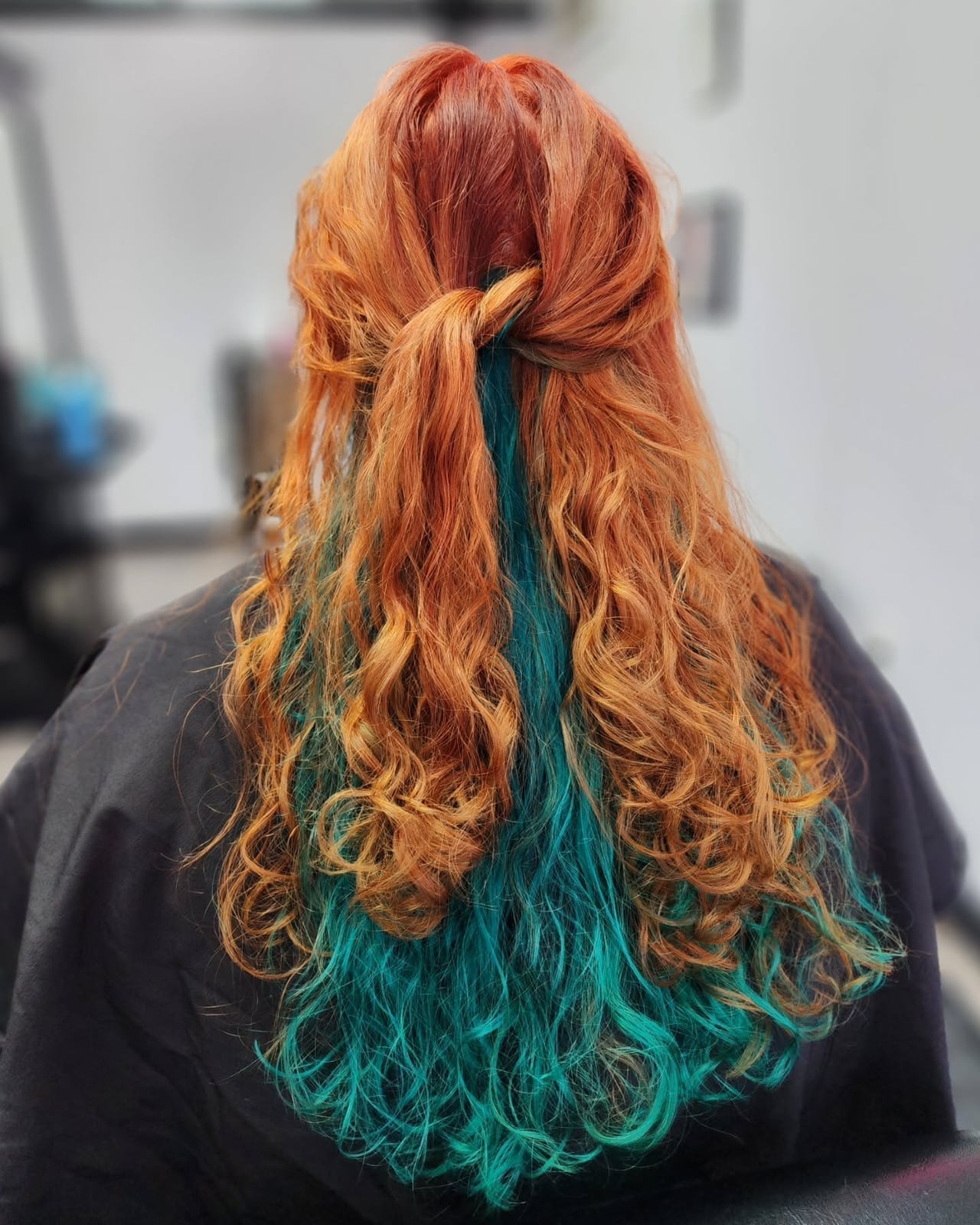
Teal peekaboo color revealed in a half-up, half-down twist
Via fabbon.com
Copper base, teal hidden underneath, revealed by a half-up twist. The long layers let the bottom color peek through the waves without effort. Middle part, no bangs. Thick, wavy hair starting at collarbone length or longer gives the twist enough weight to stay. The construction: pull the top section back, twist loosely, pin at the crown. Let the bottom wave sit naturally. Skip it if you prefer styles that are always worn down.
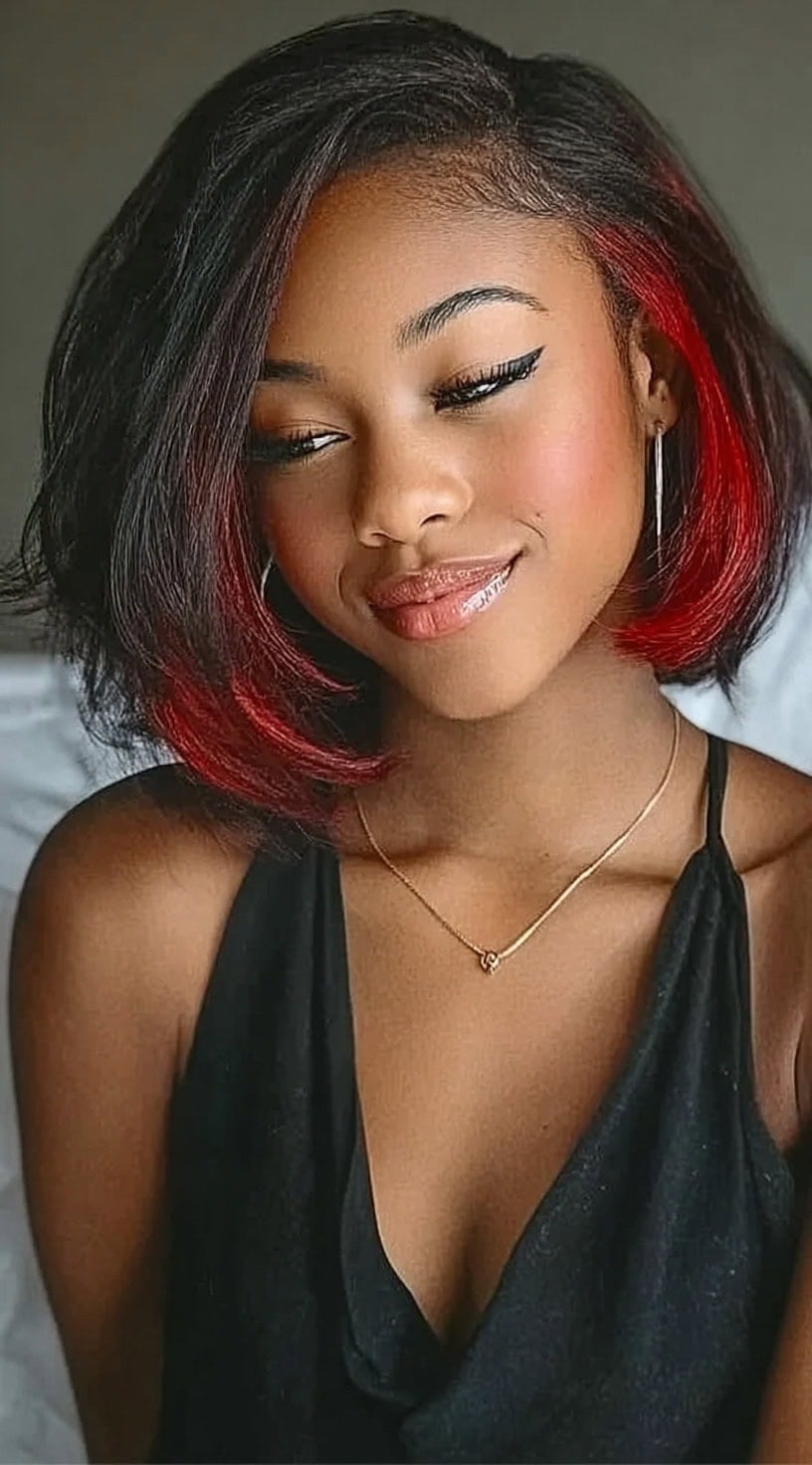
Red flashes under a black bob framing the face
Courtesy of: looksniceonme.com
Side part changes everything. A black bob hitting around the chin, air-dried into soft waves, hides red underneath along the front section. You get the color without the commitment of an all-over shade. Fine hair holds the wave well here because the bob is cut blunt enough to keep weight. Ask your stylist for: black bob with red peekaboo front pieces. The red shows when you tuck or turn your head. Straight hair would let the color sit too flat. Wavy texture gives the red movement so it flashes instead of sits.
Bright red peekaboo highlights on a dark gray layered cut
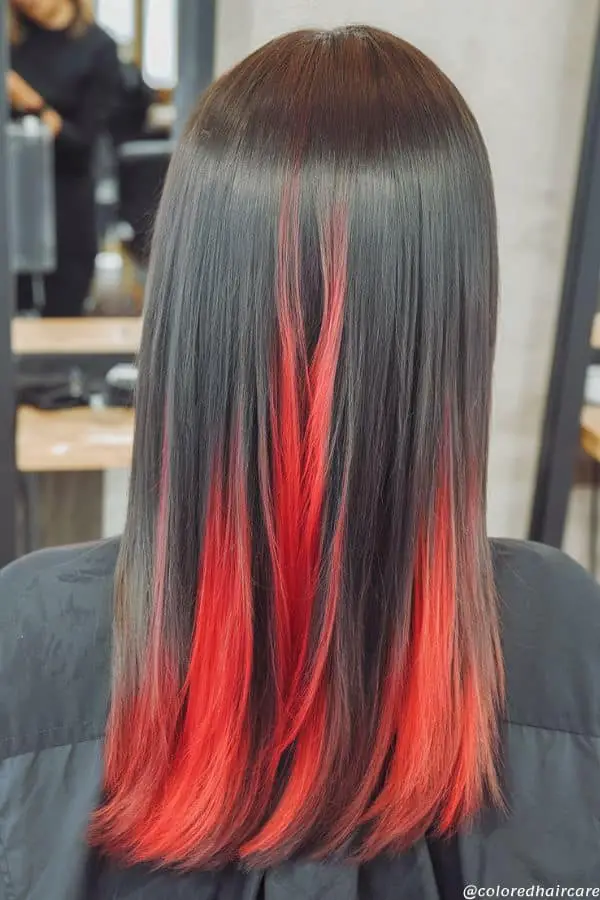
Photo credit: coloredhaircare.com
Dark gray base, bright red underneath, middle part, air-dried straight. The layers run long so the red peeks at the nape and along the back. Fine straight hair needs this kind of cut to keep the color from getting lost. Layers give the red room to emerge. The upkeep is reasonable. Red fades faster on gray than on brown, so a color-depositing conditioner every other wash helps. Straight texture means the red sits quiet until you move. That is the whole point.
Vibrant red peekaboo highlights on a layered cut, close-up take
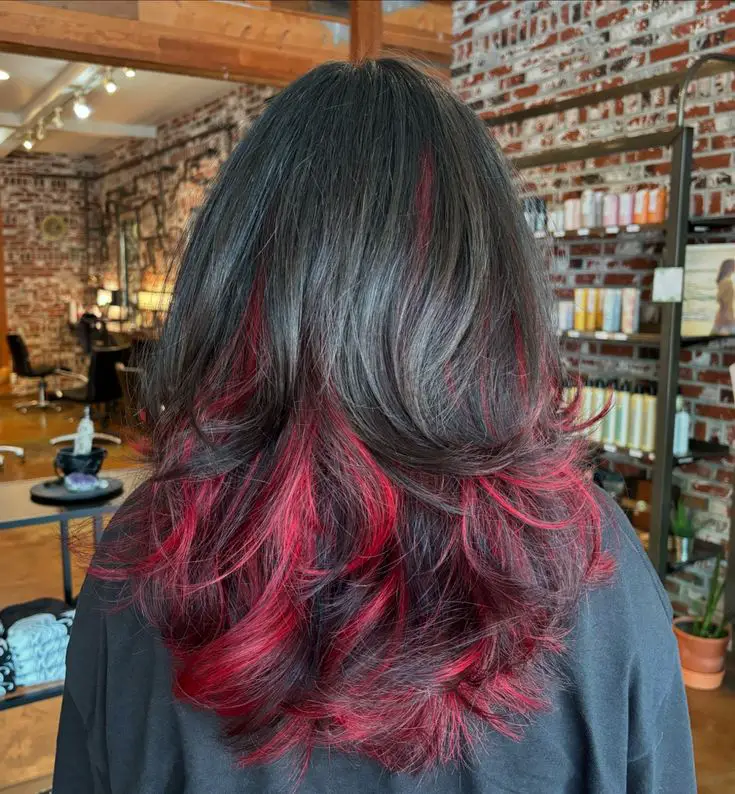
Image credit: fabbon.com
Middle part, air-dried wave pattern, dark base with red underneath. The layers are cut so the red lands at different heights. Fine wavy hair makes this work because the texture breaks up the color. The catch: placement is exact. Too high and the red looks a highlight instead of a secret. Too low and it vanishes. A stylist who understands peekaboo placement matters. Skip it if your hair is very thick. The layers needed to reveal the red can make thick hair look uneven. Wavy fine hair gets the balance right.
Hidden pink peekaboo highlights in a sleek straight bob
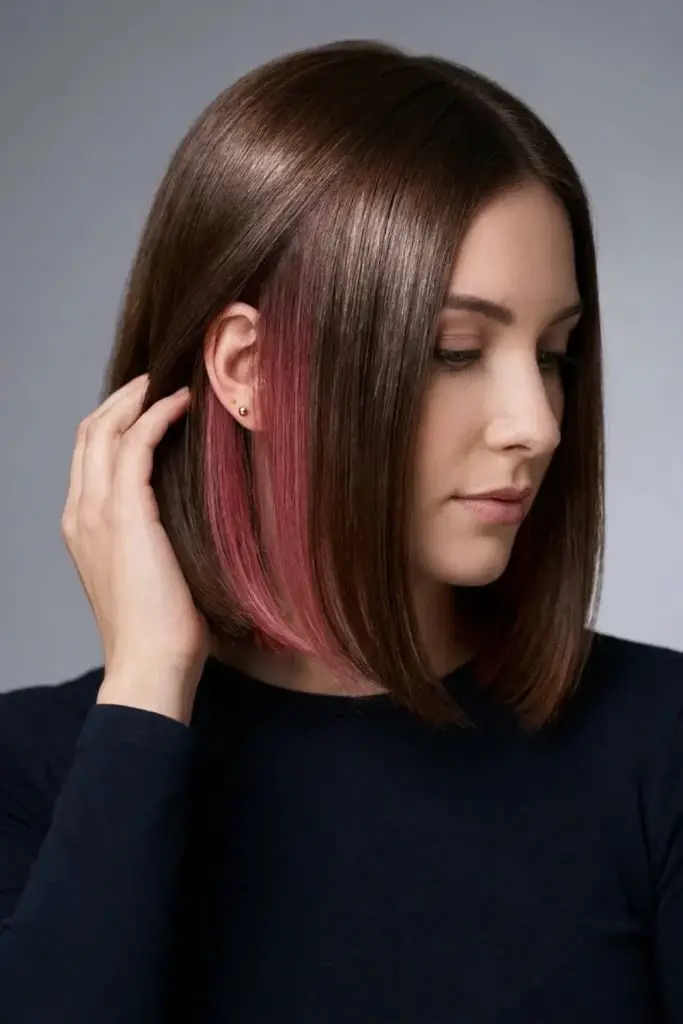
Source: nailvely.com
Sleek bob, side part, straight as a line. The pink sits underneath so from the front you see a dark brown bob. Turn your head and the pink appears. Jaw-length cut keeps the shape sharp. Fine straight hair needs that precision. Any softness in the cut and the pink looks messy instead of intentional. Ask your stylist for: sleek straight bob, side part, pink peekaboo underneath. The flat iron is your friend here. Wavy texture would fight the bob’s geometry. Straight hair lets the pink sit exactly where it was placed.
Curtain bangs and red peekaboo highlights on a layered shag
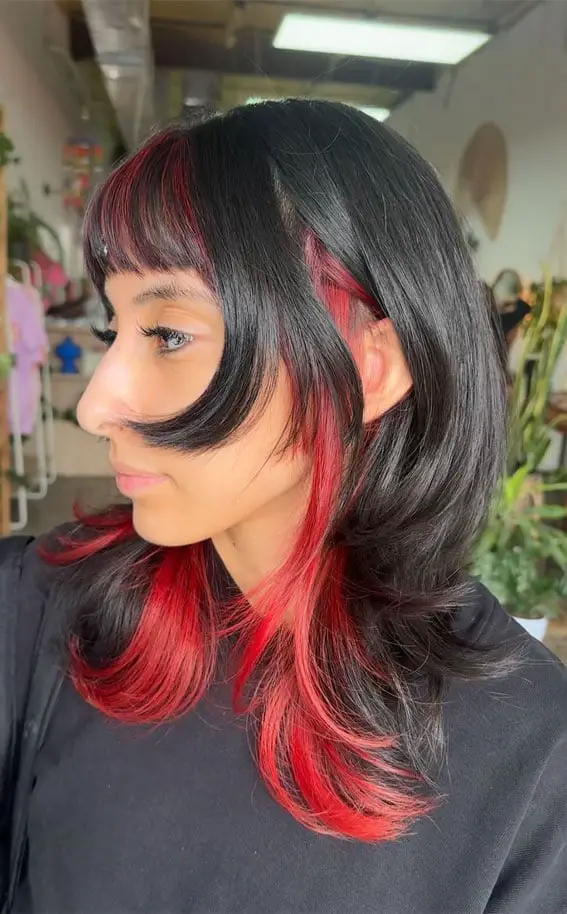
Source: itakeyou.co.uk
Layered shag, curtain bangs, middle part, air-dried waves. Black base with red peeking through. The shag cut gives the red multiple exit points. Curtain bangs frame the face without hiding the color. Fine wavy hair suits this because the shag’s layers add volume where fine hair needs it. Curtain bangs soften a square jaw. The red shows when the waves shift. Skip it if you hate bangs. Curtain bangs need styling every morning. A quick blow-dry with a round brush keeps them from falling flat.
Face-framing curtain bangs on a layered bob with blonde highlights
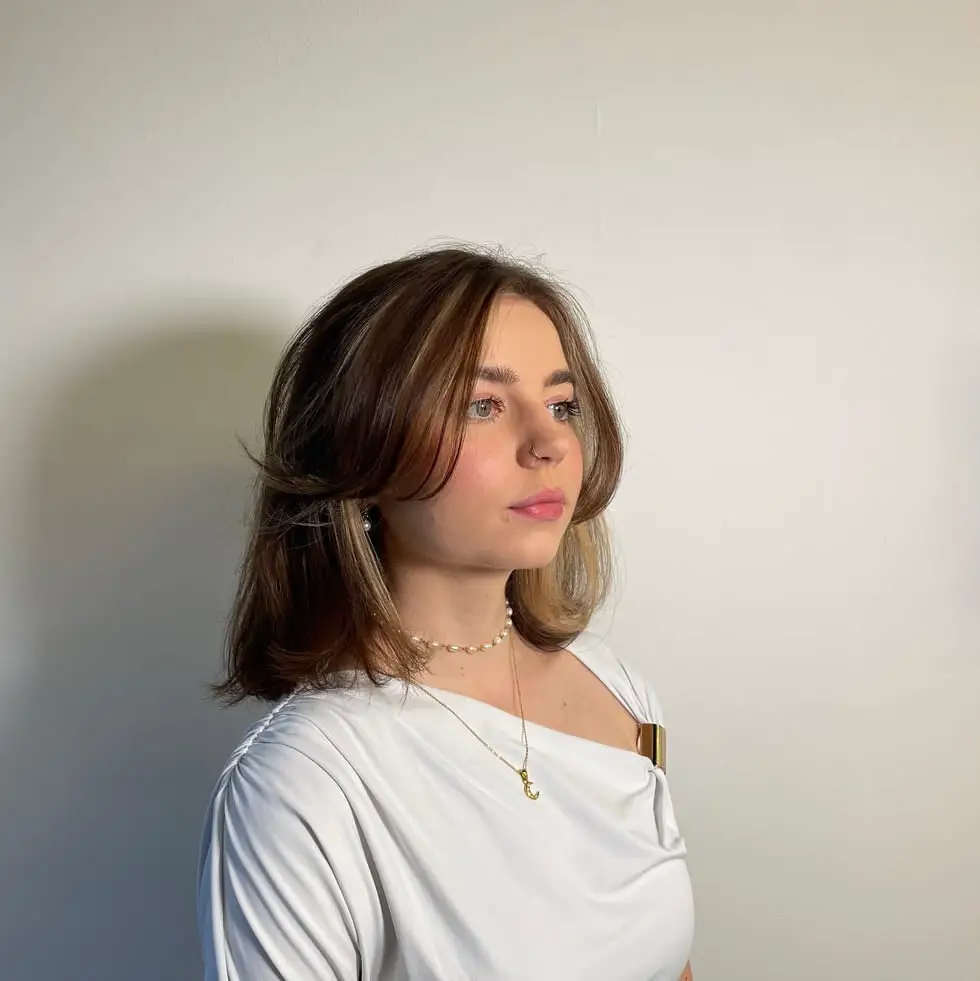
Via cosmopolitan.com
Can a blowout on fine hair hold past lunch? The trick is in the fringe direction. A layered bob with curtain bangs and a middle part relies on the blowout technique: dry the bangs forward with a round brush, then sweep each side outward. The dark brown base with subtle blonde highlights catches light where the layers hit. Fine, straight texture needs the root volume from a nozzle-focused dryer, not a paddle brush. The words for the chair: layered bob, face-framing curtain bangs, dark brown with subtle blonde highlights.
This is a salon-leaning shape. Curtain bangs require precision layering to fall right without daily trimming. A round brush is your main tool at home. The bob needs a visit every six to eight weeks to keep the line clean.
Vibrant pink peekaboo highlights woven through long wavy layers
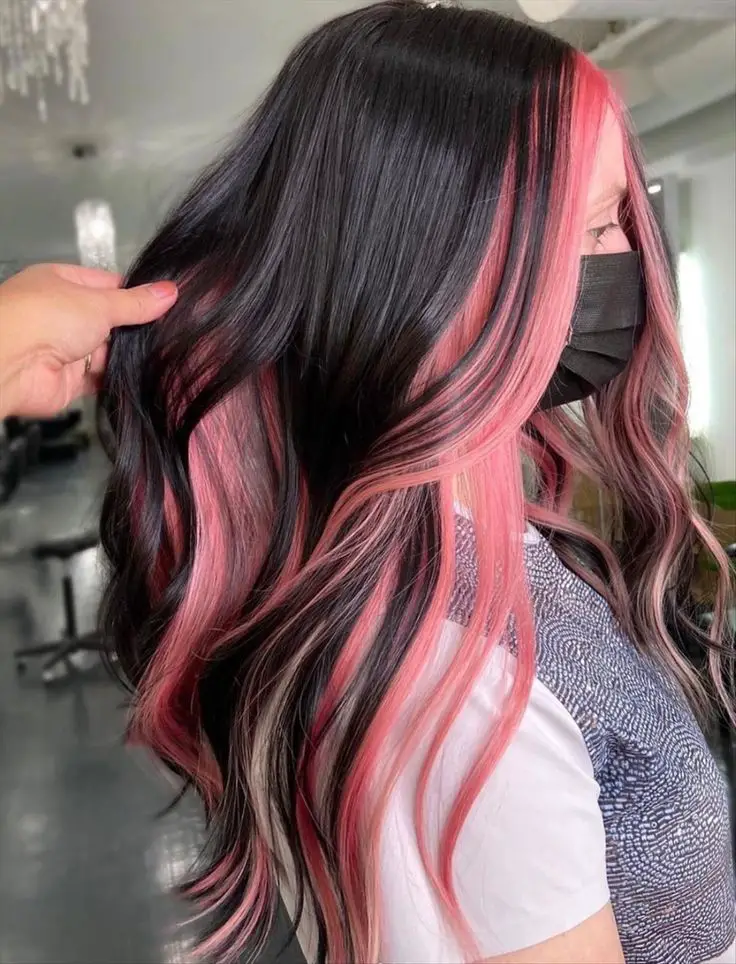
Courtesy of: hnahair.com
Deep black base with pink highlights, the pink sections sit underneath the top layer so they flash only when the waves shift. Long layers cut into straight, thick hair create the weight needed to hold that shape. A middle part keeps the peekaboo effect balanced from both sides. This color placement suits someone who wants a hidden bright accent rather than an all over look.
Thick hair takes the color placement well because the stylist can weave the pink through the interior without the strands peeking out at the root. Ask your colorist for: long wavy layers, deep black base with vibrant pink peekaboo. The wavy styling is the reveal mechanism, a flat iron would hide the color completely.
Two-tone color contrast with platinum blonde underneath
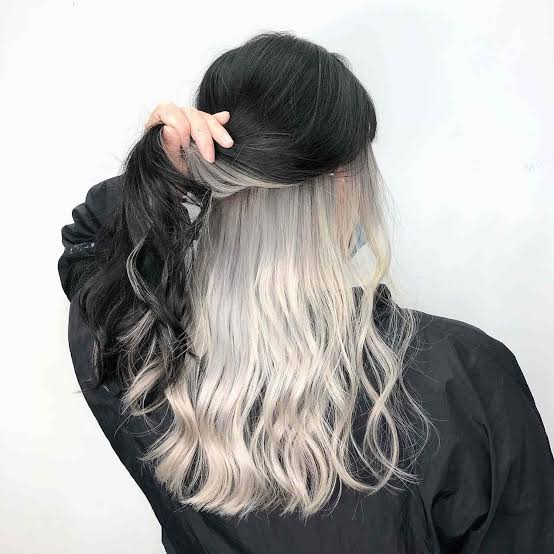
Photo credit: byrdie.com
Black on top with platinum blonde underneath is a straight-up contrast play. No blending, no gradient. The layers let the blonde show when the hair moves, and the middle part keeps the division clean. Fine, wavy texture works with this because air-dried waves push the top layer aside naturally. The catch: platinum underneath requires lifting dark hair several levels, which means a salon-only process and regular toning to keep the brass out.
Compare it to a full blonde balayage. This one leaves your top color intact. You get the brightness without the root upkeep on your crown.
Vibrant pink and blue peekaboo highlights under a black layered cut
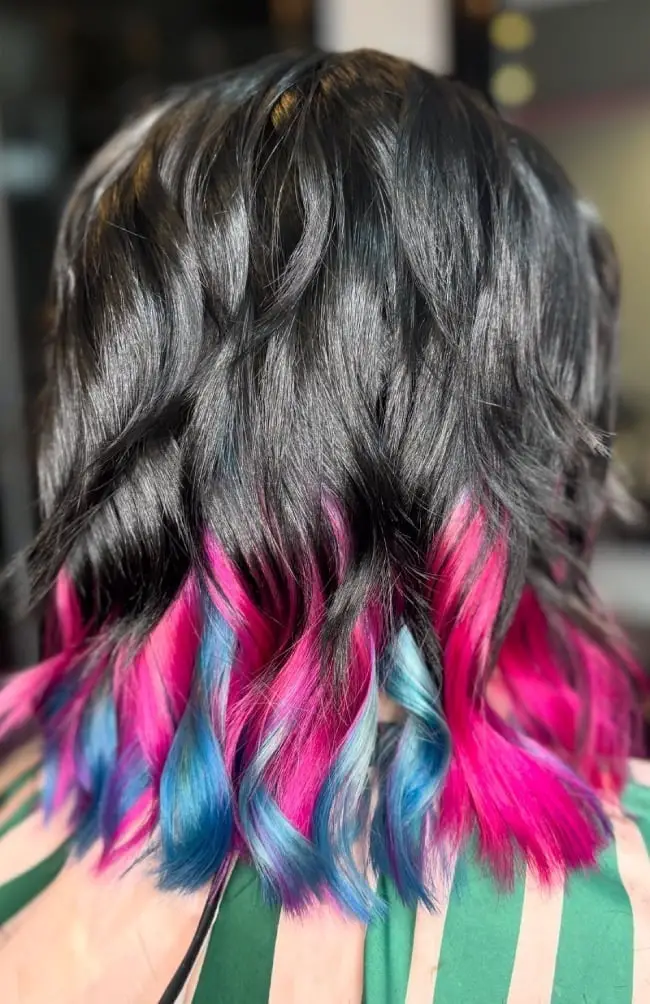
Image credit: fabmood.com
Two colors under black means twice the upkeep conversation. The pink and blue peekaboo highlights sit beneath a layered cut on thick hair, styled in loose waves that part to reveal the contrast. Thick texture holds the wave pattern without product fighting the curl. The colors fade at different rates, blue tends to go greenish first, pink fades to peach. A color-depositing conditioner every two weeks extends the window between salon visits.
Tell your stylist: layered cut, black base with pink and blue peekaboo. The layers need trimming every eight to ten weeks to maintain the shape that lets the color escape. Wavy styling is not optional here; it is the mechanism that makes the peekaboo work.
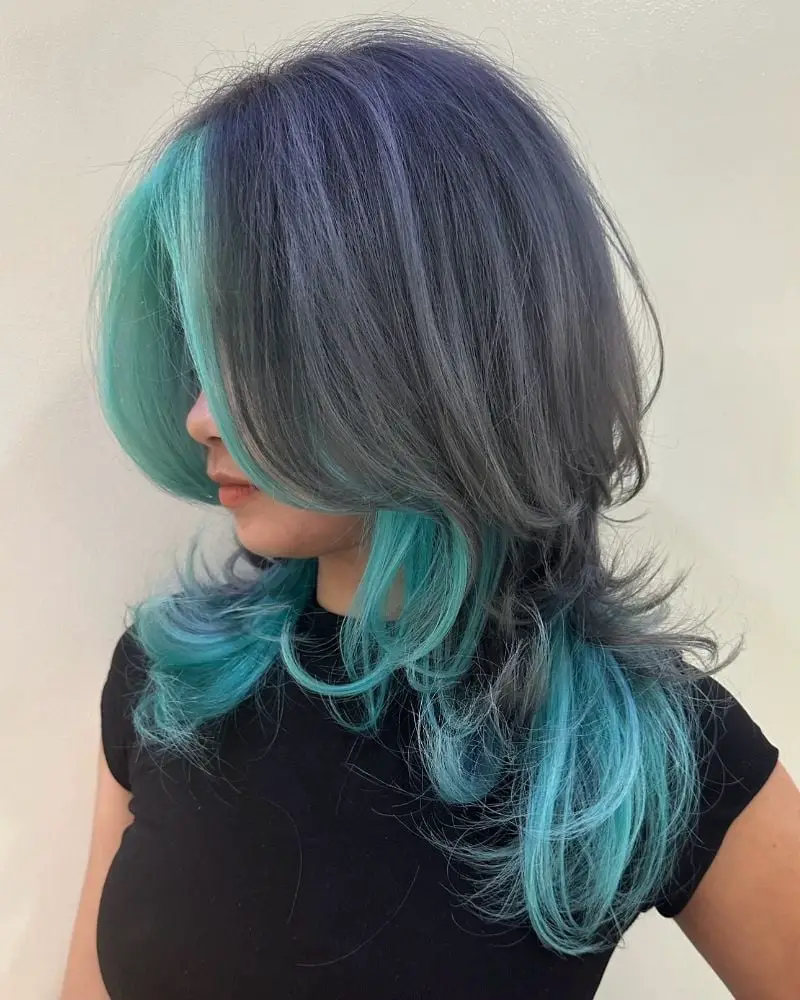
Teal peekaboo highlights on a layered shag with curtain, close-up take
Source: fabbon.com
A layered shag with curtain bangs on fine, wavy hair needs volume to hold the shape, and the teal peekaboo highlights underneath add visual weight without actual bulk. Dark gray with blue undertones as the base keeps the teal from looking separate. The trade-off: fine hair requires a volumizing product at the roots and a diffuser to lift the crown. Skip it if you prefer to air-dry with zero effort, the shag collapses without the lift.
Vibrant pink peekaboo layer under a deep black long layered cut
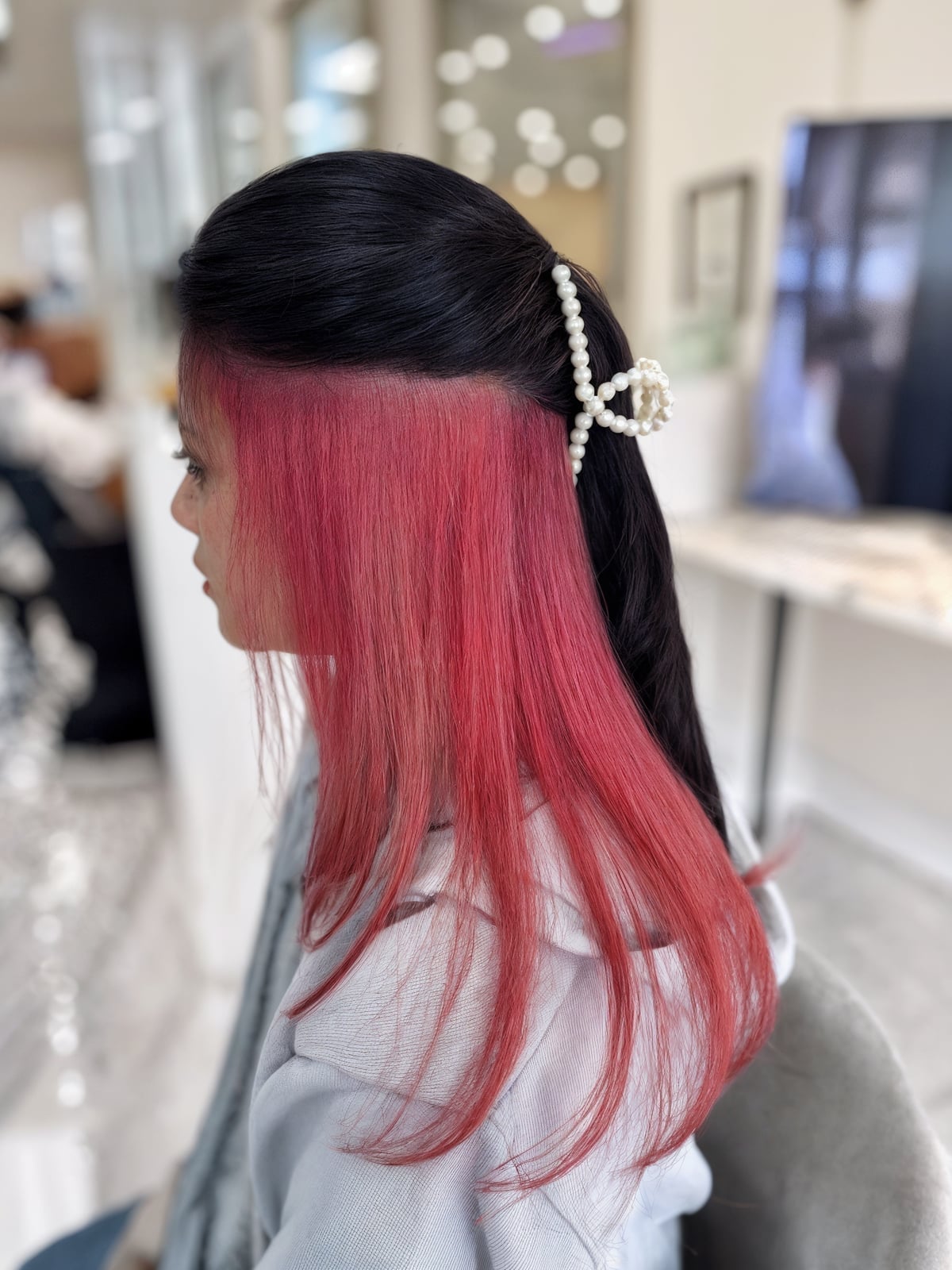
Not every peekaboo needs a dramatic flip to show. This one works because the pink lives underneath long straight layers, fine hair included. The middle part lets the black top layer fall flat against the scalp. The contrast hits when you turn your head or tuck a side behind your ear. That is the reveal moment, no teasing required. Straight texture is the point here; waves would bury the color.
It works best if the peekaboo is visible from the front at rest. Ask your stylist for: long straight layers, deep black with vibrant pink peekaboo. Air-dry is your friend.
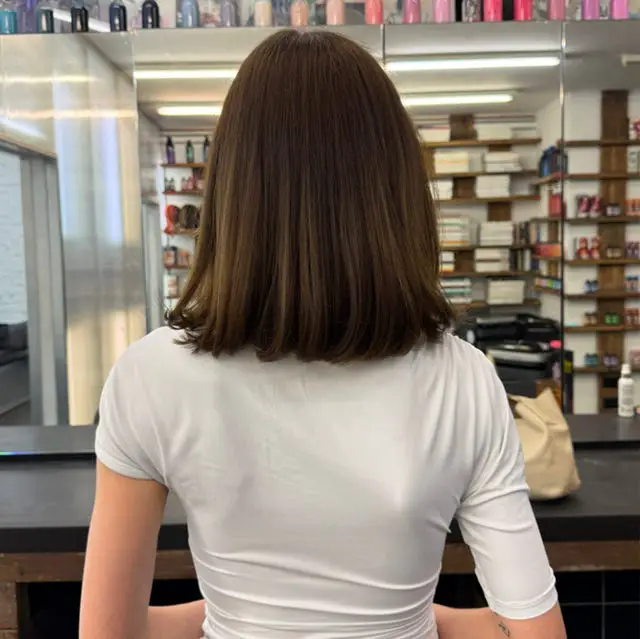
Blunt cut ends on a dark brown fine straight bob
Courtesy of: cosmopolitan.com
Fine hair at jaw length needs a precise line to look intentional rather than thin. A blunt bob delivers that. The dark brown base with subtle highlights keeps it from looking one flat block. No layers means every strand hits the same point. You get density without bulk.
Pass when you prefer movement or textured ends. It suits oval and square faces evenly. A smoothing serum stops flyaways from ruining the line.
Pink peekaboo ends on a platinum blonde layered cut
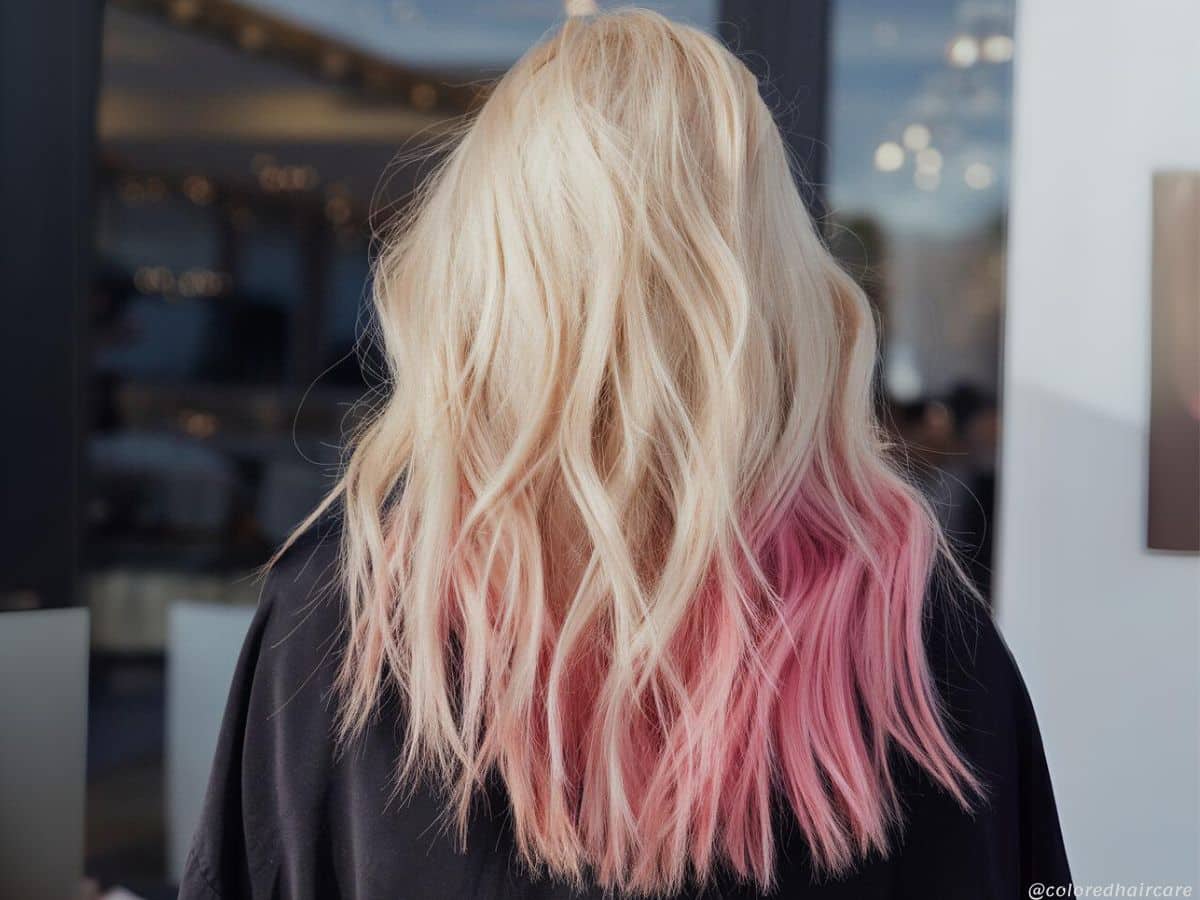
Photo credit: coloredhaircare.com
Color placement matters more than shade here. The pink sits at the ends only, not scattered through the mid-lengths. That keeps the platinum blonde base clean and the surprise contained. Fine wavy texture helps the pink peekaboo ends catch light without a curling iron. The layers are subtle, enough to lift the shape, not enough to steal focus from the color transition.
Skip it if you prefer solid color or a darker base. Ask your stylist for: layers, platinum blonde with pink peekaboo ends. The blonde base needs toning every four to six weeks. Air-dry the waves for a lived-in finish.
Teal peekaboo highlights on soft blonde wavy layers
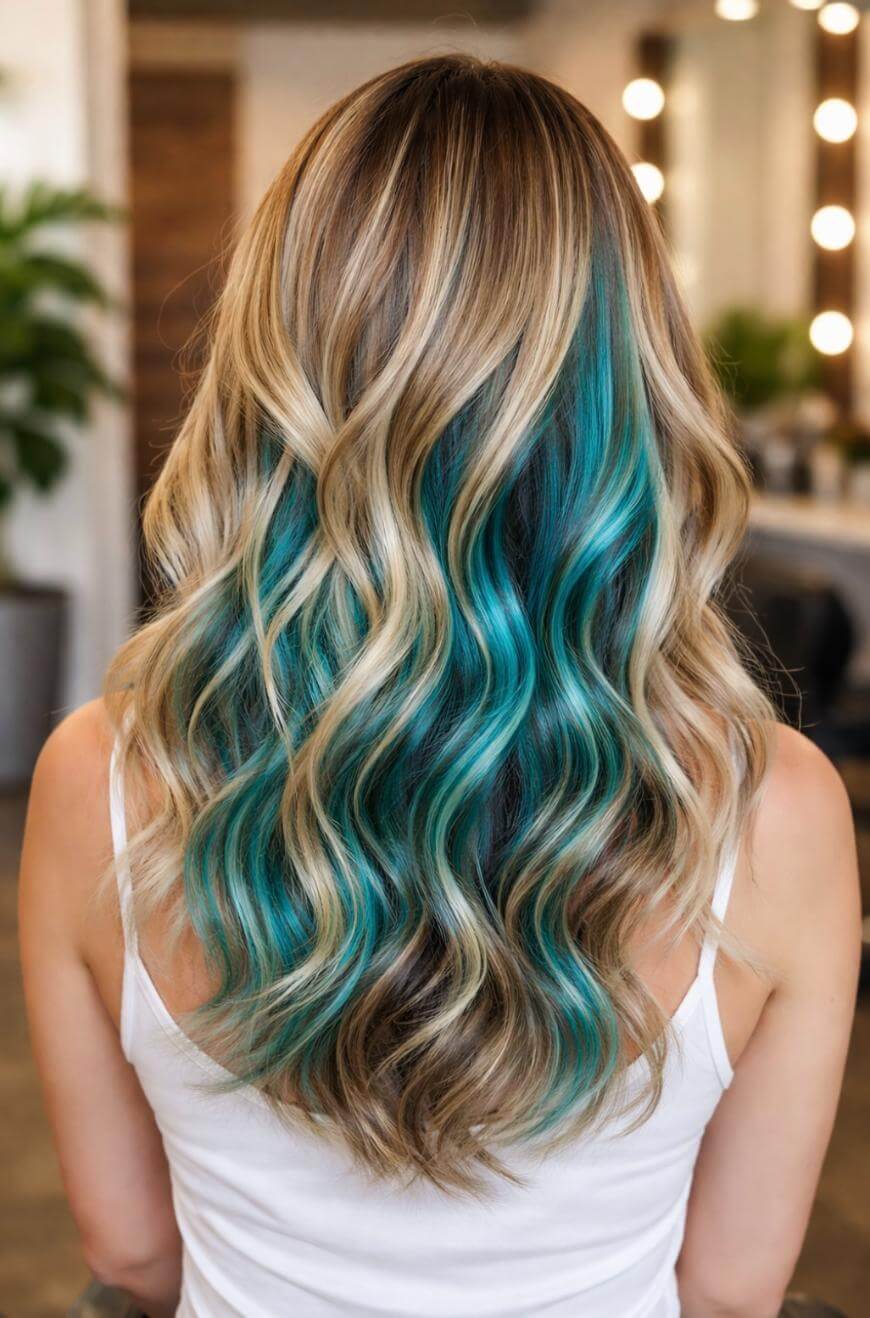
Image credit: melissajanelee.com
Teal on blonde reads cooler than teal on brown. The soft blonde base keeps the contrast high without looking muddy. Long wavy layers let the teal peekaboo highlights peek through on the bends and hide on the straighter sections. Fine hair holds the wave longer than you expect.
Not for anyone who prefers a solid color or straight styling. The wave is what makes the teal show, flat hair buries it. A curl cream defines the wave without weighing it down.
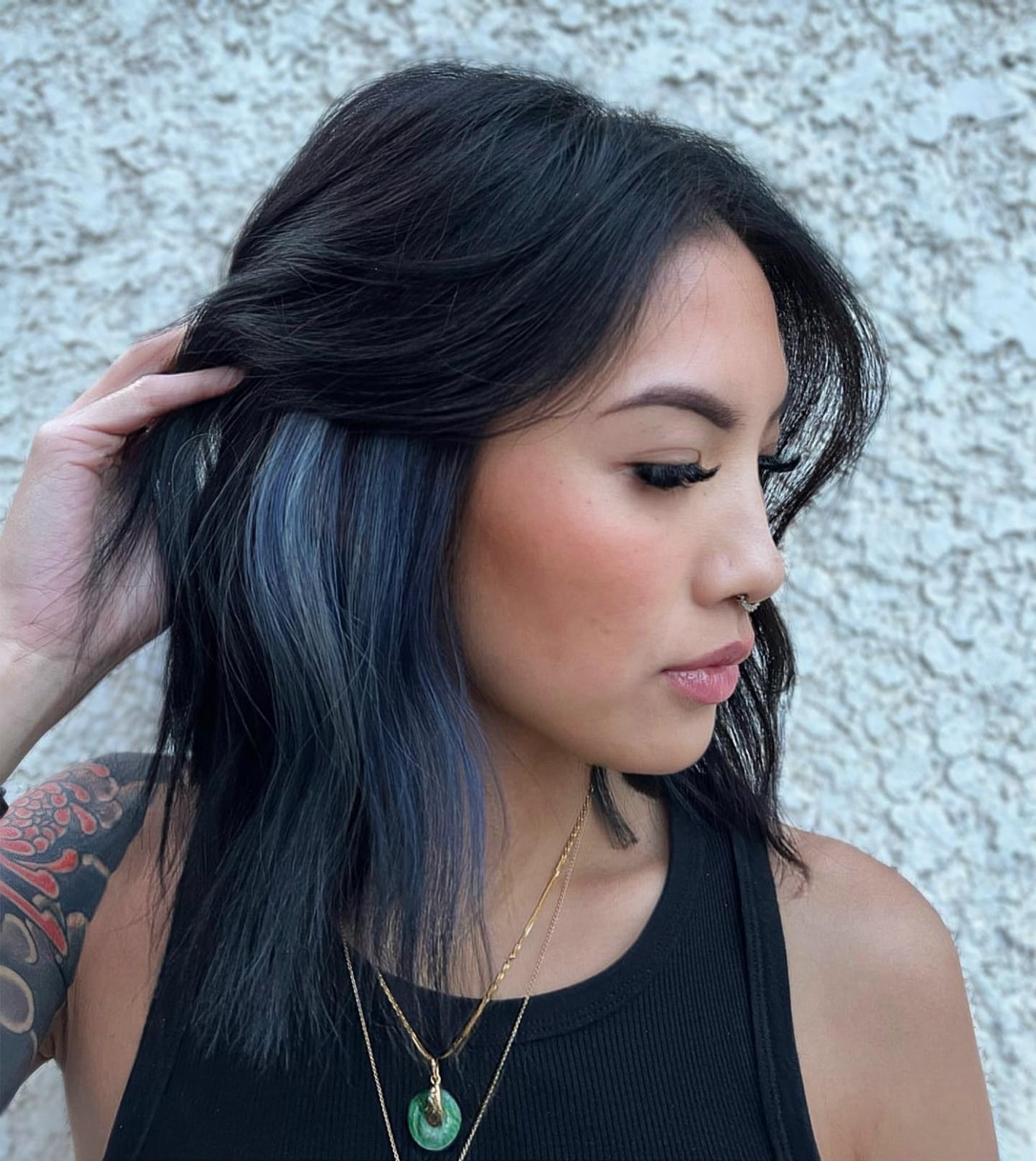
Blue flashes when you want color without showing it
Via hadviser.com
Blue peekaboo on black hair is the most discreet option in this batch. The color stays hidden under the top layer until you sweep hair to one side or put it up. Fine wavy texture helps the blue peekaboo flashes catch light when they surface. Side parting creates a natural reveal zone without effort.
Skip it if you want color visible from every angle. Upkeep is straightforward: the blue fades to a pastel tone in six to eight weeks, then it is time for a refresh. Ask your stylist for: layers, black base with blue peekaboo. Air-dry keeps the texture relaxed.
Blonde flashes on a dark brown base with curtain bangs
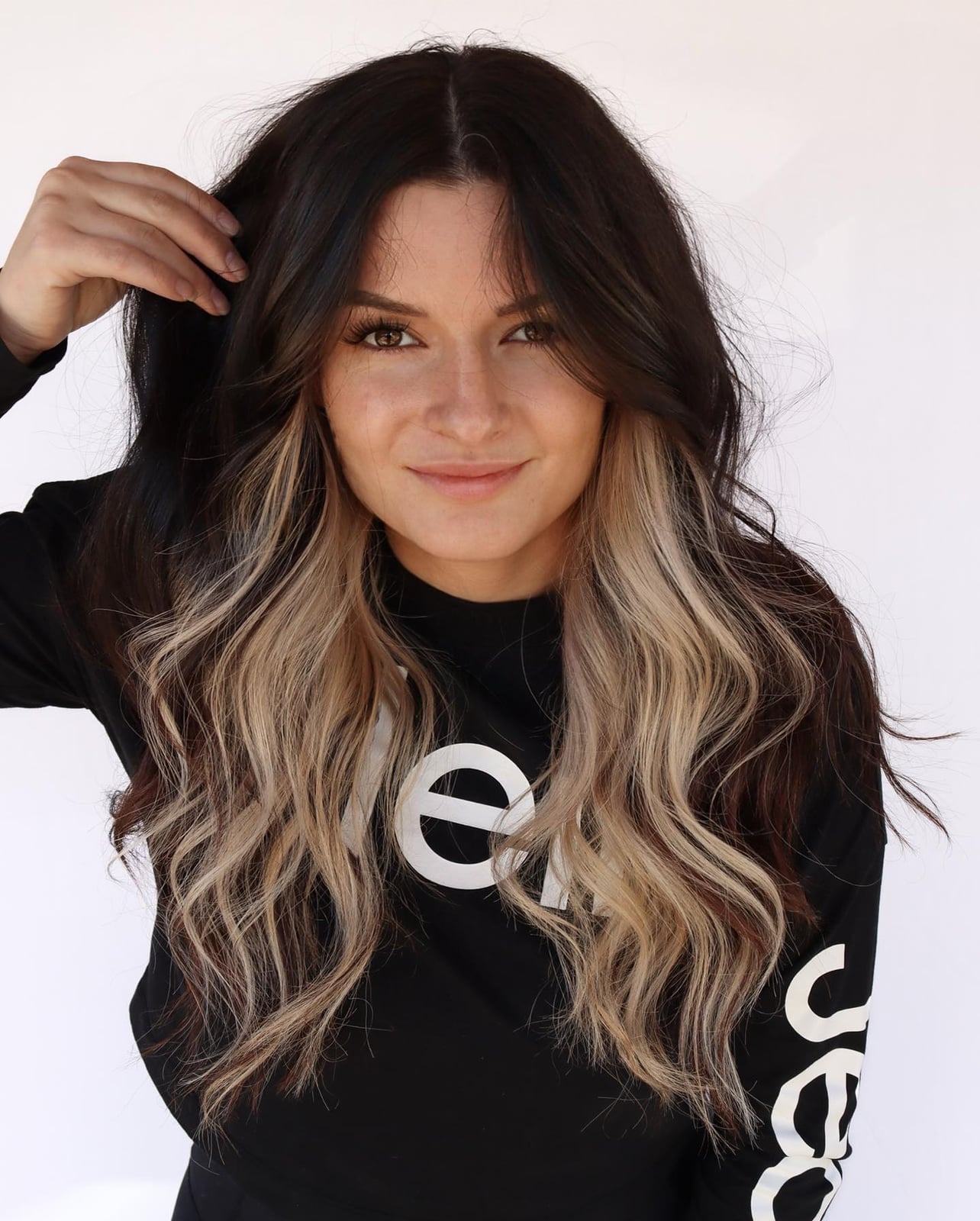
Courtesy of: hadviser.com
Curtain bangs on fine, wavy hair pull double duty. They frame the face while the dark brown base hides the blonde peekaboo highlights. The middle part lets the layers fall forward naturally. The air dried styling requires daily effort to set the bangs into place.
Blonde peekaboo highlights in voluminous blowout with long layers
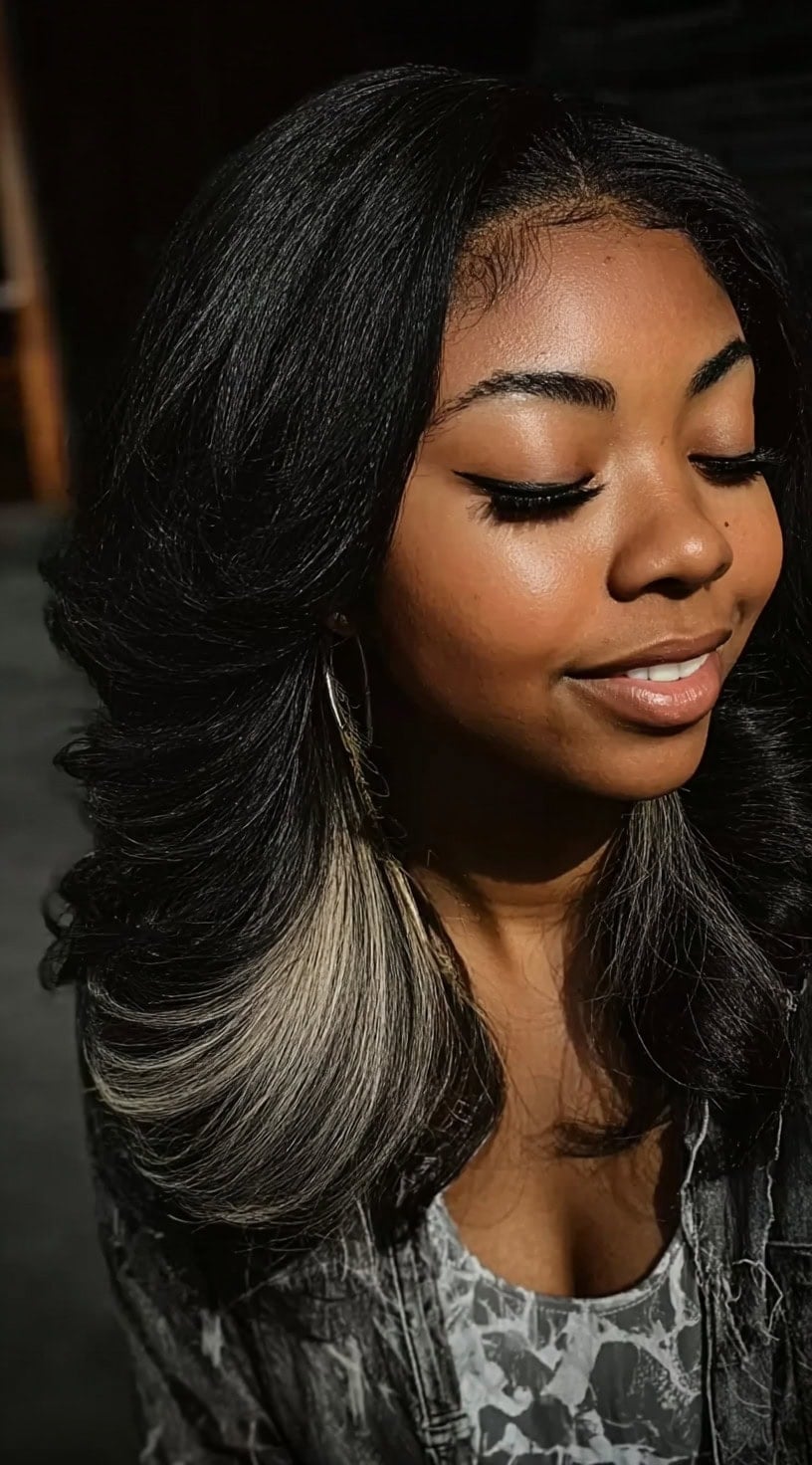
Photo credit: looksniceonme.com
A smooth blowout on thick, wavy hair gives a neat look without the flatiron commitment. The black base stays sleek on top while the blonde peekaboo highlights peek through the lower layers. A middle part keeps the volume balanced. Compare this to a beachy wave style, which would hide the color contrast instead of showing it off. The blowout on thick hair holds for two days with dry shampoo. Ask your stylist for long layers and a black base with blonde peekaboo.
Black flashes creating a sharp color transition in a bob
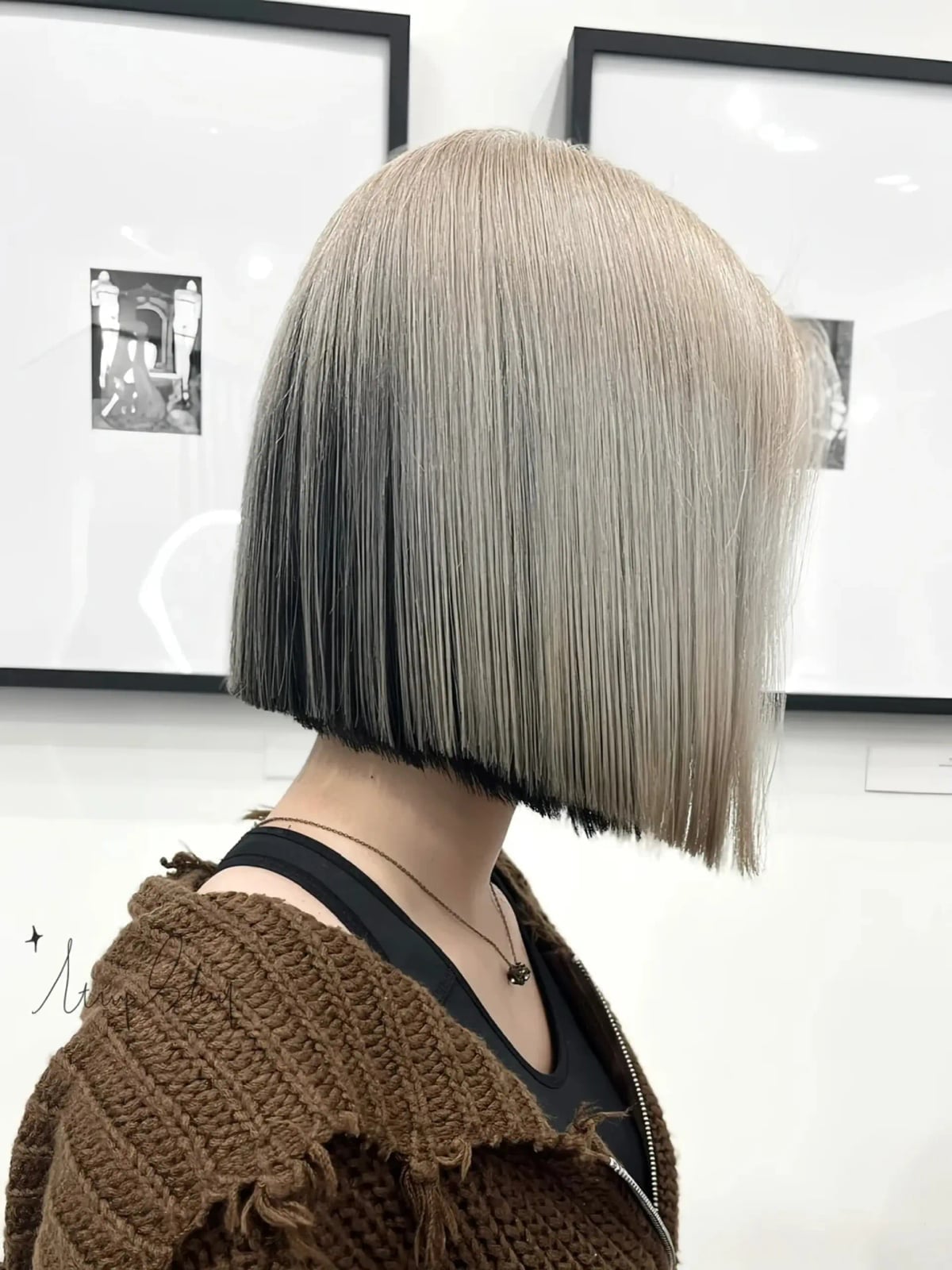
Image credit: kiri-me.com
A blunt bob at chin length shows the black peekaboo underlayer only from the side. The platinum blonde top layer and middle part create a clean, graphic line. Thick, straight hair holds this shape without product. The transition works best on jaw-length hair; anything shorter loses the contrast. Not for very fine hair, which would reveal the underlayer too easily.
Rainbow flashes when you want bold dimension without dullness
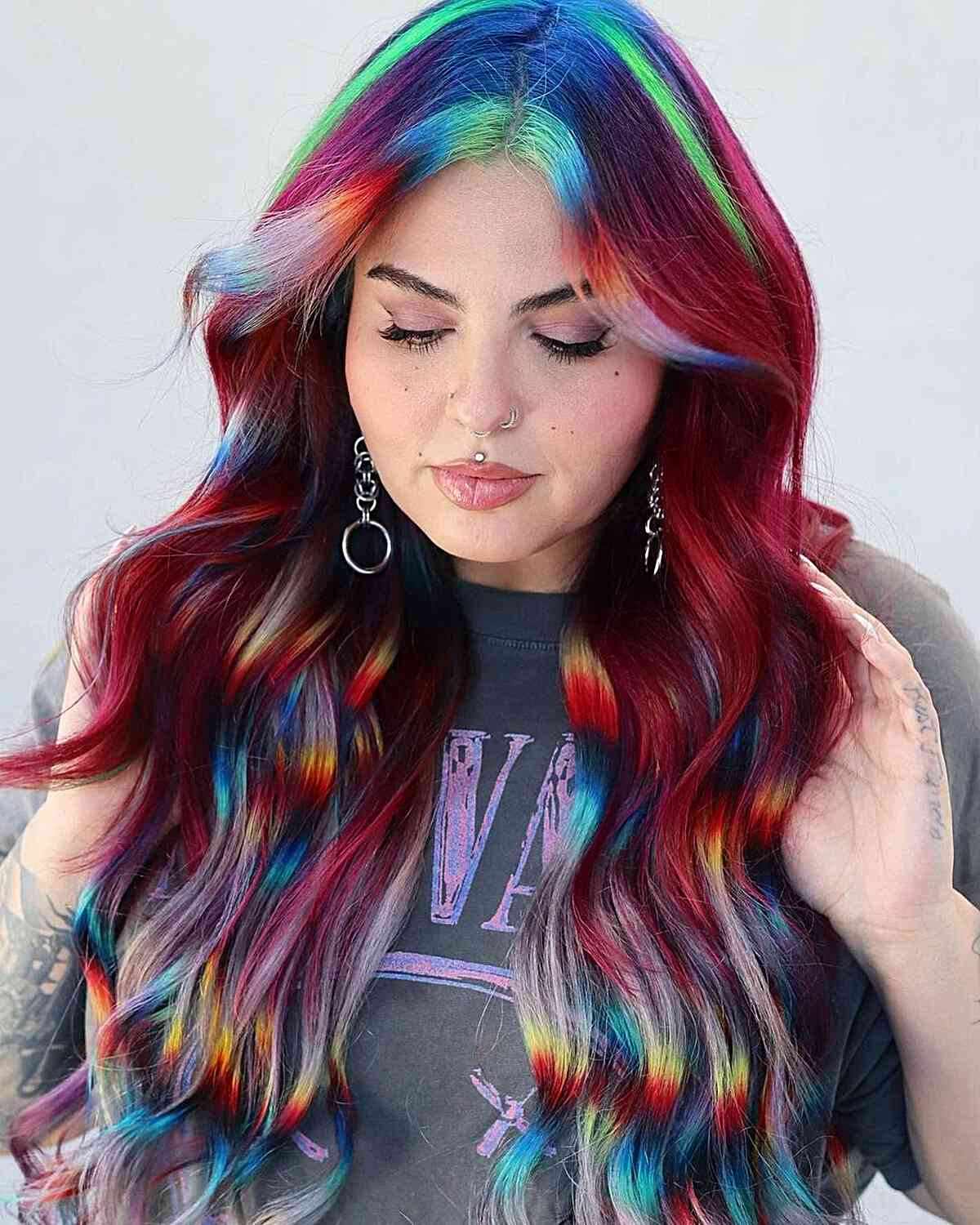
Source: latest-hairstyles.com
Long layers and curtain bangs on thick, wavy hair give the rainbow peekaboo highlights room to move. The dark red base grounds the color while the loose waves reveal flashes of color. This is a salon-only job: the colorist places each shade so they layer without muddling. A wavy blowout with a round brush at the roots keeps the volume up. The whole look takes about three hours in the chair initially. Skip it if you dislike bangs or prefer natural hair colors.
Purple and pink peekaboo highlights under blonde layered hair
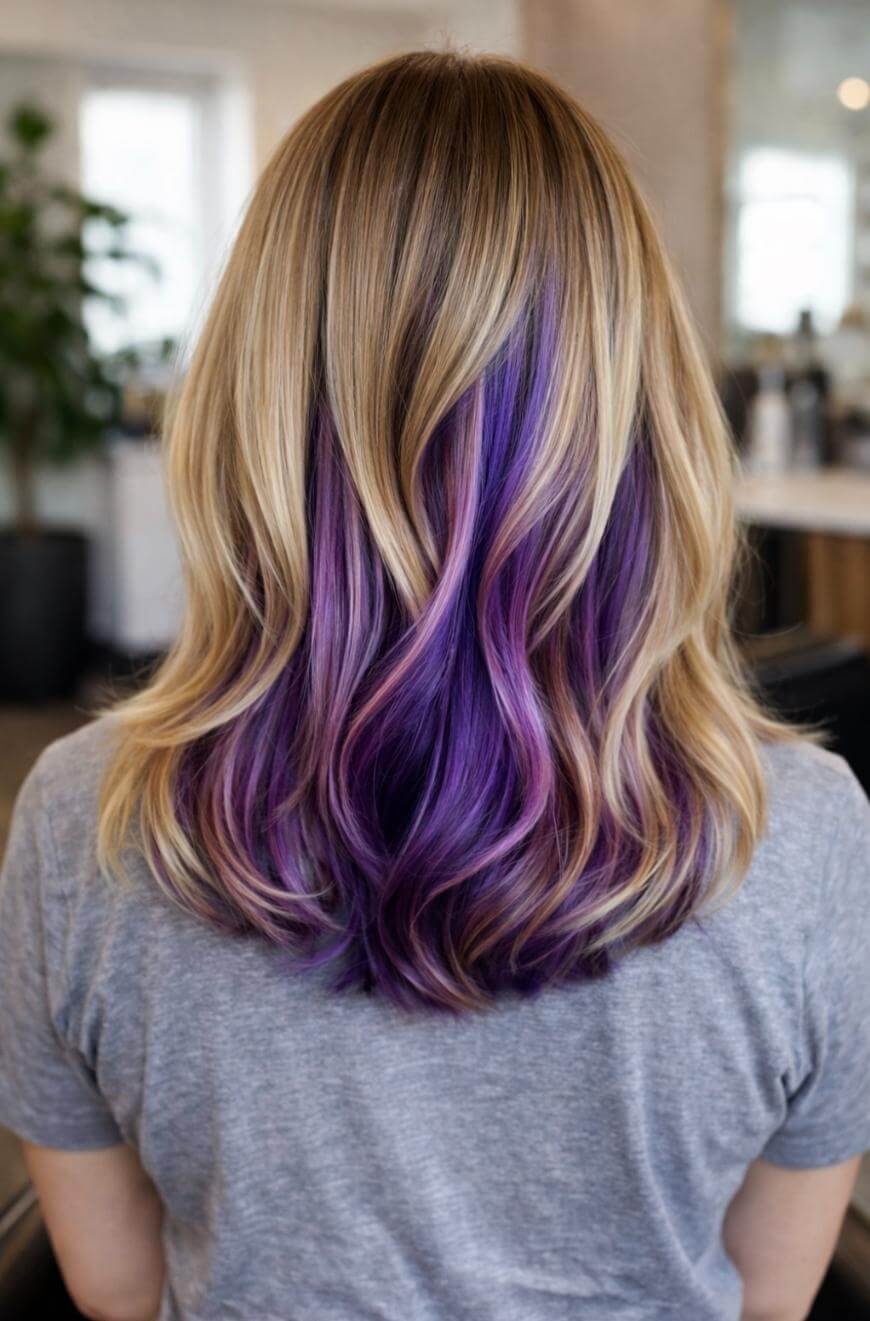
Air-dried texture on fine, wavy hair makes the purple and pink peekaboo highlights look like an accident. The blonde base keeps the overall tone light, while the color sits underneath and surfaces when you move. A middle part and soft waves keep it relaxed. The alternative is a straight style, which would hide most of the color. Fine hair needs a colorist who places the saturation precisely; too heavy and it bleeds through.
Hidden purple streaks underneath long layered brown hair
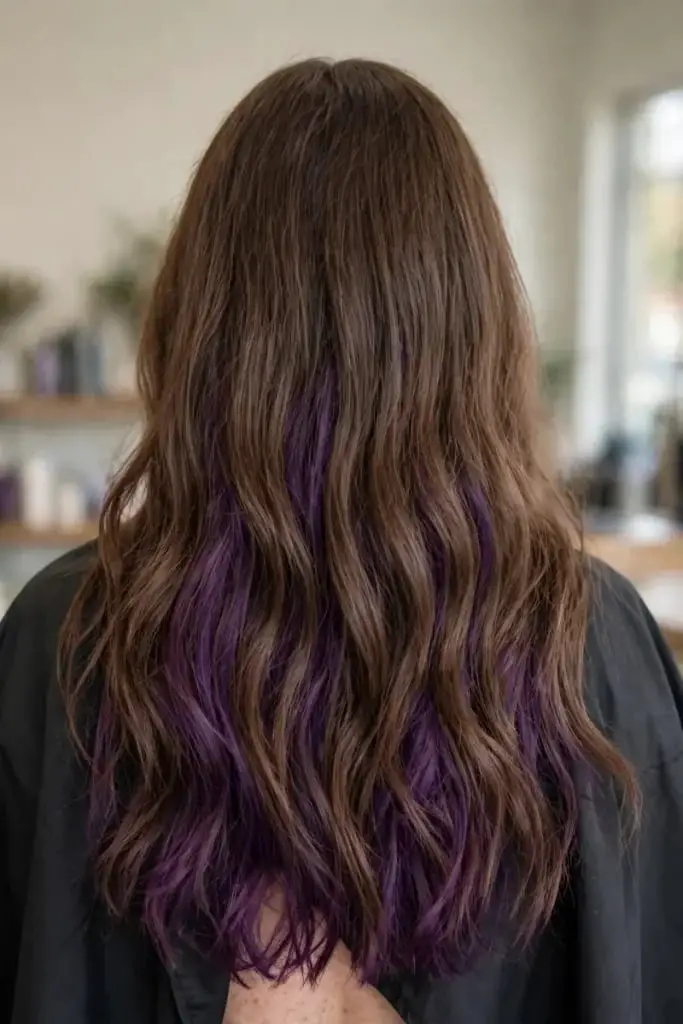
Courtesy of: stylvira.com
Fine, wavy hair gets a quiet upgrade here. The brown base stays dominant; purple streaks live underneath, only surfacing when you move. A middle part keeps the look clean, and the layers let those waves do their thing without fighting the cut. It works best for those who prefer natural movement over pin straight hair. The real win is the contrast: a neutral top layer, a surprise underneath that stays hidden until you shift. Tell your stylist: long layers, brown base with purple peekaboo.
This shade waits for movement to reveal itself. The upkeep is straightforward: a gloss every six weeks keeps the brown rich and the purple from turning muddy. No bangs means you can part it anywhere and still get a flash of color from the back. The fine texture works with the layers, not against them.
Teal and green peekaboo highlights under dark brown fine straight hair
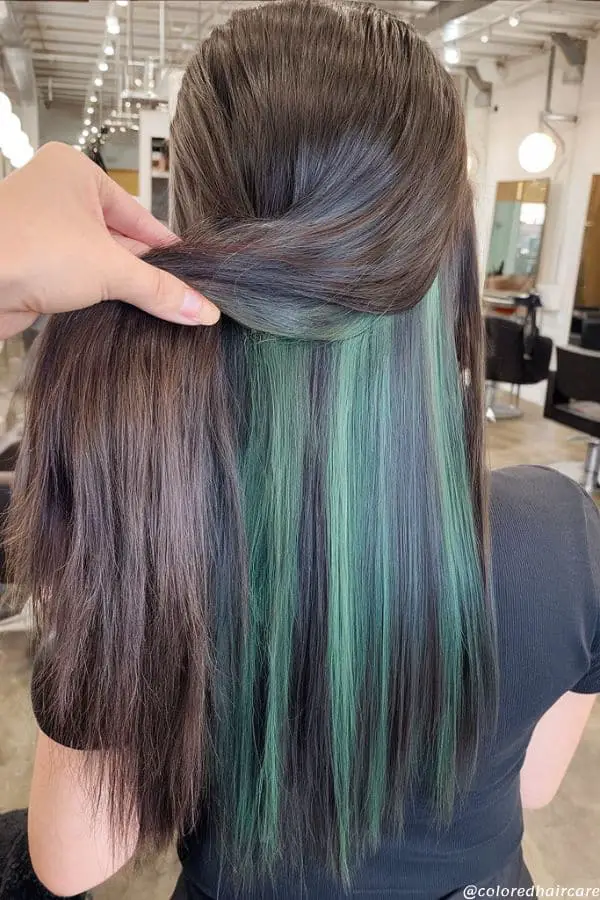
Photo credit: coloredhaircare.com
Air-dry is the move here. The fine, straight texture means no fighting with heat tools, and the teal and green peekaboo highlights sit underneath the dark brown base, visible only from the side. A middle part keeps the front clean. The trick is the touch-up: every six to eight weeks, because those cool tones fade faster on straight hair. The layers add just enough movement to catch the color when you turn. Skip it if you prefer wavy hair or lighter base colors that show everything at once.
Bright blue peekaboo highlights on long layered thick straight hair
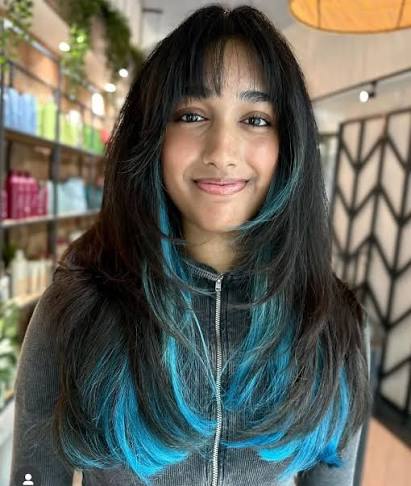
Image credit: fabbon.com
Thick hair and full bangs is a combination that demands maintenance. The bright blue peekaboo highlights sit underneath long layers, so the color stays hidden until the hair moves. Bangs require daily styling, and very fine hair moves faster. The payoff is the contrast: a dark brown top layer with blue flashes that show only when you push hair back or wear it up. Tell your stylist: long layers, full bangs, dark brown with bright blue peekaboo. Oval, square, and heart faces handle the bangs best.
Air-dry is the natural move here. The thick texture holds the straight shape without heat, and the layers keep the length from feeling like a single block. The blue stays hidden most of the time, so it appears as a deliberate accent. The difficulty is the layering: too heavy and the blue never shows; too light and the whole thing looks like a single color.
Purple and blue peekaboo highlights under dark wavy hair
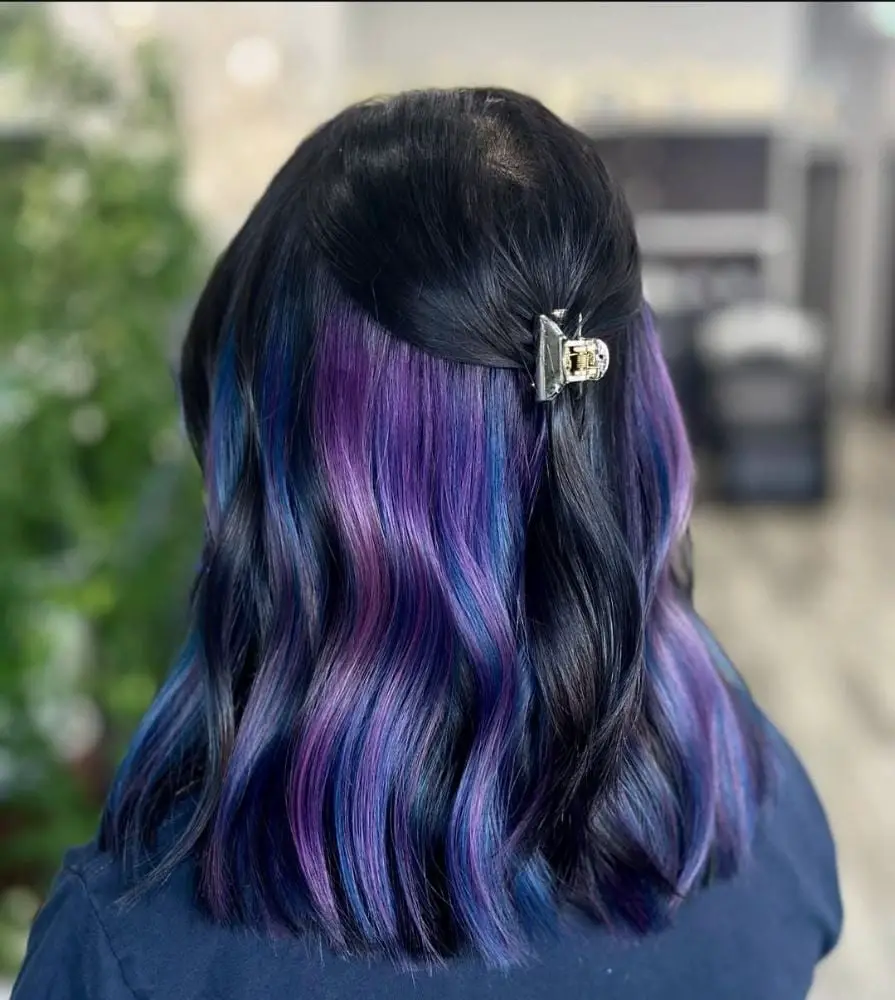
Source: fabbon.com
Loose waves and a dark base create the right conditions for hidden color. The purple and blue peekaboo highlights sit underneath, showing only when the waves shift. A middle part and a simple clip keep the front simple. Thick, wavy hair starting at collarbone length or longer handles this best. The waves give the color a natural reveal, no twisting or pinning required. Straight hair or very fine hair that lays flat may not show the peekaboo effect as well. The layers need to be subtle enough to keep the dark base dominant but present enough to let the waves move.
The color application here is complex. Two tones underneath a dark base means the stylist needs to section precisely and process each shade separately. The reward is a peekaboo effect that shows the colors in a multi-dimensional way, not a messy one. The thick texture holds the wave shape well, so the color shifts every time you move. The clip keeps the top layer in place during the day, and when you take it out at night, the full effect appears.
Orange pink and purple flashes under dark hair in waves
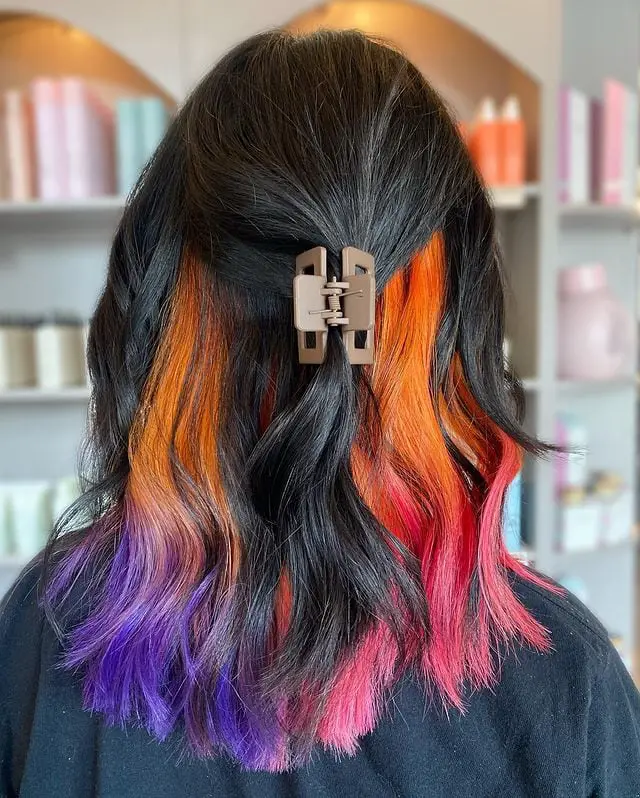
Courtesy of: looksniceonme.com
Fine, wavy hair gains a lot from this placement. The dark base keeps the overall look grounded, while the orange, pink, and purple peekaboo flashes sit underneath, appearing only when the hair moves. A middle parting keeps the front clean. The fine texture means the waves are soft and the color is a gentle surprise. Straight hair or minimal color that stays hidden is not a good fit for this style. Tell your stylist: layers, dark base with orange, pink, purple peekaboo. Air-dry for the natural wave pattern; the color shows best when the hair is dry and moves freely. The collarbone length or longer lets the layers do their work without the color overwhelming the base.
Blonde peekaboo highlights on a sharp dark brown bob with waves
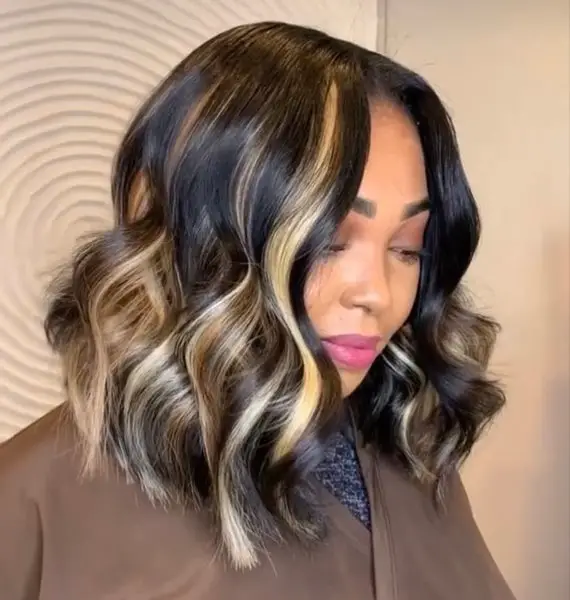
Photo credit: hermosahair.com
A blowout with waves on thick hair needs a solid cut underneath, and a bob at chin length provides exactly that. The middle part keeps the shape balanced while the blonde peekaboo highlights flash through each wave. Dark brown base means the contrast reads sharp, not muddy.
This is a salon-only placement: the blonde sections need to sit low enough to hide when the hair is still, then surface with movement. Skip it if you plan to air-dry straight, the peekaboo effect relies on the wave pattern to reveal itself. Thick, wavy hair suits oval, square, and heart faces best here.
Understated lavender peekaboo highlights on a dark layered cut
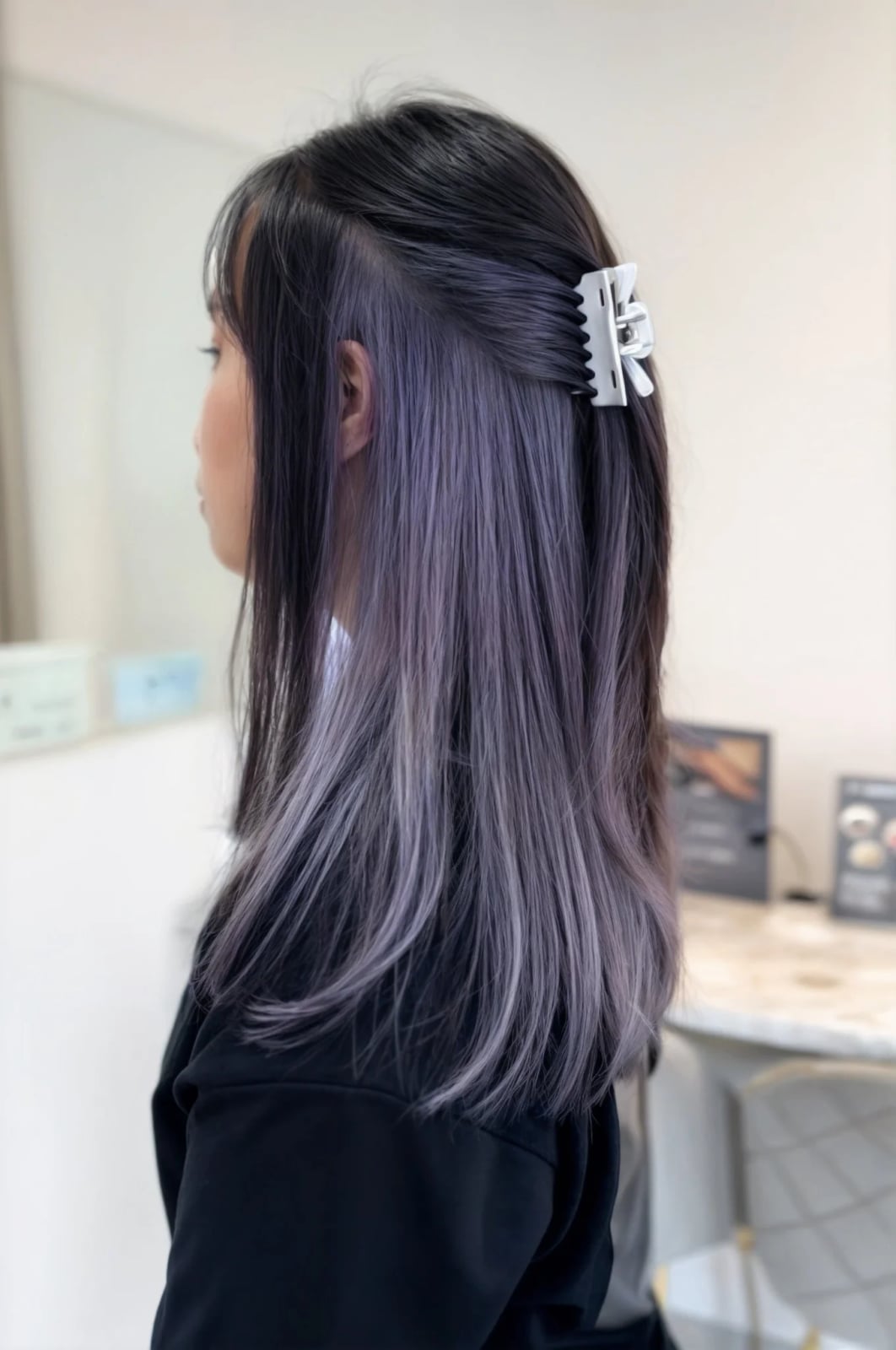
Image credit: ariannahairsalon.com
Lavender on a dark base is subtle rather than bold. Fine, straight hair starting at collarbone length carries these peekaboo sections without bulk, and the air dried finish lets the color sit quietly below the surface layers. A side part shifts the weight so the lavender appears only when the head is turned.
The payoff is subtle, and the precise placement means a salon visit is required. Bold contrast or very wavy hair would pull the lavender up too high. Tell your stylist: layered cut, dark base with lavender peekaboo. Straight, fine texture keeps the effect clean.
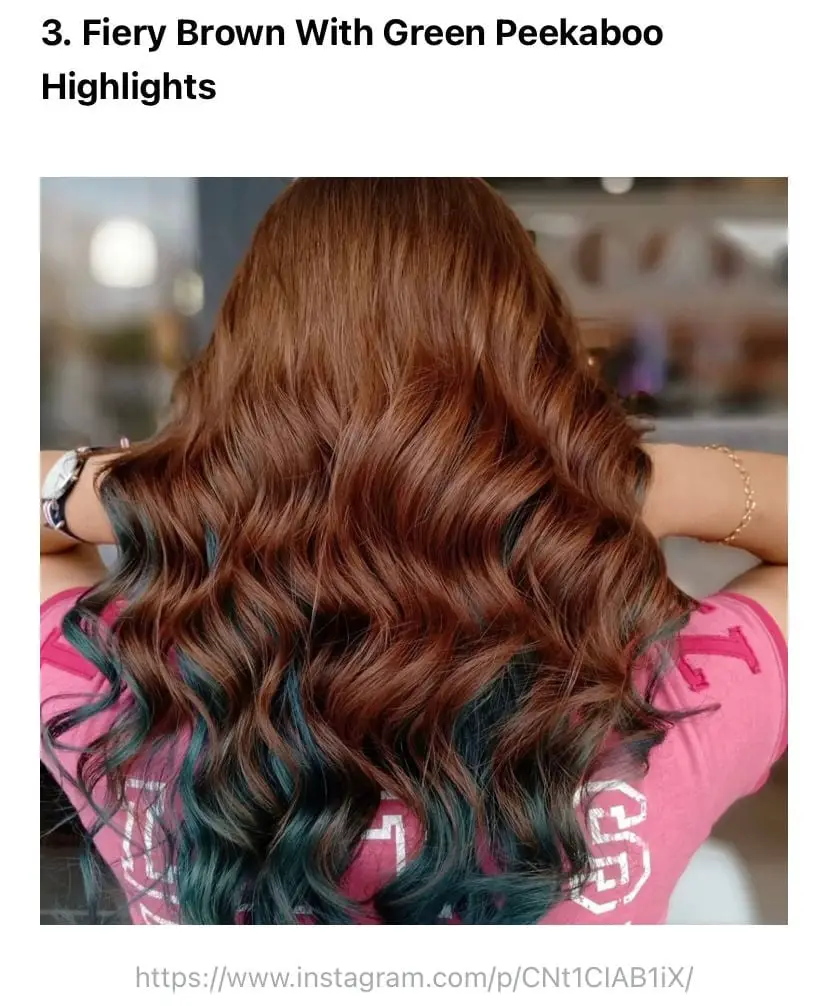
Green flashes on a fiery brown layered cut
Source: shampoolounge.com
Two colors that do not normally share a palette, and that is the point. Fiery brown base with green peekaboo highlights works because both sit in the warm spectrum, so the contrast feels harmonious rather than clashing. Long layers with loose waves let the green surface in sections, never all at once.
A cool green on a neutral brown looks mossy and muted. Here, the fiery undertone keeps the green bright. The waves are what expose the peekaboo sections. Thick, wavy hair starting at shoulder length or longer holds the shape best.
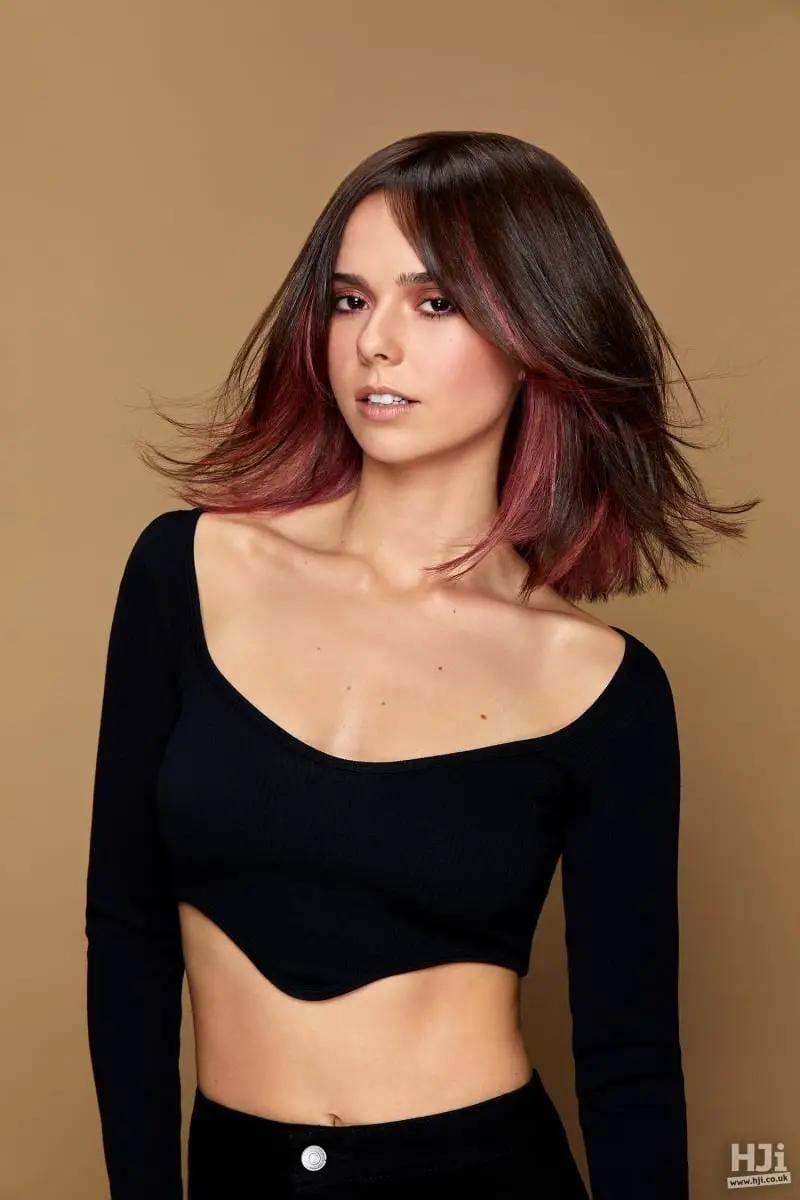
Pink peekaboo highlights on a fine straight layered bob with wispy
Via hji.co.uk
A layered bob at chin length with wispy bangs and a middle part. The pink peekaboo highlights sit underneath, surfacing only when the hair moves. Fine, straight texture styled in a smooth blowout means the pink stays hidden until you tuck or turn. Skip it if you dislike bangs or prefer very thick hair that would swallow the peekaboo effect. Tell your stylist: layered bob, wispy bangs, dark brown with pink peekaboo. Oval, round, and heart faces suit this shape well.
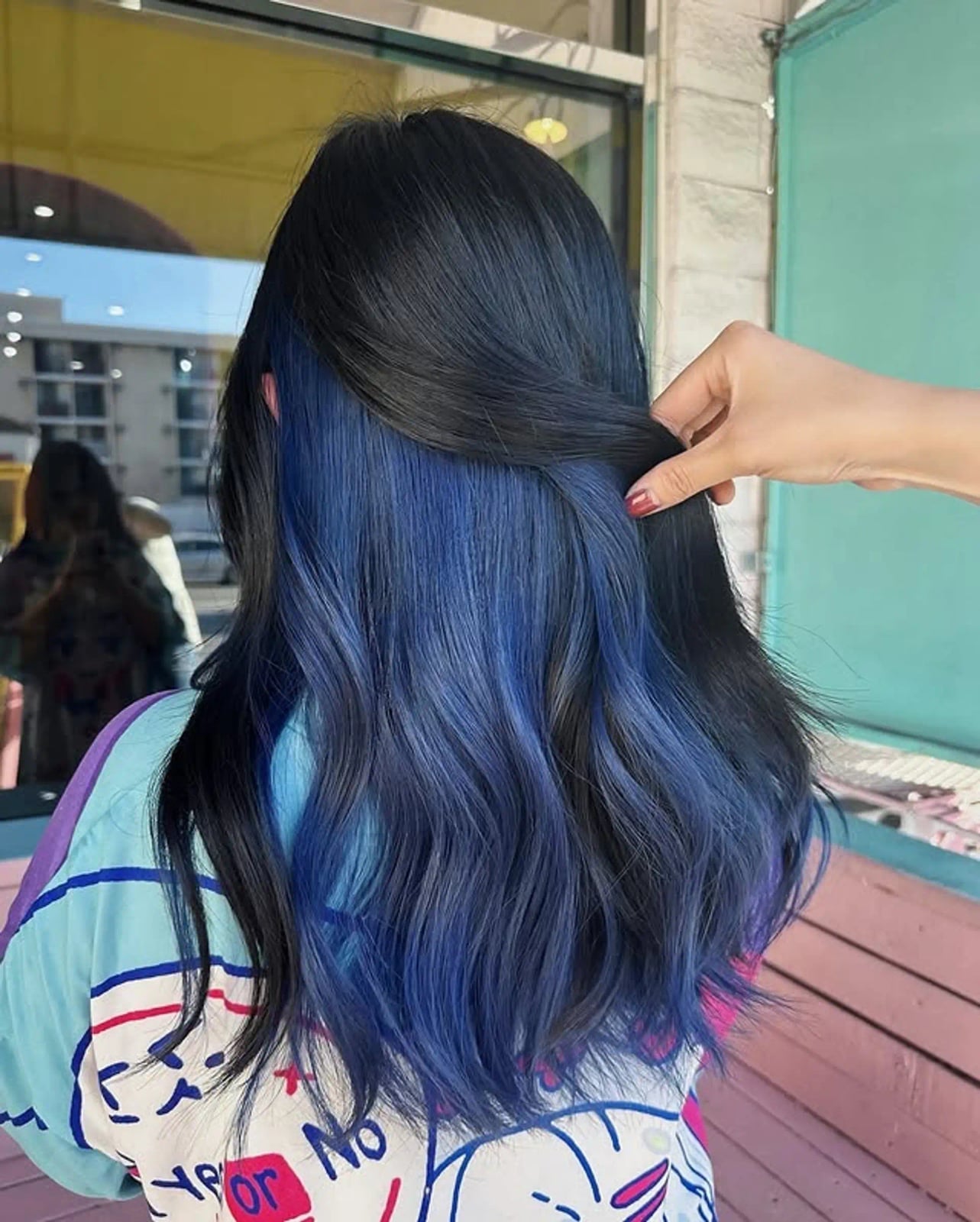
Vibrant electric blue peekaboo layer under black layered hair
Courtesy of: kiri-me.com
Electric blue under black. The contrast is extreme, and that is the trade-off. Fine, wavy hair starting at shoulder length or longer lets the blue sit in a single layer underneath, so it stays hidden when the hair is down and reveals itself in sections when you move. The air-dried texture keeps the look casual, not costumed.
One real drawback: precise placement is critical. If the blue layer sits too high, it peeks out constantly; too low, and it never shows. Fine hair amplifies any margin of error. Skip it if you prefer straight hair or very subtle color, because this is not subtle. Wavy texture adds the movement that makes the reveal work.
Final Thoughts
Peekaboo color is a decision about what you want to reveal, and when.
- Fine hair: keep the color underneath to add weightless depth.
- Ten minutes in the morning: choose a placement that shows when you tuck a strand.
- Cool base that pulls brassy: add a toner to your six-week rhythm.
- Busy schedule: plan for touch-ups every 6 to 10 weeks.
Pick the placement that matches your cut and your week.
